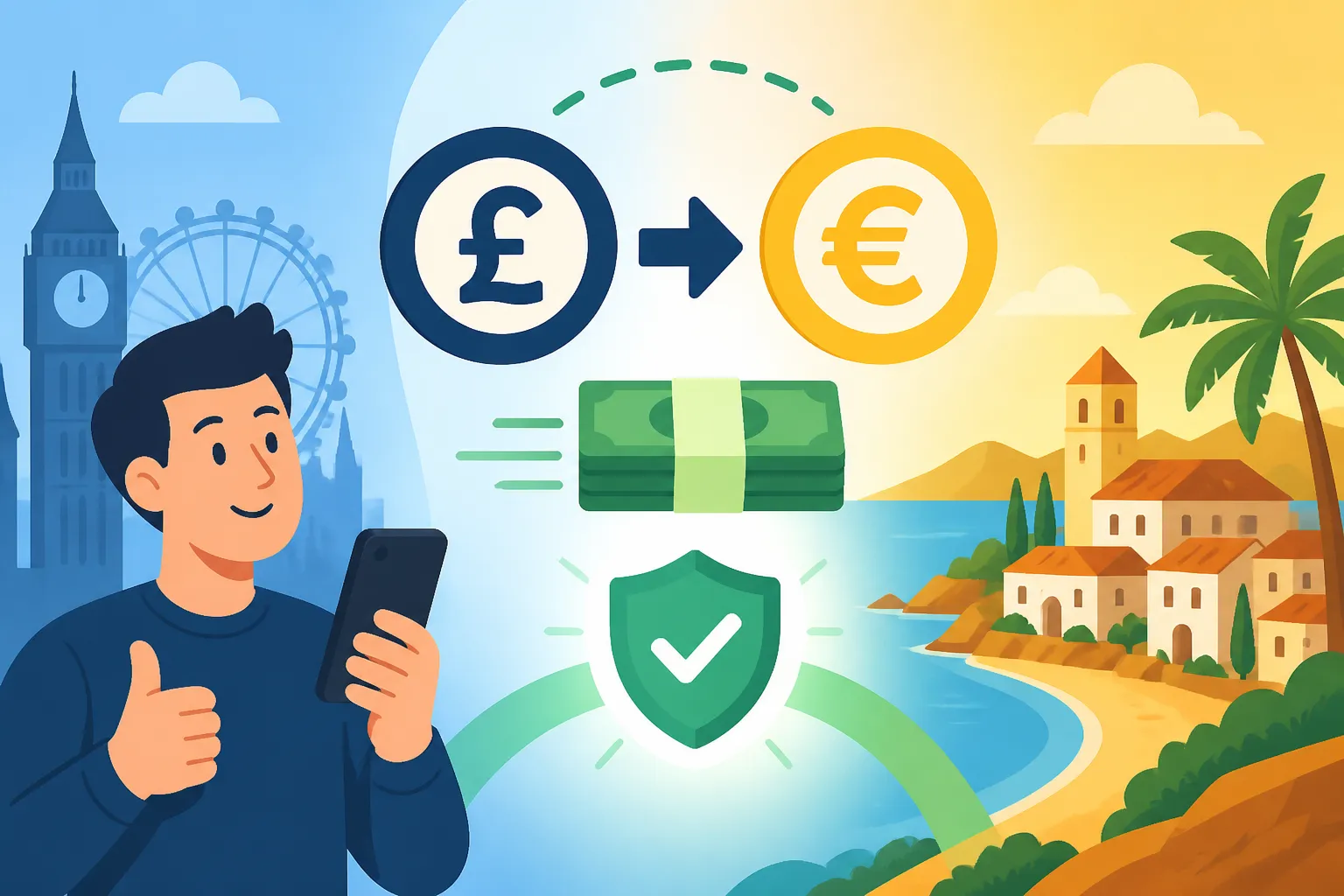
Moving Money From the UK to Spain After Brexit: GBP to EUR Without the Markup
Disclosure: This article contains affiliate links. If you buy through them, we may earn a commission at no extra cost to you. Read our full disclosure.
Oh, the joy of moving money from the UK to Spain after Brexit! It used to be a fairly straightforward affair, didn't it? But then came the B-word, and suddenly, what was once a simple bank transfer became a labyrinth of confusing fees, fluctuating exchange rates, and a general sense of "are they really going to take that much out of my hard-earned cash?" If you've found yourself staring at your bank statement, feeling like your pounds are shrinking faster than an ice cream in the Seville sun, then you're in the right place. This guide is all about navigating that tricky GBP to EUR conversion, ensuring you get the most for your money and avoid those nasty hidden markups that catch so many of us off guard.
Understanding the Post-Brexit Landscape for GBP to EUR Transfers
Let's be honest, Brexit has added a whole new layer of complexity to everything, and money transfers are no exception. What was once part of the seamless EU financial ecosystem is now, well, a bit more like dealing with an international transfer from further afield. This impacts everything from the speed of your transfers to the fees you pay and, most crucially, the exchange rate you actually receive.
The Impact of UK's Departure from the EU Single Market
Before Brexit, transferring money between the UK and Spain often felt like a domestic transfer. Banks operated within the EU's single market, meaning less red tape and, often, lower costs for cross-border transactions. Many British banks had a direct presence or strong partnerships within Spain, simplifying the process. However, since the UK left the single market, financial services between the two regions are now treated as international transfers. This means more regulatory hurdles, less direct integration, and, unfortunately, a fertile ground for banks to introduce new charges or widen their exchange rate margins.
For us expats, this often translates to slower processing times, especially for larger sums, and less transparency regarding the total cost. You might see a "no fee" transfer advertised, but if the exchange rate is significantly worse than the market rate, you're still losing money, just in a less obvious way. It’s like buying a coffee that says "free delivery" but costs twice as much as it should. The frustration is real, and it’s a constant battle to ensure your money retains its value. Many traditional banks, despite their size, haven't fully adapted their pricing models to offer truly competitive post-Brexit rates for regular people just trying to pay their rent or bills in Spain.
Navigating Fluctuating Exchange Rates
The exchange rate between GBP and EUR is constantly moving, influenced by global economic news, political events, and market sentiment. While this was always the case, post-Brexit, the volatility can feel more pronounced, particularly when you're dealing with larger sums or making regular transfers. You might check a rate online, initiate a transfer, and then find that the rate has shifted by the time your money is actually converted, sometimes significantly. This is where the concept of a "guaranteed rate" becomes absolutely crucial.
When you're trying to budget for your Cost of Living in Spain: Realistic Budgets and Savings Tips or planning a big purchase like a car or property, having certainty over the exchange rate is invaluable. Imagine sending money for a house deposit, only for the rate to dip mid-transfer, leaving you short. It's enough to give anyone a headache! This uncertainty means you need a transfer service that is transparent about its rates before you commit and ideally locks in the rate for a period, even if it's just for a few hours. This is one area where specialist services truly shine, offering peace of mind that your GBP will translate into the EUR you expect.
Traditional Banking vs. Specialist Transfer Services: A Deep Dive
When it comes to moving your money, you've essentially got two main paths: sticking with your familiar high-street bank or venturing into the world of specialist money transfer providers. Both have their pros and cons, but understanding the nuanced differences is key to making an informed decision that saves you money and stress.
The Hidden Costs of Traditional Bank Transfers
You know the drill: log into your online banking, select "international transfer," and off it goes. Seems simple, right? Well, that simplicity often comes at a premium, a premium that isn't always obvious until you see the final amount credited to your Spanish account. Traditional banks, both in the UK and Spain, are notorious for their less-than-transparent fee structures.
Firstly, many banks will charge a flat transfer fee, sometimes varying depending on whether you're sending online or in a branch. While these fees might seem small individually, they add up quickly, especially if you're making regular payments. More significantly, however, is the exchange rate markup. Banks rarely offer you the true "mid-market" rate – the rate you see on Google or Reuters. Instead, they apply their own, less favorable retail rate. This difference, often a percentage point or two, is how they make a substantial profit, and it's where you lose the most money. For example, on a £1,000 transfer, a 1% markup means you're losing £10 immediately, often without even realizing it. On larger sums, this can easily amount to hundreds of pounds, simply vanishing into the bank's coffers. It’s infuriating when you think about it! Additionally, bank transfers can sometimes take several business days, and there's often a correspondent bank involved, which might add another fee without your prior knowledge. It's like a game of financial whack-a-mole where you're always the one getting whacked.
The Rise of Dedicated Online Money Transfer Platforms
Enter the new kids on the block: dedicated online money transfer platforms. These services were born out of a desire to make international transfers cheaper, faster, and more transparent. They operate with lower overheads than traditional banks, meaning they can afford to offer much more competitive rates and fees. Companies like Wise (formerly TransferWise) have revolutionized the industry by championing transparency and offering the real mid-market exchange rate, charging a small, upfront fee instead.
These platforms often boast user-friendly apps and websites, making the transfer process incredibly simple, sometimes even simpler than your bank's interface. You can usually see the exact amount your recipient will receive before you even hit send, including all fees and the locked-in exchange rate. This level of clarity is a breath of fresh air after dealing with opaque bank statements. Transfers are often much faster too, with many arriving within hours, or even minutes, especially for common currency routes like GBP to EUR. For an expat managing their Financial Checklist for Moving to Spain: First 90 Days and needing funds quickly, this speed can be a lifesaver. While they might not offer face-to-face service, their online support is usually very responsive, and the cost savings are undeniable.
Why Wise Stands Out for Expats in Spain
As someone who's navigated the choppy waters of international finance for years, I can tell you that not all money transfer services are created equal. For expats in Spain, particularly those moving money from the UK, Wise has consistently proven itself to be a true game-changer. It's not just about the numbers; it's about the peace of mind and the feeling that you're finally getting a fair deal.
True Mid-Market Exchange Rates and Transparent Fees
This is the absolute core of Wise's appeal. Unlike traditional banks that sneak in a markup on the exchange rate, Wise offers the real mid-market exchange rate. This is the rate banks use to trade with each other, and it's the one you see on independent financial sites like Google or XE. They don't hide their profit in a tweaked exchange rate. Instead, they charge a small, upfront fee that is clearly displayed before you initiate any transfer. You always know exactly what you're paying and precisely how much EUR will land in your Spanish bank account.
Let me give you a real-world scenario. You need to send £2,000 to your Spanish bank account to cover your rent and utilities. With a traditional bank, they might tell you there's a £10 transfer fee, but then their exchange rate is, say, 1.15 EUR for every GBP. The actual market rate might be 1.17 EUR. That 0.02 difference per pound means you're losing £2,000 x 0.02 = 40 EUR, on top of the transfer fee! With Wise, you'd see the actual 1.17 rate and a transparent fee, perhaps £8. The difference quickly adds up, especially if you're making regular transfers for your Spanish Taxes for Foreign Residents: Practical Guide to Staying Compliant or just covering monthly expenses. It’s this honesty that truly sets Wise apart and why it’s become the go-to for so many of us expats.
Speed, Security, and Ease of Use
Beyond the fantastic rates, Wise excels in the practical aspects of money transfers. When you're managing life in a new country, you need things to be quick and hassle-free. Wise typically processes GBP to EUR transfers very quickly, often within hours, and sometimes even minutes. This is crucial for urgent payments or simply for maintaining a healthy cash flow between your UK and Spanish finances. They achieve this speed by using a "local in, local out" system where possible, minimizing the actual cross-border movement of funds.
Security is, of course, paramount when dealing with your money, and Wise is fully regulated by financial authorities worldwide, including the FCA in the UK and the Bank of Spain in Europe. This means your money is held securely and your transactions are protected.
And then there's the user experience. The Wise platform, whether on their website or mobile app, is incredibly intuitive. Setting up a transfer takes just a few clicks, and you can easily save recipient details for recurring payments. You receive email notifications every step of the way, so you're never left wondering where your money is. This ease of use, combined with the transparent fees and excellent exchange rates, makes Wise an indispensable tool for anyone living in Spain and needing to move money from the UK. It’s a far cry from the clunky interfaces and uncertain timelines of some older banking systems.
Multi-Currency Account and Debit Card Benefits
Wise isn't just about single transfers; it also offers a fantastic multi-currency account with a debit Mastercard, which is incredibly useful for expats. This account allows you to hold, send, and receive money in over 50 currencies, including GBP and EUR, all within one account. You get local bank details for countries like the UK, Eurozone, US, Australia, and more.
For you, this means you can keep some funds in GBP in your Wise account, and when the exchange rate looks favourable, you can convert it to EUR within the same account at the mid-market rate. This gives you much more control over when your money is converted, rather than being forced to accept whatever rate your bank offers on a specific transfer day. The associated Wise debit card is brilliant for everyday spending in Spain. You can spend directly in EUR from your balance without any foreign transaction fees. If you don't have enough EUR, Wise will automatically convert from your GBP balance (or another currency) at the mid-market rate, again with that tiny, transparent fee. This is a massive advantage over using your UK bank card in Spain, which will almost certainly hit you with foreign transaction fees and a poor exchange rate. It's also a great way to avoid Avoiding Dynamic Currency Conversion (DCC) at Spanish ATMs and Terminals which is another sneaky way you can lose money when spending abroad.
Think about it: you get paid in GBP, hold it in your Wise account, convert it to EUR when the rate is good, and then spend or transfer it to your Opening a Bank Account in Spain: Step-by-Step for Foreigners as needed. This flexibility and control are unmatched by traditional banks and truly empower you to manage your finances efficiently in Spain.
Step-by-Step Guide to Sending Money with Wise
Getting started with Wise is surprisingly easy, which is a huge relief when you're already juggling so much as an expat. Forget about complex forms or lengthy waits; Wise has streamlined the process to make it as pain-free as possible.
Setting Up Your Wise Account
First things first, you'll need to create an account. Head over to the Wise website or download their app on your smartphone – both are incredibly intuitive. The registration process is straightforward:
- Sign Up: You can sign up using your email, Google, Facebook, or Apple ID.
- Personal Details: You'll be asked for some basic personal information, including your full name, date of birth, and contact details. This is standard for any financial service.
- Verification: To comply with financial regulations and keep your money safe, Wise will need to verify your identity. This usually involves uploading a photo of a valid ID (like your passport or driving license) and sometimes a proof of address (like a utility bill or bank statement). This step is quick and usually processed within a few hours, though it can take a bit longer in busy periods. Don't worry, it's a normal and necessary part of the process for all regulated money transfer services, including when you're setting up your Top Banks in Spain for Expats: Fees, Apps, and Requirements. Once verified, you're good to go!
Initiating Your First GBP to EUR Transfer
Once your account is set up and verified, sending money is a breeze.
- Select Currencies: On the Wise homepage or app, click "Send money" or "Send & Receive." You'll then choose GBP as the "Send" currency and EUR as the "Receive" currency.
- Enter Amount: Input the amount you want to send in GBP, or the amount of EUR you want your recipient to receive. Wise will instantly show you the exact amount of the other currency, the real mid-market exchange rate, and the small, transparent fee. No surprises here!
- Choose Recipient: You'll need to add your recipient's details. If you're sending to your own Spanish bank account, you'll put in your Spanish account details. For a friend or family member, you'll need their full name, address, and their Spanish IBAN. You can save these details for future transfers. Remember, for transfers within the SEPA zone (which includes Spain), the IBAN is crucial for Spanish IBAN, SEPA, and SWIFT: Sending and Receiving Money Explained.
- Review and Pay: Double-check all the details – the amount, the rate, the fee, and the recipient's information. Once everything looks correct, you'll proceed to pay for your transfer. Wise offers several payment methods from the UK, including:
- Bank transfer (usually the cheapest): You transfer the money from your UK bank account to Wise's UK account.
- Debit card: A quick and easy option, though sometimes with a slightly higher fee than a bank transfer.
- Credit card: Also fast, but often incurs higher fees.
- Track Your Transfer: After payment, Wise will send you email updates every step of the way. You can also track the progress of your transfer in real-time through their website or app. Most GBP to EUR transfers arrive very quickly, often within hours. It's a surprisingly smooth process that takes the stress out of international money movement.
Comparing Your Options: Features, Fees, and Exchange Rates
Choosing the right money transfer service is about more than just the lowest fee; it's about value, transparency, speed, and reliability. Let's break down how the various options stack up, keeping in mind that your personal circumstances (how much you send, how often, and how fast you need it) will influence your best choice.
Key Factors in Choosing a Transfer Service
When you're trying to decide where to send your precious pounds, it's easy to get bogged down in the details. But after years of doing this, I've boiled it down to a few critical factors that truly matter:
- Exchange Rate: This is often the biggest hidden cost. Always compare the rate offered against the mid-market rate (which you can find on Google or Reuters). A "no fee" transfer means nothing if the exchange rate is terrible. Wise, for example, prides itself on offering the mid-market rate.
- Fees: Are they upfront and transparent, or are there hidden charges? Look out for flat fees, percentage-based fees, and potential correspondent bank charges from traditional banks.
- Speed: How quickly does the money arrive? For urgent payments, speed is crucial. Many specialist services are significantly faster than traditional banks for GBP to EUR transfers.
- Security: Is the service regulated? Does it protect your funds? Ensure the provider is licensed and has a good track record.
- Ease of Use: Is the platform intuitive? Can you easily track your transfers? A user-friendly interface can save you a lot of headaches.
- Customer Support: What happens if something goes wrong? Is there accessible and helpful customer service?
A Side-by-Side Look at Popular Transfer Methods
To give you a clearer picture, here’s a comparison table highlighting the main differences between common money transfer methods from the UK to Spain.
| Feature / Service | Traditional High Street Banks (e.g., Lloyds, Barclays, Santander UK) | Wise | Other Specialist Services (e.g., Revolut, OFX, CurrencyFair) |
|---|---|---|---|
| Exchange Rate | Marked up from mid-market rate (less favourable) | True mid-market rate | Often close to mid-market, some markups for smaller transfers |
| Fees | Flat transfer fees, hidden exchange rate markups, potential third-party charges | Low, transparent, upfront fee (percentage-based, varies by amount) | Varies; some flat fees, some percentage-based, often competitive |
| Speed (GBP to EUR) | 2-5 business days (can be longer with intermediaries) | Often within hours, sometimes minutes (up to 1-2 business days for larger sums) | Varies; typically 1-3 business days |
| Transparency | Often poor; final received amount can be uncertain | Excellent; you see final EUR amount and all fees upfront | Generally good; usually show fees and rates before confirmation |
| Security | Highly regulated, established banks | Highly regulated (FCA, Bank of Spain, etc.), strong security features | Regulated by relevant financial authorities |
| Ease of Use | Can be clunky online; branch visits for complex issues | Excellent; intuitive app and website, easy tracking | Generally good; app/web-based |
| Multi-Currency Account | Usually limited to major currencies, not for flexible spending | Yes, multi-currency account with local details and debit card (Wise card) | Some offer multi-currency features and cards (e.g., Revolut) |
| Minimum Transfer | Varies; usually no strict minimums | Small minimums, ideal for any amount | Varies; some may have higher minimums for better rates |
As you can see, when you put it all down in black and white, Wise truly shines, particularly for its commitment to the mid-market rate and overall transparency. This is why it is generally recommended as the primary solution for moving money from the UK to Spain.
Common Pitfalls and How to Avoid Them
Even with the best tools, moving money internationally can have its tricky moments. As someone who's seen (and probably made) all the mistakes, I can help you steer clear of the most common pitfalls that expats encounter.
Overlooking Hidden Fees and Poor Exchange Rates
This is hands down the biggest money drain for unsuspecting expats. You see an advertisement for "zero fees" on an international transfer, and you think you've struck gold. But then, when your money lands in your Spanish account, it's less than you calculated. Where did it go? More often than not, it's swallowed by a poor exchange rate markup. Banks are particularly guilty of this. They don't charge a "fee" but give you a rate that's significantly worse than the actual market rate, pocketing the difference.
How to avoid this:
- Always check the mid-market rate: Before initiating any transfer, type "GBP to EUR exchange rate" into Google. This is your benchmark.
- Compare the actual amount received: Don't just look at the sending fee. Input your desired sending amount into two or three different services (including Wise!) and compare the exact amount of EUR that will be credited to your Spanish account. This will reveal the true cost.
- Read the small print: Some services might have different rates for different payment methods or different transfer speeds. Make sure you understand all the charges upfront. This is where Wise really stands out; they tell you everything before you commit.
Delays and Incorrect Recipient Details
There’s nothing quite like the panic of money that doesn't arrive when it's supposed to, especially when bills are due. International transfers, especially through traditional banking channels, can sometimes face unexpected delays due to intermediary banks, public holidays in either country, or internal processing times. Furthermore, even a tiny error in recipient details can lead to significant delays, or worse, your money being sent to the wrong account and then trying to get it back (trust me, that’s a nightmare you want to avoid!).
How to avoid this:
- Double-check, triple-check IBANs: The International Bank Account Number (IBAN) is absolutely critical for transfers to Spain. It's a long string of letters and numbers, and even one digit wrong can send your money astray. Copy and paste if possible, or have someone else verify it. For more on this, check out our guide on Spanish IBAN, SEPA, and SWIFT: Sending and Receiving Money Explained.
- Verify recipient name: Ensure the recipient's full name matches the name on the bank account exactly.
- Allow buffer time: Especially for large or critical payments, don't leave it to the last minute. Factor in a few extra days, particularly around weekends or public holidays in the UK or Spain.
- Use tracking: Services like Wise offer real-time tracking, which gives you peace of mind and allows you to quickly identify any potential issues.
Currency Volatility Risks
The GBP to EUR exchange rate can be a bit of a rollercoaster, and sending money at the wrong time can mean you get significantly less for your pounds. Post-Brexit, the market can be even more sensitive to economic news and political announcements. Waiting a day or two can sometimes mean a difference of tens, or even hundreds, of Euros on a larger transfer.
How to avoid this:
- Monitor exchange rates: Keep an eye on the rates over a few days or weeks before you need to make a transfer. Many financial news sites or apps offer rate alerts.
- Use rate alerts from Wise: Wise allows you to set up email alerts that notify you when the GBP to EUR rate reaches a specific level you're aiming for. This can help you time your transfers better.
- Consider "lock-in" rates: Some services, including Wise, will lock in the exchange rate for a certain period (e.g., 24-48 hours) once you initiate a transfer. This protects you from adverse rate movements during the transfer process.
- Split larger transfers: If you have a very large sum to transfer and aren't in a hurry, consider splitting it into smaller chunks and transferring them over a few days or weeks. This can help "average out" the rate and reduce your exposure to sudden dips.
By being aware of these common issues and taking these proactive steps, you can save yourself a lot of money and stress, ensuring your financial life in Spain runs as smoothly as possible.
Beyond the Basics: Advanced Tips for Expat Financial Management
Moving money is just one piece of the expat financial puzzle. Once you've mastered the art of sending your GBP to EUR efficiently, there are other aspects of managing your finances across borders that can make a huge difference to your daily life and long-term security.
Setting Up Recurring Payments and Direct Debits
Once you’re settled, you’ll be faced with a whole host of regular payments in Spain: rent, utilities, internet, phone bills. Many of these are most conveniently paid via domiciliación bancaria (direct debit) or regular bank transfers from your Spanish account. Ensuring your Spanish bank account is consistently topped up to cover these is crucial. This is where a service like Wise, with its quick and reliable transfers, really helps.
Tip: Consider setting up a regular, small transfer from your UK account to your Wise EUR balance, and then automatically forward that to your Spanish bank account. Or, if you primarily use your Wise multi-currency account, you can set up direct debits directly from your Wise EUR balance. This creates a financial buffer and ensures you never miss a payment. Don't forget, understanding How Direct Debits (Domiciliación) Work in Spain: Setup and Cancellations is vital for stress-free bill paying.
Managing Multiple Currencies with Ease
For many expats, the reality is that your income might be in one currency (GBP), but your expenses are in another (EUR). Having a strategy for managing these currencies effectively is not just about convenience, it's about optimizing your money.
Tip: The Wise multi-currency account is incredibly useful here. You can hold balances in both GBP and EUR simultaneously. This means you can get paid in GBP, and then only convert funds to EUR when you need them, or when the exchange rate is particularly favorable. This flexibility allows you to play the long game with currency fluctuations rather than being at the mercy of daily market shifts. You can even set up different "jars" or "spaces" within your Wise account to budget for different expenses, a feature that many traditional banks simply don't offer in a multi-currency context. This proactive approach helps you take control, rather than reacting to whatever rates your bank decides to offer.
Financial Planning and Tax Implications
Living in Spain and earning money from the UK (or vice-versa) definitely adds layers to your financial planning. You'll need to consider how your UK assets and income are treated for Spanish tax purposes, especially if you become a tax resident. This involves understanding rules around foreign income reporting and wealth tax, depending on your situation.
Tip: While Wise helps you move money efficiently, it's vital to get expert advice on the tax implications of your cross-border finances. Consult a qualified gestor or tax advisor in Spain who specializes in expat taxes. They can help you understand your obligations for Spanish Taxes for Foreign Residents: Practical Guide to Staying Compliant and ensure you remain compliant, avoiding any nasty surprises down the line. Remember, proper financial planning often involves more than just transactional efficiency; it's about legal and fiscal responsibility too.
Disclaimer
Please note that this guide provides general information based on current knowledge and typical expat experiences. Financial regulations, exchange rates, and service offerings can change. It is always recommended to verify the latest terms and conditions directly with financial service providers and consult with a qualified financial advisor for personalized guidance regarding your specific situation and financial planning in Spain.