Door-to-Door vs Port-to-Port Moves to Spain: What Each Quote Includes
Disclosure: This article contains affiliate links. If you buy through them, we may earn a commission at no extra cost to you. Read our full disclosure.
Moving to Spain is an adventure, but let's be honest, the logistics of actually getting your life here can feel like navigating a labyrinth blindfolded. One of the biggest head-scratchers for many expats is understanding the different types of moving quotes, especially the jargon like "door-to-door" versus "port-to-port." This guide will demystify these terms, break down what each option truly entails, and help you decide which is the best fit for your unique relocation to Spain, making the process much smoother.
Understanding Door-to-Door Moving Services to Spain
When you’re planning a big move, particularly internationally, the phrase "door-to-door" sounds like a dream. And, for many, it truly is the most convenient way to transport your belongings to Spain. This service wraps up almost every aspect of your move into one tidy package, managed by a single company, from your current home right to your new one in, say, a bustling city like Barcelona or a charming village in Andalusia.
What "Door-to-Door" Truly Means for Your Move
Imagine packing up your entire life, sending it off, and then having it reappear, ready to be unloaded, at your new Spanish apartment. That's the essence of a door-to-door move. It’s designed to minimize your personal involvement and stress, which, let's face it, is a huge relief when you’re already swamped with Spain Visas & Residency: Complete Guide for Foreigners and NIE, TIE & Empadronamiento: Essential IDs and Registrations in Spain.
This comprehensive service typically begins with professional packers arriving at your current residence. They'll meticulously pack all your possessions, label boxes, and create an inventory. Once packed, they handle the loading onto the transport vessel – be it a shipping container for ocean freight, a truck for road transport within Europe, or air cargo. From there, your goods embark on their journey to Spain.
Upon arrival in Spain, the moving company takes care of all customs clearance procedures. This can be a huge headache for individuals, as it involves navigating Spanish bureaucracy and specific import regulations. With door-to-door, the moving company's agents or partners on the ground in Spain will manage this on your behalf. Once cleared, your belongings are transported directly to your new address, unloaded, and usually placed in the rooms you designate. Many services even include basic unpacking and removal of packing debris, leaving you free to focus on settling into your new Spanish home.
When Door-to-Door is Your Best Bet and Why It Costs More
Door-to-door moving is often the preferred choice for those who prioritize convenience and peace of mind over budget. If you're a busy professional, a family with young children, or simply new to the complexities of international relocation, this service offers invaluable support. You're effectively paying a premium to outsource the majority of the logistical heavy lifting, paperwork, and potential hiccups to experienced hands. This can be particularly beneficial if your Spanish isn’t fluent, as dealing with customs agents or local transport companies can be challenging.
The higher cost associated with door-to-door service stems from the extensive range of services provided and the expertise required to execute them seamlessly. You're paying for professional labor, high-quality packing materials, specialized transport, customs brokerage fees at both ends, and often, a single point of contact for all inquiries. While the upfront cost may seem daunting, it often prevents unexpected charges and unforeseen delays that can arise from a less comprehensive service. Think of it as investing in a smooth, worry-free transition into your new life in Spain.
What a Door-to-Door Quote Typically Covers
A well-structured door-to-door quote should be transparent and comprehensive, clearly outlining all services included. This is where a platform like Sirelo really shines, as it helps connect you with reputable movers who provide detailed breakdowns. Generally, you can expect a door-to-door quote to cover:
- Packing Services: Professional packing at your origin residence, including all necessary packing materials (boxes, bubble wrap, tape, etc.).
- Loading: The labor involved in carefully loading your packed belongings onto the transport vehicle.
- Transportation: The cost of freight, whether by sea, air, or road, from your origin country to your destination in Spain. This includes fuel surcharges and any port/airport handling fees.
- Customs Clearance (Origin & Destination): The administrative and brokerage fees associated with clearing your goods through customs in both your home country and Spain. This can also cover basic port terminal charges.
- Delivery to New Residence: Transport from the arrival port/terminal in Spain directly to your specified new home address.
- Unloading & Placement: Labor for unloading your items and placing them in designated rooms. Some premium services might even include basic unpacking and debris removal.
- Standard Insurance: Often, a basic level of transit insurance is included, though it's always wise to inquire about comprehensive coverage options for your specific valuable items.
It's crucial to ensure your quote specifies whether duties and taxes (like VAT or import duties, if applicable to your goods) are included or clearly stated as an additional cost. A good moving company will make this clear upfront. When you compare quotes using Sirelo, you can easily see these details side-by-side from various trusted providers.
Navigating Port-to-Port (or Terminal-to-Terminal) Moves to Spain
For those with a tighter budget or a willingness to get hands-on with the logistics, a port-to-port moving service might seem appealing. This option essentially covers only the core transportation segment of your move, leaving the bookends—the pre-shipping and post-arrival arrangements—entirely up to you.
The Basics of Port-to-Port Shipping
A port-to-port move, sometimes referred to as terminal-to-terminal, means the moving company's responsibility begins when your packed belongings arrive at a designated shipping terminal or port in your country of origin. Their service concludes when your items reach the destination port in Spain, such as the busy ports of Valencia, Barcelona, or Algeciras. Everything before and after these two points is on your shoulders.
This means you are responsible for packing all your items yourself (or hiring local packers independently), transporting them to the origin port, and completing any local export documentation. Once your goods arrive in Spain, you then become responsible for handling all import customs clearance procedures, paying any duties and taxes, arranging for your goods to be picked up from the port, and transporting them to your new home. This DIY approach certainly offers cost savings on the surface, but it demands a significant investment of your time, effort, and often, a good grasp of the local language and administrative processes.
Who Benefits from a Port-to-Port Approach?
This option is generally best suited for:
- Budget-conscious movers: If every euro counts, and you have the time and energy to manage significant portions of the move yourself, port-to-port can appear cheaper initially.
- Experienced international movers: If you've moved internationally before and are comfortable with customs procedures, documentation, and arranging local transport in a foreign country.
- Those with fewer items: Shipping just a few boxes or a small consignment might make port-to-port more manageable than a full household move.
- Individuals with local support in Spain: If you have friends, family, or a reliable gestor (administrator) in Spain who can assist with customs clearance, local transport, and delivery, this can ease the burden considerably.
- Those with good Spanish language skills: Navigating Spanish customs and coordinating with local transport companies will be significantly easier if you can communicate effectively.
While the financial savings can be tempting, it’s vital to weigh them against the increased workload and potential for unexpected costs if you're not fully prepared. It’s a route that requires a great deal of proactivity and a robust understanding of both international shipping and local Spanish regulations, especially when it comes to customs, which can be notoriously complex.
Deciphering a Port-to-Port Quote: What to Expect and Hidden Costs
A port-to-port quote will look deceptively simple compared to a door-to-door one. It primarily covers the cost of transporting your goods from the origin port to the destination port. However, the real challenge lies in identifying and budgeting for everything that’s not included.
What's typically covered in a port-to-port quote:
- Ocean or Air Freight: The cost of shipping your container or cargo from the designated departure port to the arrival port in Spain.
- Port Handling Charges (Origin & Destination): Basic fees for moving containers within the port terminals at both ends.
Crucially, what's not covered (and where hidden costs often arise):
- Packing: You'll need to pack everything yourself or hire independent packers.
- Origin Transport: Getting your packed goods from your home to the departure port/terminal.
- Export Documentation & Clearance: While the shipping line handles some vessel-related paperwork, you're responsible for declaring your goods for export.
- Customs Brokerage at Destination: Engaging a customs agent in Spain to clear your goods through Spanish customs. This is essential and can be costly.
- Import Duties & Taxes: Any tariffs, VAT (IVA), or other taxes levied by the Spanish government on your imported goods. Make sure you understand What You Can Bring to Spain Duty‑Free When Moving (Household Goods) to avoid surprises.
- Terminal Handling Charges (Destination): Additional fees for moving and storing your container once it arrives at the Spanish port. These can accrue quickly.
- Demurrage/Detention Fees: If you don't clear your goods promptly from the port, you'll be charged daily fees for the container sitting idle. These can become substantial.
- Local Transport & Delivery (Destination): Arranging and paying for a truck to pick up your cleared goods from the Spanish port and deliver them to your new home.
- Unloading & Unpacking: Labor for unloading the truck at your home and unpacking your items.
- Insurance: Often, only minimal liability is included for the freight segment. Comprehensive insurance for your items is an extra you'll need to arrange.
Before committing to a port-to-port service, demand a comprehensive list of all potential charges you might face from arrival in Spain until your items are in your home. Companies like those found on Sirelo will often provide clearer breakdowns, even for port-to-port, but it's your responsibility to ask detailed questions. Don't be shy; clarity now saves you a lot of grief (and money) later.
Comparing Your Options: Door-to-Door vs. Port-to-Port for Spain
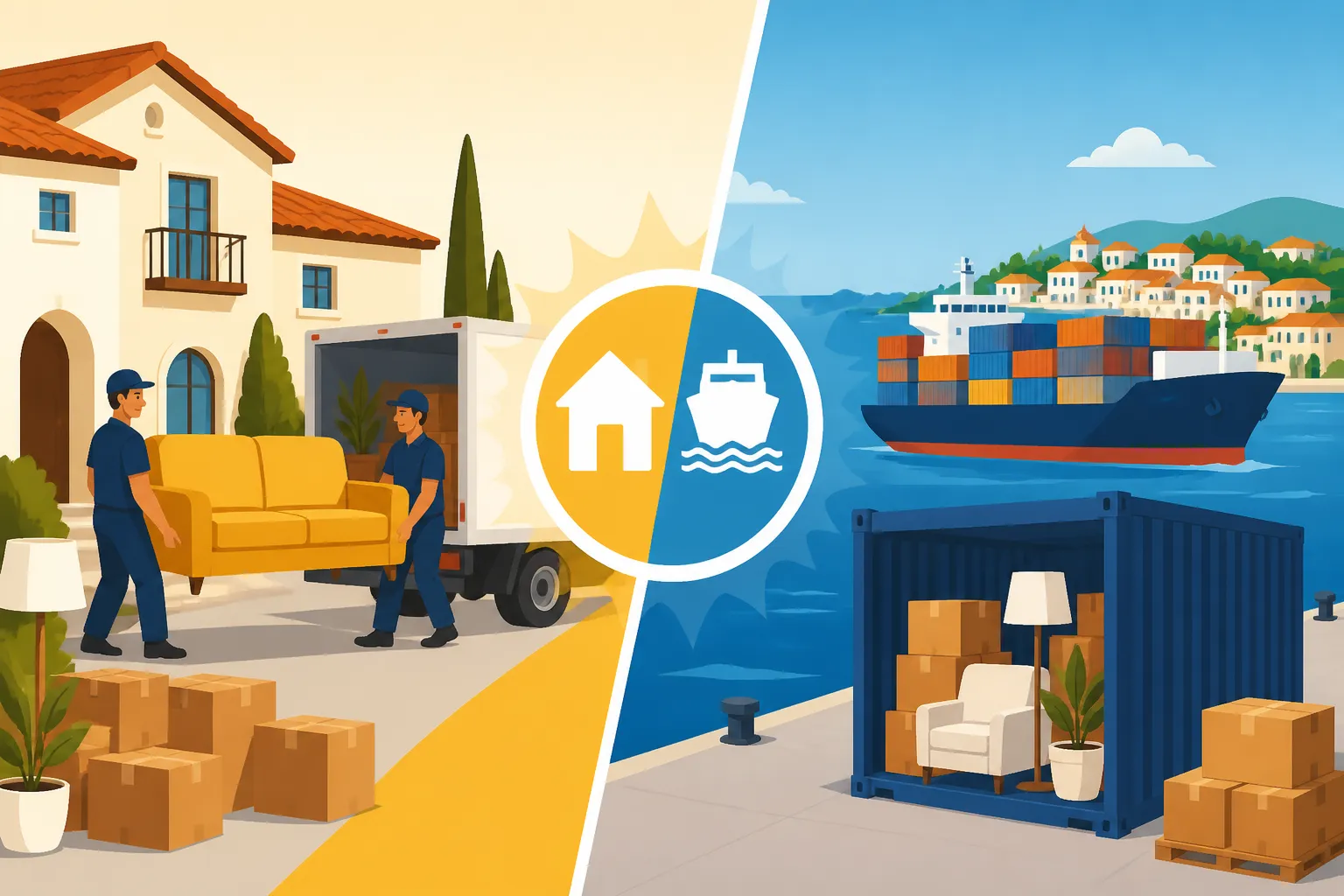
Deciding between door-to-door and port-to-port for your move to Spain really boils down to balancing your priorities: convenience versus cost, and how much personal involvement you're prepared to undertake.
A Head-to-Head Look at Convenience and Stress Levels
The distinction here is stark, and it's where many expats find themselves weighing the pros and cons very carefully, especially when already grappling with a Spain Relocation Checklist: First 30 Days for New Residents.
Door-to-Door Convenience: This option is the gold standard for low-stress international moves. You sign a contract, your goods are picked up, and then they reappear at your new address in Spain. There's a single point of contact for inquiries, and the moving company handles the labyrinthine customs processes, transport logistics, and local deliveries. This means less worrying about unexpected paperwork, language barriers at Spanish customs, or coordinating multiple third-party services. The peace of mind is invaluable, allowing you to focus on Setting Up Your Life in Spain: Utilities, Internet, and Essentials and enjoying your new surroundings.
Port-to-Port Stress: This route demands significant hands-on management. You are essentially the project manager for your own move. This means coordinating initial packing and transport to the departure port, and then, crucially, navigating the complexities of customs clearance at the Spanish port, arranging onward transport to your home, and then unloading. If you don't speak fluent Spanish, or don't have local support, the stress of dealing with port authorities, customs brokers, and local delivery companies can quickly negate any initial cost savings. Delays are more likely if you're not experienced, leading to potential storage fees and added frustration.
Cost Implications: Upfront vs. Hidden Expenses
This is often the primary driver for choosing port-to-port, but it requires a very careful financial assessment.
Door-to-Door Costs: The upfront cost for a door-to-door move is undeniably higher. This is because you are paying for the full, comprehensive service. However, this higher price usually means fewer surprises. All the major costs – packing, freight, customs brokerage, and delivery – are bundled into one quote. While you still might need to pay duties and taxes directly to customs (your mover will advise), the fees for managing the process are included. This predictability is a huge advantage for budgeting, helping you manage your Cost of Living in Spain: Realistic Budgets and Savings Tips.
Port-to-Port Costs: The quote for a port-to-port service will appear significantly lower. This is where the allure lies. However, this is also where many people get caught out by "hidden" or unbudgeted expenses. You'll need to factor in:
- Your own packing costs (materials, time, or hiring local help).
- Transport to the origin port.
- Customs broker fees at the Spanish port. These can range from a few hundred to over a thousand euros, depending on the complexity and value of your goods.
- Import duties and VAT (IVA) on declared goods, which you pay directly.
- Port storage fees if your goods aren't cleared quickly.
- Local transport from the Spanish port to your home.
- Unloading and unpacking costs.
These additional, fragmented costs can quickly add up, often bringing the total expense closer to, or sometimes even exceeding, a door-to-door quote, all while demanding much more of your time and effort. It's a classic example of "penny wise, pound foolish" if not meticulously planned.
Here’s a quick overview to help you visualize the differences:
| Feature | Door-to-Door Move to Spain | Port-to-Port Move to Spain |
|---|---|---|
| Scope | Origin home to destination home | Origin port to destination port |
| Inclusions | Packing, loading, transport, customs (both ends), delivery, unloading, basic unpacking | Freight transport only (from origin port to destination port) |
| Cost (Upfront) | Higher | Lower |
| Hidden Costs | Minimal (duties/taxes may be separate) | High potential (customs brokerage, duties/taxes, port fees, local transport, storage, labor) |
| Convenience | Very high | Low to moderate (requires significant DIY effort) |
| Stress Level | Low | High (especially without local knowledge/support) |
| Ideal For | Busy individuals, families, first-time international movers, large households, those prioritizing ease | Small consignments, experienced movers, very tight budgets, those with local Spanish support, minimal items |
| Time/Effort | Minimal personal involvement | Significant personal time and effort required |
Ideal Scenarios for Each Moving Type
To put it simply:
- Choose Door-to-Door if you're moving your entire household, desire a stress-free experience, want one company to manage everything, and your budget allows for the comprehensive service. This is particularly recommended if you’re not fluent in Spanish or haven’t navigated international customs before. For a hassle-free start to Renting in Spain: Contracts, Deposits, and Tenant Rights, it’s often the best path.
- Consider Port-to-Port if you are moving only a few items (e.g., a small collection of books, personal effects), have a very strict budget, are an experienced international mover, and have excellent Spanish language skills or reliable local assistance in Spain to manage the logistics post-arrival. Be prepared for a significant administrative commitment.
Making the Right Choice for Your Move to Spain with Confidence
Deciding on the right moving service is a critical step in your journey to Spain. It affects not just your wallet, but your sanity too! Don't let the administrative burden overshadow the excitement of your new life abroad.
Assessing Your Needs and Resources
Before you even start looking at quotes, take a moment to honestly assess what you need and what you can realistically handle. Ask yourself:
- What's my budget? Be realistic about what you can afford, but also consider the total cost, including your time and potential stress. What might look cheaper upfront could end up being more expensive in the long run if you hit unexpected snags.
- How much time do I have? Do you have weeks to dedicate to managing customs paperwork, coordinating local transport, and making endless phone calls in Spanish? Or do you need a hands-off approach?
- What are my Spanish language skills like? This is often a deal-breaker for port-to-port moves. Dealing with Spanish customs officials, freight forwarders, and delivery companies requires clear communication. If your Spanish is limited, consider how you’ll bridge that gap. Remember, you might need a Medical Interpreters in Spain: Where to Find Help for healthcare, but you’ll also need clarity for your belongings!
- How many belongings am I moving? A small shipment might be manageable with port-to-port, but a full household is a monumental task to manage yourself upon arrival.
- How comfortable am I with bureaucracy? Spanish bureaucracy can be challenging even for natives. Are you prepared to tackle this in a foreign language right after moving? You might even consider hiring a How to Choose a ‘Gestor’ for Housing Paperwork in Spain for help.
The Power of Comparison: Getting Accurate Quotes
Regardless of whether you lean towards door-to-door or port-to-port, the golden rule of international moving is to get multiple quotes. This isn't just about price comparison; it's about transparency and understanding what each company offers. A detailed quote should break down every service, every fee, and clearly state what is and isn't included.
This is precisely where platforms like Sirelo become an invaluable tool for expats moving to Spain. Sirelo simplifies the process by connecting you with a network of vetted international moving companies, all of whom are experienced in shipping to Spain. You can submit your moving details once and receive multiple, tailored quotes from various providers. This allows you to:
- Compare Apples to Apples: Easily see what each company includes in their door-to-door or port-to-port service.
- Spot Discrepancies: Identify any hidden fees or services that might be missing from a port-to-port quote, prompting you to ask for clarification.
- Read Reviews: Benefit from the experiences of other expats who have used these companies for their moves to Spain, giving you added confidence in your choice.
By using Sirelo, you're not just getting quotes; you're gaining clarity and control over a process that can often feel overwhelming. Make sure that your chosen service provides adequate insurance for your goods. It's often an additional cost, but losing your treasured possessions to an unforeseen incident would be a far greater expense.
Ready to explore your options and get truly transparent quotes for your move to Spain? Take the stress out of finding a reputable mover and start comparing reliable door-to-door and port-to-port services with Sirelo today. It's your first step towards a smoother, more confident relocation journey.
Disclaimer
Please note: The information provided in this article is intended for general guidance only and does not constitute legal or professional advice. Moving regulations, customs duties, and service offerings can change. Always consult with reputable moving companies, customs officials, or legal professionals for the most accurate and up-to-date information pertaining to your specific relocation to Spain.