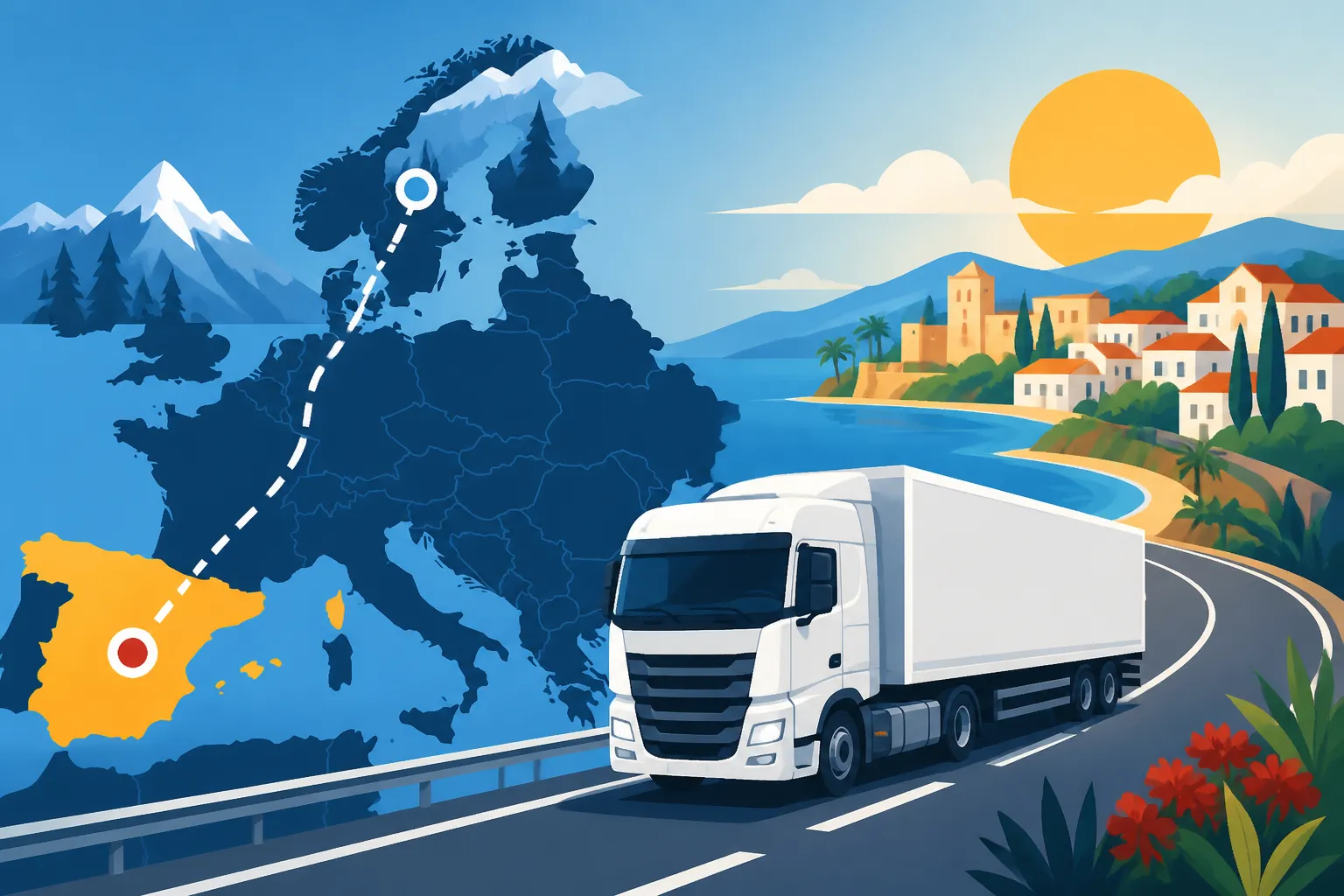
Moving to Spain from Scandinavia: Long-Haul European Road Freight
Ah, the dream of sunny Spain, leaving behind the Nordic chill! But let's be honest, that dream can quickly turn into a logistical headache when you start thinking about moving your entire life, from your cozy Swedish sofa to your essential Finnish sauna accessories, all the way across Europe. The sheer distance from Scandinavia to Spain, coupled with the thought of all your precious belongings traversing thousands of kilometers, can feel utterly overwhelming. This guide is here to untangle the complexities of long-haul European road freight, helping you understand your options and, most importantly, find a reliable way to get your home from 'hygge' to 'hola!'.
Disclosure: This post may contain affiliate links. We may earn a commission at no extra cost to you if you make a purchase through these links. Read full disclosure.
The Nordic-Spanish Odyssey: Understanding the Unique Challenges
Moving from a Scandinavian country like Sweden, Norway, Denmark, Finland, or Iceland to Spain isn't just a change of latitude; it's a monumental undertaking that tests even the most organized among us. It’s a trek that spans diverse landscapes and bureaucratic systems, demanding careful planning and a good dose of patience. You’re not just hopping across a border; you're orchestrating a cross-continental transfer of your entire household.
The Sheer Distance and Geographic Hurdles
When you look at a map, the distance between, say, Stockholm and Málaga, or Oslo and Valencia, is vast. We’re talking thousands of kilometers that involve multiple border crossings within the Schengen Area, traversing different climate zones, and potentially navigating mountain ranges or dense urban traffic. This isn't a quick drive in a rental van; it requires professional logistics. While there aren't traditional customs borders between EU/EEA countries for personal goods, the sheer mileage means a prolonged journey for your items. This extended transit time brings its own set of concerns, from potential wear and tear on your belongings to the need for robust insurance coverage.
Imagine your carefully packed boxes, full of memories and necessities, making their way through the intricate highway networks of Germany, France, and then across the width of Spain. It’s a journey that typically takes anywhere from 5 to 15 days, sometimes more, depending on the specific origin and destination, and whether you've chosen a dedicated or shared freight service. This isn't just about speed; it's about the consistent and careful handling of your possessions over a considerable period. Knowing the route, understanding the estimated transit times, and accepting the inevitable variables (like traffic or weather) are crucial for managing your expectations and stress levels during this significant relocation.
Expectation vs. Reality of European Logistics
Coming from Scandinavia, where efficiency and punctuality are often ingrained in daily life, you might expect the moving process to be a seamless, perfectly timed operation. The reality of long-haul European logistics, however, can often be a bit more… fluid. While professional movers strive for precision, the variables involved across such a vast distance mean delays can, and sometimes do, happen. It's not always a reflection of incompetence, but simply the nature of managing complex transport across multiple countries. Road conditions, unforeseen administrative checks, driver rest stops, and even vehicle maintenance can all contribute to adjustments in the schedule.
One of the biggest eye-openers for many expats is the cultural approach to time and problem-solving. In Spain, while certainly professional, there can be a more relaxed attitude to strict timelines compared to what you might be accustomed to in Sweden or Denmark. This isn't to say things don't get done, but they might operate on a slightly different clock. Being prepared for potential flexibility in delivery windows, and having a buffer period in your own schedule, can save you a lot of anxiety. It's also important to remember that communication styles can vary; what might seem like a direct request in one culture could be perceived differently in another. When coordinating with moving companies, clear and consistent communication is key, but so is a flexible mindset.
Cultural Nuances in the Moving Process
Beyond the logistics, there are subtle cultural differences that can impact your moving experience. In Scandinavia, detailed planning and clear instructions are paramount. In Spain, while planning is still important, there's often a greater emphasis on personal interaction and finding solutions on the fly. This can manifest in everything from how you communicate with your moving company's local partners to the actual delivery day. For instance, in some Spanish neighborhoods, particularly older city centers, access for large moving trucks can be incredibly challenging. Narrow streets, pedestrian zones, and limited parking require specific permits or smaller delivery vehicles for the "last mile." This often means a second transfer of your goods onto smaller vans for delivery to your actual doorstep.
Moreover, understanding the local work culture, including typical working hours and national holidays, is vital. Planning your move during a Spanish national holiday or a major local fiesta could mean unexpected delays or higher costs due to limited availability of staff or road restrictions. It's wise to consult a Spain relocation checklist well in advance, and factor in these local rhythms when setting your moving dates. A good moving partner, like those found through Sirelo, will be aware of these local specifics and can help you navigate them. They can advise on the best timing, potential access issues for your new address, and any specific permits that might be required for parking or street closure during delivery, ensuring a smoother transition for your precious belongings.
Deciphering Long-Haul European Road Freight Options
When you're moving your life across a continent, choosing the right road freight option is paramount. It’s not a one-size-fits-all situation, and what might be cost-effective for one person could be a logistical nightmare for another. Understanding the different services available is the first step in making an informed decision that suits your budget, timeline, and the volume of your belongings.
Dedicated vs. Groupage/Shared Load Services
The primary decision you'll face is between a dedicated load and a groupage (or shared load) service.
-
Dedicated Load: This means your belongings are the only items in the truck. The truck travels directly from your Scandinavian home to your new Spanish address.
- Pros: This is the fastest option, as there are no diversions to pick up or drop off other customers' goods. You have more control over the schedule, and transit times are generally more predictable. There's also less handling of your items, which can reduce the risk of damage. It’s truly a door-to-door, express service for your entire household.
- Cons: Naturally, this is the most expensive option. You are paying for the entire truck's journey, regardless of whether you fill it completely. It's usually only cost-effective if you have a very large household or an urgent need for delivery.
- Real-life scenario: Imagine you're a family of five moving into a large villa near Marbella, bringing a substantial amount of furniture, children's toys, and personal effects. You might opt for a dedicated service to ensure everything arrives together and as quickly as possible, justifying the higher cost for the convenience and speed.
-
Groupage/Shared Load: This service involves consolidating your belongings with those of other customers heading in the same general direction. Your items will be loaded onto a truck alongside other shipments, making several stops along the route.
- Pros: This is significantly more economical. You only pay for the space your items occupy in the truck, as the cost is shared among multiple clients. It's an excellent choice if you're on a tighter budget or have a smaller volume of goods (e.g., a one-bedroom apartment's worth of furniture).
- Cons: The main trade-off is time and flexibility. Transit times are longer and less predictable because the truck has to follow a multi-stop itinerary. There's also more handling of your items as they are loaded and unloaded at various points, which increases the potential for minor damages if not packed properly.
- Real-life scenario: If you're a solo expat moving to Barcelona with a few essential pieces of furniture and many boxes of personal items, a groupage service offers a much more budget-friendly way to move your life without breaking the bank. You’ll need to be patient, but the savings are often worth it.
Here’s a quick overview to help you weigh your options:
| Feature | Dedicated Load (Full Truck Load – FTL) | Groupage Load (Less Than Truck Load – LTL) |
|---|---|---|
| Cost | High | Low to Moderate |
| Speed | Fastest, direct | Slower, multiple stops |
| Flexibility | High, predictable schedule | Low, less predictable schedule |
| Volume | Best for large households | Best for smaller shipments |
| Handling | Minimal | More frequent |
| Risk of Damage | Lower | Slightly higher due to more handling |
No matter which option you lean towards, finding a reputable international moving company is key. Platforms like Sirelo specialize in connecting you with movers offering both dedicated and groupage services, allowing you to compare quotes and find the best fit for your move to Spain.
Costs, Transit Times, and the Value of Insurance
The financial aspect of moving from Scandinavia to Spain can be daunting. Costs are influenced by the volume of your goods, the distance, the type of service (dedicated vs. groupage), the time of year, and any additional services like packing, unpacking, or storage. As a rough guide, a move for a 2-bedroom apartment from, say, Copenhagen to Madrid could range from €2,500 to €6,000 for groupage, and significantly more for a dedicated service. These are just estimates, and getting precise quotes through a service like Sirelo is always the best approach.
Transit times are also a critical factor. For a groupage service, expect anywhere from 7 to 20 days. A dedicated truck might get there in 5-10 days. These are working days, so factor in weekends and public holidays. It’s crucial to understand these timelines, especially if you’re trying to coordinate the arrival of your belongings with your own travel and the readiness of your new home. For a seamless transition, remember to organize your Spain Relocation Checklist: First 30 Days for New Residents and plan your stay in interim accommodation if your items won't arrive immediately.
Finally, let's talk about insurance. This is non-negotiable for a long-haul move. Standard carrier liability might be minimal, covering only a fraction of your items' value. You absolutely need comprehensive transit insurance that covers loss or damage during the entire journey. This usually involves declaring the value of your goods, which can add to the cost but provides invaluable peace of mind. Discuss insurance options thoroughly with any potential mover. A reputable company found through Sirelo will always offer clear insurance policies and help you understand your coverage. Don’t skimp here; that antique Norwegian dresser isn't going to replace itself if something goes wrong.
The Role of Professional Moving Platforms like Sirelo
Navigating the multitude of international moving companies can feel like trying to find a needle in a haystack – especially when you're dealing with a cross-continental move from Scandinavia to Spain. This is where professional moving platforms become indispensable. They act as a centralized hub, simplifying what would otherwise be an arduous, time-consuming research process.
Sirelo is a prime example of such a platform, designed specifically to take the stress out of finding reliable movers. Instead of spending countless hours researching individual companies, vetting their credentials, and requesting quotes one by one, Sirelo allows you to submit your moving details once. With this information, they can then provide you with multiple, obligation-free quotes from pre-vetted, reputable international moving companies that specialize in the Scandinavia-to-Spain route. This not only saves you a tremendous amount of time but also provides you with a clear comparison of services and pricing, ensuring you get the best value without compromising on quality. Their focus on user experience helps you make an informed decision easily.
Furthermore, these platforms often provide valuable resources and guides, helping you understand everything from How to Ship Personal Belongings to Spain: Customs and Timing to tips on packing for an international move. They empower you, the expat, with the knowledge and connections needed to confidently manage your move, turning a potentially overwhelming task into a manageable project. When you’re facing such a significant transition, having a trusted resource like Sirelo to streamline the logistics is truly a game-changer.
The Paper Trail and Practicalities of Your Spanish Arrival
Once your precious cargo is on its way, the next stage of your journey begins: the arrival in Spain itself. This involves navigating local bureaucracy and ensuring your new Spanish home is ready to receive your belongings. While the lack of traditional customs duties between EU/EEA countries simplifies things somewhat, there's still a specific set of practicalities to consider, especially when transitioning from the highly organized systems of Scandinavia.
Documentation: Beyond the Box Labeling
Even within the EU/EEA, moving your household goods requires more than just slapping a label on a box. You'll need to prepare a comprehensive inventory list of all items being shipped. This list should be detailed, ideally in both English and Spanish, and include quantities and a brief description of each item (e.g., "1 box of kitchenware," "1 disassembled bookshelf"). This inventory serves multiple purposes: it's vital for your own tracking, crucial for insurance claims should anything go awry, and may be requested by authorities if there's any query about your shipment.
While you won't typically face customs duties for personal effects when moving from another EU/EEA country, it's essential that your shipment is clearly categorized as "personal belongings" or "household goods" for relocation. This distinction prevents it from being treated as commercial cargo, which would incur different taxes and procedures. Ensure that your chosen moving company, especially those recommended by Sirelo, understands this and prepares the necessary consignment notes accurately. You might also need to provide proof of your residency in Spain, such as your NIE number or a copy of your TIE card, to demonstrate that you are indeed relocating. This is part of the broader administrative process of getting your essential IDs and registrations in Spain sorted. Having all your personal identification and residency documents in order will be a huge time-saver.
Delivery Access and On-the-Ground Logistics in Spain
Spain’s urban landscapes, particularly the older city centers like those in Seville, Valencia, or even parts of Madrid and Barcelona, can present unique challenges for large delivery trucks. Unlike the often wider, more modern infrastructure you might be used to in Scandinavian cities, Spanish streets can be incredibly narrow, pedestrianized, or have strict parking regulations. It's not uncommon for large international removal trucks to be unable to access your exact street.
In such cases, your moving company will likely arrange for a smaller local vehicle to complete the "last mile" delivery. This involves transferring your goods from the larger truck to a smaller van, then delivering them to your door. This process, while necessary, can add a day or two to the final delivery time and sometimes an additional cost. It's crucial to discuss potential access issues with your moving company well in advance. Provide them with your exact address, photos of the street, and any known parking restrictions. They can then advise on the best approach, whether it's obtaining temporary parking permits from the local Ayuntamiento (city council) or planning for a smaller transfer vehicle. For apartments, also consider lift access and stairwell dimensions, especially for bulky furniture. A reliable mover from the Sirelo network will often conduct a pre-move survey (even virtual) to identify these potential hurdles.
Planning for the First Days Without Your Belongings
One of the most overlooked aspects of an international move is the period between your arrival and the delivery of your household goods. Even with the most efficient road freight, there will be a gap of several days, if not longer, where you’ll be in Spain without your comforts. This is where strategic packing of "essentials" comes into play. You need a separate bag, or several, that travels with you, containing everything you'll need for those first few days or even weeks.
Think about necessities: clothes, toiletries, essential medications, important documents (passports, residency papers, financial records), chargers for all your devices, a basic first-aid kit, and perhaps some comfort items like a favorite book or blanket. If you're moving with children, their comfort items and a selection of toys are crucial. Don't forget adaptors for Spanish plugs! This is an important part of your Financial Checklist for Moving to Spain: First 90 Days too, as you'll need funds for immediate expenses.
Planning for interim accommodation is also key. Whether you're staying in a hotel, an Airbnb, or with friends, ensure it can comfortably house you during this waiting period. Having a temporary base allows you to start the administrative tasks of Setting Up Your Life in Spain: Utilities, Internet, and Essentials and get your NIE sorted without the added stress of living out of a suitcase for an extended time. Embrace this period as an adventure; it's a chance to explore your new neighborhood, try local eateries, and start getting acquainted with Spanish Customs, Etiquette, and Social Life before your home arrives to ground you.
Choosing Your Trusted Partner for the Journey
A move of this magnitude, spanning thousands of kilometers across Europe, is not something you want to leave to chance or an inexperienced provider. Your choice of moving company will dictate much of your experience, from the initial packing in Scandinavia to the final delivery at your Spanish doorstep. This is where the power of a dedicated platform can truly shine.
Why Reputation and Experience Matter for Such a Move
When you're moving your entire life from a Scandinavian country to Spain, you're not just hiring someone to transport boxes; you're entrusting them with your memories, your valuables, and a significant portion of your financial investment. This is why reputation and extensive experience in international European road freight are absolutely critical. A company that understands the nuances of cross-continental logistics, from route planning and driver regulations to local Spanish delivery challenges, will be invaluable.
An experienced mover knows how to properly pack fragile items for a long journey, how to secure a load for thousands of kilometers of road vibration, and how to navigate potential roadblocks (both literal and bureaucratic). They'll have a network of trusted partners at both ends of the journey, ensuring seamless transitions. Conversely, an inexperienced or unreliable company can lead to endless headaches: lost items, damaged goods, unexpected delays, hidden fees, and a colossal amount of stress. It can turn your exciting new chapter into a nightmare. Therefore, always seek out companies with verifiable track records and positive reviews for similar long-haul moves. Platforms like Sirelo play a crucial role here by pre-vetting movers and making their reviews and ratings transparent, giving you confidence in your choice.
How Sirelo Simplifies the Quote and Comparison Process
The traditional way of finding international movers involves calling multiple companies, explaining your specific needs each time, waiting for individual quotes, and then trying to compare apples to oranges. It's time-consuming, frustrating, and often leaves you unsure if you've really found the best deal or the most reliable service.
Sirelo revolutionizes this process by creating a streamlined, user-friendly platform. You simply input your moving details once – your current location in Scandinavia, your new address in Spain, the estimated volume of your belongings, and any special requirements (like piano transport or packing services). With this comprehensive information, Sirelo then acts as a conduit, connecting you with multiple professional moving companies that are equipped for your specific long-haul journey. These aren't just any companies; they are vetted partners known for their reliability in international moves.
The real magic happens when you receive multiple, detailed quotes directly through the platform. This allows you to easily compare not just the prices, but also the services included, transit times, insurance options, and even customer reviews for each company. This transparent comparison process empowers you to make an informed decision without the guesswork, ensuring you find a mover that aligns with your budget and expectations for your move to Spain. It's an essential tool for anyone facing the complexities of relocating across borders, providing clarity and efficiency.
Maximizing Value and Minimizing Stress with the Right Service
Choosing the right moving service isn’t just about the lowest price; it’s about maximizing value for your investment and minimizing the inevitable stress that comes with such a significant life change. A slightly higher price for a truly reputable and experienced mover, particularly for a long-haul journey from Scandinavia to Spain, can save you countless hours of worry and potential financial losses down the line.
When comparing quotes from Sirelo's network, look beyond the bottom line. Consider what's included:
- Packing and Unpacking Services: Are these offered? Do you want them? While a DIY pack can save money, professional packers are experts at securing items for long transit.
- Insurance Coverage: What are the specifics? What percentage of value is covered, and what are the exclusions?
- Disassembly and Reassembly: Especially for larger Scandinavian furniture, is this part of the service?
- Storage Options: Do you need temporary storage at either end of the journey?
- Customer Support and Communication: How responsive and clear is the company's communication? This is vital for peace of mind during transit.
- Accreditation and Affiliations: Is the company a member of any international moving associations? This often indicates adherence to industry standards.
By thoroughly evaluating these aspects, you can select a partner that offers robust support, clear communication, and a comprehensive service package that ensures your belongings arrive safely and efficiently. Whether you're moving a small apartment or a grand family home, leveraging a platform like Sirelo ensures that you're matched with a company capable of handling the unique demands of this long-distance European transition. This ultimately allows you to focus less on the logistics and more on settling into your exciting new life in Spain, whether you're looking to Renting in Spain: Contracts, Deposits, and Tenant Rights or even Buying Property in Spain as a Foreigner: Process and Costs.
Disclaimer
Please remember that while I strive to provide accurate and up-to-date information, circumstances and regulations can change. This guide offers general advice for moving to Spain from Scandinavia via road freight. Always consult with professional moving companies, relevant government agencies in both your departure country and Spain, and consider seeking legal or financial advice for your specific situation before making any definitive decisions.