What Are the Most Useful Spanish Phrases for Tourists?
Oh, the joy and terror of arriving in a new country where you don't speak the language! I remember stepping off the plane in Spain years ago, armed with a phrasebook and a whole lot of confidence, only to realize that real-life conversations move at lightning speed, and everyone uses idioms I'd never heard. It's completely normal to feel a bit overwhelmed by the language barrier, but trust me, even a handful of key Spanish phrases can transform your experience from baffling to brilliant. This guide is here to arm you with the most useful Spanish phrases for tourists, helping you navigate everything from ordering tapas to asking for directions with a little more confidence and a lot less panic.
Disclosure: This post may contain affiliate links. We may earn a commission at no extra cost to you if you make a purchase through these links. Read full disclosure.
Navigating Basic Greetings and Social Niceties
One of the easiest ways to endear yourself to locals in Spain is by simply attempting to speak their language, even if it’s just a few words. Spaniards, in my experience, are incredibly patient and appreciative of the effort. Don't be shy; your attempts will likely be met with a warm smile and perhaps even an offer to switch to English if they can.
Starting a Conversation with "Hola" and Beyond
The absolute cornerstone of Spanish interaction is "Hola." It's your universal greeting, suitable for any time of day, any situation. Walking into a small shop? "Hola." Bumping into someone on the street? "Hola." It’s simple, effective, and always appropriate. But let's add a bit more flavor to your greetings.
Beyond "Hola," you have your time-specific greetings. "Buenos días" (good morning) is used generally until lunchtime, which in Spain can often stretch past 2 PM. After lunch, you switch to "Buenas tardes" (good afternoon/evening), which carries you through until nightfall. Once it's truly dark or late in the evening, you can use "Buenas noches" (good night). These aren't just for saying goodbye; they're also common hellos. If you’re ever unsure, "Hola" is your safe bet. When you enter a small bar or shop, a quick "Hola" or "Buenos días/tardes" to the staff is a standard courtesy that makes a world of difference.
Politeness Goes a Long Way: Please, Thank You, and Excuse Me
These are the non-negotiables, the glue that holds polite society together, no matter where you are. Mastering them will make your interactions smoother and more pleasant for everyone involved.
"Por favor" (please) and "Gracias" (thank you) are absolute must-knows. Use them constantly. Asking for the menu? "La carta, por favor." Receiving your coffee? "Gracias." When someone thanks you, the common response is "De nada" (you're welcome), which literally translates to "of nothing." Then there's "Perdón" and "Con permiso" for apologies and asking to pass. "Perdón" is used for a minor apology, like if you accidentally bump into someone or need to get someone's attention. Think of it like "excuse me" or "pardon me." If you need to physically pass someone in a crowded space, "Con permiso" (with permission) is the more appropriate phrase. For a more serious apology, such as if you genuinely messed something up, you'd say "Lo siento" (I'm sorry). Don't overuse "Lo siento" for minor things; it carries a bit more weight.
Essential Phrases for Eating Out and Ordering Food
Dining in Spain is a fundamental cultural experience, whether you're grabbing quick tapas or settling in for a long lunch. Being able to communicate your needs at a restaurant will make your culinary adventures far more enjoyable and less stressful.
Decoding the Menu and Ordering Your Meal
When you first sit down, you'll likely want the menu. A simple "La carta, por favor" will do the trick. If you're looking for the daily fixed-price menu, which is often an incredible value, you can ask, "¿Tienen el menú del día?" This is especially useful for lunch, as the Menú del Día in Spain: How It Works often includes several courses, a drink, and dessert for a set price.
Once you’ve looked over the menu, it’s time to order. "Quiero…" (I want…) is direct and perfectly acceptable, though "Me gustaría…" (I would like…) is slightly more polite, especially when you’re still getting used to the language. If you're unsure what a dish is, just point and ask, "¿Qué es esto?" (What is this?). If you have specific dietary concerns, these phrases are critical: "Soy alérgico/a a…" (I am allergic to…) followed by the ingredient, or simply "Sin [ingrediente]" (without [ingredient]). For example, "Soy alérgico al cacahuete" (I am allergic to peanuts) or "Sin lactosa" (without lactose).
Handling the Bill and Dietary Needs
When you're finished, you'll want to ask for the bill: "La cuenta, por favor." It's straightforward. And in today's digital world, you'll probably want to know if you can pay by card: "¿Se puede pagar con tarjeta?" Cash is still very much a part of Spanish life, especially in smaller establishments, so it's always good to have some euros on hand.
Speaking of dietary needs, Spain has become much more accommodating, but knowing the phrases yourself is always best. "Soy vegetariano/a" (I am vegetarian), "Soy vegano/a" (I am vegan), and "Soy celíaco/a" (I am celiac/gluten-intolerant) are crucial. Remember that "celíaco/a" is generally understood better than "sin gluten" alone in many places, especially outside major cities. It's also helpful to note that in Spain, tipping isn't as mandatory or high-percentage as in some other countries. Generally, a small amount or rounding up is appreciated for good service, but it's not expected to be 15-20% of your bill. You can learn more about Tipping in Spain: When, Where, and How Much.
Getting Around and Asking for Directions
Spain is a country meant for exploring, whether you're navigating bustling city streets or charming rural villages. Knowing how to ask for directions and understand responses is vital for an independent traveler.
Basic Navigation Queries
When you’re lost, or simply trying to find your next destination, these phrases are your lifeline. "¿Dónde está…?" (Where is…?) is your go-to. Follow it with the place you're looking for, such as "la estación de tren" (the train station), "la estación de autobuses" (the bus station), or "el centro" (the city center). For example, "¿Dónde está la Plaza Mayor?" (Where is the Plaza Mayor?). If you need to understand how to get somewhere, "¿Cómo llego a…?" (How do I get to…?) is perfect.
When purchasing tickets for public transport or tours, you'll often need to know the cost. "¿Cuánto cuesta?" (How much does it cost?) is a simple, effective question. For train or bus travel, you might say, "Un billete a [ciudad], por favor" (A ticket to [city], please). Platforms like Omio make booking intercity travel incredibly easy, but knowing the basic phrases for local transport or if you need to ask a question at the station can save you a lot of hassle. Getting a bus pass or a metro card in big cities like Madrid or Barcelona can simplify daily commutes significantly, and understanding Public Transport in Spain: Cards, Discounts, and Etiquette is a good start.
Understanding Directions and Transport
Spaniards are generally very helpful if you ask for directions, but you need to understand their replies. The most common directional words are "a la derecha" (to the right), "a la izquierda" (to the left), and "todo recto" (straight ahead). They might also tell you to go "aquí" (here) or "allí" (there). It can be confusing if you don't recognize them quickly!
Sometimes, they might give you a landmark, like "al lado de la iglesia" (next to the church) or "delante del ayuntamiento" (in front of the city hall). It helps to have a map handy, whether digital or physical, so you can point if words fail you. While many tour guides on platforms like GetYourGuide will speak excellent English, being able to interact with a bus driver or a local for a quick question makes a world of difference. Navigating unfamiliar streets can be daunting, but with these phrases, you’ll feel more confident asking for How to Ask for Directions in Spanish (Simple Phrases).
Shopping, Services, and Emergencies
Daily life, even as a tourist, involves transactions and sometimes, the unexpected. Knowing a few phrases for shopping, handling minor issues, and even emergencies can really take the edge off.
Shopping Transactions
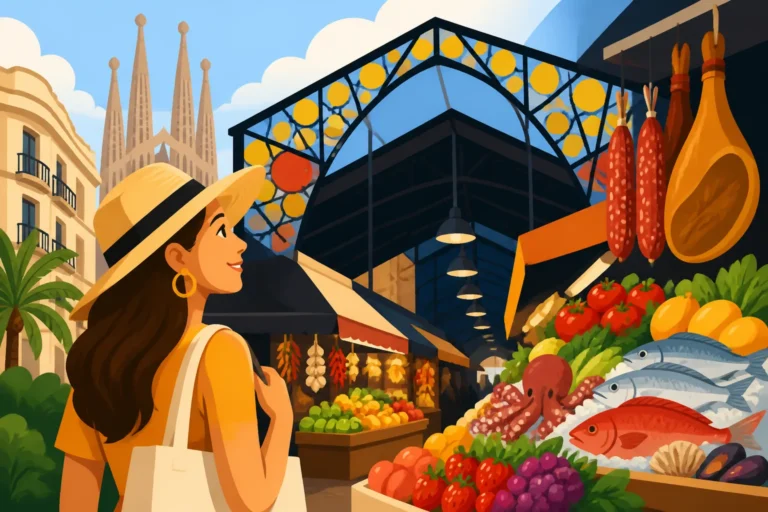
Whether you're browsing through local markets, which you can explore more about in Spanish Markets and Food Halls: Where to Eat and Shop, or popping into a souvenir shop, these phrases will come in handy. Again, "¿Cuánto cuesta?" is your friend for pricing. If you see something you like but want to check for other options, ask, "¿Tienes esto en otra talla/color?" (Do you have this in another size/color?). Sometimes, you just want to look without feeling pressured; for that, "Solo estoy mirando" (I'm just looking) works perfectly. When you've made up your mind, "Quiero comprar esto" (I want to buy this) gets the message across. Finally, if you're trying to figure out opening hours, "¿A qué hora cierran/abren?" (What time do you close/open?) is a good one to know.
Dealing with Unexpected Situations
Even with the best planning, things can go awry. Knowing how to call for help is crucial. "Necesito ayuda" (I need help) is a general plea. If it's more urgent, "¡Auxilio!" (Help!) is the direct cry. If you're struggling with the language, which is common, you can ask "¿Habla inglés?" (Do you speak English?). Don't be embarrassed if you don't understand; just say "No entiendo" (I don't understand).
The most important number to remember in Spain for any emergency is 112. It’s the universal emergency number, and operators can usually connect you to English-speaking assistance. For non-life-threatening medical needs, head to a "farmacia" (pharmacy); they are incredibly knowledgeable and can often provide advice and over-the-counter remedies. Learn more about Pharmacies in Spain: Prescriptions, Over-the-Counter Meds, and Practical Tips. If you’re out and about and suddenly need a restroom, "¿Dónde está el baño?" (Where is the bathroom?) is a fundamental question that can save you a lot of discomfort. For serious emergencies, remember Emergency Numbers in Spain: 112 and When to Use It.
Common Misunderstandings and Cultural Nuances
Understanding a few phrases is one thing, but understanding the culture behind the language is another. Spain has its own rhythm, and being aware of it can prevent a lot of minor frustrations.
Time, Pace, and Personal Space
One common cultural adjustment for many expats and tourists is the Spanish concept of time. Things often run a bit later, and the pace of life can feel slower. "Mañana" might literally mean tomorrow, but it can also mean "later," "sometime soon," or even "not today." "Ahora" (now) can sometimes mean "in a bit." It's part of the relaxed Mediterranean lifestyle that many of us come to Spain to enjoy, but it can certainly take some getting used to when you have appointments or plans!
Personal space is also a bit different. Spaniards are generally more tactile and stand closer when talking. And don't be surprised by the "dos besos" (two kisses) greeting – a peck on each cheek – which is common in social settings, even among new acquaintances, especially with women or mixed-gender groups. It's a sign of warmth and welcome. For a deeper dive into this, check out Spanish Social Customs: Greetings, Kisses, and Personal Space. Another thing to note is the general noise level; Spanish conversations, especially in bars and restaurants, can be lively and loud – it's part of the atmosphere!
The Importance of Trying, Even if Imperfect
I can't stress this enough: make the effort. Even if your Spanish is broken, even if you stumble over words, even if you have to resort to charades, locals will appreciate your attempt. It shows respect for their culture and makes interactions more genuine. Many people in tourist areas, especially younger generations or those in the service industry, do speak English, but starting with a Spanish greeting and a polite "Perdón, ¿habla inglés?" will often get you a much warmer response.
The frustration of not being understood or not understanding can be real, I’ve been there countless times. But every phrase you learn, every successful interaction, builds your confidence. Platforms like Booking.com, for example, offer plenty of accommodations where staff are multilingual, which can be a comfort, but stepping out and using those few phrases in local cafés or shops enriches your travel experience immensely. Don't let the fear of making a mistake stop you; embrace the learning curve, and you'll find your trip to Spain all the more rewarding.
To help you get started, here's a handy table summarizing some of these essential phrases:
| English Phrase | Spanish Translation | When to Use It |
|---|---|---|
| Hello / Hi | Hola | Universal greeting. |
| Good morning | Buenos días | Until early afternoon. |
| Good afternoon/evening | Buenas tardes | From afternoon until nightfall. |
| Good night | Buenas noches | Late evening/night. |
| Please | Por favor | When requesting something. |
| Thank you | Gracias | When receiving something or being helped. |
| You're welcome | De nada | In response to "Gracias." |
| Excuse me (to get attention/apology) | Perdón | Minor apology, getting someone's attention. |
| Excuse me (to pass through) | Con permiso | When moving through a crowded space. |
| I'm sorry | Lo siento | For more serious apologies. |
| The menu, please | La carta, por favor | To ask for the menu. |
| The bill, please | La cuenta, por favor | To ask for the check. |
| I would like… / I want… | Me gustaría… / Quiero… | To order food or drink. |
| What is this? | ¿Qué es esto? | To ask about an item. |
| Do you have…? | ¿Tienes…? / ¿Tiene…? (formal) | To inquire about availability. |
| I am allergic to… | Soy alérgico/a a… | To state an allergy. |
| Without [ingredient] | Sin [ingrediente] | To request a dish without a specific ingredient. |
| Can I pay by card? | ¿Se puede pagar con tarjeta? | To ask about payment methods. |
| Where is…? | ¿Dónde está…? | To ask for directions to a place. |
| How do I get to…? | ¿Cómo llego a…? | To ask for directions. |
| How much does it cost? | ¿Cuánto cuesta? | To ask for the price. |
| Right | A la derecha | Direction. |
| Left | A la izquierda | Direction. |
| Straight ahead | Todo recto | Direction. |
| Here | Aquí | Location. |
| There | Allí | Location. |
| I need help | Necesito ayuda | When in need of assistance. |
| Help! | ¡Auxilio! | Urgent call for help. |
| Do you speak English? | ¿Habla inglés? | To find an English speaker. |
| I don't understand | No entiendo | When you don't comprehend. |
| Where is the bathroom? | ¿Dónde está el baño? | To locate a restroom. |
| I'm just looking | Solo estoy mirando | When browsing in a shop. |
| I want to buy this | Quiero comprar esto | When ready to purchase. |
| What time do you close/open? | ¿A qué hora cierran/abren? | To ask about opening/closing hours. |
Disclaimer
Please remember that while this guide provides useful information, local laws, regulations, and customs in Spain can change. It's always a good idea to cross-reference information with official sources or local authorities if you have specific concerns, especially regarding legal or health matters. Travel advice is subject to personal interpretation and changing circumstances.