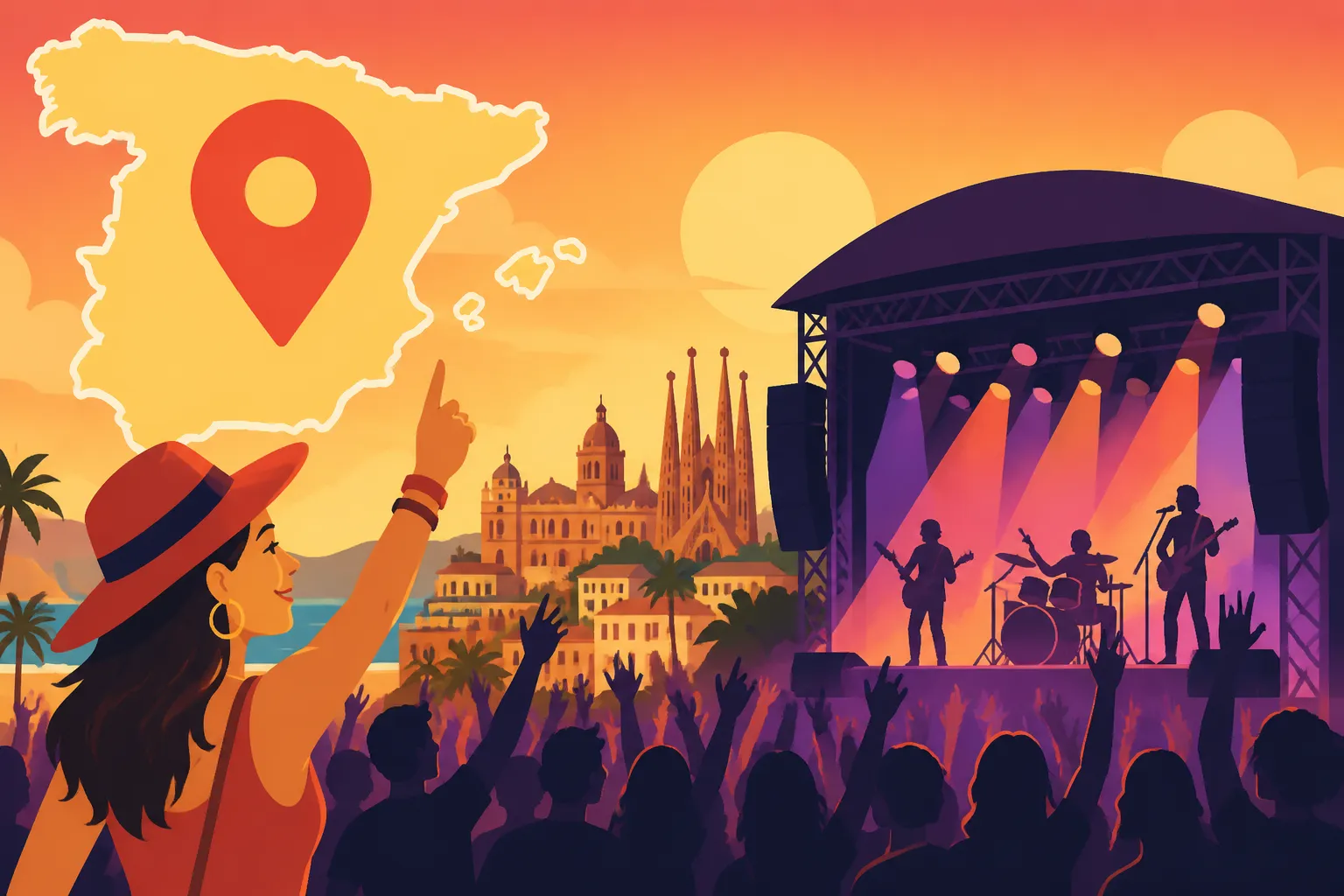
Live Music and Concerts in Spain: How to Find Events
Finding out about a local gig only to realize it sold out three weeks ago because you were looking at the wrong websites is a rite of passage for many new arrivals. I remember spending my first month in Valencia scrolling through generic global event sites, completely oblivious to the fact that the best indie shows were being advertised on posters in neighborhood bakeries and specific Spanish apps. This guide solves the mystery of the Spanish music scene, showing you exactly where to look, how to navigate the late-night schedules, and how to secure your spot at the best live music and concerts in Spain.
Disclosure: This post may contain affiliate links. We may earn a commission at no extra cost to you if you make a purchase through these links. Read full disclosure.
Understanding the Spanish Live Music Rhythm
The most important thing to grasp about live music in Spain is the timeline. Unlike in London or New York, where a headliner might wrap up by 11:00 PM, a Spanish concert often doesn't even see the "teloneros" (opening acts) take the stage until 9:30 PM or 10:00 PM. If a ticket says "puertas" (doors) at 8:00 PM, do not expect the main event for several hours. This is a fundamental part of Nightlife in Spain: Cities That Stay Up Late, where music is viewed as the centerpiece of a long evening that usually begins with late tapas and ends with a sunrise walk home.
The cultural diversity of the country also dictates what kind of music you’ll find. While Madrid and Barcelona are the heavy hitters for international stadium tours, cities like Seville and Granada offer a deep, soulful immersion into authentic flamenco. If you are looking for something more contemporary, the northern coast, particularly the Basque Country, has a thriving rock and "autor" (singer-songwriter) scene. Knowing this helps you narrow down your search; you wouldn't look for a massive electronic rave in a historic pueblo, just as you’d avoid the tourist-trap flamenco shows in the center of Madrid if you want the real deal.
Another nuance is the concept of the "Sala." In Spain, a sala is more than just a room; it is a licensed music venue that often transforms from a concert hall into a nightclub after the band finishes. This means your concert ticket often grants you free entry to stay for the DJ set afterward. This "two-for-one" culture is prevalent in venues like Razzmatazz in Barcelona or Joy Eslava in Madrid. Understanding this transition is key to planning your night and managing your energy levels.
Top Digital Platforms for Finding Concerts
In the digital age, you might think Google is your best friend, but in Spain, the most reliable information often hides in specialized apps. One of the most essential tools for any expat or long-term traveler is Wegow. This platform is arguably the king of the Spanish indie and mid-tier music scene. It allows you to follow your favorite artists and sends you notifications the second a Spanish tour date is announced. It also has a social feature where you can see who else is going, which is fantastic for those trying to Make Friends in Spain: Clubs, Meetups, and Language Exchanges.
DICE is another heavy hitter, especially for electronic, experimental, and trendy indie acts. Its mobile-only ticketing system is designed to prevent scalping, which is a major plus. For more mainstream or massive international acts—think Coldplay or Beyoncé—you will inevitably find yourself on Ticketmaster España or El Corte Inglés Entradas. A pro-tip from my early days: always create an account on these sites before a big sale starts. Spanish payment gateways can be finicky with foreign cards, and having your details pre-saved can be the difference between getting a ticket and seeing the "sold out" screen.
Don’t overlook local city-specific cultural agendas. Most municipal governments (Ayuntamientos) maintain a website or a physical magazine called an "Agenda Cultural." In Madrid, "Guía del Ocio" has been the gold standard for decades, though it’s now largely digital. These local guides are where you’ll find the smaller, more intimate gigs in jazz cafes or neighborhood cultural centers that don't have the marketing budget for the big apps. To get to these venues across the city, you’ll want to familiarize yourself with Getting Around Spanish Cities: Metro, Bus, Tram, and Bikes.
Navigating the Music Festival Circuit
Spain is arguably the festival capital of Europe. From the massive urban sprawls of Primavera Sound in Barcelona to the sun-soaked shores of FIB in Benicàssim, the "festivalero" lifestyle is a significant part of the Spanish summer. If you’re planning to attend one of these, you need to think about logistics months in advance. Booking.com is usually the go-to for finding nearby apartments or hotels, but be warned: prices in cities like Bilbao during the BBK Live festival can triple. It’s often better to look for accommodation in neighboring towns and use local transport.
The festival season typically kicks off in May and runs through September. Beyond the famous names, there are dozens of "boutique" festivals that offer a much more relaxed experience. Festivals like Azkena Rock in Vitoria or Vida Festival in Vilanova i la Geltrú focus on comfort, good food, and a curated lineup rather than just cramming in 50,000 people. These are often better suited for families or those who want to avoid the chaos of the massive crowds. For a unique cultural experience, you might even look for events through GetYourGuide, which sometimes offers packages that combine music festivals with local vineyard tours or historical walks.
When buying festival tickets, look for "abonos." An abono is a multi-day pass, and in Spain, they are almost always released in tiers. The "Early Bird" tickets are significantly cheaper, sometimes half the price of the final release. Many festivals also offer a "Cashless" wristband system. You top up your wristband with money online or at booths, and that’s the only way to buy food and drinks inside. Always check the refund policy for leftover credit on these wristbands; usually, there’s a one-week window after the festival to claim your money back, or you lose it forever.
Venue Types and What to Expect
The type of venue in Spain often dictates the "vibe" and the social rules of the night. Large-scale concerts are frequently held in "Pabellones" (indoor arenas) or "Estadios" (stadiums). For these, expect heavy security and long queues. If you’re heading to an outdoor show in the summer, remember to stay hydrated. Some visitors faint before the main act even starts because they underestimated the Spanish sun during the queueing process. Reading up on Heatstroke vs Dehydration: Prevention Tips for Spain Summers is actually quite practical for concert-goers.
Historic Theaters and Auditoriums
For classical music, opera, or high-end jazz, Spain has some of the most beautiful theaters in the world. The Teatro Real in Madrid and the Palau de la Música Catalana in Barcelona are architectural masterpieces. Attending a show here is a formal affair; while there isn't a strict "tuxedo" dress code, people generally dress up. These venues are perfect for those looking for History, Art, and Architecture in Spain through the lens of live performance.
The Underground and Alternative Scene
If you prefer sweat-soaked basement shows and punk rock, you’re looking for "Centros Sociales Okupados" (CSOAs) or small alternative bars. In neighborhoods like Malasaña in Madrid or Gràcia in Barcelona, these venues are the heart of the local counter-culture. Information for these shows is rarely on Ticketmaster; you’ll find it on Instagram stories, flyposted on walls, or through word-of-mouth in local record stores. These spots are also great for practicing your Spanish Slang and Everyday Expressions for Visitors in a real-world, high-energy environment.
Logistics: Getting There and Staying Safe
Getting to a concert venue in a new country can be stressful, especially when the show ends at 2:00 AM and the metro has stopped running. This is where planning your transport is vital. For traveling between cities for a big tour, I always use Omio to compare train and bus prices. Often, the high-speed AVE train is the most comfortable, but the ALSA bus is a fraction of the price and runs throughout the night, which is a lifesaver if you didn't book a hotel.
Safety at Spanish concerts is generally very high, but like any crowded area, pickpockets are a concern. This is particularly true at large festivals or venues in tourist centers. Keep your phone and wallet in a front pocket or a cross-body bag. If you’re coming from out of town, it’s a good idea to check Staying Safe in Spain: Common-Sense Tips for Travelers for general advice on navigating crowds. Most venues have a "Consigna" (cloakroom) where you can leave your bags for a few euros, which is highly recommended so you can dance without worry.
| Platform/Method | Best For | Accessibility |
|---|---|---|
| Wegow | Indie, Alternative, Local Bands | App & Web |
| DICE | Electronic, Modern Indie, Anti-Scalp | Mobile App Only |
| Ticketmaster.es | Major International Stars, Stadiums | Web & App |
| El Corte Inglés | Mainstream, Musical Theater, Pop | Web & In-store |
| Local Ayuntamientos | Free festivals, Jazz, Classical | Web & Physical Agendas |
| Instagram/Flyers | DIY, Punk, Underground | Physical/Social Media |
Specialized Music: Flamenco and Jazz
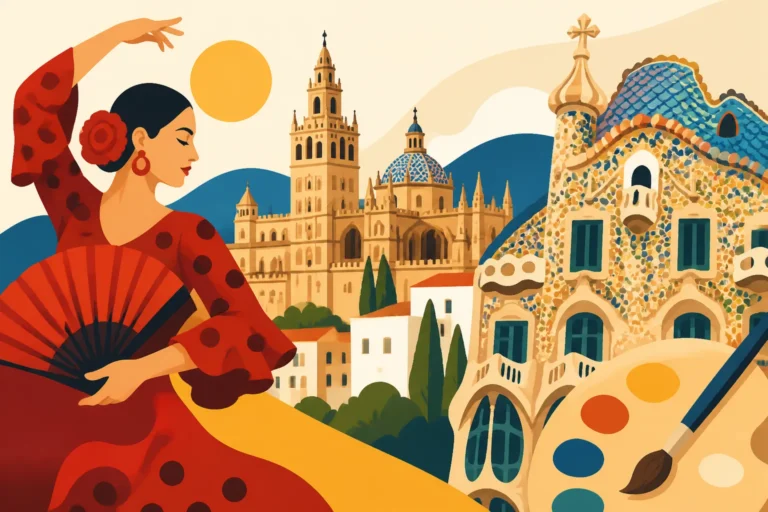
You cannot talk about live music in Spain without mentioning Flamenco. However, there is a big difference between a "Tablao" (a professional venue for tourists) and a "Peña Flamenca" (a local club for aficionados). While Tablaos offer high production values and are often easier to book through platforms like GetYourGuide, Peñas are where you’ll see the raw, improvisational heart of the art form. If you are in Andalusia, seeking out a Peña is a must. Just remember that silence is strictly enforced during the performance; it is a sign of respect for the "duende" or the spirit of the music.
The jazz scene in Spain is also surprisingly robust. Madrid’s Café Central and Barcelona’s Jamboree are legendary spots that host world-class talent almost every night of the week. These venues often have two "passes" (sets)—one earlier in the evening and one late at night. Booking a table usually requires a small fee or a minimum drink spend, but it provides an intimate experience that is hard to beat. For those interested in this more refined side of the night, exploring Spanish Wine Regions: A Beginner's Guide can help you choose the right glass to accompany the music.
Finally, don't ignore the "Fiestas Mayores." Every town and neighborhood in Spain has an annual festival where the streets are taken over by "Verbenas" (open-air parties with live orchestras). These are free, high-energy, and feature a mix of traditional songs and current pop hits. It is the most authentic way to experience how Spaniards consume live music—as a multi-generational, community-driven celebration. If you find yourself in a town during its patron saint's day, just follow the sound of the drums; the music will find you.
Tips for the Best Concert Experience
- Earplugs are your friends: Spanish venues are notoriously loud. Many older salas are made of stone and brick, which creates a lot of reverb.
- Check the "Vaso" policy: At festivals, you usually have to pay 1 or 2 euros for a reusable plastic cup. Don't throw it away! You can trade it in for a clean one at your next drink or, in some cases, return it at the end for your money back.
- The "Telonero" Factor: Support acts in Spain are often excellent local bands. It’s worth showing up early to discover something new, even if the main act is hours away.
- Transport Apps: Download Cabify or Bolt. Uber works in some cities, but Cabify is often more reliable in Spain. Having these ready for when the concert ends is a much better plan than trying to hail a taxi in a crowd of 10,000 people.
- Pre-Gig Rituals: Do as the locals do. Meet for a "caña" and some "racciones" near the venue. It’s a great way to soak up the pre-show atmosphere. If you’re unsure of what to order, a quick look at Spanish Tapas Culture: How to Order and Where to Go will set you straight.
Disclaimer
This guide is intended for informational purposes for expats and tourists in Spain. While the platforms and venues mentioned are generally reliable, event schedules, ticketing policies, and venue operations can change without notice. Always verify details on the official website of the artist or the venue before making travel or financial commitments. Live music events involve large crowds and late hours; please exercise personal caution and follow local safety guidelines.