How to Childproof a Rented Apartment in Spain
Moving into a classic Spanish apartment with a toddler is a heart-pounding experience that most relocation brochures conveniently forget to mention. I remember standing in our first Madrid flat, staring at the beautiful but deadly marble floors and the low-slung balcony railings, wondering how we’d survive the week. This guide provides realistic, no-drill, and renter-friendly strategies to secure your Spanish home without risking your security deposit.
Disclosure: This post may contain affiliate links. We may earn a commission at no extra cost to you if you make a purchase through these links. Read full disclosure.
Identifying the Unique Risks in Spanish Architecture
When you first arrive and start Moving to Spain With Kids: Packing and Settling‑In Checklist, you might be enamored by the high ceilings and the charming Juliette balconies. However, Spanish "pisos" often feature architectural elements that are nightmare-fuel for parents. The most common feature is the hard flooring—usually marble, granite, or ceramic tile. While these materials are excellent for keeping the home cool during sweltering summers, they are unforgiving when a toddler takes a tumble. Unlike the carpeted or hardwood floors common in North America or Northern Europe, a fall here often results in a significant bump.
Another regional quirk is the "persiana" system. These heavy, external rolling shutters are essential for light and heat control, but the thick nylon cords used to operate them are frequently left dangling at exactly a child’s eye level. In many older buildings, the electrical sockets are also placed higher up on the walls than you might expect, sometimes right at the mid-level height of a crawling baby who is just beginning to pull themselves up.
Finally, we have to talk about the balconies. In cities like Barcelona or Valencia, the balcony is the heart of the home, but the railings (barandillas) are often designed for aesthetics rather than safety. In many historic apartments, the gaps between the wrought iron bars are wide enough for a small child to slip through. Because you are likely Renting in Spain: Contracts, Deposits, and Tenant Rights, you cannot simply weld new bars onto a 19th-century facade. You need temporary, high-strength solutions that can be removed when your lease ends.
Renter Friendly Safety Modifications for Floors and Furniture
The primary goal for any expat parent is to protect the child while protecting the "fianza" (security deposit). If you are looking for mid-term accommodation through platforms like Spotahome, you will find that many apartments are beautifully staged but completely lack safety features. To soften those hard Spanish floors, skip the wall-to-wall carpeting, which is difficult to clean and store. Instead, invest in high-quality, interlocking EVA foam mats for play areas. For the rest of the house, heavy cotton rugs with extra-thick non-slip underlays are a must.
When it comes to furniture, Spanish rentals often come "amueblado" (furnished) with heavy, dark wood pieces or glass-topped coffee tables. Since you cannot bolt these to the walls without permission, look for "furniture straps" that use high-tension adhesive rather than screws. These adhesives are incredibly strong but can be dissolved with a bit of heat from a hairdryer when it’s time to move out. You can find a vast array of these safety straps on Amazon Spain, which is often the easiest way to source specific childproofing brands that might not be stocked in your local neighborhood "ferretería" (hardware store).
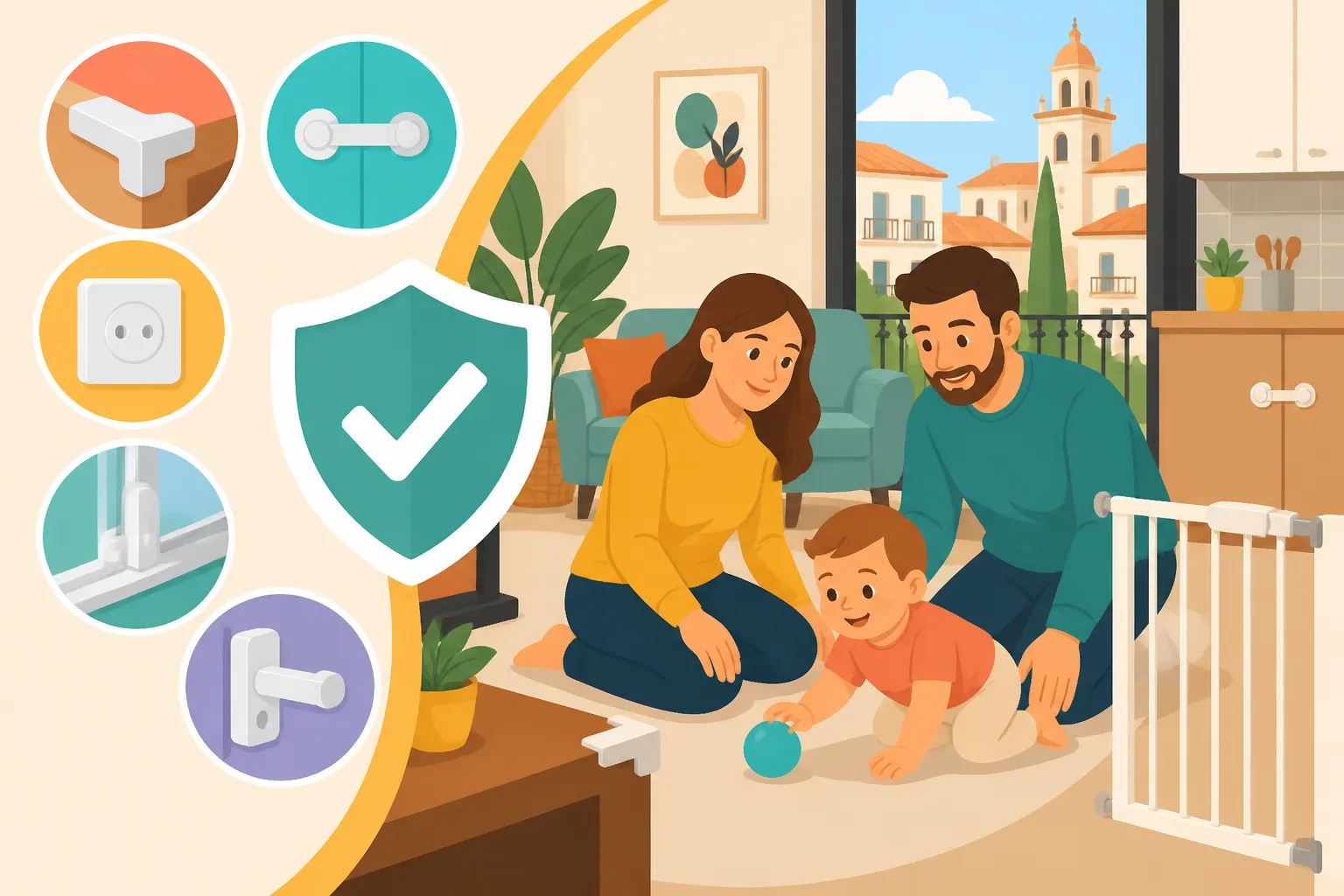
For those sharp marble corners, clear silicone corner guards are your best friend. In my experience, the cheap foam ones tend to be peeled off by curious toddlers within forty-eight hours. The clear silicone versions are more discreet and use a stronger adhesive that won't chip the stone or wood. If your apartment has a "pasillo" (long hallway), which is a common feature in Spanish layouts, you might be tempted to install a pressure-mounted baby gate. Just be careful—if the walls are made of older "tabique" (thin brick), over-tightening a pressure gate can actually crack the plaster. Use wall protector cups to distribute the pressure more evenly.
Securing Windows and Balconies Without Drilling
Windows in Spain often open inward (casement style) or slide horizontally. If you have the inward-opening type, you are in luck, as these are easier to secure with simple handle locks. However, if you have sliding windows, a common childproofing mistake is using a simple plastic stick-on lock. These often fail under the intense heat of a Spanish summer as the adhesive melts. Instead, look for metal sliding window locks that screw onto the track manually with a thumb screw. They require no drilling and are incredibly secure.
Balcony safety is where most expat parents feel the most stress. The most effective non-permanent solution is heavy-duty balcony netting (red de seguridad). Many local companies in major cities specialize in "redes para niños," and while they can install them for you, you can also buy the kits online. If you are struggling to find a local installer because your Spanish is still a work in progress, using Airalo to keep your data active while you search for English-speaking handymen on local forums can be a lifesaver during those first chaotic weeks.
When installing netting, use heavy-duty zip ties to attach the mesh to the existing ironwork. Make sure the mesh is taut enough that a child cannot lean into it and create a "pocket." If your landlord is worried about the "estética" of the building, point out that these nets are often nearly invisible from the street level. It is also worth checking if you have Home Insurance in Spain: What Renters and Owners Should Know, as some policies actually offer advice or coverage for minor home safety installations.
| Feature | Risk Level | Renter-Friendly Solution | Tool Needed |
|---|---|---|---|
| Marble Floors | High (Impact) | Interlocking foam mats / Rugs | Non-slip underlay |
| Balcony Bars | Extreme (Fall) | UV-resistant safety netting | Heavy-duty zip ties |
| Persiana Cords | High (Strangulation) | Cord cleats (adhesive) | Adhesive strips |
| Sliding Windows | Medium (Fall) | Track locks | Thumb-screw locks |
| Kitchen Cabinets | Medium (Poison/Sharp) | Magnetic hidden locks | Magnetic key |
Navigating the Landlord Relationship and the Law
In Spain, the law generally allows tenants to make small, non-structural changes to a property, but "childproofing" is a bit of a gray area. To avoid a dispute over the Security Deposits in Spain: Rules, Limits, and Returns, always communicate with your landlord or the "agencia" before you start sticking things to the walls or windows. I found that most Spanish landlords are quite "familiar" (family-oriented) and will be sympathetic to your needs as long as you promise to return the flat to its original state.
When you discuss these changes, use the term "seguridad infantil." If you need to install something that requires a small hole—like a top-of-stairs gate—offer to have the holes professionally filled and painted when you leave. Many expats find that if they are staying for the long term, perhaps while their children are attending School Enrollment in Spain: Registration Steps for Foreign Families, the landlord might even agree to permanent upgrades if they add value to the property for future family tenants.
Always document the condition of the walls and surfaces before you apply any adhesives. Take high-resolution photos and send them to the landlord or agent. This prevents them from claiming that a tiny bit of residue left by a corner guard is "damage." If you are unsure about the legality of a specific clause in your contract regarding modifications, it is wise to revisit What is ‘Fianza’ in Spain? Deposit Rules Explained Simply to understand your rights. Remember, the goal is to create a safe environment so you can focus on more important things, like How to Find Family-Friendly Neighborhoods Near Spanish Schools or planning your first family weekend at the beach.
Kitchen and Bathroom Hazards in Spanish Rentals
The kitchen in a Spanish apartment is often small and packed with hazards. A peculiar habit in some older renovations is the lack of a "zócalo" (toe kick) under the cabinets, leaving a gap where small toys—and small fingers—can get stuck. Furthermore, many Spanish kitchens use "butano" (bottled gas) for cooking. If your rental uses gas bottles, you must ensure the cabinet housing the bottle is locked. Toddlers are fascinated by the orange hoses and the regulator valves.
In the bathroom, the biggest danger is often the "bidé" (bidet). While expats often find them quirky or use them as a footbath, they are a major drowning hazard for a crawling baby who can pull themselves up. Since you can't easily "remove" a bidet in a rental, a simple lid lock—the same kind used for toilets—can be adapted. Also, be aware that Spanish Apartment Heating: What Systems You’ll Commonly Find often includes wall-mounted radiators. These get incredibly hot in the winter and are usually at the perfect height for a toddler to grab. Using a freestanding, heat-resistant mesh guard is an easy way to prevent burns without needing to bolt anything to the masonry.
Finally, keep an eye on the "tomas de tierra" (grounding) in older apartments. While modern Spanish builds are very safe, some "casas antiguas" have outlets that aren't perfectly flush with the wall. Using plastic outlet covers is a cheap and effective way to prevent accidents. Most of these can be bought in bulk at your local IKEA or any large supermarket like Carrefour or Alcampo.
Health and Medical Disclaimer
The information provided in this guide is for general informational purposes only and does not constitute professional safety or legal advice. Childproofing requirements can vary significantly based on the specific architecture of a building and the age/mobility of the child. We recommend consulting with a professional childproofing service or your local "Ayuntamiento" for specific safety regulations. Always follow the manufacturer's instructions for any safety devices installed and ensure that modifications do not interfere with emergency exit routes.