How Are Crypto Gains Taxed for Residents of Spain?
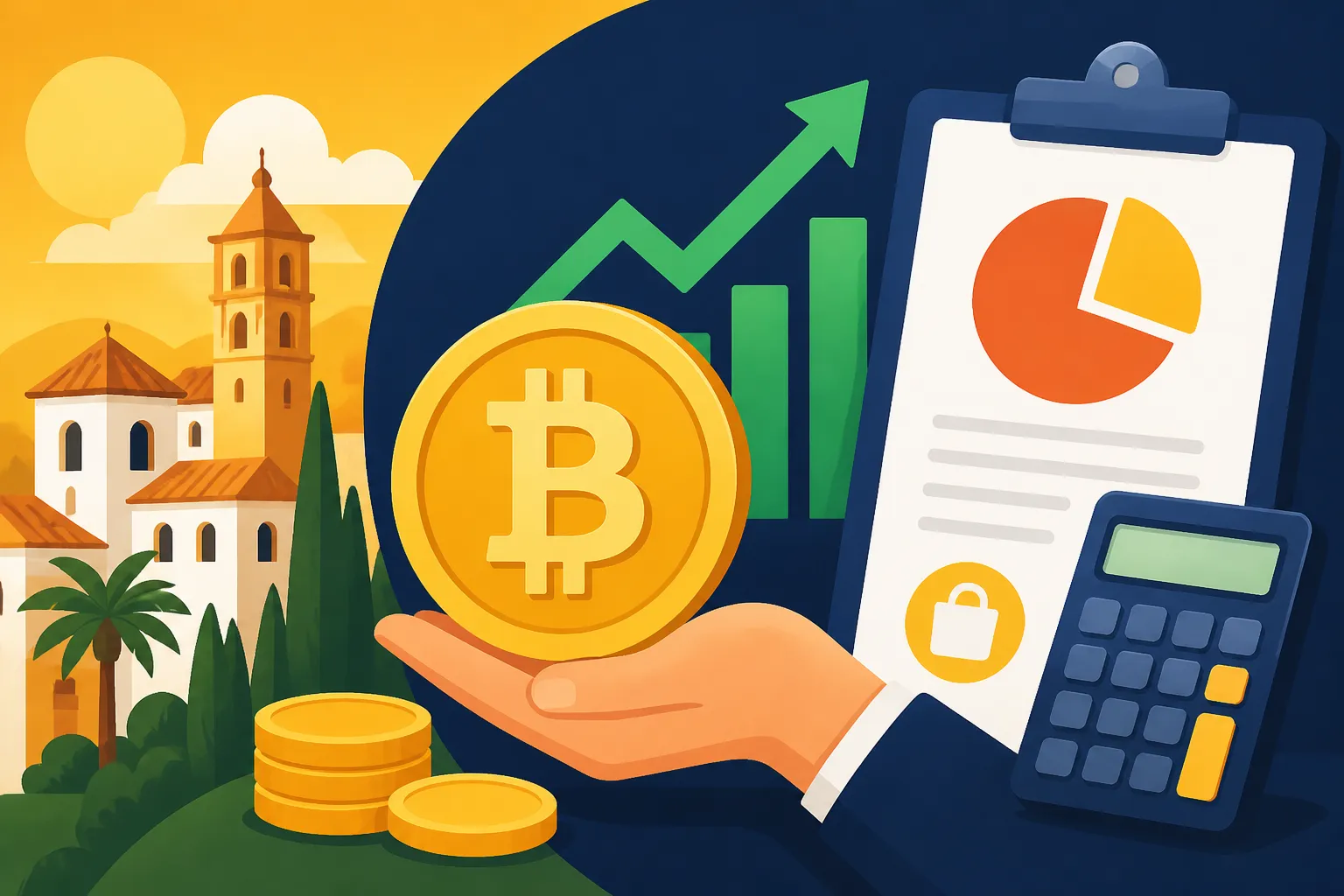
The complexity of Spanish tax law can turn your Mediterranean dream into a bureaucratic headache faster than you can say "Hacienda." I remember the sheer panic I felt during my first year in Barcelona, staring at a confusing spreadsheet of Bitcoin trades and wondering if I was about to be audited. This guide breaks down exactly how the Spanish Tax Agency views your digital assets and how to remain compliant.
Disclosure: This post may contain affiliate links. We may earn a commission at no extra cost to you if you make a purchase through these links. Read full disclosure.
Understanding the Spanish Tax Agency and Cryptocurrency
The Spanish Tax Agency, known locally as the Agencia Tributaria or simply "Hacienda," has become increasingly sophisticated in how it tracks digital assets. If you are a tax resident in Spain, you are liable for taxes on your worldwide income, including any profits made from cryptocurrency, regardless of where the exchange is located. You are generally considered a resident if you spend more than 183 days in the country during a calendar year or if your primary "center of economic interests" is located here. For a deeper look at these rules, check out Tax Residency in Spain: 183‑Day Rule and Practical Tests.
In the eyes of the Spanish government, cryptocurrency is not considered legal tender but rather a taxable asset. This means that every time you sell crypto for Euros, or even exchange one cryptocurrency for another, it is considered a "taxable event." Many expats mistakenly believe that they only owe money when they "cash out" to a traditional bank account, but in Spain, the swap from BTC to ETH is enough to trigger a capital gains obligation.
Navigating this requires a clear paper trail. It is often recommended that newcomers use a digital-first bank like N26 to keep their local expenses separate from their trading capital, making it easier to see exactly what has been moved into the crypto ecosystem. When you are moving large sums back and forth, having a transparent banking history is your best defense during an inquiry.
The Savings Taxable Base: How Much Will You Pay
Cryptocurrency gains are taxed as part of the "Savings Taxable Base" (Base Imponible del Ahorro). Unlike your salary, which is taxed at progressive general rates that can climb quite high, savings income is subject to a specific set of brackets. It is vital to understand Spanish Income Tax (IRPF) 101: Who Pays and When to see how these different buckets of income interact on your final return.
For the 2026 tax year, the capital gains rates for crypto are structured progressively:
- Up to 6,000 EUR: 19%
- Between 6,000 EUR and 50,000 EUR: 21%
- Between 50,000 EUR and 200,000 EUR: 23%
- Between 200,000 EUR and 300,000 EUR: 27%
- Amounts exceeding 300,000 EUR: 28%
To calculate your gain, you subtract the "acquisition value" (what you paid, including fees) from the "transmission value" (what you received, minus fees). Spain uses the FIFO (First-In, First-Out) method. This means that if you bought Bitcoin at three different prices over two years and then sold a portion of it, Hacienda assumes you sold the very first coins you purchased. This can be a nightmare to track manually if you are an active trader, which is why services like Taxes for Expats can be a lifesaver for those who need to reconcile international trades with Spanish requirements.
Reporting Requirements: The Three Essential Forms
The most confusing part of living in Spain isn't necessarily the percentage you pay, but the multiple forms you have to file. Missing a deadline for an "informative" form can result in fines that far exceed the actual tax you owe. You should familiarize yourself with How to File a Spanish Tax Return (Renta) as a New Resident early in the year to avoid the June rush.
Modelo 100: The Annual Income Tax Return
This is the standard IRPF (Impuesto sobre la Renta de las Personas Físicas) return. Here, you report your realized gains and losses for the previous year. If you sold crypto at a loss, you can actually use those losses to offset gains from other sources in the savings base, such as stock dividends, or carry them forward for up to four years. To file this online, you will definitely need to set up your Cl@ve and Digital Certificate: Accessing AEAT (Tax Agency) Online.
Modelo 714: The Wealth Tax
If your total worldwide assets—including crypto, real estate, and bank balances—exceed certain thresholds (usually 700,000 EUR, though this varies by region like Madrid or Andalusia), you must file a Wealth Tax return. Crypto is valued at its market price on December 31st of the tax year. Even if you haven't sold a single satoshi, the mere value of your portfolio can trigger a tax bill here.
Modelo 721: The New Crypto-Specific Disclosure
Until recently, expats worried about the infamous Modelo 720 and Foreign Asset Reporting: A Practical Overview. However, for crypto held in "foreign" wallets or exchanges (like Binance or Coinbase), the government introduced Modelo 721. If the value of your crypto held abroad exceeds 50,000 EUR on December 31st, you must disclose these holdings. This is purely informative, but the penalties for "forgetting" are notoriously harsh.
Practical Scenarios: Trading, Staking, and Spending
Let’s look at how this works in the real world, as these are the questions I get asked most often over coffee in the Plaza Mayor. If you are ever in doubt, Choosing a Gestor or Tax Advisor in Spain: What to Look For should be your first priority, as a good professional can save you thousands in errors.
Scenario A: The Crypto-to-Crypto Swap
Imagine you bought 1,000 EUR of Solana. A month later, it’s worth 1,500 EUR, and you decide to swap it all for Polkadot. In Spain, you have just realized a 500 EUR gain. You owe tax on that 500 EUR in your next Modelo 100, even though you never touched a Euro. This is where people get caught out; they reinvest everything and then don't have the cash on hand to pay the tax bill in June. Wise can be used to move funds from exchanges to a Spanish account specifically to set aside tax "provisions" throughout the year.
Scenario B: Staking and Airdrops
Income earned from staking or receiving airdrops is generally treated as "investment income" (capital movemement) rather than a capital gain from a sale. You must report the Euro value of the coins at the moment you received them. If you then hold those coins and they go up in value before you sell them, that subsequent increase is taxed as a capital gain.
Scenario C: Buying a Coffee with Crypto
Yes, even using a crypto debit card to buy a café con leche is a taxable event. Every time the card converts your crypto to EUR at the point of sale, it’s a sale of an asset. If you use your crypto for daily spending, you are going to have a very long list of transactions to report. Using an account like N26 for your daily "tapas and beer" money while keeping your crypto as a long-term investment is a much cleaner way to live.
Summary of Spanish Crypto Tax Obligations
To help you keep track of these moving parts, I've put together a quick reference table. Remember that deadlines in Spain are set in stone; the "mañana" attitude does not apply to the Hacienda.
| Requirement | Threshold | Form | Deadline |
|---|---|---|---|
| Capital Gains/Losses | Any amount | Modelo 100 | April – June |
| Wealth Tax | Varies (often >700k EUR) | Modelo 714 | April – June |
| Assets Abroad (General) | >50,000 EUR | Modelo 720 | Jan – March |
| Crypto Abroad | >50,000 EUR | Modelo 721 | Jan – March |
Managing Your Portfolio as an Expat
The best way to stay sane is to automate your record-keeping. Most modern exchanges allow you to export a CSV of your history. If you are moving between the US and Spain, you might face double-taxation issues. This is where a specialized service like Taxes for Expats is essential, as they understand the treaty between the two countries and can ensure you aren't paying twice on the same Bitcoin gain.
Another tip from my years of trial and error: keep your receipts for everything. If you paid a high gas fee for a transaction on the Ethereum network, that fee can often be deducted from your gain, reducing your tax bill. In an audit, the Hacienda will ask for proof. I keep a digital folder of every transaction confirmation. When I need to transfer funds back to my Spanish bank, I use Wise because their statements are clear and accepted by local accountants as valid proof of the "transmission value."
Don't ignore the Are Crypto Gains Taxed in Spain? High‑Level Overview if you're just starting out. It covers the basics that every new arrival should know before they make their first trade on Spanish soil. The system is designed to be rigorous, but if you are organized and proactive, it is entirely manageable.
Common Pitfalls to Avoid
The biggest mistake I see is "The Ostrich Method"—burying your head in the sand and hoping the Hacienda won't notice your crypto. With the implementation of the EU's DAC8 directive and Spain's own strict reporting laws, exchanges are now sharing data directly with tax authorities.
- The 50,000 EUR Myth: Some people think if their portfolio is under 50,000 EUR, they don't have to pay tax. This is wrong. The 50,000 EUR threshold is only for the informative Modelo 721. You still owe tax on a 5 EUR gain even if your total portfolio is only 100 EUR.
- Forgetting Fees: Always include your exchange fees in your "acquisition cost." If you ignore them, you're paying more tax than you legally have to.
- Misunderstanding Residency: If you moved to Spain in August, you might still be a tax resident in your home country for that year. Check Crypto and Taxes in Spain: How Gains Are Reported to see how mid-year moves are handled.
Living in Spain is about the lifestyle—the late dinners, the beach weekends, and the vibrant culture. Don't let a "carta certificada" from the tax office ruin that. By using tools like N26 for your liquidity, Wise for your transfers, and Taxes for Expats for your complex filings, you can navigate the 2026 tax season with confidence.
Disclaimer
This article is for informational purposes only and does not constitute professional tax, legal, or financial advice. Tax laws in Spain are subject to frequent changes and regional variations. You should always consult with a qualified "Gestor" or tax advisor who is familiar with your specific situation and the latest regulations from the Agencia Tributaria.