Regional Health Systems in Spain: How Coverage Differs by Comunidad
Navigating Spain's healthcare system often feels like solving a puzzle where the pieces change shape every time you cross a regional border. I learned this the hard way when my Madrid health credentials were met with blank stares at a clinic in rural Galicia. This guide demystifies how healthcare varies across Spain’s autonomous communities to ensure you get care regardless of where you settle.
Disclosure: This post may contain affiliate links. We may earn a commission at no extra cost to you if you make a purchase through these links. Read full disclosure.
Understanding the Decentralized Reality of Spanish Healthcare
While we often talk about the Spanish National Health System (Sistema Nacional de Salud or SNS) as a single entity, the reality on the ground is far more fragmented. Since the late 20th century, Spain has progressively devolved the management of healthcare to its 17 Autonomous Communities (Comunidades Autónomas). This means that while the central government sets general standards and provides funding, the actual delivery of care, the hiring of staff, and even the digital infrastructure are handled independently by each region.
For an expat, this decentralization is the source of most administrative headaches. A residency permit (TIE) is national, but your health card is regional. If you move from Barcelona to Seville, you aren't just changing your address; you are effectively switching insurance providers within a massive federal framework. This is why understanding Spain Healthcare System for Expats: Public vs Private is essential before you pick a city to call home, as the "public" experience in one region may look nothing like it does in another.
The Power of the Autonomous Communities
Each region has its own health service, such as SERMAS in Madrid, CatSalut in Catalonia, or SAS in Andalusia. These organizations have the autonomy to decide how to allocate their budgets. Some regions invest heavily in primary care and local clinics, while others focus on high-tech metropolitan hospitals. This leads to a situation where the quality of specialized equipment might be world-class in one community, but the wait time for a simple GP appointment could be weeks longer than the national average.
The practical impact of this autonomy extends to the very "feel" of the service. In some regions, you might find a heavy emphasis on digital-first care, while in others, the system remains stubbornly paper-based. This disparity often catches newcomers off guard, especially those who assume that a "national" system implies total uniformity.
Why Your Postcode Dictates Your Experience
Your residential address, or where you are "empadronado," is the single most important factor in determining your healthcare access. Because the funding for your care is tied to the tax revenue and census of your specific region, you are generally restricted to the doctors and hospitals within that boundary. While emergency care is guaranteed nationwide, routine screenings, specialist referrals, and elective surgeries are managed strictly by your local health department.
This geographic restriction is why many expats choose to supplement their coverage. For instance, if you are moving to a region known for longer surgical wait times, checking Choosing a Private Health Insurer in Spain: What to Compare can provide a safety net. Brands like Cigna Global offer a layer of consistency that the regional public systems cannot match, allowing you to bypass the "postcode lottery" for specialist consultations.
Interoperability and Cross-Border Care
One of the biggest frustrations for travelers and expats moving within Spain has historically been the lack of communication between regional computer systems. For years, a doctor in Valencia could not see the medical records of a patient from Asturias. While the "Tarjeta Sanitaria Unica" (a project to create a unified national health card) has made progress, the systems are still not perfectly synced.
The introduction of the interoperable e-prescription system has been a lifesaver, allowing you to pick up medication in a Madrid pharmacy using a prescription issued in the Canary Islands. However, for full history access, Medical Records in Spain: Accessing and Sharing Your History remains a complex topic because you often have to manually request transfers if you move permanently between communities.
Regional Variations in Access and Registration
The path to getting your "Tarjeta Sanitaria" (Health Card) is paved with regional bureaucracy. While the basic requirements—social security number, residency, and a padrón certificate—are standard, the "how" and "where" of the application process vary wildly. In some regions, you can do everything online with a digital certificate; in others, you must physically go to your local Centro de Salud and wait for a specific administrator who only works on Tuesday mornings.
I remember the shock of moving to a region where they required a specific "certificate of no healthcare coverage" from my home country, translated and apostilled, even though my previous Spanish region had never asked for it. These localized requirements are why you must verify Who Can Access Public Healthcare in Spain? Eligibility Basics specifically for your new community.
The Padrón Requirement and the Local Clinic
To register for regional healthcare, you must first be on the municipal register of inhabitants, known as the padrón. Once you have this, you are assigned to a specific "Centro de Salud" based on your neighborhood. This clinic is your gateway to everything else. In regions like Andalusia, these centers are often the heart of the community, whereas in Madrid, they can feel like high-traffic hubs where you are just a number on a screen.
The registration process is your first encounter with regional health staff. It is during this step that you should ask about How to Ask for an English‑Speaking Doctor Appointment in Spanish (Phrase Guide) because some regions, particularly those with high expat populations like the Costa del Sol or Alicante, have better-established protocols for non-Spanish speakers than regions in the interior.
Regional Health Cards and Digital IDs
Each community issues its own physical health card. In Catalonia, it’s the "TSI" (Tarjeta Sanitaria Individual); in Valencia, it’s the "SIP" card. These cards are not just IDs; they are keys to the regional digital portal. For example, Madrid’s "Tarjeta Sanitaria Virtual" is an incredibly advanced app that stores your COVID records, appointments, and even your e-prescriptions on your phone.
In contrast, more rural or less funded regions may still rely on a physical card and phone calls for every interaction. If you are a tech-savvy expat, the digital maturity of a region’s health system might be a significant factor in where you choose to live. Always research How to Get a Spanish Health Card (Tarjeta Sanitaria): Step‑by‑Step for your specific community to avoid a month-long wait for a piece of plastic.
Navigating the Language Barrier by Region
Language is perhaps the most overlooked regional difference. In communities with their own co-official languages—such as Catalonia, the Basque Country, Galicia, and the Balearic Islands—the healthcare system is bilingual. While doctors will speak Castilian Spanish, the signage, websites, and automated phone systems might default to Catalan, Euskera, or Galician.
In my experience, this adds a layer of "cognitive load" for new expats who are already struggling with basic Spanish. If you are concerned about navigating a bilingual system, you might look into Mental Health Support in Spain: How to Find Help as an Expat early on, as finding a therapist who speaks English can be harder in regions where the local language takes priority in public service administration.
The Postcode Lottery: Wait Times and Service Disparities
The most controversial aspect of the regional system is the disparity in waiting times. Spain’s Ministry of Health publishes annual reports, and the gap between the fastest and slowest regions is often staggering. Whether you are waiting for a diagnostic test like an MRI or a non-emergency surgery like a hip replacement, your location is the primary factor in how long you will spend on a list.
| Region | Average Wait for Specialist (Days) | Average Wait for Surgery (Days) | Key System Feature |
|---|---|---|---|
| Madrid | 50 – 60 | 60 – 75 | High hospital density; fast specialist access |
| Catalonia | 80 – 90 | 120 – 150 | Hybrid public-private (concertada) model |
| Andalusia | 110 – 130 | 140 – 160 | Extensive rural primary care network |
| Basque Country | 60 – 70 | 70 – 80 | High per-capita spending; modern facilities |
| Valencia | 85 – 100 | 110 – 130 | Strong focus on digital health tracking |
Primary Care vs. Specialist Delays
Primary care—seeing your family doctor—is generally quite fast across Spain, usually taking 1 to 5 days. However, the bottleneck occurs when that doctor refers you to a specialist. In regions like Madrid or the Basque Country, you might see a dermatologist or cardiologist within two months. In others, such as Extremadura or parts of Andalusia, that wait can stretch beyond six months.
This delay is a major pain point for expats used to faster systems. It’s the primary reason many choose to maintain a policy from a provider like SafetyWing during their first few months, or transition to a long-term plan from Cigna Global. Having the ability to jump the queue for a specialist consultation can be the difference between resolving a minor issue and watching it become a chronic problem.
Surgical Waiting Lists and Regional Efficiency
Elective surgeries are where the regional "lottery" is most evident. The national average might be around 120 days, but in some communities, it can exceed 160 days. Regions often try to manage these lists by "outsourcing" public patients to private hospitals (a process called "derivación"), but this is also dependent on regional politics and budget availability.
If you have a known condition that may eventually require surgery, it is vital to look at the specific waiting list data for your intended Comunidad. For those who cannot risk a six-month wait, the private sector is the only alternative. In fact, many visa types require you to have no-wait coverage, which is why Private Health Insurance for Spain Visas: What Policies Must Include is such a critical topic for non-EU citizens.
Disparities in Mental Health and Dental Care
Public dental and mental health care are the "weak links" in the Spanish system nationwide, but the regional differences are still there. Some communities, like the Basque Country and Navarre, offer slightly more robust dental coverage for children than others. However, for adults, the public system is mostly limited to extractions and emergency infections.
Most expats quickly realize that Public vs Private Dental Care in Spain: What Expats Usually Choose leans heavily toward private clinics. Similarly, for mental health, the public system is often overwhelmed with long gaps between therapy sessions. If mental wellness is a priority, you will likely need to find a private provider who can offer consistent, English-language support.
Digital Health and Pharmacy Systems Across Regions
Spain is a global leader in e-health, but that leadership is fragmented. Every Comunidad has its own app for booking appointments, viewing test results, and managing prescriptions. These apps are generally excellent, but they require a "Cl@ve" (digital identity) or a specific regional code to access.
When I first used the "Salud Responde" app in Andalusia, I was amazed that I could book a GP appointment in thirty seconds. But when I moved, I had to learn a completely different interface with different login requirements. This digital divide is something every expat must navigate as they settle into their local routine.
Regional Health Apps: A Comparison
The functionality of these apps varies. Madrid’s "Tarjeta Sanitaria Virtual" allows you to see your active prescriptions and even shows a QR code that pharmacies can scan. Catalonia’s "La Meva Salut" is known for its comprehensive access to hospital reports and diagnostic images.
If you are moving to a region with a less developed digital interface, you might find yourself more reliant on Emergency Healthcare in Spain: 112, Urgent Care, and What to Expect because booking a routine appointment via a slow phone line or a clunky website feels like too much of a hurdle. Always download your region's app as soon as you get your SIP or health card number.
E-Prescriptions and Regional Co-payments
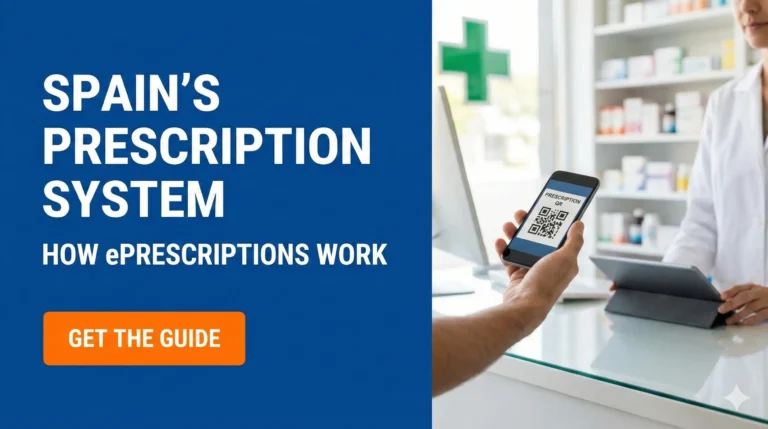
The "Receta Electrónica" (e-prescription) system is one of the best features of living in Spain. Your doctor "loads" your medication onto your health card, and you simply swipe it at any pharmacy. However, the amount you pay (the "copago") depends on your income level and, in some cases, your regional status.
In some regions, retirees might have different caps on their monthly pharmacy spending than in others. If you have a chronic condition, understanding how your region handles renewals is vital. Often, the doctor will authorize a "long-term" prescription that lasts for a year, meaning you only need to visit the pharmacy, not the clinic, for refills.
Accessing Medical Records Across Borders
If you fall ill while visiting another region, the local doctors can access a "summary" of your medical history through a national database, but they may not see your full file. This "Digital Health Record of the SNS" is a work in progress. For important documents, like vaccination records for your children, it is always a good idea to keep your own digital copies.
When you move permanently, don't expect the system to automatically "pull" your records from your old region. You should ask your current GP for a printout of your "historial clínico" before you leave. This ensures that your new doctor in a different Comunidad doesn't have to start from scratch, which is especially important for managing Chronic Conditions in Spain: Managing Ongoing Care as an Expat.
Specific Regional Deep Dives: Madrid, Catalonia, and Andalusia
To give you a better idea of the variety, let's look at the three most popular regions for expats. Each has a distinct "personality" when it comes to healthcare delivery, and your experience will differ significantly based on which one you choose.
Healthcare in Madrid (SERMAS)
Madrid is the powerhouse of Spanish healthcare. It boasts some of the best hospitals in Europe, such as La Paz and Gregorio Marañón. The system is highly centralized and efficient, with some of the lowest waiting times for specialists in the country. The "Libre Elección" policy in Madrid is a unique feature; it allows you to choose any GP or specialist in the entire region, not just the one in your neighborhood.
However, the speed of Madrid’s system comes with a "corporate" feel. Consultations can be very short—sometimes under ten minutes—as doctors are pushed to meet high patient volumes. If you prefer a more personal, slow-paced relationship with your doctor, Madrid’s efficiency might feel a bit cold. For many professionals in the city, using a broker like Innoinsure to find a private plan that includes these top-tier hospitals is a common way to get the best of both worlds.
Healthcare in Catalonia (CatSalut)
Catalonia uses a unique model called "concertada." While the healthcare is public and free, many of the hospitals and clinics are managed by private or non-profit entities that have a contract with the government. This creates a very high standard of care and a system that feels quite modern and integrated.
The downside is that Catalonia often has longer waiting lists for surgery than Madrid. Additionally, as mentioned earlier, the administrative side of CatSalut is heavily Catalan-focused. While you will have no problem being treated in Spanish, the online portals and automated systems will require a bit of linguistic adaptation.
Healthcare in Andalusia (SAS)
The Servicio Andaluz de Salud (SAS) manages one of the largest healthcare networks in the world. Because Andalusia is so geographically diverse, the system is designed to provide care even in remote mountain villages. This means that access to a local "consultorio" is excellent, but for anything serious, you may have to travel a significant distance to a major city like Seville or Malaga.
Andalusia’s system has faced significant pressure in recent years, leading to longer wait times and frequent protests by medical staff. For expats living on the coast, the public system is often supplemented with private insurance. This is where a plan from SafetyWing can be useful for those just arriving, providing a bridge of private care while they navigate the potentially slow SAS registration process.
Complementing Regional Care with Private Options
Given the regional discrepancies, many expats conclude that relying solely on the public system is a gamble. Private healthcare in Spain is remarkably affordable compared to the US or UK, and it offers the one thing the public system cannot: a guarantee of speed and choice across all of Spain, regardless of your Comunidad.
When Regional Wait Times Become Too Long
The primary trigger for going private is the specialist wait time. If you have a worrying symptom and the public system tells you it will be four months for a scan, the mental toll is heavy. Private insurance allows you to book that scan for the following Tuesday. Brands like Cigna Global are particularly favored by "slow-mad" expats who might spend six months in Valencia and six months in the north, as their coverage follows them seamlessly without regional re-registration.
International Coverage for Frequent Travelers
If your life in Spain involves frequent trips back to your home country or travel within the EU, the regional health card has limits. While you can get a European Health Insurance Card (EHIC/TSE) from the Spanish social security office, it only covers emergency care. For comprehensive protection that includes medical evacuation or private care abroad, an international policy is a necessity.
Meeting Visa Requirements with Private Plans
For many, the choice is made for them by the Spanish consulate. If you are applying for a Non-Lucrative Visa or a Digital Nomad Visa, you are often required to show proof of a private policy that has "no co-payments" and "no waiting periods." Companies like Innoinsure specialize in these "visa-compliant" policies, which are designed specifically to satisfy Spanish immigration officers while providing you with high-quality private care from day one.
Disclaimer
This guide is for informational purposes only and does not constitute legal or medical advice. Healthcare regulations and waiting times in Spain change frequently. Always verify the current requirements with the official health service of your specific Autonomous Community or consult with a qualified relocation specialist. For visa-specific insurance requirements, check with the relevant Spanish consulate or a licensed insurance broker.