Setting Up Direct Debits for Bills in Spain Domiciliacion Guide
Logging into your foreign bank only to realize a Spanish utility provider blocked your manual payment and cut your electricity is a terrifying wake-up call. I spent my first winter freezing because my landlord completely forgot to explain how local automatic payments worked. This guide breaks down exactly how to set up Spanish direct debits so you never miss a bill.
Disclosure: This post may contain affiliate links. We may earn a commission at no extra cost to you if you make a purchase through these links. Read full disclosure.
The Reality of Paying Bills in Spain
When expats first arrive in Spain, they usually bring their financial habits with them. In many countries, you receive a utility bill via email, log into your personal banking portal, and manually push a payment using a credit card or a bank transfer. If you try to survive using this manual method in Spain, your life will quickly become an administrative nightmare.
Understanding Domiciliacion Bancaria
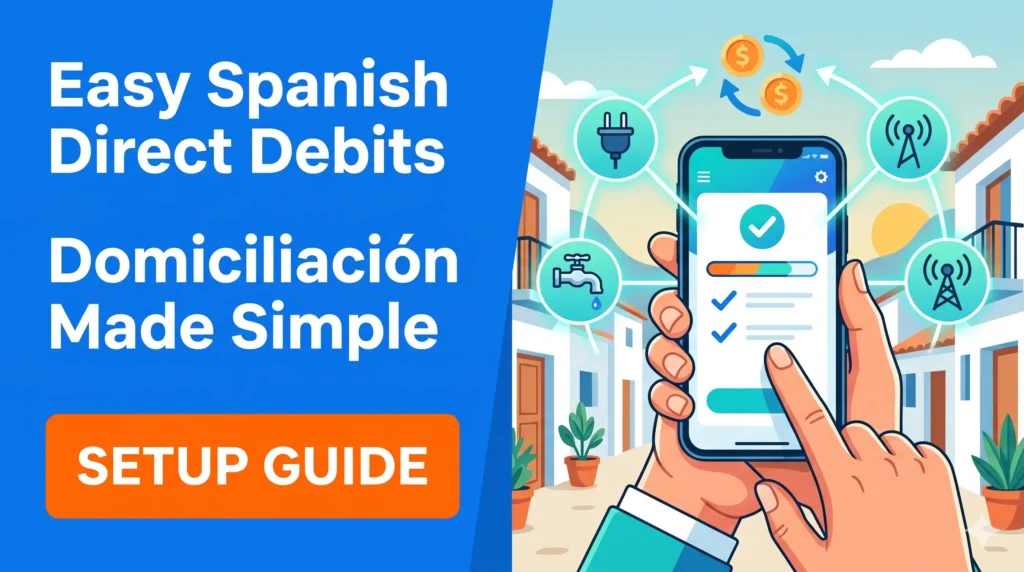
The Spanish billing system runs almost exclusively on the concept of domiciliación bancaria (direct debit). Instead of you pushing a payment to the company every month, you sign a legal mandate that gives the company explicit permission to automatically pull the funds directly from your bank account whenever a billing cycle closes.
This system applies to absolutely everything: electricity, water, internet, gym memberships, community fees, and even your annual municipal taxes. If you do not have a direct debit set up, many major companies will literally refuse to open an account for you. They do not want the administrative burden of chasing down late credit card payments. Understanding this shift in financial control is the very first step in managing your Cost of Living in Spain.
When you set up a domiciliación, you must sign a SEPA (Single Euro Payments Area) mandate. This document officially authorizes the creditor (the utility company) to instruct your bank to debit your account. The bank then automatically transfers the exact invoice amount on the due date.
The Nightmare of IBAN Discrimination
Because Spain is part of the SEPA zone, EU law explicitly states that any European IBAN (International Bank Account Number) must be accepted for direct debits. In theory, if you arrive with a German N26 account or an Irish Revolut account, you should be able to set up a Spanish utility contract immediately.
In practice, this is where you will face massive frustration. Spain is notorious for “IBAN discrimination.” Many legacy utility companies, local gyms, and municipal tax portals use outdated software that physically cannot accept an IBAN unless it begins with “ES” (Spain). The digital forms will simply flash an error message if you try to type in “DE” or “IE”.
While this practice is entirely illegal under European regulations, arguing with a customer service representative over the phone about EU financial law will not get your water turned on. You have two choices: fight a lengthy bureaucratic battle by filing a complaint with the Banco de España, or secure a local account. Walking through the steps to get a local “ES” number is a frustrating necessity we decode in Opening a Bank Account in Spain: Step-by-Step for Foreigners.
How to Set Up Your Direct Debits Step by Step
Assuming you have finally secured a bank account, setting up the actual direct debits requires a highly coordinated dance of paperwork, especially if you are taking over an existing apartment.
Gathering Your Required Documentation
To authorize a direct debit for a major utility, you cannot just hand over an account number. The company needs to verify your identity to prevent financial fraud. You will almost always be asked to provide:
- Your IBAN: The 24-character alphanumeric code identifying your Spanish bank account.
- Official Identification: Your TIE card, your green NIE certificate, or occasionally a passport. (If you are stuck waiting for your numbers, read Getting an NIE for Employment or Study: Practical Overview).
- Proof of Address: Your official rental contract (contrato de arrendamiento) or an empadronamiento certificate.
- The CUPS Number: This is the universal identifier for your physical electricity or gas meter, which you can find on an old bill.
Because you will need physical copies of these documents constantly during your first month, I highly recommend ordering a sturdy, multi-pocket accordion folder from Amazon Spain. Keeping your signed SEPA mandates, your rental contract, and your banking documents perfectly organized in a physical binder will save your sanity when a utility company inevitably claims they lost your paperwork.
The Cambio de Titular Process
If you are renting a previously occupied apartment, the electricity and water are likely still running in the landlord’s name. You have two options: cancel the landlord’s contract and start a new one, or simply change the name on the existing contract (cambio de titular).
You should almost always opt for the cambio de titular. If you cancel the contract entirely, the utility company will send a technician to physically cut the connection. Reconnecting it later involves massive “new hook-up” fees (derechos de alta) and can take weeks. When you process a cambio de titular, you assume legal responsibility for the supply point, and the utility company seamlessly switches the direct debit to your new IBAN without any service interruption.
Navigating the friction between you and the landlord during this handover is crucial, a dynamic we heavily emphasize in Renting an Apartment in Spain: A Guide for Expats. Make absolutely sure the landlord provides you with the most recent utility bill showing a zero balance before you assume the contract, otherwise, the next direct debit might automatically pull funds from your account to pay for their past debts!
| Payment Method | Effort Required | Risk of Late Fees | Accepted in Spain |
| Domiciliación (Direct Debit) | One-time setup | Zero (Automatic) | Universally mandated |
| Credit / Debit Card | High (Monthly manual login) | High | Rarely accepted for long-term contracts |
| Bank Transfer (Transferencia) | High (Manual routing) | High | Only used for rent or one-off invoices |
| Cash at Bank / ATM | Extreme | Very High | Actively phased out by all companies |
Managing, Disputing, and Bypassing the Bureaucracy
Setting up the direct debit is only half the battle. You must actively monitor your bank account because Spanish utility companies are infamous for “accidental” overcharges.
How to Dispute a Fraudulent or Incorrect Charge
One of the greatest protections of the SEPA direct debit system is your legal right to a refund. If an electricity company suddenly charges you 400 euros for a month when you were on vacation, you do not have to beg their customer service department for your money back.
Under Spanish banking law, you have up to 8 weeks (56 days) to return an authorized direct debit (devolver el recibo) directly through your bank’s app. You simply click “return receipt,” and the bank instantly yanks the funds back from the utility company and deposits them into your account. If the direct debit was unauthorized (meaning you never signed a mandate), you have up to 13 months to claim a refund.
Knowing when a bill is actually incorrect requires knowing how to read it. Decoding the complex taxes and tolls on your monthly invoice is a vital skill we teach in Understanding Utility Bills in Spain. However, to actively monitor these charges, you need reliable internet access to load your banking apps. I rely on Tiekom for my home fiber optic broadband specifically for this reason. Because their connection is incredibly stable, I can comfortably review my digital banking dashboards without the portal timing out, ensuring I catch any billing errors before the 8-week refund window closes.
The Danger of the ASNEF Defaulters List
While returning a receipt is a powerful tool, it is also incredibly dangerous if misused. Many expats mistakenly believe that the easiest way to cancel a gym membership or a mobile phone plan is to simply block the direct debit mandate in their banking app.
Never block a direct debit just to cancel a contract.
If you block the payment without legally terminating the contract first, the company will classify you as a debtor. Within a few months, they will report you to the ASNEF list (the official Spanish registry of defaulters). Once your NIE or passport number is on the ASNEF list, your financial life in Spain freezes entirely. You will be blacklisted from signing any future utility contracts, securing home internet, or applying for loans. To prevent this, you must formally cancel your contracts in writing. When dealing with sensitive financial disputes and contract cancellations, buying a reliable cross-cut paper shredder from Amazon Spain ensures you can safely destroy physical copies of your bank details and CUPS numbers so identity thieves cannot exploit your garbage.
Bypassing the IBAN Roadblock
If you are a brand-new arrival and you literally cannot get a Spanish bank account fast enough to secure basic utilities, you must look for flexible, expat-focused alternatives.
For your home connectivity, using an expat-centric telecommunications company like Tiekom is an absolute lifesaver. Unlike the rigid legacy giants that demand a Spanish “ES” IBAN and a physical TIE card, Tiekom allows you to set up your mobile line and home broadband using foreign accounts and standard passports. Bypassing this single banking hurdle means you can have fast internet running in your apartment on day one, a massive relief we discuss deeply in Best Internet Providers in Spain for Expats.
When outfitting your new apartment, you will also notice that local appliance stores heavily push zero-percent financing deals for refrigerators and washing machines—deals that strictly require a Spanish direct debit history to qualify. Instead of fighting with local financing departments, many expats opt to buy their heavy appliances directly through Amazon Spain. Doing so allows you to bypass the strict local banking requirements entirely by using your existing foreign credit cards, while still securing fast, reliable delivery to your door. Tracking the energy consumption of these new appliances is vital so your subsequent direct debits don’t spike; I highly recommend ordering a few smart plugs from Amazon Spain to monitor exactly how many kilowatts your new appliances are drawing.
Mastering the rhythm of Spanish direct debits takes a few months of trial and error. Whether you are paying your landlord, setting up your internet, or dealing with the building maintenance charges detailed in A Guide to Spanish Community Fees, aligning your finances with the domiciliación system is the ultimate step in taking control of your new life abroad. Once you understand the timelines, keep your paperwork organized, and monitor your monthly charges through a stable network connection, the sheer convenience of automatic payments makes the initial setup headache entirely worth it.
References
Primary sources official
- Banco de España – Domiciliación Bancaria y Adeudos SEPA: https://clientebancario.bde.es/pcb/es/blog/ayuda-a-tus-mayores-con-sus-finanzas-domiciliar-recibos-a-traves-de-banca-online.html
- European Commission – IBAN Discrimination and Consumer Rights: https://finance.ec.europa.eu/consumer-finance-and-payments/payment-services/payment-services/iban-discrimination_en
Other helpful sources
- Accept My IBAN – European Initiative Against IBAN Discrimination: https://www.acceptmyiban.org/
- OCU (Organización de Consumidores y Usuarios) – Cómo devolver un recibo domiciliado: https://www.ocu.org/dinero/cuenta-bancaria/consejos/devolver-recibo
Disclaimer
The information provided in this guide is exclusively for educational and informational purposes and does not constitute official legal or financial advising. Spanish banking regulations, the specific enforcement of SEPA direct debit mandates, and the reporting criteria for the ASNEF defaulters registry are highly dynamic and subject to frequent regulatory updates by the Banco de España. While we strive to ensure absolute accuracy regarding best practices, you should always consult directly with your registered Spanish bank, thoroughly read the fine print of any utility contract before authorizing a domiciliación, and escalate persistent cases of illegal IBAN discrimination directly to the designated European financial authorities.