Networking in Spain: Events, LinkedIn, and Community Strategies
Pouring hours into tweaking your resume only to realize eighty percent of jobs in Spain are never publicly advertised is a uniquely crushing realization. I spent my first year in Madrid blindly applying online before learning that local relationships are the only true professional currency here. This guide unpacks exactly how to break into the hidden Spanish job market through authentic, targeted networking.
Disclosure: This post may contain affiliate links. We may earn a commission at no extra cost to you if you make a purchase through these links. Read full disclosure.
The Reality of the Spanish Job Market and Networking
If you attempt to secure a corporate role in Spain using the exact same isolated, digital-first strategies you used in the United States, the UK, or Northern Europe, you will fail. The Spanish recruitment ecosystem is deeply relational, highly saturated, and fundamentally wired to protect known entities over unknown foreign applicants.
The Hidden Job Market and Enchufe Culture
The single most important concept an expat must understand about the Spanish labor market is the enchufe. Literally translating to “plug,” an enchufe is a personal connection or a referral. While expats frequently (and bitterly) mistranslate this as pure nepotism, in modern corporate Spain, it is actually a highly sophisticated mechanism for risk mitigation.
Because Spanish labor laws make it incredibly expensive and legally difficult to fire an employee once they have passed their probationary period, HR managers are terrified of hiring complete strangers. If a hiring manager must choose between an unknown international applicant who submitted a flawless CV on a job portal, and an applicant who was personally recommended by their senior marketing director, the recommended candidate will win every single time.
The vast majority of mid-to-senior level roles are never posted on public job boards; they are filled entirely through these internal, trusted referral networks. If you are exclusively sitting in your apartment clicking “Apply” on generic portals, you are only accessing twenty percent of the actual job market. To understand how to properly format the resume you will eventually hand to these connections, you must read Finding a Job in Spain: CV, Interviews, and Networking.
Overcoming the Expat Isolation Trap
The greatest threat to your professional networking strategy in Spain is your own comfort zone. When expats arrive in a new country, feeling overwhelmed by the language and the bureaucracy, they naturally gravitate toward people who share their native language and their specific anxieties.
This creates the infamous “Expat Bubble.” You can easily spend an entire year living in Barcelona or Valencia, frequenting Irish pubs, attending English-speaking comedy nights, and socializing exclusively with other international students or digital nomads. While this provides immense emotional comfort, it completely destroys your professional mobility.
Other newly arrived expats cannot give you an enchufe. They do not possess the deep, entrenched local networks required to recommend you to a Spanish hiring manager. You must aggressively force yourself out of the international bubble and insert yourself into local, Spanish-speaking professional circles. To understand which specific sectors are actually receptive to international talent once you break into these circles, carefully review Job Market in Spain 2027: Sectors Hiring International Talent.
Cultural Nuances of Professional Relationships
Anglo-Saxon networking is frequently transactional and hyper-efficient. You attend a mixer, deliver a thirty-second elevator pitch, exchange business cards, and immediately follow up the next day asking for a job interview. If you attempt this aggressive, transactional approach in Spain, local professionals will view you as rude, opportunistic, and untrustworthy.
In Spain, professional trust is inextricably linked to personal rapport. You must build a human relationship before you can leverage a professional favor. When you meet a Spanish executive at a networking event, you should spend eighty percent of the conversation discussing their background, shared interests, the city, or current industry trends, and only twenty percent discussing your immediate job search.

Mastering LinkedIn for the Spanish Market
While face-to-face networking is the ultimate goal, LinkedIn is the absolute foundation of your digital presence in Spain. It is heavily utilized by local headhunters, HR directors, and international recruiters, but the Spanish platform operates under its own distinct cultural rules.
Translating Your Profile for Local Recruiters
If your LinkedIn profile is entirely in English, you are systematically filtering yourself out of the local Spanish market. While multinational corporations in Spain might search in English, the local HR managers who act as the gatekeepers frequently search using localized Spanish keywords.
You must utilize LinkedIn’s built-in feature to create a secondary, bilingual profile. Maintaining a flawless English profile is vital for international recruiters, but a perfectly translated Spanish profile proves to local directors that you respect their business culture and possess the linguistic agility to survive in their office.
However, translating complex, industry-specific achievements from English into formal Spanish is a massive minefield. You cannot rely on automated translation tools, as they frequently hallucinate awkward, literal translations of complex business idioms. Utilizing the advanced corporate curriculum on SpanishPod101 ensures you can accurately and elegantly translate your technical achievements into the formal, sophisticated Spanish that local executives expect to read. To understand how this fits into the broader digital job hunt, read Top Job Search Websites in Spain: How to Use Them Effectively.
The Art of the Cold Message in Spain
Because the hidden job market is so vast, you must proactively reach out to decision-makers. LinkedIn Direct Messages (InMails) are incredibly effective in Spain, provided you strike the exact right tone of warm professionalism.
A cold message to a Spanish hiring manager should never be a massive block of text demanding an interview. It must be concise, highly polite, and clearly state a shared connection or a shared professional interest. You should begin with a formal greeting (Estimado/a), congratulate them on a recent company milestone, briefly introduce your international value proposition, and softly ask for a fifteen-minute virtual coffee (café virtual) to discuss industry trends, not a job.
If your grammar or tone is overly casual or grammatically incorrect in these initial messages, you will be instantly ignored. Dedicating time to the structured audio lessons on SpanishPod101 allows you to master the nuances of formal business Spanish, ensuring your cold-outreach emails command respect rather than revealing your linguistic insecurities.
Leveraging Alumni and Expat Groups
The most powerful, underutilized networking tool on LinkedIn is the search filter for alumni and affinity groups. Your highest conversion rate for informational interviews will always come from people who share a specific, niche background with you.
If you attended a specific university in the United States, the UK, or Latin America, use LinkedIn to search for alumni from your school who are currently living and working in Madrid or Barcelona. These individuals have already navigated the brutal transition you are currently facing, and they are almost universally willing to hop on a phone call to help a fellow alum.
In-Person Networking Events and Meetups
Digital outreach is merely the setup; physical presence is where the actual hiring decisions are seeded. You must physically place yourself in the rooms where Spanish industry leaders gather.
Industry Conferences and Trade Fairs
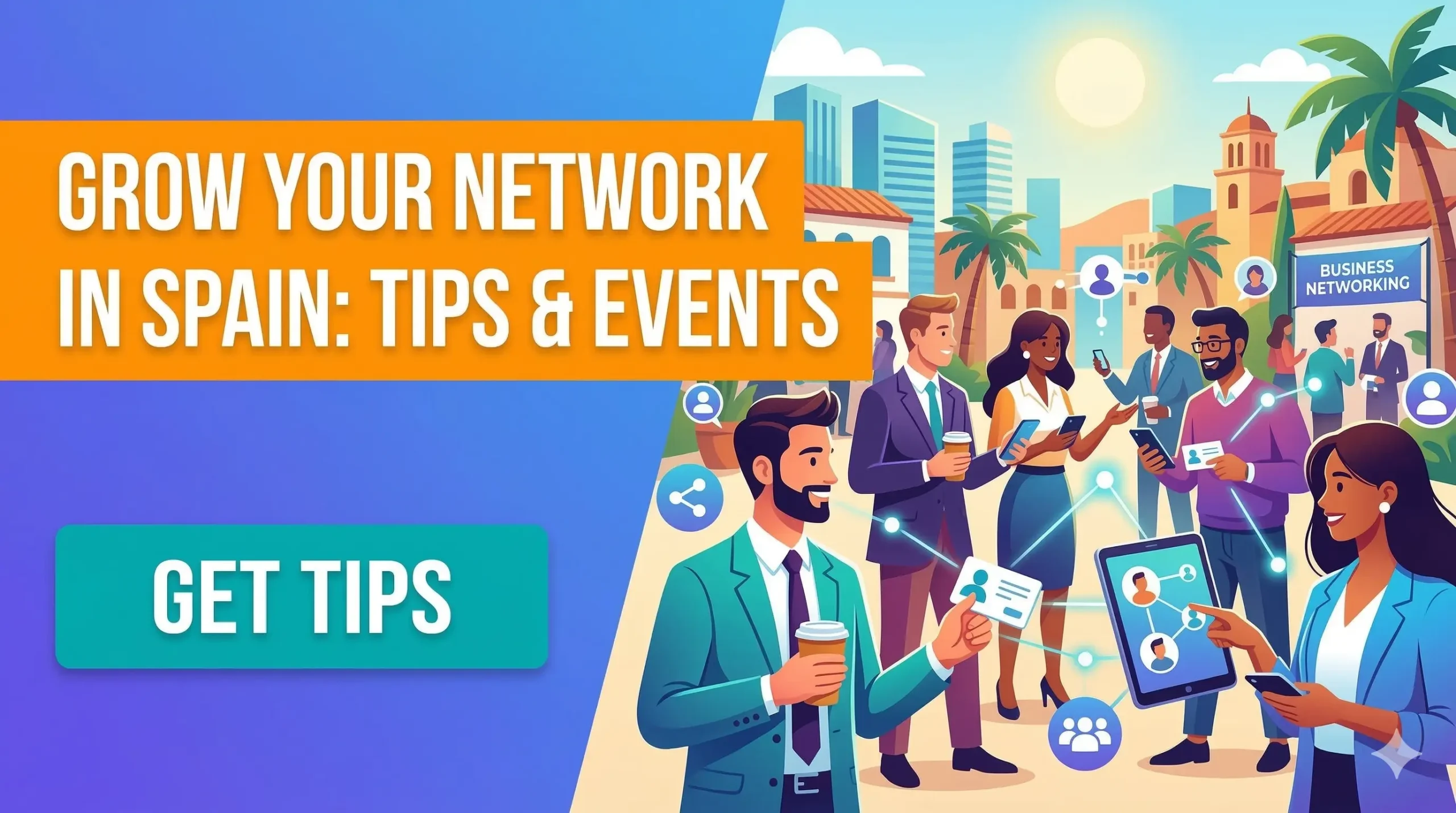
Spain hosts some of the most massive, globally significant industry conferences in the world. Events like the Mobile World Congress (MWC) in Barcelona, the South Summit for startups in Madrid, and FITUR for the global tourism industry are absolute goldmines for high-level networking.
These events are where international corporations send their top executives and HR directors to scout for talent and forge partnerships. You must treat these conferences as active job fairs. Print physical business cards (which are still highly utilized in formal Spanish business settings alongside LinkedIn QR codes) and prepare a highly polished elevator pitch.
A standard attendee badge can cost hundreds of euros, and booking last-minute travel to Barcelona during MWC will decimate your budget. When you are buying these expensive conference tickets online or booking travel using your home-country savings, routing the payments through a multi-currency account like Wise protects your fragile networking budget from the predatory foreign transaction fees charged by legacy banks. To safely budget for these massive localized expenses, you must review Cost of Living in Spain: Budgeting for Expats.
Casual Networking Meetups and Intercambios
If elite trade fairs are too expensive, you must pivot to the grassroots networking scene. Platforms like Meetup.com are incredibly active in major Spanish cities, hosting dozens of casual, industry-specific networking events every single week.
Look for groups with titles like “Madrid Marketing Professionals,” “Barcelona Tech & Beers,” or “GuiriBusiness.” These events are typically held in local bars or hotel lounges and offer a much lower-pressure environment to practice your networking skills. Furthermore, attending language exchange events (intercambios) is a brilliant dual-purpose strategy. You meet local Spanish professionals who want to practice their English, while you get to practice your Spanish and organically ask them about their industries.
Walking into a crowded Spanish bar and attempting to network in a second language is terrifying. If you freeze up and revert entirely to English, you defeat the purpose of the event. Preparing yourself mentally by listening to the conversational dialogue tracks on SpanishPod101 right before the event ensures your ear is tuned to the local accent, allowing you to confidently break the ice and build rapport.
Professional Associations and Chambers of Commerce
For expats seeking high-level corporate connections, particularly in B2B sales, law, or international finance, joining formal professional associations is non-negotiable.
Organizations like the Cámara de Comercio de España (Spanish Chamber of Commerce), the American Chamber of Commerce in Spain (AmCham), or the British Chamber of Commerce host exclusive, highly formalized networking breakfasts, legal seminars, and gala dinners. These events are specifically designed to bridge the gap between foreign capital and local Spanish enterprise.
Membership in these chambers frequently requires a steep annual fee, but the return on investment is massive. You are granted direct access to a curated directory of executives who actively want to hire international talent. When paying these hefty membership dues from your home country or executing cross-border payments for gala tickets, utilizing Wise guarantees you bypass the massive SWIFT fees that legacy banks hide in international wires. For a comprehensive look at exactly how much wealth this modern strategy preserves during your relocation, carefully read Sending Money to/from Spain: Comparing Banks vs Transfer Services.
| Networking Channel | Primary Target Audience | Formality Level | Best Expat Strategy |
| LinkedIn InMail | HR Directors & Headhunters | Medium-High | Direct, polite outreach for virtual coffee |
| Trade Fairs (MWC) | Global Executives & Startups | High | Polished elevator pitch & business cards |
| Meetup.com | Local Peers & Tech Workers | Low (Casual) | Building organic friendships & finding mentors |
| Chambers of Commerce | B2B Leaders & Multinational Execs | Very High | Attending formal breakfasts & leveraging member directories |
Building Organic Community Connections
The most powerful professional connections in Spain frequently occur completely outside the confines of formal networking events. Embracing the deep social rhythms of Spanish daily life will unlock doors that perfectly polished resumes cannot.
The Power of the Desayuno and Afterwork
In the Spanish corporate world, the office is for executing tasks, but the cafeteria is for building trust. If you successfully land a coffee meeting with a Spanish professional, or if you are currently working a part-time job, you must master the rituals of the desayuno (the mid-morning coffee break) and the afterwork (post-office drinks).
Around 11:00 AM, Spanish professionals inevitably migrate to a local cafe for twenty minutes of intense socialization. Similarly, going out for a caña (a small draft beer) at 7:00 PM on a Thursday is a cornerstone of corporate bonding. If you consistently decline these invitations because you want to “be efficient” and go home to apply for more jobs, you will permanently isolate yourself from the hidden referral networks.
These casual environments are where Spanish professionals drop their formal guard and share insider information about upcoming unlisted job openings in their departments. To survive the rapid-fire, heavily slang-infused conversations that dominate the afterwork, you must train your listening comprehension beyond textbook grammar. Integrating SpanishPod101 into your daily routine provides you with the specific, colloquial vocabulary necessary to understand the jokes and seamlessly blend into the local culture. To understand how these social rituals integrate into the broader professional day, review Spanish Work Culture: Hours, Holidays, and Workplace Etiquette.
Volunteering and Local Hobbies
One of the most authentic ways to bypass the transactional nature of networking is to join local community groups entirely unrelated to your profession.
Joining a local pádel (a wildly popular racket sport in Spain) league, a municipal hiking club, or volunteering at a local NGO instantly surrounds you with Spanish citizens from diverse professional backgrounds. When you play sports or volunteer alongside someone every weekend, you build profound, organic trust.
When they inevitably ask what you do for a living, your job search becomes a natural conversation between friends rather than a desperate pitch to a stranger. It is incredibly common for expats to secure their first major corporate interview simply because their pádel partner’s spouse happens to be a hiring manager at a massive logistics firm.
Following Up Without Being Pushy
The final, and arguably most delicate, step of Spanish networking is the follow-up. In Northern Europe or the US, sending a highly aggressive, formal follow-up email the morning after a networking event is standard protocol. In Spain, this can feel incredibly clinical and overly demanding.
The Spanish professional world relies heavily on WhatsApp for business communication, a reality that deeply shocks many newly arrived expats. While you should absolutely send a polite LinkedIn message or a formal email the day after a trade fair, if you established genuine rapport with a contact at a casual meetup, transitioning the conversation to WhatsApp is the ultimate sign of trust.
Sending a brief, warm WhatsApp message a few days later—perhaps sharing an article related to what you discussed, or inviting them for a quick coffee—is the culturally appropriate way to keep the relationship warm. You are nurturing the connection, not demanding a transaction. Building this robust, localized social and professional infrastructure takes time, immense patience, and capital. To ensure you have the financial runway to survive this relationship-building phase without running out of cash, you must meticulously manage your local overhead; review Student Finances in Spain: Bank Accounts and Budgeting Tips and Opening a Bank Account in Spain as a Non-Resident to set up your survival systems securely.
References
Primary sources (official)
- Cámara de Comercio de España (Spanish Chamber of Commerce) – Networking and Events: https://www.camara.es/en
- LinkedIn Economic Graph – Global Labor Market and Workforce Data: https://economicgraph.linkedin.com/workforce-data
Other helpful sources
- InterNations – Community for Expatriates and Global Networking in Spain: https://www.internations.org/
- Meetup – Professional Networking and Expat Groups in Spain: https://www.meetup.com/
Disclaimer
The information provided in this article is for educational and informational purposes only and does not constitute formal career counseling, legal, or financial advice. Spanish labor laws, including the regulations surrounding the Situación Nacional de Empleo, visa sponsorship requirements, and the membership protocols for official Chambers of Commerce, are highly complex and subject to frequent updates. Always verify your specific legal standing, visa eligibility, and labor rights directly with a certified immigration lawyer (abogado de extranjería) or a registered labor advisor before attempting to secure employment or signing legally binding contracts in Spain.