How to Open a Spanish Bank Account Without a Long‑Term Address
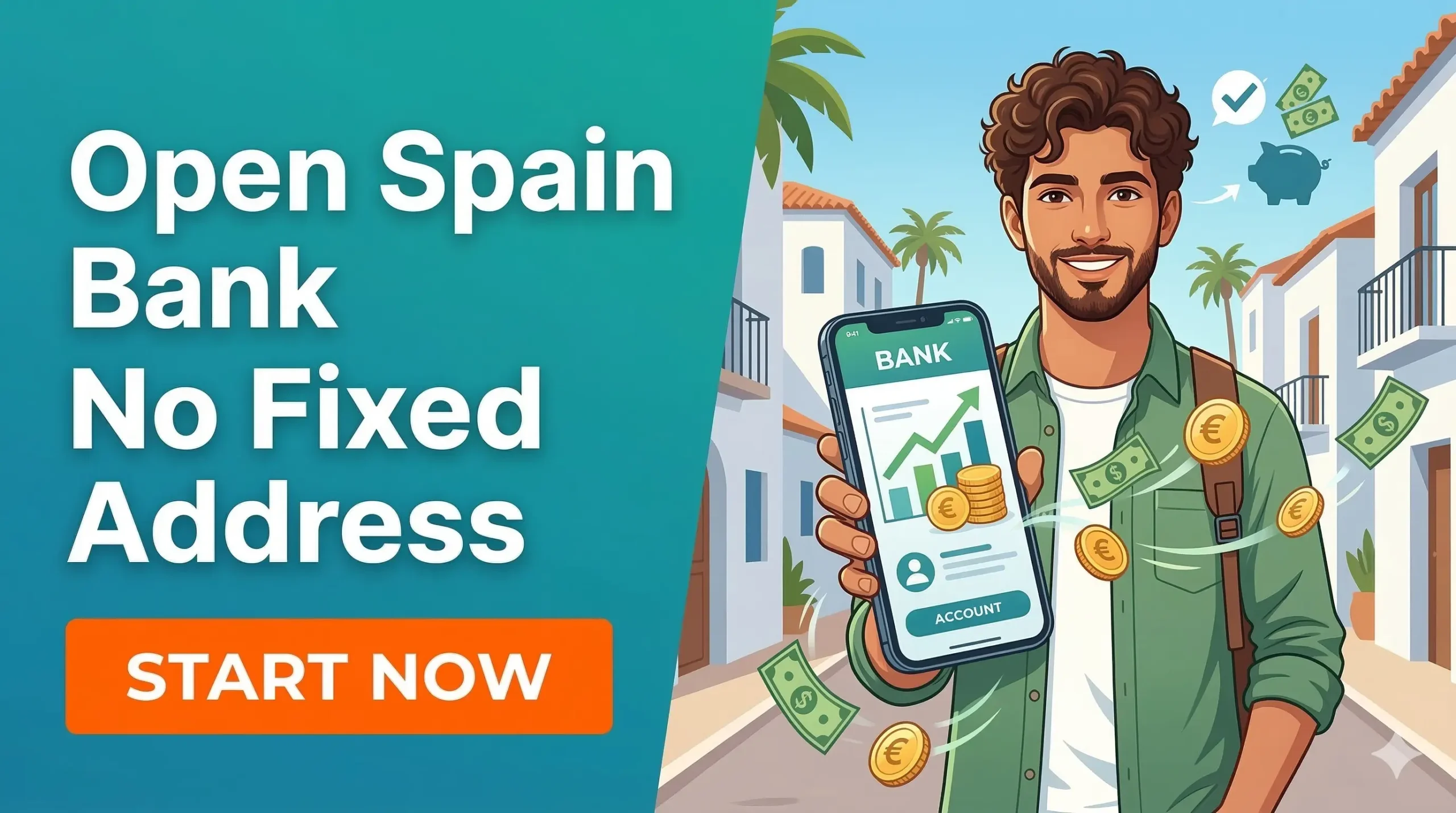
You need a Spanish bank account to rent a long-term apartment, but legacy banks demand a signed lease to open that account. I spent my first two weeks in Madrid crying in a hostel because three different traditional branches rejected my application over this exact paradox. This guide breaks down exactly how to legally secure a Spanish IBAN without a permanent address.
Disclosure: This post may contain affiliate links. We may earn a commission at no extra cost to you if you make a purchase through these links. Read full disclosure.
The Administrative Paradox of Spanish Addresses
When you arrive in Spain, you are immediately thrown into a bureaucratic loop that seems designed to break your spirit. Understanding why traditional Spanish bank tellers are so inflexible will save you hours of arguing in a physical branch.
Why Legacy Banks Demand a Lease
Spanish high-street banks operate under incredibly strict federal and European compliance frameworks. To satisfy Anti-Money Laundering and Know Your Customer regulations, compliance departments force branch tellers to collect absolute proof of your physical residency. They cannot simply take your word that you are living in a specific neighborhood.
For a standard resident checking account, legacy banks will demand a municipal census certificate, a recent utility bill in your name, or a fully signed, legally binding long-term rental contract. If you are sleeping on a friend’s couch, staying in a thirty-day Airbnb, or living in a youth hostel, you mathematically cannot produce these documents. If you try to hand a branch manager a booking receipt from a short-term rental platform, they will reject your application on the spot. To understand exactly how rigid these paper requirements are, you must review What Proof of Address Do Spanish Banks Accept?.
The Housing Market Catch
The cruelty of this banking requirement becomes apparent the moment you try to secure a long-term apartment. Spanish landlords and real estate agencies almost universally demand a local Spanish IBAN before they will let you sign a lease. They need this local account to set up your monthly direct debits for rent and utilities.
They will actively refuse to accept manual monthly international wire transfers from your checking account in the United States, the United Kingdom, or Australia. Because you cannot get the apartment without the bank account, and you cannot get the bank account without the apartment, you are effectively paralyzed. You must bridge this gap using financial tools that operate entirely outside the traditional Spanish high street. To budget for the massive upfront costs required the moment you finally break this loop, read Renting in Spain: How to Budget for Deposits, Fees, and Utilities.
Digital Banking Alternatives for Immediate Setup
If you lack a long-term address, your absolute best strategy is to avoid traditional physical bank branches entirely during your first few weeks. The digital banking sector has revolutionized expat relocation by streamlining the compliance process.
Securing a Spanish IBAN Digitally
Modern European digital banks are fully licensed financial institutions that operate without the massive overhead of physical branches. Because their entire business model is built around mobile agility, their onboarding processes are vastly more accommodating to newly arrived international residents.
N26 is one of the most popular digital banking solutions for expats facing the address paradox. When you open a standard account with N26 using a Spanish address, they issue you a recognized Spanish IBAN. This is the exact credential you need to appease local landlords and set up your utility contracts.
Unlike legacy banks that demand a twelve-month rental contract or a government census document, N26 utilizes a highly sophisticated, app-based identity verification process. You can frequently open an N26 account using just your passport and a temporary Spanish shipping address (like your Airbnb or your employer’s office) to receive your physical debit card. This frictionless onboarding completely bypasses the hostile gatekeeping of traditional tellers. For a broader look at how this fits into your overall relocation strategy, review Best Low-Fee Bank Accounts in Spain for New Residents.
Moving Your Relocation Funds Safely
Securing the digital account solves your local direct debit problem, but you still face the massive hurdle of actually funding your new life. Before you secure that long-term lease, you will likely need to transfer thousands of euros to cover the required two-month security deposit, the current month’s rent, and the inevitable real estate agency fees.
To fiercely protect their relocation capital, veteran expats rely on Wise. By utilizing Wise, you can hold your home currency and convert it to euros at the highly transparent mid-market exchange rate. You can then use Wise to send your massive rental deposit directly to the landlord’s Spanish account instantly and cheaply. Keeping this multi-currency infrastructure active is also a lifesaver for splitting temporary housing costs or paying for hostel extensions while you apartment hunt. To understand the exact math behind these savings, read Sending Money to/from Spain: Comparing Banks vs Transfer Services.
Opening a Traditional Non Resident Account
If you absolutely must use a traditional Spanish legacy bank—perhaps because your specific visa requires a stamped certificate from a high-street branch—you can legally open an account without a Spanish address by applying for a non-resident account.
Using Your Home Country Address
Spanish banks offer a specific product called a Cuenta de No Residente (Non-Resident Account). This account is legally designed for tourists, property investors, and newly arrived expats who have not yet established fiscal residency in the country.
To open this account, the bank will accept the permanent address from your home country. You can use a bank statement, a utility bill, or a tax return from the United States, the UK, or wherever you currently reside. However, walking into a local neighborhood branch with English utility bills will frequently cause panic. Many regional tellers will demand you pay for an expensive, certified sworn translation of your foreign address documents before they will accept them.
Furthermore, non-resident accounts at traditional banks carry brutal maintenance fees. Because the bank views you as a temporary, high-risk client who is not directly depositing a local Spanish payroll, they will charge you premium quarterly tariffs simply for keeping the account open. If you are an international student trying to stretch a tight budget, these fees will cause immediate financial anxiety. To explore how to navigate these specific bureaucratic traps, read Opening a Bank Account in Spain as a Non-Resident.
The Police Certificate Requirement
The largest barrier to opening a non-resident account at a traditional branch is the Certificado de No Residente. By law, the bank must prove to the government that you are not secretly living in Spain to evade taxes.
While some premium, expat-focused bank branches will offer to request this certificate on your behalf for an extra processing fee, many standard branches will force you to get it yourself. This requires you to secure an appointment at a National Police station (Comisaría de Policía Nacional), fill out the EX-15 form, pay a minor tax at a local bank, and wait for the police to issue the certificate confirming you are not a resident.
Transitioning to Long Term Financial Infrastructure
Once you use your digital tools to secure a long-term lease, your administrative status in Spain fundamentally shifts. You must immediately upgrade your temporary financial setup to ensure long-term stability.
Securing the Municipal Register
The moment your landlord hands you the keys to your new long-term apartment, you must book an appointment at the local town hall to secure your Certificado de Empadronamiento. This document legally registers you on the municipal census.
Once you hold this document, the address paradox is officially broken. You now possess the absolute, universally accepted proof of address required by every single institution in Spain. If you opened a high-fee non-resident account at a traditional bank upon arrival, you must immediately march back into that branch, present your empadronamiento, and demand they convert your profile to a standard resident account to drop the punishing quarterly fees.
If you started with a digital solution like N26, you simply update your final, permanent address in the app. Having your official address registered properly ensures that your physical residency cards, your local health insurance paperwork, and your domestic payroll are all perfectly aligned. For a deep dive into structuring this localized daily budget, review Student Finances in Spain: Bank Accounts and Budgeting Tips.
Managing Global Wealth and Investments
After your local Spanish checking account is functioning smoothly and your rent is automated, you must consider your long-term wealth. When you become a formal resident with a registered address, traditional Spanish banks will aggressively attempt to cross-sell you their localized investment products, such as proprietary mutual funds or rigid pension plans.
Instead of locking your wealth into the Spanish high street, veteran expats prefer to manage their portfolios through globally recognized, low-fee brokerages like Interactive Brokers. Utilizing a platform like Interactive Brokers ensures your investments remain entirely portable and independent from your localized Spanish checking account. However, as a registered resident of Spain, holding significant capital in foreign accounts triggers serious annual reporting requirements. To ensure you do not violate the strict Spanish asset declaration laws, you must meticulously review Spanish Taxes for Foreign Residents: Practical Guide to Staying Compliant.
| Banking Strategy | Proof of Address Required | Setup Speed | Best Expat Use Case |
| Digital Bank (N26) | Temporary EU shipping address | Instant / Same day | Securing an immediate Spanish IBAN for apartment hunting |
| Multi-Currency (Wise) | Home country address | Instant / Same day | Moving large rental deposits across borders cheaply |
| Legacy Non-Resident | Home country address (Translated) | Days to Weeks | Expats who require a physical branch and can afford high fees |
| Legacy Resident | Official Spanish Lease or Padrón | Same day (with docs) | Settled expats converting their status to drop maintenance fees |
References
Primary sources (official)
- Banco de España – Abrir una cuenta de pago básica: https://clientebancario.bde.es/pcb/es/menu-horizontal/productosservici/cuentas/cuenta-pago-basica/
- Policía Nacional – Certificados de residentes y no residentes: https://www.policia.es/_es/extranjeria_certificados_y_nie.php
Other helpful sources
- N26 Support – How to open a bank account in Spain: https://n26.com/en-es/open-bank-account-in-spain
- Expatica – Opening a bank account in Spain: https://www.expatica.com/es/finance/banking/spanish-bank-account-103392/
Disclaimer
The information provided in this article is for educational and informational purposes only and does not constitute formal financial, legal, or immigration advice. Spanish banking compliance regulations, including the specific documentation required for non-resident accounts, the legal frameworks governing digital identity verification, and the procedures for the Certificado de No Residente, are highly complex and subject to frequent changes by the Banco de España and individual financial institutions. Always verify exact onboarding requirements and fee structures directly with your chosen bank or financial service provider before initiating large international transfers or attempting to establish financial residency in Spain.