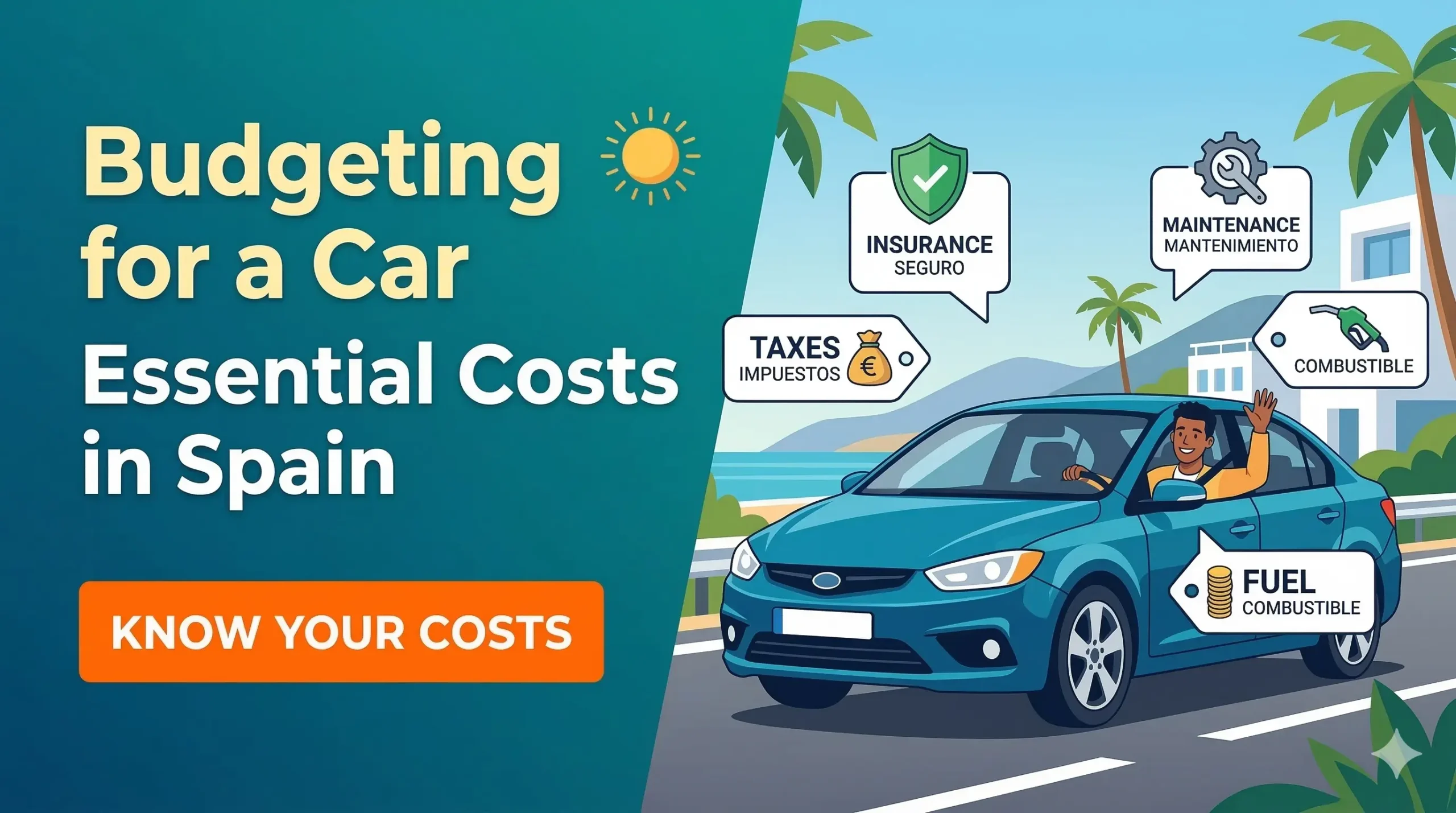
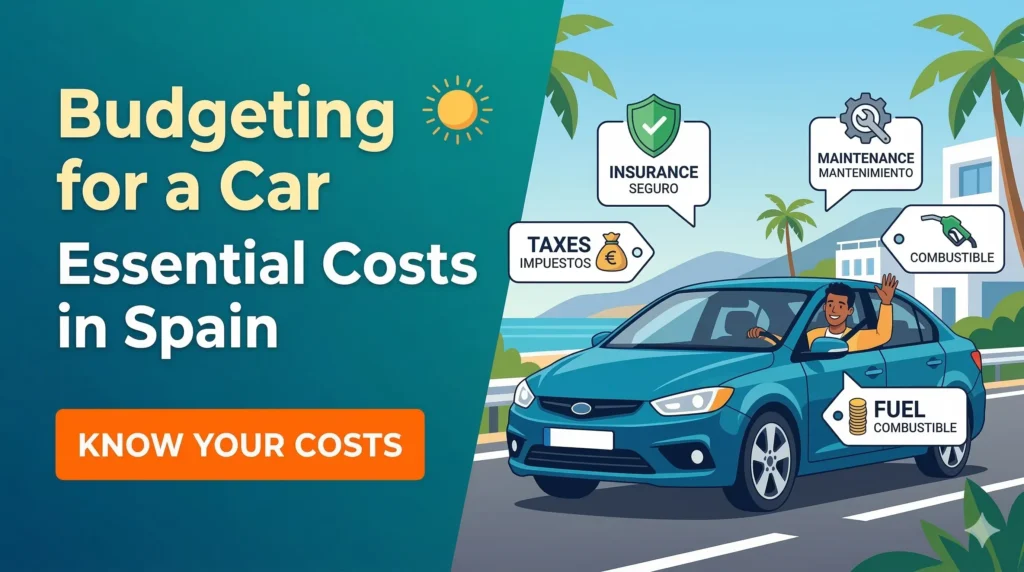
Car Costs in Spain: Insurance, Taxes, Maintenance, and Fuel
Disclosure: This article contains affiliate links. If you buy through them, we may earn a commission at no extra cost to you. Read our full disclosure.
Buying a car in Spain seems straightforward until a mysterious government embargo suddenly freezes your checking account over an unpaid municipal road tax you never knew existed. Buyers can end up spending days unraveling local bureaucracy simply because a previous owner skipped their annual vehicle fee before handing over the keys. This guide breaks down the true costs of Spanish car ownership.
The Mandatory Spanish Car Taxes
When budgeting for a vehicle, expats often focus entirely on the initial purchase price, completely ignoring the structural taxation the Spanish government applies to the physical asset. Whether you buy a brand-new SUV or a twenty-year-old hatchback, the state will demand its cut.
The IVTM Local Road Tax
The cornerstone of continuous vehicle taxation in Spain is the Impuesto sobre Vehículos de Tracción Mecánica, universally abbreviated as the IVTM and colloquially known as the sello del coche. This is an annual road tax levied not by the federal government, but directly by the local town hall (Ayuntamiento) where the vehicle is formally registered.
The exact amount you pay varies wildly depending on two factors: your specific municipality and the power of your car. The tax is mathematically calculated using a uniquely Spanish metric called caballos fiscales (fiscal horsepower), which is based on the cylinder capacity of the engine. A standard compact car might cost you sixty euros a year in a small Andalusian village, while a high-powered luxury SUV could easily trigger a two-hundred-euro annual bill in the center of Madrid. Much like the municipal property taxes detailed in Annual Property Taxes in Spain (IBI): What Owners Should Expect, the IVTM is a fiercely localized expense.
The most critical, uncompromising rule regarding the IVTM is the date of liability. Under Spanish law, whoever is the legal, registered owner of the vehicle on exactly January 1st is entirely responsible for the full year’s tax bill. If you buy a second-hand car on January 2nd, the seller is legally obligated to pay that year’s IVTM. You must demand to see the physical, stamped receipt proving they paid it; otherwise, the debt attaches to the car, and the local traffic authority (DGT) will strictly prohibit you from transferring the title into your name.
Registration and Transfer Taxes
The taxes applied at the exact moment of purchase depend entirely on whether the car is new or used. If you buy a brand-new car from a dealership, you are subjected to the standard 21 percent Value Added Tax. On top of this, you must also pay the Impuesto de Matriculación (Registration Tax), which is a federal tax scaled aggressively based on the vehicle’s official CO2 emissions. Zero-emission electric vehicles are entirely exempt from this tax, while heavy, gas-guzzling sports cars are penalized with a tax rate approaching 15 percent of the purchase price.
The ITP for vehicles generally ranges from 4 percent to 8 percent of the car’s value, heavily depending on which autonomous community you reside in. Understanding these localized tax traps is vital; read Spanish Taxes for Foreign Residents: Practical Guide to Staying Compliant to see how regional borders dictate your financial reality.
Navigating Spanish Car Insurance
Driving without valid insurance in Spain is a severe criminal offense that results in immediate vehicle impoundment and massive fines. However, securing a reasonably priced policy as a newly arrived foreigner requires navigating a deeply skeptical insurance industry.
Third Party Coverage Versus Fully Comprehensive
By law, every vehicle on a Spanish road must possess at least Seguro a Terceros (Third-Party Liability Insurance). This baseline coverage guarantees that if you cause an accident, the insurance company will pay for the physical and medical damages inflicted upon the other driver and their vehicle. It absolutely does not cover a single scratch on your own car.
For true peace of mind, especially if you purchase a newer vehicle, expats generally opt for Todo Riesgo (Fully Comprehensive Insurance). This covers everything, including fire, theft, broken glass (lunas), and damages to your own car even when you are explicitly at fault.
However, Todo Riesgo policies are incredibly expensive. To lower the monthly premium, Spanish insurers heavily promote policies con franquicia (with an excess or deductible). Understanding exactly how this deductible functions is paramount to protecting your emergency budget, a concept explored broadly in Cost of Living in Spain: Budgeting for Expats.
The Expat Premium and No Claims Bonuses
The greatest frustration expats face when buying Spanish car insurance is the absolute erasure of their driving history. Spanish insurance algorithms calculate premiums based heavily on your physical age, the exact date you acquired your driver’s license, and your historical claims record within their system.
When you arrive in Spain, the local insurance companies view you as a high-risk, unproven entity. Even if you have driven flawlessly for thirty years in the United States or the United Kingdom without a single accident, Spanish insurers will often stubbornly refuse to acknowledge your foreign driving record. They will routinely quote you the exact same exorbitant premiums they would charge an eighteen-year-old student who just passed their driving exam.
To aggressively fight this expat premium, you must obtain a formal Certificado de Siniestralidad (Claims History Certificate) from your previous foreign insurance provider before you cancel your old policy. This document must explicitly state how many years you have gone without filing a claim. You will likely need to have this document officially translated into Spanish by a sworn translator. Presenting this to a sympathetic local insurance broker is often the only way to force the algorithm to grant you the massive no claims bonus discount you rightfully deserve.
The Dreaded ITV Vehicle Inspection
Keeping your car legally registered and insured is completely useless if it is not deemed physically safe to be on the road. Spain enforces a rigorous, uncompromising mechanical inspection program that dictates the lifespan of your vehicle.
Frequency and Appointment Mechanics
The Inspección Técnica de Vehículos (ITV) is a mandatory technical test designed to verify that your car meets strict environmental emissions standards and baseline mechanical safety requirements. The frequency of this test accelerates aggressively as your vehicle ages.
If you buy a brand-new passenger car, you are entirely exempt from the ITV for the first four years of its life. Once the car turns four years old, you must pass the inspection every two years. The moment the vehicle reaches its tenth birthday, the rules become brutal: you must pay for and pass the ITV every single year without fail.
You cannot simply drive into a testing center unannounced. You must secure a cita previa (prior appointment) through the official regional ITV portal. On the day of the test, technicians will aggressively test your brakes, suspension, tire tread depth, lighting systems, and exhaust emissions. If your vehicle passes, you are handed a highly specific, color-coded sticker that must be permanently affixed to the top right corner of your windshield. Police aggressively scan for expired stickers, and driving without a valid ITV carries an automatic two-hundred-euro fine.
| Vehicle Age (Passenger Cars) | ITV Inspection Frequency |
| 0 to 4 Years Old | Exempt (No inspection required) |
| 4 to 10 Years Old | Biennial (Every 2 years) |
| 10+ Years Old | Annual (Every 1 year) |
What Happens When Your Car Fails
Failing the ITV is a stressful, financially draining rite of passage for expats driving older vehicles. The inspectors do not fix your car; they simply hand you a diagnostic report detailing exactly why it failed. Failures are categorized by severity.
A Falta Grave (Major Fault), such as failing the emissions test, severely worn brake pads, or a bald tire, results in an immediate, catastrophic failure. The moment you receive a Falta Grave, your vehicle is legally banned from driving on public roads, with one highly specific exception: you are only allowed to drive it directly from the ITV station to a mechanic’s garage, and then directly back to the ITV station for a re-test. You are generally granted exactly two months to fix the issue and return for a free or heavily discounted secondary inspection. If you are operating a vehicle for freelance work, the sudden requirement to drop a thousand euros on a new catalytic converter is devastating; check Business Expenses in Spain: What’s Typically Deductible to see if you can mitigate this through tax write-offs.
Fuel Tolls and Daily Running Costs
The daily operational costs of driving in Spain fluctuate wildly based on global macroeconomic factors and highly localized infrastructure choices. Budgeting for your daily commute requires understanding the Spanish specificities of the pump and the highway.
The True Cost of Petrol and Diesel
When pulling into a Spanish gas station, you are faced with a heavily taxed commodity. Spain imports the vast majority of its fossil fuels, meaning the prices at the pump are highly sensitive to global supply chain disruptions.
You will generally choose between Gasolina 95 or Gasolina 98 (unleaded petrol, with the number denoting the octane rating) and Gasóleo A (standard diesel). Historically, diesel was significantly cheaper than petrol, heavily incentivizing the Spanish population to buy diesel vehicles. However, due to shifting environmental taxes and refining costs, the price gap has narrowed dramatically, and on some days, diesel is actually more expensive.
Roughly half of the price you pay per liter goes directly to the state in the form of the Impuesto Especial sobre los Hidrocarburos (Special Tax on Hydrocarbons) and the standard 21 percent VAT. Because prices fluctuate daily and vary significantly between specific brands, veteran expats utilize mobile apps to aggressively hunt down the cheapest fuel in their specific municipality before filling up.
Autopistas and Electronic Toll Systems
Spain boasts an incredibly vast, highly maintained network of high-speed highways, but they are strictly divided into two distinct categories: Autovías and Autopistas.
Autovías (usually designated with an ‘A’ prefix, like the A-7) are dual-carriageway expressways built and maintained by the state. They are completely free to use. Autopistas (usually designated with an ‘AP’ prefix, like the AP-7) are privately operated, premium toll roads. While the Spanish government has been systematically allowing private toll concessions to expire—effectively turning many former toll roads back into free public highways—several major corridors, particularly around Madrid and the Basque Country, remain heavily tolled.
If you frequently commute on an Autopista, stopping at the physical toll booths to pay with a credit card causes massive friction. Most daily commuters install a VIA-T device (a small electronic transponder) on their windshield. As you drive through the dedicated toll lane, the sensor reads the device without requiring you to stop, and the toll is automatically charged to your linked bank account at the end of the month. Setting up this specific hardware shares similarities with establishing your household infrastructure, which we cover in Utility Costs in Spain: Electricity, Gas, Water, and Internet.
Financial Logistics for Expat Drivers
The overarching reality of owning a car in Spain is that absolutely every single associated cost—from the annual insurance premium to the municipal road tax—requires seamless interaction with the local financial system. Executing this efficiently is where most expats fail.
Managing Direct Debits and Local Banking
The Spanish economy operates almost exclusively on the domiciliación bancaria (direct debit) system. When you sign your car insurance policy or register for your annual IVTM road tax, the administration will not simply mail you a bill to pay manually. They will aggressively demand a local bank account IBAN so they can automatically pull the funds on the exact day they are due.
Attempting to provide a foreign European IBAN to a local Spanish town hall frequently results in catastrophic system rejections due to archaic billing software. If the direct debit fails, your car insurance is instantly canceled, or your road tax accrues massive late penalties.
To bypass this illegal IBAN discrimination without subjecting yourself to the predatory quarterly maintenance fees of traditional Spanish high-street banks, savvy expats utilize modern digital platforms like N26. By opening a dedicated account with N26, you instantly receive a recognized, official Spanish IBAN directly from your smartphone. Linking your N26 account to your insurance provider and the DGT ensures your direct debits process flawlessly, keeping you legally on the road. If you are struggling to understand exactly how deeply this direct debit system permeates daily life, read How to Pay Bills in Spain: Direct Debit, Cash, and Online Portals.
Moving Capital for a Car Purchase
The initial act of buying the car itself requires moving a massive amount of capital across international borders. If you are buying a reliable, second-hand SUV to navigate the Spanish countryside, you will easily need to transfer fifteen to twenty thousand euros to the seller.
If you attempt to wire this massive lump sum directly from your home country bank in the US, UK, or Australia via a traditional SWIFT transfer, you will be financially crushed. Traditional legacy banks hide aggressive profit margins in terrible currency exchange rates. A 3 percent hidden markup on a twenty-thousand-euro transfer means the legacy bank is silently pocketing six hundred euros of your capital simply for executing a digital conversion.
To fiercely protect your vehicle budget, you must bypass the legacy banking system entirely and use a dedicated currency specialist like Wise. By executing your massive upfront car purchase transfer through a Wise account, you secure the true, transparent mid-market exchange rate. This strategic move ensures your hard-earned capital is actually used to buy a better car, rather than lining the pockets of institutional bank managers. For a deeper comparative look at how much the legacy system extracts from your wealth, read Sending Money to/from Spain: Comparing Banks vs Transfer Services.
Protecting Your Remaining Wealth
Once you have successfully navigated the taxes, the inspections, and the purchase itself, you will ideally have surplus capital remaining from your relocation budget. Dumping a massive portion of your life savings into a rapidly depreciating physical asset like a car is a necessary evil of rural expat life, but leaving the remainder of your wealth sitting idle in a zero-interest Spanish checking account is a devastating mistake.
High European inflation will quietly erode your purchasing power over time. Furthermore, if you ask a local Spanish branch manager for investment advice regarding your surplus cash, they will inevitably push you into their proprietary mutual funds, which are notorious for abysmal performance and exorbitant management fees.
To actively protect and aggressively grow the wealth you are not spending on catalytic converters and insurance premiums, veteran expats utilize global brokerage platforms like Interactive Brokers. By transferring your surplus capital into an institutional-grade account with Interactive Brokers, you gain direct, unfiltered access to low-cost, globally diversified ETFs and sovereign bonds. This allows you to build a highly portable, tax-efficient portfolio that easily outpaces the inflation of local Spanish fuel prices. To ensure you understand how holding massive global wealth interacts with Spanish reporting laws, carefully review the exemptions detailed in Wealth Tax and Solidarity Tax in Spain: Overview for Foreigners. To see how your local financial footprint is established initially, read Opening a Bank Account in Spain as a Non-Resident.
References
Primary sources (official)
- Dirección General de Tráfico (DGT) – Impuesto de Circulación (IVTM): https://www.dgt.es/nuestros-servicios/tu-vehiculo/tus-vehiculos/impuesto-de-circulacion-ivtm/
- Asociación Española de Entidades Colaboradoras de la Administración en la Inspección Técnica de Vehículos (AECA-ITV) – Cuándo pasar la ITV: https://www.aeca-itv.com/la-itv/cuando-me-toca-pasar-la-itv-2/
Other helpful sources
- Expatica – Driving in Spain: https://www.expatica.com/es/living/transportation/driving-in-spain-101425/
- RACE – Cuándo pasar la primera ITV al coche nuevo: https://www.race.es/cuando-pasar-primera-itv
Disclaimer
The information provided in this article is for educational and informational purposes only and does not constitute formal financial, tax, or legal advice. Spanish vehicle taxation, the localized calculation of the IVTM, regional ITP variations, and the stringent administrative timelines for mandatory ITV inspections are highly complex and subject to frequent legislative updates by the Dirección General de Tráfico and regional authorities. Always consult directly with a certified gestor administrativo or your insurance broker regarding your specific vehicle registration, emission tax liabilities, and foreign driving history before finalizing a vehicle purchase in Spain.