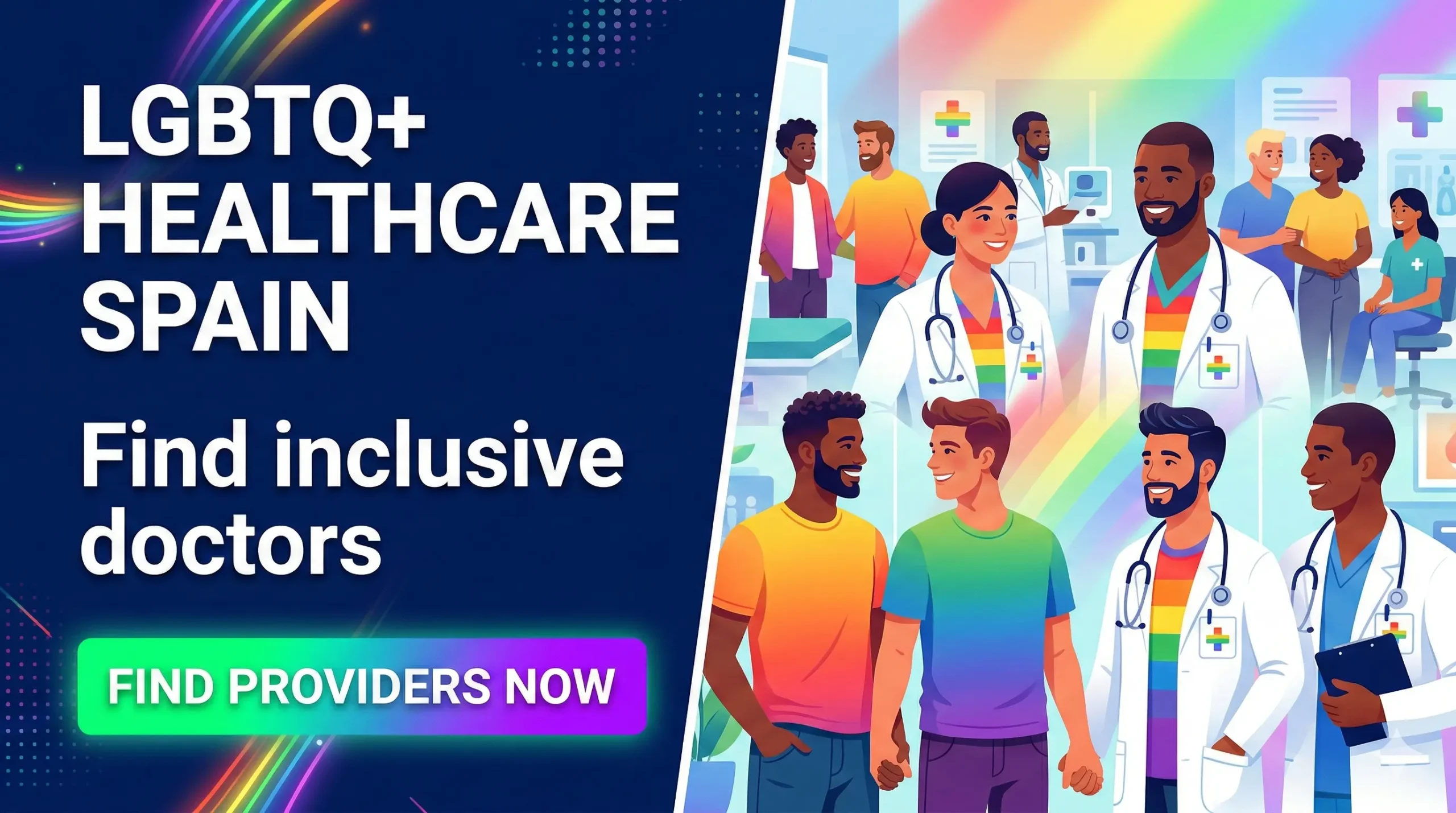
LGBTQ+ Friendly Healthcare in Spain: Finding Inclusive Providers
Relocating to Spain offers expats access to one of the most progressive and highly ranked healthcare systems globally. This comprehensive guide helps LGBTQ+ individuals navigate public and private medical networks, access gender-affirming care, secure preventative treatments, and find culturally competent, inclusive providers across the country.
Disclosure: This post may contain affiliate links. We may earn a commission at no extra cost to you if you make a purchase through these links. Read full disclosure.
The Landscape of Inclusive Healthcare in Spain
Spain as a Global Leader in LGBTQ Rights
Spain has consistently ranked as one of the most progressive countries in the world regarding LGBTQ+ rights and social acceptance. This legislative and cultural progression directly impacts the medical landscape. Following the early legalization of same-sex marriage in 2005, the Spanish government has continuously implemented national and regional laws aimed at dismantling healthcare discrimination.
The cornerstone of this inclusive approach is the Sistema Nacional de Salud (SNS), Spain’s public healthcare system. The SNS operates on the fundamental principle of universality, ensuring that comprehensive medical care is available to all registered residents regardless of their background, sexual orientation, or gender identity.
However, the experience of accessing this progressive care can vary. Because Spain’s healthcare system is decentralized and managed by its 17 autonomous communities, the availability of specialized LGBTQ+ clinics and the specific bureaucratic processes can differ depending on whether you live in Madrid, Catalonia, or Andalusia. Understanding this regional fragmentation is essential for expats who rely on specific medical treatments. Before diving into localized specifics, reviewing our broader guide on the Spain Healthcare System for Expats: Public vs Private provides a crucial foundation for understanding how these regional health boards operate.
Public Versus Private Care Systems
When seeking LGBTQ+ friendly healthcare in Spain, expats must carefully weigh the differences between the public SNS and the private healthcare sector. The public system is highly lauded for its comprehensive coverage. If you are a legal resident contributing to the social security system, you have access to fully funded preventative sexual health services, HIV management, and comprehensive gender-affirming care, including hormone replacement therapy and surgeries.
Conversely, the private healthcare sector offers unparalleled speed, convenience, and choice. By purchasing a private health insurance policy, expats can bypass the public waiting lists and book appointments directly with private specialists. Private clinics also feature modern facilities and a much higher likelihood of finding English-speaking medical professionals, which significantly reduces the anxiety of discussing sensitive health topics in a second language.
Despite these advantages, the private sector has limitations regarding complex LGBTQ+ healthcare. Many basic private insurance policies explicitly exclude coverage for gender-affirming surgeries, labeling them as pre-existing or elective cosmetic procedures, though routine hormone monitoring is usually covered.
Navigating the Public System for Sexual and Gender Health
Registering for Your Public Health Card
To access the comprehensive LGBTQ+ healthcare services offered by the state, your first administrative hurdle is integrating into the public health system. This process begins with obtaining your Spanish Social Security number, which requires a valid employment contract or proof of self-employment (autónomo status). Once registered with Social Security, you must formally register your residential address at the local town hall to acquire a Padrón certificate. Armed with these documents and your residency card (TIE) or passport, you must visit your local community health clinic (Centro de Salud) to apply for your physical health card, known regionally as the SIP card, TSI, or Tarjeta Sanitaria.
It is highly advisable to discuss this explicitly with the administrative staff at your Centro de Salud during your initial registration. Bringing an advocate or a fluent Spanish speaker can help navigate this specific request, ensuring that your medical file accurately reflects your identity from day one, thereby preventing misgendering during future medical appointments or when being called from the waiting room.
Pros and Cons of Public Health Services
The public health system shines brightest when handling long-term, high-cost medical needs that disproportionately affect the LGBTQ+ community. The complete absence of financial barriers at the point of service is a massive advantage. Treatments that cost tens of thousands of dollars in countries like the United States—such as a lifetime supply of antiretroviral therapy for HIV, comprehensive surgical transitions, or regular comprehensive STI PCR panels—are managed entirely free of charge for registered residents. The clinical safety and evidence-based protocols utilized by the SNS are world-class, ensuring patients receive the highest standard of medical care.
However, the public system’s rigid structure can be frustrating. Patients cannot choose their primary care physician (médico de cabecera); they are assigned a doctor based strictly on their home address. If your assigned doctor lacks specific knowledge regarding LGBTQ+ health nuances, requesting a transfer to a different doctor within the same clinic involves a tedious bureaucratic process.
Utilizing Private Clinics for Personalized Care
The Advantages of Private Insurance
For expats seeking immediate access to tailored healthcare, securing comprehensive private health insurance is an essential strategy. The private model shifts the power dynamic, allowing the patient to act as a consumer with total freedom of choice. You can comb through local expat forums, consult LGBTQ+ community groups, and read online reviews to identify the most inclusive, highly recommended specialists in your city. Once you find a doctor whose medical philosophy aligns with your needs, you can book an appointment directly through your insurer’s digital portal without needing a prior referral.
When selecting a policy, utilizing a specialized broker or an international provider like Innoinsure ensures you secure a plan specifically designed for expats. These premium policies often feature extensive medical directories (cuadro médico) packed with bilingual specialists. They also provide English-language customer support, which is invaluable when you need to clarify whether a specific STI panel or a consultation with a gender specialist is covered under your plan’s terms and conditions.
Finding Specialized and English Speaking Doctors
Finding an affirming, English-speaking doctor in the private sector is relatively straightforward in major metropolitan hubs like Madrid, Barcelona, Valencia, and Málaga. These cities host numerous private international clinics that cater specifically to the expat demographic. In neighborhoods with high LGBTQ+ populations, such as Chueca in Madrid or the Eixample district in Barcelona, private clinics overtly market their LGBTQ+ competency, displaying pride flags and offering specialized services tailored to the community.
When vetting a potential private doctor, you can often review their professional biography on the clinic’s website to check for specific credentials or memberships in LGBTQ+ medical associations. Do not hesitate to call the clinic’s reception desk directly to ask about the doctor’s experience with transgender healthcare, their approach to PrEP monitoring, or their fluency in English. An inclusive clinic will welcome these questions and provide clear, reassuring answers.
Preventative Care and Sexual Health Services
Routine STI Screenings and Privacy
Maintaining proactive sexual health is a cornerstone of overall wellness, and Spain offers excellent resources for routine screenings. In the public system, you can request comprehensive STI panels through your primary care physician. For individuals seeking a higher degree of privacy or specialized care, major cities feature Centros de ITS (STI Centers). These public clinics focus exclusively on sexual health, offering rapid testing, expert counseling, and immediate treatment for infections without the need for a general practitioner referral.
If you prefer to bypass the public system entirely, private diagnostic laboratories are abundant. You can walk into a private lab, request a comprehensive molecular PCR panel out-of-pocket, and receive highly accurate results via a secure online portal within 24 to 48 hours. Regardless of the route you choose, Spanish data protection laws strictly guarantee your confidentiality. Your employer or immigration officials cannot access your sexual health records. For a deeper understanding of these privacy laws and testing procedures, refer to our detailed guide on Sexual Health Clinics in Spain: Testing, Privacy, and Appointments.
Accessing PrEP and PEP Programs
Spain has made monumental strides in HIV prevention. Pre-Exposure Prophylaxis (PrEP) is fully integrated into the public healthcare portfolio and is provided completely free of charge to high-risk individuals, including men who have sex with men, transgender women, and sex workers. To access public PrEP, you must secure a referral from your public GP to a specialized infectious disease unit, where you will undergo baseline testing before the medication is prescribed and dispensed directly from the hospital pharmacy. Notably, Spain has recently approved long-acting injectable PrEP, further cementing its status as a pioneer in preventative care.
Post-Exposure Prophylaxis (PEP), the emergency 28-day antiretroviral treatment taken after a potential HIV exposure, is also freely available. If you require PEP, you must go immediately to the emergency room (Urgencias) of a major public hospital within 72 hours of the exposure. The emergency department will triage your case, provide the initial starter pack of medication, and refer you for follow-up monitoring. For expats navigating these emergency protocols, reading our comprehensive breakdown in STI Testing in Spain: How to Access Services as a Foreigner provides vital logistical clarity.
Transgender and Gender Affirming Care
The Impact of the Spanish Trans Law
In early 2023, Spain passed the historic Ley 4/2023, widely known as the “Ley Trans” (Trans Law), marking a paradigm shift in transgender rights and healthcare. This landmark legislation officially enshrined the principle of gender self-determination, completely removing the archaic requirement for a psychological diagnosis of “gender dysphoria” or mandatory medical treatments to change one’s legal gender marker. This depathologization profoundly impacts the healthcare environment, validating transgender identities as natural human variations rather than psychiatric disorders.
The law also dictates that all autonomous communities must provide specialized, multidisciplinary healthcare for transgender individuals within the public system. While the implementation pace varies by region, major areas like Catalonia (via the Trànsit service) and Madrid provide dedicated gender identity units staffed by endocrinologists, surgeons, and specialized psychologists who guide patients through their medical transitions without gatekeeping their access to care.
Hormone Replacement Therapy and Surgical Options
For transgender expats moving to Spain who are already on Hormone Replacement Therapy (HRT), ensuring the continuity of your prescription is the highest priority. You cannot simply take a foreign prescription to a Spanish pharmacy. You must book an appointment with a Spanish doctor—either a public GP or a private endocrinologist—and present your medical history. It is highly recommended to bring a detailed, officially translated letter from your home country’s endocrinologist outlining your current dosages, your historical lab results, and your transition timeline. The Spanish doctor will then issue a local prescription, ensuring your HRT continues seamlessly.
In the public system, HRT medications are heavily subsidized, costing only a few euros per month. The public system also covers comprehensive gender-affirming surgeries, including facial feminization, top surgery (mastectomy or breast augmentation), and genital reconstructive surgeries. However, because these are highly specialized procedures, the public waiting lists are notoriously long, often stretching from three to five years depending on the specific surgery and the regional hospital’s capacity.
Mental Health and Community Support
Overcoming Expat Isolation
Relocating to a new country is inherently stressful, and LGBTQ+ expats face the compounded challenge of navigating “minority stress” alongside cultural adaptation. Being far away from established support networks, struggling with the Spanish language, and learning the nuances of a new medical system can lead to profound feelings of isolation, anxiety, and depression. Recognizing these mental health challenges early and seeking proactive support is crucial for a successful relocation. Check our guide on Mental Health Support in Spain: How to Find Help as an Expat to check for support services if needed.
To combat this isolation, actively seeking out the local LGBTQ+ community is vital. Spain’s major cities possess incredibly vibrant, welcoming queer communities. Engaging with local advocacy groups, joining LGBTQ+ sports leagues (which are immensely popular in Spain), or simply attending events in queer neighborhoods can provide an immediate sense of belonging. Finding your community provides a vital safety net of peers who can share their lived experiences and offer practical advice on navigating daily life in Spain.
Finding LGBTQ Affirming Therapists
When professional psychological support is needed, finding an affirming therapist is paramount. While the public healthcare system provides access to psychologists and psychiatrists, the mental health sector is notoriously underfunded. Wait times for non-emergency public therapy sessions can stretch for months, and appointments are often brief and infrequent. Furthermore, finding a public psychologist fluent in English is incredibly rare, making deep, nuanced therapeutic work nearly impossible for non-native speakers.
Consequently, most expats rely on the private sector for mental health support. Spain has a robust network of private clinical psychologists, many of whom specialize in expat adaptation, gender identity, trauma, and LGBTQ+ relationship counseling. When searching for a therapist, look for professionals who explicitly state their competency in queer issues and offer sessions in English.
Essential Resources and Administrative Tips
Sourcing Medications and Pharmacy Protocols
The Spanish pharmacy (farmacia) operates differently than drugstores in many other countries. They do not sell groceries or cosmetics; they are highly regulated healthcare dispensaries staffed by university-trained pharmacists. If you require specialized LGBTQ+ healthcare products, such as high-quality lubricants, specific barrier methods, or post-surgical care supplies, the pharmacy is your primary destination. Pharmacists can also provide excellent, non-judgmental advice on managing minor intimate health issues without requiring a doctor’s visit.
However, certain wellness products, specialized vitamins to support hormone therapy, or specific organic supplements can be excessively expensive or difficult to source in local Spanish pharmacies. For these specific needs, the expat community heavily relies on online health retailers. Platforms like iHerb offer a massive, affordable selection of specialized wellness products, vitamins, and organic personal care items, delivering them reliably directly to your Spanish address.
Financial Management for Healthcare Costs
Managing the financial aspects of your healthcare across international borders requires strategic planning. While public healthcare is free, opting for private therapy, out-of-pocket molecular STI panels, or elective gender-affirming surgeries requires substantial funding. If you are drawing your income from your home country or transferring savings to cover these premium Spanish medical costs, traditional banks will severely deplete your budget with hidden international transfer fees and poor exchange rates.
To maximize your healthcare budget, utilizing dedicated financial technology platforms is essential. Services like Wise allow you to transfer money internationally at the transparent, mid-market exchange rate with minimal fees. Setting up a multi-currency account ensures you have the Euros necessary to pay your private therapists, surgeons, or insurance premiums promptly, without wasting precious funds on archaic banking bureaucracy. By managing your finances efficiently, you ensure that your access to premium, inclusive healthcare in Spain remains uninterrupted and financially sustainable.
Comparison of LGBTQ+ Healthcare: Public vs Private
| Healthcare Feature | Public System (SNS) | Private Healthcare Sector |
| Financial Cost | Free at the point of service | Monthly premiums + potential out-of-pocket costs |
| Hormone Therapy (HRT) | Fully covered and subsidized | Consultations covered; medication often out-of-pocket |
| Gender-Affirming Surgery | Fully covered, but waitlists are years long | Rarely covered by insurance; paid out-of-pocket |
| PrEP and HIV Care | Free, comprehensive, managed by hospitals | Prescriptions available; medication retail cost applies |
| Language Availability | Primarily Spanish | High availability of English-speaking specialists |
| Doctor Choice | Assigned by residential address | Total freedom to choose inclusive specialists |
References
Primary sources (official)
- Boletín Oficial del Estado (BOE) – Ley 4/2023 para la igualdad real y efectiva de las personas trans y para la garantía de los derechos de las personas LGTBI: https://www.boe.es/buscar/act.php?id=BOE-A-2023-5366
- Ministerio de Sanidad – Profilaxis Pre-Exposición (PrEP) al VIH: https://www.sanidad.gob.es/areas/DCVIHT/vihSida/PrEP/home.htm
Other helpful sources
- FELGTBI+ (Federación Estatal de Lesbianas, Gais, Trans, Bisexuales, Intersexuales y más) – Health Resources: https://felgtbi.org/
- ILGA-Europe – Annual Review of the Human Rights Situation of LGBTI People in Spain: https://www.ilga-europe.org/sites/default/files/2023/spain.pdf
Disclaimer
The information provided in this article is for educational and informational purposes only and does not constitute medical, legal, or financial advice. Healthcare regulations, insurance coverages, and the specific implementation of laws like the Ley Trans vary by autonomous community and are subject to change. Always consult directly with a qualified healthcare professional regarding your specific medical needs, and verify policy details directly with your chosen health insurance provider.