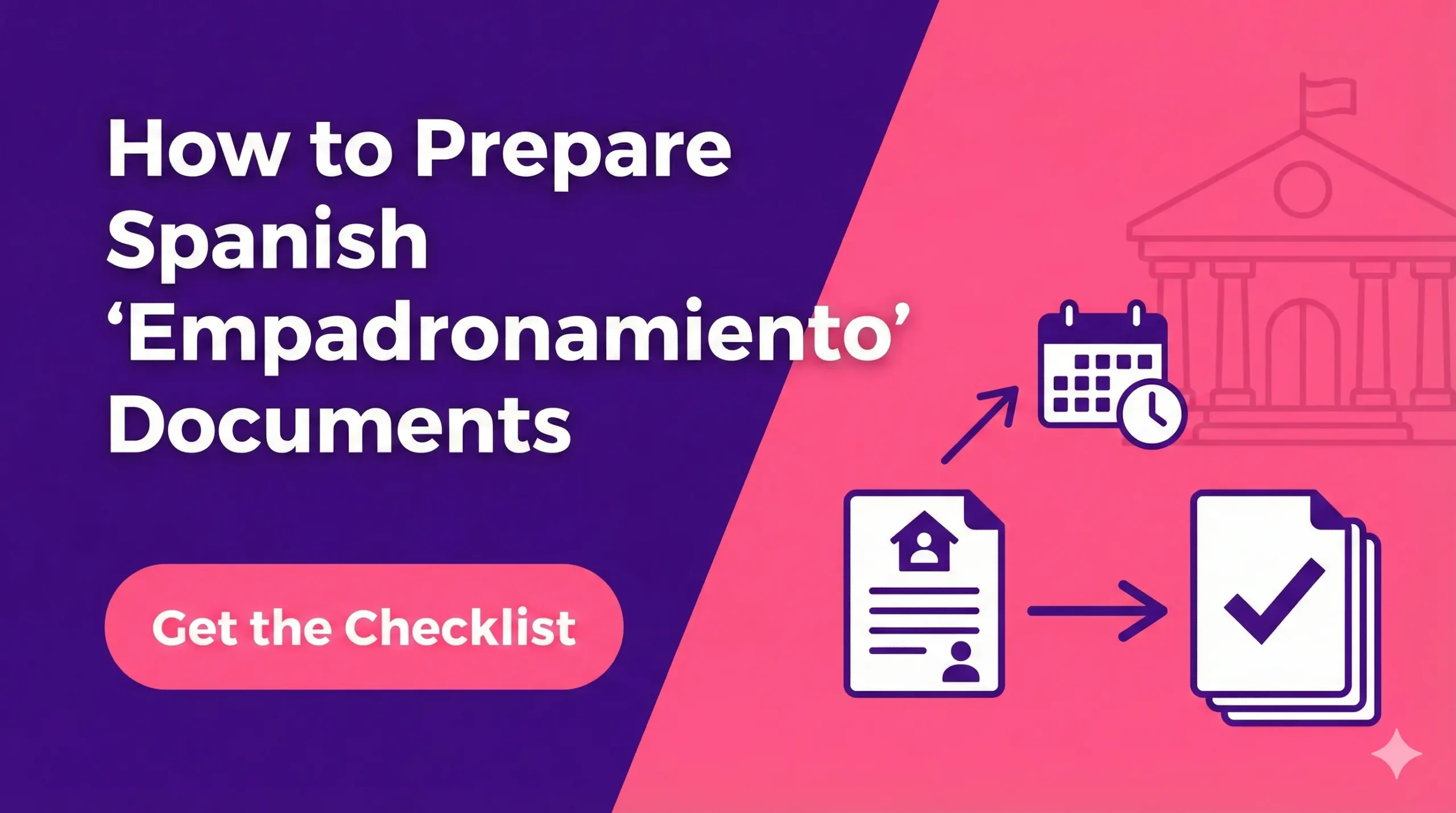
How to Prepare a Spanish ‘Empadronamiento’ Appointment: Required Documents
Securing your Padrón is the foundational step for all residency and daily life in Spain. This detailed guide outlines exactly which documents you need—whether you own, rent, or share a room—to navigate the Town Hall appointment successfully and avoid administrative rejection.
Disclosure: This post may contain affiliate links. We may earn a commission at no extra cost to you if you make a purchase through these links. Read full disclosure.
Understanding the Importance of the Padrón
The Padrón Municipal de Habitantes is an administrative register where the neighbors of a municipality are listed. By law, every person who lives in Spain is obliged to register in the municipality where they habitually reside.
For foreigners, this document serves a dual purpose. First, it proves you live where you say you live. Second, and more importantly for immigration, it proves time in country. When you apply for permanent residency after five years, or citizenship after ten, the Padrón is the primary history used to verify that you have not left the country for extended periods.
Furthermore, the Padrón is geographically tied to your services. Your assigned health center (Centro de Salud) and your children’s public school allocation are entirely determined by the address on this certificate. Therefore, getting this right is not just about compliance; it is about accessing the infrastructure of your daily life.
Step 1: Booking the Appointment (Cita Previa)
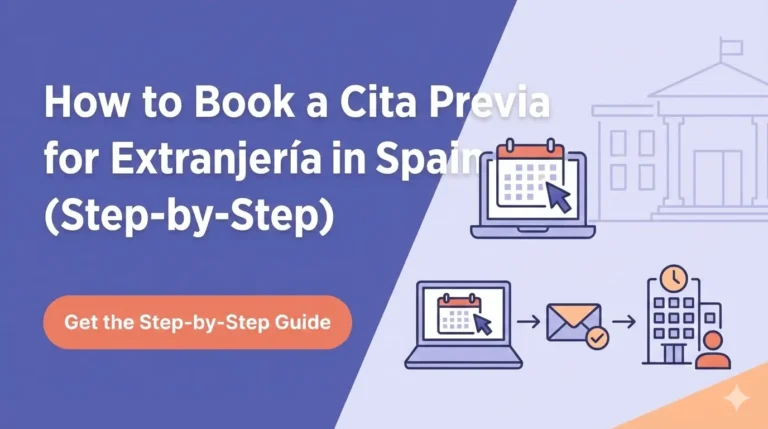
Before you gather your papers, you need a slot. In the past, you could take a ticket and wait. Today, almost every major municipality in Spain—from Madrid and Barcelona to Valencia and Seville—requires a Cita Previa (prior appointment).
How to Book
- Online: Visit the website of your local Ayuntamiento. Look for sections labeled “Padrón,” “Atención Ciudadana,” or “Estadística.”
- Phone: Many towns offer the “010” service (or a local equivalent) for citizen information and booking.
- In-Person (Rare): Only in very small villages can you still walk in without an appointment.
Warning: In major cities, appointments can be scarce. It is not uncommon to check the website and see no availability for weeks. You must be persistent, checking early in the morning (around 8:00 AM or 9:00 AM) when new slots are often released. Do not wait until you urgently need the certificate for a residency renewal to start looking for an appointment.
Core Documents Required for Everyone
Regardless of your housing situation, every applicant must bring a specific set of personal identification documents. These are non-negotiable.
1. Identification
You must prove who you are.
- For Spanish Nationals: DNI (National ID) or Passport.
- For EU Citizens: Passport or National ID card from your home country (plus your Green EU Registry Certificate if you already have it).
- For Non-EU Citizens: Valid Passport or TIE (Foreigner Identity Card).
- Originals and Copies: Always bring the original document and a clear photocopy. The clerk will view the original and keep the copy.
2. The Application Form (Hoja de Inscripción)
Most Town Halls use a standardized registration sheet (Hoja Padronal or Hoja de Inscripción).
- Download in Advance: You can usually download this PDF from the city council website.
- Signatures: Every adult registering must sign the form. If you are registering a family of four, both parents must sign.
- One Form per Household: Typically, you use one form to register everyone living at that address. You do not need a separate form for each person if you are a family unit moving in together.
Scenario A: You Are Renting an Apartment
This is the most common scenario for new arrivals. You have signed a lease and want to register. The Town Hall needs to prove you have the legal right to reside in that property.
Required Documents
- Rental Contract: The lease must be in Spanish (or an official translation). It must be valid (within its dates) and signed by both the landlord and the tenant.
- Rental Receipt: If the contract is not brand new, bring the latest bank transfer receipt showing you paid the rent. This proves the contract is still active.
- Utility Bill (Optional but Recommended): Sometimes, if the contract structure is unusual, they may ask for an electricity or water bill in the tenant’s name to further prove occupancy.
Crucial Note on Duration:
Town Halls prefer long-term contracts (usually 1 year or more). If you present a seasonal contract (contrato de temporada) of 3 to 6 months, some officials may refuse to register you, arguing that it is not your “habitual” residence. However, legally, if you live there, you should be registered. Be prepared to argue your case or show proof of work in the city to demonstrate stability.
For more details on what a standard valid contract looks like, reviewing our guide on Renting in Spain: Contracts, Deposits, and Tenant Rights can help you identify if your lease will pass scrutiny.
Scenario B: You Own the Property
If you have purchased a home, the process is generally smoother because you are the definitive owner of the asset.
Required Documents
- Title Deed (Escritura): You do not need the full 50-page mortgage document. You need the Copia Simple of the deed of sale (Escritura de Compraventa) which shows you as the owner.
- IBI Receipt: The Impuesto sobre Bienes Inmuebles is the annual property tax. Bringing the last payment receipt is the gold standard for proving ownership and correct address data.
- Nota Simple: If you do not have the deed handy (e.g., the notary is still processing it), a Nota Simple from the Land Registry (less than 3 months old) is usually accepted.
Scenario C: You Are Renting a Room (Shared Flat)
This is the most complex scenario and the source of most rejections. If you do not rent the whole apartment, but just a room, or if you are moving in with friends who already live there, you cannot just show up with a key.
You need the explicit authorization of the person who does have the legal right to the home (the owner or the main tenant).
Required Documents
- Authorization Form: Most Town Halls have a specific template for this (Autorización de Empadronamiento). The owner/main tenant must sign this, authorizing you to live at the address.
- Owner/Tenant ID: You must bring a photocopy of the DNI/NIE/Passport of the person who signed the authorization.
- Proof of their right: You also need to bring the deed or rental contract of that person to prove they have the right to authorize you.
The “In-Person” Requirement:
In many municipalities (including Madrid and Barcelona), providing a photocopy of the owner’s ID is no longer enough due to fraud. They may require the owner or main tenant to attend the appointment with you to sign in front of the official. Check your local Town Hall’s specific rules on this carefully.
Document Requirements at a Glance
To help you organize your folder, here is a comparison table of what is needed based on your housing situation.
| Document Type | Home Owner | Main Tenant | Room Renter / Living with Family |
| ID (Passport/TIE) | Required (Original + Copy) | Required (Original + Copy) | Required (Original + Copy) |
| Application Form | Signed by you | Signed by you | Signed by you + Owner |
| Proof of Address | Property Deed or IBI Receipt | Rental Contract | Copy of Owner’s Deed or Lease |
| Authorization | N/A | N/A | Signed Authorization Form |
| Authorizer’s ID | N/A | N/A | Copy of Owner’s ID |
| Utility Bill | Optional | Recommended | Optional |
Registering Minors (Children)
Registering children is critical for their access to healthcare and education. It is often done at the same time as the parents, but it carries extra safeguards to prevent child abduction or custody disputes.
Both Parents Registering
If the whole family moves in together, you simply include the children on the main sheet. You will need:
- Birth Certificates: Original and photocopy. If they are not EU documents, they usually need to be translated and legalized (Apostille).
- Passports/IDs: For the children.
- Family Book: The Libro de Familia (if you have a Spanish one) acts as proof of custody.
One Parent Registering
If only one parent is registering with the child (while the other parent lives elsewhere or stays in another country), the scrutiny increases drastically.
- Authorization: You will need a signed authorization from the other parent stating they agree to the child being registered at this address.
- ID of Absent Parent: Photocopy of the other parent’s passport/ID.
- Custody Court Order: If the parents are divorced, you must present the court ruling awarding custody (Guardia y Custodia) to the registering parent. If custody is shared, the other parent’s written consent is mandatory.
This step is often a prerequisite before you can proceed with School Enrollment in Spain: Registration Steps for Foreign Families, so getting the custody paperwork right is essential.
The Volante vs. The Certificado
During your appointment, or when you download documents later, you will encounter two types of Padrón documents. Knowing the difference saves time.
1. Volante de Empadronamiento
- What is it? A simplified flyer. It is purely informative.
- Use cases: Applying for a travel discount (if you live on the islands/Ceuta/Melilla), getting a library card, or local sports center registration.
- Validity: Usually 3 months.
2. Certificado de Empadronamiento
- What is it? A formal legal certificate with a secure verification code (CSV) signed by the Secretary of the Town Hall.
- Use cases: Immigration procedures (TIE card, Visa renewals), Traffic office (DGT) for driving licenses, Courts, and Civil Registry (marriage).
- Validity: Strictly 3 months for immigration purposes.
When you are preparing for your residency card appointment, specifically when following the steps in How to Get the TIE Card in Spain: Fingerprints, Fees, and Pickup, you must present the Certificado, not the Volante. If you bring a Volante to the National Police, they will reject it.
Common Pitfalls and Troubleshooting
Even with preparation, things can go wrong. Here are common issues and how to handle them.
“My contract is in my spouse’s name”
If you are married but the lease is only in your partner’s name, treat it as the “Room Renter” scenario. Your spouse counts as the “Titular” and must authorize you. Bring your marriage certificate (translated/apostilled) to smooth the process, as it proves the family unit.
“I live in an Airbnb / Temporary Rental”
Hotels and tourist apartments generally do not allow registration. However, if you are staying in a “mid-term” rental (e.g., 3-6 months) and have a formal contract, you should be able to register. Be aware that some officials resist this. If you encounter resistance, ask to speak to a supervisor and cite the law that requires registration at your habitual residence.
“My landlord refuses to sign”
Some landlords, particularly those renting “off the books” to avoid taxes, refuse to help with the Padrón. This is a major red flag. Without their signature or a valid contract, you cannot register. Do not rent a specialized room or apartment without clarifying first: “Is the Padrón possible?” (¿Se puede empadronar?). If they say no, walk away. You cannot obtain residency without it.
“The system says my contract is invalid”
Town Halls cross-reference the Referencia Catastral (Cadastral Reference) of the property. If your contract has the wrong address or lacks the Cadastral reference, the official might not find the house in the system. Ensure your landlord includes the 20-character Cadastral Reference code in the lease.
Digital Certificates: The Shortcut
If you already have a Digital Certificate (Certificado Digital) or Cl@ve PIN—perhaps because you are moving from one Spanish city to another—you might not need an appointment at all.
Many modern Town Halls allow you to upload your PDF documents (contract, ID) to their electronic registry (Sede Electrónica). A civil servant reviews them remotely and mails you the certificate or allows you to download it.
If you haven’t set up your digital ID yet, it is highly recommended to do so as soon as possible, as it simplifies renewals and tax interactions. Check out Cl@ve and Digital Certificate: Accessing AEAT (Tax Agency) Online to get started.
Renewal and Confirmation
The Padrón is not a “one and done” for everyone.
- EU Citizens: If you do not have permanent residency yet, you may need to confirm your residence every 2-5 years.
- Non-EU Citizens: You must renew your registration (Renovación padronal) every two years if you do not have a long-term residence permit. If you forget, the Town Hall will eventually delete you from the system (Baja por caducidad). This creates a gap in your residency history which can be disastrous for citizenship applications.
Conclusion
The Padrón appointment is the gateway to your legal life in Spain. While the list of documents may seem bureaucratic, it follows a logical path: prove who you are, prove where you live, and prove you have permission to be there.
By preparing a folder with originals and photocopies of every document listed above—especially the tricky authorizations if you don’t own the home—you turn a potential headache into a ten-minute administrative formality. Once you walk out with that Certificado in hand, the rest of the Spanish system—from healthcare to residency cards—opens up to you.
References
Primary sources (official)
- Instituto Nacional de Estadística (INE) – Padrón Rules: https://www.ine.es/
- Sede Electrónica del Ayuntamiento de Madrid (Empadronamiento Info): https://sede.madrid.es/
- Ajuntament de Barcelona (Registration Guidelines): https://seuelectronica.ajuntament.barcelona.cat/
- Ministry of Territorial Policy (Citizen Services): https://mpt.gob.es/
Other helpful sources
- Parainmigrantes.info (Legal Guides on Residency): https://www.parainmigrantes.info/
- Housing & Land Registry Information: https://www.registradores.org/
Disclaimer
The information provided in this article is for general informational purposes only and does not constitute legal or administrative advice. Requirements for the Empadronamiento (documents, appointment methods, and validity) vary significantly by municipality (Ayuntamiento) in Spain. Readers should verify the specific requirements on their local Town Hall’s official website before attending an appointment.