How Much Does a Dental Cleaning Cost in Spain?
Discover exactly how much a dental cleaning costs in Spain. This comprehensive guide breaks down out-of-pocket expenses, the limits of public healthcare, average prices for routine procedures, and whether private dental insurance is the right financial choice for you.
Disclosure: This post may contain affiliate links. We may earn a commission at no extra cost to you if you make a purchase through these links. Read full disclosure.
Understanding Dental Care in Spain
Relocating to a new country involves navigating a completely different medical landscape. For many newly arrived expats, understanding how dental care operates in Spain is a steep learning curve. While the country is famous for its exceptional public health system, oral healthcare functions under an entirely different set of rules that you must understand to protect your health and your wallet.
The Limits of Public Dental Coverage
Many expats arrive in Spain assuming that the renowned public healthcare system covers everything from head to toe. However, adult dental care is almost completely excluded from the state-funded network. If you visit your local public clinic requesting a routine dental cleaning, a cavity filling, or a check-up, you will be turned away. For adults, the public system is strictly limited to emergency triage. They will extract a severely infected tooth or prescribe antibiotics for a massive dental abscess, but they will not perform preventive or restorative dentistry.
The one major exception to this rule is pediatric care. The Spanish regional health authorities operate specific dental programs for children, typically covering those between the ages of six and fifteen. Under these regional programs, children are entitled to free annual check-ups, fissure sealants, and basic fillings on permanent teeth. If you are navigating the system for your family, reviewing our comprehensive guide on Pediatric Care in Spain: Choosing a Pediatrician will help you understand these specific regional benefits.
Because routine adult care is entirely excluded, you must conceptually separate your general medical care from your oral health. Relying on the public emergency room for your dental needs is a guaranteed path to severe tooth loss. To understand exactly how the state system functions and how to enroll for your general medical needs, consult our guide on What Is a ‘Centro de Salud’ in Spain and How Do You Register?. Ultimately, every adult expat must seek out private clinics for their routine dental hygiene.
The Thriving Private Dental Sector
Because the state heavily restricts adult dental services, Spain features a massive, highly competitive, and technologically advanced private dental sector. More than ninety percent of all dental procedures in the country are performed in private clinics. This intense competition is incredibly beneficial for expats, as it drives clinical standards up while keeping out-of-pocket prices remarkably low compared to Northern Europe or North America.
Private Spanish clinics are generally outfitted with cutting-edge technology. It is standard for a local neighborhood clinic to have on-site 3D scanners, digital panoramic X-ray machines, and modern sterilization equipment. The high standard of care combined with affordable pricing has actually turned Spain into a premier destination for European dental tourism, drawing thousands of international patients each year for complex restorative work.
When stepping into the private market, you will encounter two distinct types of practices: independent neighborhood clinics and massive corporate franchises. Independent clinics often provide excellent continuity of care, allowing you to see the exact same dentist at every single visit. Corporate franchises, conversely, heavily advertise promotional discounts and highly structured financing plans, but they often experience higher staff turnover. To understand how this private sector fits into the broader national infrastructure, check out our deep dive into the Spain Healthcare System for Expats: Public vs Private.
Finding the Right Dentist as an Expat
Finding a dentist you trust is a highly personal decision, and adding a foreign language into the mix requires strategic research. Discussing complex localized pain or the nuances of oral hygiene in a second language can be daunting. Fortunately, finding an English-speaking dentist in Spain is relatively easy, especially if you live in a popular expat hub like the Costa del Sol, Alicante, or major metropolitan cities like Madrid and Barcelona.
When searching for a reputable professional, the most crucial step is verifying their credentials. Every practicing dentist in Spain must be officially registered with the General Council of Dentists. Ensuring your chosen professional is fully licensed guarantees that their clinic meets strict national hygiene and safety standards. Word-of-mouth recommendations from local expat community groups are also incredibly valuable when searching for a clinic with a gentle bedside manner.
The Cost of a Dental Cleaning and Routine Care
When it comes to maintaining your oral health, the professional dental cleaning is the absolute cornerstone of preventative care. Understanding the exact costs associated with this routine procedure will help you budget your healthcare expenses effectively while living abroad.
Average Out of Pocket Prices for Cleanings
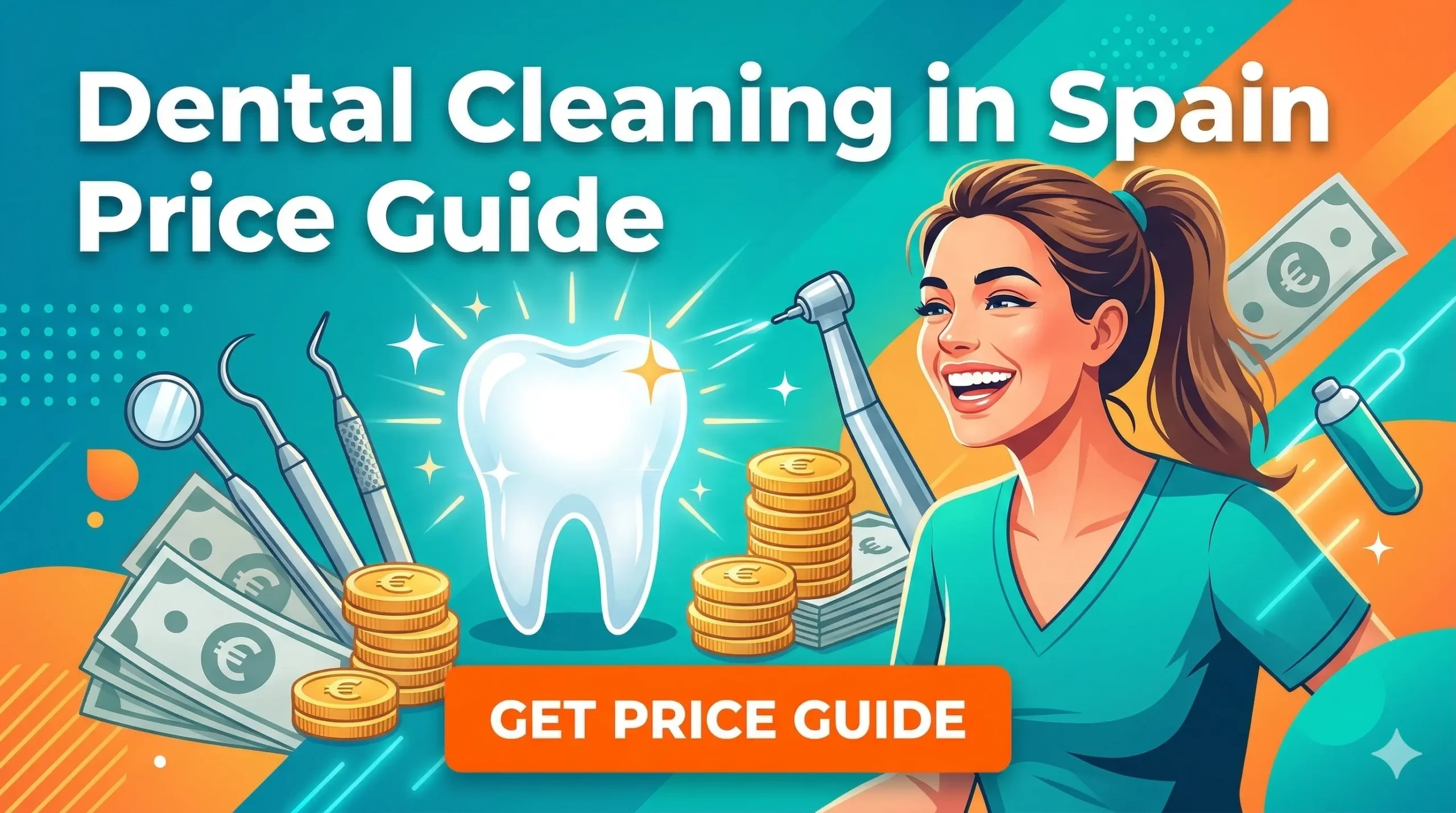
The direct answer to the most common expat question is that a standard professional dental cleaning in Spain usually costs between €40 and €80 out of pocket. This procedure, known in Spanish as a limpieza dental or a tartrectomía, typically takes about thirty to forty minutes. The cost generally includes ultrasonic scaling to remove hardened plaque and tartar, followed by professional polishing to remove surface stains.
It is important to differentiate a standard cleaning from a deep periodontal cleaning. If you have not visited a dentist in several years and have developed early-stage gum disease, a standard cleaning will not suffice. The dentist will recommend a deep cleaning, known as a curettage or root planing, which involves cleaning beneath the gum line under local anesthesia. This procedure is billed per quadrant of the mouth and typically costs between €50 and €90 per quadrant.
Costs for Fillings Extractions and Whitening
Beyond routine cleanings, expats should be aware of the baseline costs for other standard dental procedures. If your dentist detects decay during your cleaning, you will need a cavity filling. A standard composite filling, known as an empaste, typically ranges from €50 to €80 depending on the size and surface area of the tooth affected. This is significantly cheaper than the hundreds of dollars often charged in the United States.
Tooth extractions also carry very reasonable price tags. A simple, routine extraction generally costs between €30 and €60. However, if you require a complex surgical extraction, such as the removal of an impacted wisdom tooth, the price will naturally increase, typically ranging from €90 to €150. If you suffer a sudden, agonizing toothache over the weekend and need an immediate extraction, our guide on Emergency Dental Care in Spain: Where to Go explains how to locate after-hours clinics and manage urgent out-of-pocket fees.
Cosmetic procedures are also highly sought after in Spain due to their affordability. Professional, in-office laser teeth whitening generally ranges from €150 to €300. These are baseline out-of-pocket costs without any insurance discounts applied. If you are navigating the broader costs of Spanish healthcare and want to compare these dental prices against general medical fees, you can do so in our article on Health Costs in Spain: Typical Co-Pays and Out-of-Pocket Fees.
How to Pay and Avoid Hidden Fees
When visiting a private dental clinic in Spain, the payment expectations are very straightforward. You are expected to settle your invoice at the reception desk immediately after your appointment concludes. Spanish clinics universally accept all major credit and debit cards, and contactless mobile payments are standard practice across the country.
However, expats paying with foreign bank cards must be highly cautious. Swiping an international card often subjects you to terrible dynamic currency conversion rates and hidden international transaction fees charged by your home bank, instantly inflating the cost of your dental cleaning. Financially savvy expats avoid this completely by using a multi-currency account like Wise. By tapping your Wise card, you guarantee that you are paying the exact Euro amount at the true mid-market exchange rate, keeping your money focused entirely on your health.
Furthermore, always ensure you ask for an itemized, officially stamped invoice after your treatment. If you hold international travel insurance that covers emergency dental pain relief, you will absolutely need this specific document to successfully process a refund claim. We detail exactly what this paperwork must look like and how to dispute any unexpected administrative charges in our guide on How to Handle Medical Bills in Spain: Receipts, Claims, and Disputes.
Dental Insurance vs Paying Out of Pocket
Once you understand the baseline costs of Spanish dental care, the next hurdle is deciding how to finance it long-term. Expats generally choose between paying cash as they go or utilizing a private dental insurance policy.
How Private Dental Insurance Works
Spanish dental insurance operates very differently from the American or British models. There are rarely any massive annual deductibles to meet, nor are there strict annual maximum payout caps that cut off your care midway through the year. Instead, Spanish dental insurance functions much more like a heavily discounted, highly structured medical membership club.
You pay a very low monthly premium, often ranging from just €10 to €25 a month. In exchange for this premium, a vast array of preventative services are completely free of charge. Most standard policies include one or two free dental cleanings per year, unlimited routine consultations, free annual X-rays, and free emergency triage visits. For complex treatments like fillings, extractions, crowns, and orthodontics, the insurance company provides a legally binding, pre-negotiated price list known as a baremo.
Cost Benefit Analysis for Expats
Deciding whether to pay out of pocket or buy insurance requires a quick cost-benefit analysis of your personal oral health. If you are a young, healthy individual with perfect teeth who only visits the dentist once a year for a standard €50 cleaning, paying entirely out of pocket makes the most financial sense. The cost of a year’s worth of insurance premiums would exceed the cost of the single cleaning.
For older expats, or those who know they will eventually require extensive restorative work such as crowns, bridges, or dental implants, the monthly premium pays for itself instantly through the baremo discounts. Beyond the direct financial savings, having a policy provides immense peace of mind. Knowing exactly what a procedure will cost before you even sit in the chair completely prevents financial anxiety. To help clarify your options, here is a breakdown comparing the costs:
| Dental Procedure | Average Out of Pocket Cost | Cost with Dental Insurance |
| Routine Dental Cleaning | €40 – €80 | Free (usually 1-2 per year) |
| Deep Cleaning (Per Quadrant) | €50 – €90 | €30 – €50 |
| Standard Composite Filling | €50 – €80 | €30 – €50 |
| Simple Tooth Extraction | €30 – €60 | Free or highly discounted |
| Professional Teeth Whitening | €150 – €300 | €80 – €150 |
Preventive Care and Daily Maintenance
Ultimately, the most effective, proven way to lower your dental costs in Spain is rigorous, daily preventative care. Brushing twice a day, flossing consistently, and maintaining a healthy diet are your best defenses against expensive restorative invoices. However, expats sometimes find that sourcing their preferred, high-quality oral hygiene products locally can be frustrating.
Specific preventative products, such as specialized remineralizing toothpastes, clinical-grade expanding dental floss, or targeted holistic mouthwashes, are often completely unavailable in local Spanish supermarkets. If you do find them in a physical Spanish pharmacy, they are frequently subjected to extreme retail markups. To bridge this gap, proactive expats order their daily oral care supplies through global platforms like iHerb.
Utilizing iHerb allows you to affordably stock your Spanish bathroom with your favorite, trusted international dental brands without paying premium pharmacy prices. If you prefer natural, fluoride-free alternatives or specific xylitol mints to actively prevent decay, iHerb offers a massive catalog that local shops simply cannot match. By pairing excellent daily prevention at home with a smart Wise payment strategy and robust Innoinsure coverage, maintaining your smile in Spain will be completely affordable. If you ever need general medical advice or a quick prescription for a minor health issue without leaving your home, remember to explore how virtual care functions in our guide on Telemedicine in Spain: When It’s Useful and What to Expect.
References
Primary sources official
- Consejo General de Colegios de Odontólogos y Estomatólogos de España (General Council of Dentists): https://consejodentistas.es/
- Ministerio de Sanidad (Ministry of Health Spain) – Salud Bucodental: https://www.sanidad.gob.es/profesionales/saludPublica/prevPromocion/promocion/saludBucodental/home.htm
Other helpful sources
- Expatica – Dental Care in Spain: https://www.expatica.com/es/healthcare/healthcare-services/dental-care-in-spain-582615/
- Caser Expat Insurance – Dental Health Check Up Costs: https://www.caserexpatinsurance.com/blog-typical-non-spanish/dental-health-check-up-how-often-covered-by-insurance-everything-you-need-to-know
Disclaimer
The information provided in this article is for educational and informational purposes only and does not constitute formal medical, dental, or financial advice. Dental care prices, promotional offers, and private insurance baremo rates vary significantly by autonomous community and individual clinic in Spain. Always consult a licensed dental professional for clinical diagnoses and refer directly to your specific insurance provider for exact coverage details and current price lists.