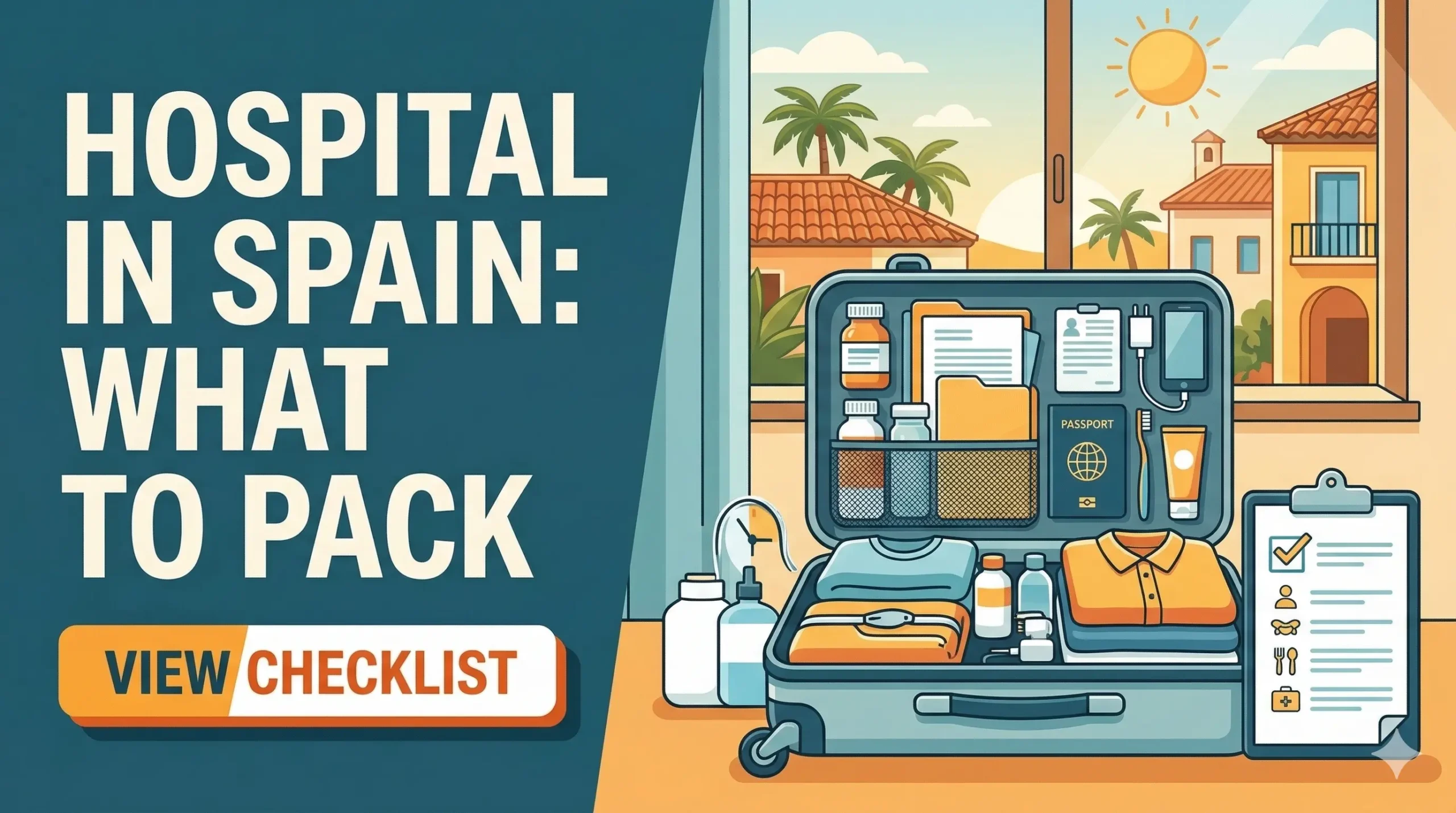
What to Bring to a Hospital in Spain: Practical Packing List
Preparing for a hospital admission in Spain requires more than just a toothbrush. This comprehensive guide outlines the exact administrative documents, personal care items, and essential comforts you need to pack for a seamless stay in a Spanish medical facility.
Disclosure: This post may contain affiliate links. We may earn a commission at no extra cost to you if you make a purchase through these links. Read full disclosure.
Essential Documents and Paperwork for Spanish Hospitals
When checking into a hospital in Spain, the administrative desk will require specific documentation before you are admitted to a ward. Having your paperwork perfectly organized prevents admission delays and ensures your medical team has the legal and clinical information they need.
Identification and Residency Proof
Regardless of whether your hospital stay is a planned surgery or an unexpected emergency, you must prove your identity. For expats and tourists, a physical passport is the most universally accepted document. If you are a legally registered resident, you must also bring your Foreigner Identity Card (TIE) or your green NIE certificate.
Hospitals need this identifying information to correctly open your clinical file and match you with the national or regional health databases. If you are a tourist from within the European Union, you must bring your physical European Health Insurance Card (EHIC). It is highly recommended to bring photocopies of all your identification documents, as administrative staff often require copies for their physical files. Keeping a dedicated, brightly colored folder for this paperwork will streamline your admission process significantly and reduce anxiety on the day of your procedure.
Health Insurance Cards and Authorization
The documentation you need varies heavily depending on whether you are entering a public or private facility. If you are using the public system, you must present your regional public health card, known as the Tarjeta Sanitaria Individual (SIP card).
If you are utilizing the private healthcare sector, you must bring your private insurance card and your policy number. For planned surgeries or diagnostic stays in private clinics, insurance companies typically require a pre-authorization document. Securing a robust private policy through a specialized broker like Innoinsure ensures you have access to streamlined admissions processes and private rooms without administrative headaches. Providers sourced through Innoinsure often offer digital portals where you can download these authorization PDFs directly to your smartphone. For a complete understanding of how these two distinct systems handle patient intake, review our guide on the Spain Healthcare System for Expats: Public vs Private.
Medical Records and Prescriptions
Spanish hospitals, especially in the public sector, are highly digitized, but regional systems do not always communicate perfectly with one another. If you are being treated for a complex condition, you should bring physical or digital copies of your most recent medical history. This includes specialist reports, recent blood test results, and any surgical discharge notes you possess. Our article on Medical Records in Spain: Accessing and Sharing Your History details exactly how to request and compile these documents from your primary care doctor.
Crucially, you must bring a complete list of your current medications, including the exact dosages. If you take highly specialized pharmaceuticals, it is wise to bring your own supply in their original packaging, just in case the hospital pharmacy needs time to source a specific generic equivalent. To understand the legalities of moving these medications across borders or into care facilities, refer to Traveling With Medication in Spain: Practical Carry-On Tips.
Personal Care and Comfort Items to Pack
The amenities provided during a hospital stay in Spain can surprise newly arrived expats. While the medical care is exceptional, Spanish hospitals are generally more spartan when it comes to complimentary personal items compared to hospitals in North America or Northern Europe.
Toiletries and Hygiene Essentials
Do not expect the hospital to provide hotel-style toiletries. In the Spanish public system, you are entirely responsible for your own personal hygiene items. You must pack your own toothbrush, toothpaste, deodorant, shampoo, body wash, and a hairbrush.
Furthermore, many public hospitals do not provide bath towels or washcloths for patients. You should pack at least two medium-sized, quick-drying towels. For your daily comfort, bringing high-quality, gentle skincare products is a smart move, as hospital environments can be incredibly dry and clinical soaps can be harsh. Many expats choose to order specialized, sensitive-skin toiletries and organic hygiene products from global retailers like iHerb before a planned admission. Utilizing iHerb allows you to stock up on trusted international brands that might be difficult to find in a standard Spanish pharmacy.
Clothing and Sleepwear
While you will likely be given a standard hospital gown for surgeries and intensive care, patients in standard recovery wards are generally expected to wear their own comfortable sleepwear. You should pack loose-fitting pajamas or nightgowns that button down the front, making it easier for nursing staff to check your vitals, examine incisions, or manage intravenous lines.
Hospitals in Spain are strictly climate-controlled, meaning they can feel quite chilly in the winter and overly air-conditioned in the summer. A warm dressing gown or robe is highly recommended. Because you will be walking down the corridors for mobility recovery, sturdy, non-slip slippers or easily washable slide sandals are absolutely mandatory for hygiene and safety.
Entertainment and Electronics
Hospital stays involve long periods of waiting and resting. Bringing your own entertainment is essential for your mental wellbeing. While some private hospitals provide smart TVs in patient rooms, public hospital televisions often operate on a coin or card-based payment system and primarily feature local Spanish channels.
Pack a tablet loaded with downloaded movies, an e-reader, or physical books. Most importantly, bring an extra-long charging cable (at least two to three meters) or a high-capacity power bank, as electrical outlets are often located high up on the wall behind the medical monitoring equipment, out of reach from the bed. Remember to pack noise-canceling headphones or earplugs, as hospital wards can be noisy at night due to shift changes, medical alarms, and roommates.
What to Provide for Your Accompanying Companion
One of the most defining cultural aspects of Spanish healthcare is the expectation of family involvement. Understanding the role of the companion changes how you pack for a hospital stay entirely.
The Role of the Acompañante in Spain
In Spain, it is culturally and practically expected that a patient will have a family member or close friend stay with them in the hospital room, often overnight. The nursing staff handles all clinical tasks, medication administration, and vital sign monitoring, but the companion is generally expected to assist the patient with basic personal comfort, such as helping them eat, fetching water, or assisting them to the bathroom.
If you are an expat without family nearby, navigating this can be challenging. For non-urgent procedures, it is wise to arrange for a friend to take shifts visiting you. To understand how primary care clinics handle the transition to hospital care and the expectations of support, reviewing What Is a ‘Centro de Salud’ in Spain and How Do You Register? provides helpful context on the referral process.
Snacks Supplies and Comfort for the Companion
Because the companion spends hours or even days in the room, they need their own supplies. The hospital provides meals exclusively for the admitted patient; the companion must feed themselves. While Spanish hospitals have excellent, affordable cafeterias, it is highly practical to pack a secondary bag specifically for your companion.
The sleeping arrangements for companions vary. In private hospitals, the room often features a pull-out sofa bed for the companion. In public hospitals, the companion is usually provided with a reclining armchair. Therefore, the companion must bring their own travel pillow, a warm blanket, and comfortable clothing for overnight stays. When paying for the companion’s cafeteria meals or the daily hospital parking fees, using a low-cost, multi-currency card like Wise is a smart way to manage these incidental, out-of-pocket daily expenses seamlessly.
Differences Between Public and Private Hospital Requirements
Your packing list will shift slightly depending on the type of facility you are admitted to. The Spanish healthcare ecosystem offers two distinct experiences regarding amenities and patient comfort.
Amenities in the Public Sector
The public health system focuses strictly on world-class medical outcomes rather than hospitality. If you are admitted to a public hospital, you must assume a self-sufficient approach to packing. You will be placed in a shared room, typically with one other patient, separated by a curtain.
Because space is limited in a shared public room, pack your items in a soft, collapsible duffel bag rather than a rigid, hard-shell suitcase, so it can be easily stored in the small bedside locker. Public hospitals will not provide specialized amenities, so bringing your own tissues, wet wipes, and a reusable water bottle is essential. If you are dealing with a weekend emergency and are unsure where to go, reading our guide on What to Do If You Need Care on a Weekend in Spain will clarify which public doors are open to you.
Upgraded Facilities in Private Clinics
Private hospitals in Spain operate with a higher focus on patient comfort and hospitality. If you are admitted to a private clinic using a policy from a provider like Innoinsure, you will almost certainly be placed in a private, individual room with an en-suite bathroom.
These facilities operate more like hotels. They often provide complimentary toiletry kits, fresh daily towels, and upgraded bedding for both the patient and the companion. While you should still bring your personal clothing and entertainment, the burden of bringing basic hygiene items is significantly reduced. Private hospitals also frequently offer complimentary Wi-Fi and digital patient portals. To learn more about how to navigate these digital tools and telemedicine options, explore our article on Health Apps in Spain: Booking, Records, and Telemedicine Options.
If you face unexpected copayments or deductibles upon discharging from a private facility, managing these medical invoices is crucial. Utilizing Wise allows you to execute fast, transparent bank transfers to the hospital’s billing department using the mid-market exchange rate, saving you from expensive international banking fees. For detailed advice on settling these specific administrative matters, consult How to Handle Medical Bills in Spain: Receipts, Claims, and Disputes.
| Item Category | Public Hospital (SNS) | Private Hospital / Clinic |
| Documents | SIP Card, Passport/TIE | Private Insurance Card, ID, Authorization |
| Towels & Washcloths | Mandatory (bring your own) | Provided daily |
| Basic Toiletries | Mandatory (bring your own) | Often provided (kits available) |
| Companion Bedding | Mandatory (pillow, blanket for chair) | Often provided (sofa bed available) |
| Room Type | Shared (usually 2 patients) | Private (individual room) |
| Payment Tools | Wise card for cafeteria/parking | Wise card for deductibles/billing |
By packing intelligently and understanding the cultural expectations of Spanish medical facilities, you can remove the administrative and logistical stress from your hospital stay. Whether you are recovering in a top-tier public ward or resting in a private suite, being prepared allows you to focus all of your energy on your health and recovery.
References
Primary sources (official)
- Ministerio de Sanidad (Ministry of Health) – Ciudadanos y Asistencia Sanitaria: https://www.sanidad.gob.es/ciudadanos/prestaciones/centros/home.htm
- Seguridad Social – Prestaciones de Asistencia Sanitaria: https://www.seg-social.es/wps/portal/wss/internet/Trabajadores/PrestacionesPensionesTrabajadores/10938/30476
Other helpful sources
- Expatica – Healthcare in Spain: A Guide to the Spanish Healthcare System: https://www.expatica.com/es/healthcare/healthcare-basics/healthcare-in-spain-101467/
- Citizens Advice Bureau Spain – Healthcare Information: https://www.citizensadvice.org.es/
Disclaimer
The information provided in this article is for educational and informational purposes only and does not constitute formal medical or legal advice. Hospital amenities, admission protocols, and required documentation vary significantly by autonomous community and individual healthcare provider in Spain. Always verify the specific packing requirements and admission rules directly with your chosen hospital or your private health insurance provider prior to a planned medical stay.