Modelo 720 and FBAR Together: The Same Assets Reported to Two Countries
Moving to Spain is exhilarating, but for my fellow American expats, the administrative side often feels like navigating a labyrinth blindfolded. One of the most bewildering aspects? The seemingly redundant requirement to report your foreign assets not just to Spain, but also back home to the United States. It’s enough to make your head spin, trying to understand why the same bank account or property needs to be declared to two different governments. This guide will walk you through the intricacies of Spain's Modelo 720 and the US FBAR, explaining why they both exist, what they demand, and how you can stay compliant without losing your sanity. We’ll cut through the confusion and help you connect with the expert guidance of Taxes for Expats to ensure you’re meeting all your obligations.
Disclosure: This post may contain affiliate links. We may earn a commission at no extra cost to you if you make a purchase through these links. Read full disclosure.
Understanding Spain's Modelo 720: A Deeper Dive into Foreign Asset Reporting
Ah, the infamous Modelo 720. For many expats in Spain, the mere mention of this form brings a shiver down their spine, or at the very least, a groan of exasperation. Introduced as a measure to combat tax fraud and ensure Spanish residents are declaring their overseas assets, it quickly became known for its steep penalties and complex reporting requirements. It’s not just about paying tax on the income those assets generate; it's about transparency and informing the Spanish tax authority, the Agencia Tributaria, about what you hold outside the country.
Who Needs to File the Modelo 720?
The fundamental requirement for filing the Modelo 720 hinges on your tax residency in Spain. If you are considered a tax resident in Spain, and your assets held abroad exceed certain thresholds, then you are almost certainly obligated to file. Generally, you become a tax resident if you spend more than 183 days in Spain within a calendar year, or if your "center of vital interests" (i.e., your primary economic interests, or your spouse/dependents) is in Spain. This 183-day rule is crucial, and it doesn’t matter if those days were consecutive or not. Once you cross that threshold, Spain considers you one of theirs for tax purposes, and that includes reporting your global assets.
The reporting thresholds are grouped by type of asset. If the value of your assets in any single category (bank accounts, investments, or real estate) exceeds 50,000 euros as of December 31st of the reporting year, you must file. This isn't an aggregate total across all asset types, but rather per category. For example, if you have 40,000 euros in a US bank account, but also 60,000 euros in US investments, you would only report the investments, not the bank account (unless the bank account also exceeded 50,000 euros on its own). The complexity often lies in valuing these assets accurately at year-end.
What Assets Are Declared on the Modelo 720?
The Modelo 720 demands a detailed declaration of three broad categories of assets held outside Spain:
-
Accounts in financial institutions: This includes all types of bank accounts, savings accounts, checking accounts, fixed-term deposits, and any other cash deposits you hold in financial institutions located outside Spain. Crucially, you need to report the balance as of December 31st and the average balance over the last quarter of the year. If you have joint accounts, the value is attributed to each holder equally.
-
Securities, rights, insurance, and income deposited, managed, or obtained abroad: This is where it gets broad. It covers stocks, bonds, investment funds, life insurance policies, and any other financial assets or rights you might hold with foreign entities. Even if these are held within brokerage accounts, the underlying assets themselves need to be detailed. Think about your retirement accounts from back home – 401ks, IRAs, Roth IRAs – these often fall into this category and require careful valuation. Understanding how to correctly value these complex assets, especially those with fluctuating market values, can be a real headache.
-
Real estate and rights over real estate located abroad: If you own property outside Spain, or have any rights over real estate (like a timeshare or a leasehold), you must declare it. This requires reporting the acquisition value and location of the property. For those who've held property for decades, sometimes retrieving accurate acquisition values can be a challenge. It's not just about a house; it's any land or building that you have an ownership stake in.
It's important to note that once you've filed the Modelo 720 for an asset, you only need to re-file in subsequent years if the value of that asset category increases by more than 20,000 euros, or if you close or acquire new assets in a category. This isn't an annual chore for every single asset, but it still requires diligence to track changes. For precise guidance on your specific assets, consulting with Taxes for Expats can clarify your obligations and prevent potential errors.
The Dire Consequences of Non-Compliance in Spain
Spain's tax authority has made it abundantly clear that non-compliance with the Modelo 720 carries some of the stiffest penalties in the Spanish tax system, which have thankfully been softened slightly after challenges in the European courts, but are still significant. Initially, the penalties were seen as disproportionate, but even now, ignoring this form can lead to substantial financial pain.
For example, failure to file, or filing incomplete or inaccurate information, can result in fines for each piece of data incorrectly or omitted. While the fixed minimum fines have been adjusted, they are still significant. Even if you file late without being prompted by the tax agency, you'll face penalties, albeit usually lower than if the tax authority discovers the omission first. The real sting comes if the tax agency finds undeclared assets. In such cases, the undeclared assets are often presumed to be "unjustified capital gains" for the oldest non-prescribed year, subject to income tax plus substantial penalties and surcharges. This can mean paying tax at your highest marginal rate on the value of the asset, not just the income it generated, along with a significant penalty on top. This retroactive application can be devastating, making it absolutely critical to get this right from the beginning. You can imagine the stress of facing such an assessment, which is why proactive compliance is key. To delve deeper into the Spanish tax landscape, consider reading Spanish Taxes for Foreign Residents: Practical Guide to Staying Compliant.
Navigating US FBAR Requirements: Reporting Foreign Bank and Financial Accounts
Now, let's switch gears and head back across the Atlantic. For US citizens, Green Card holders, and even some residents in Spain, the Foreign Bank and Financial Accounts Report (FBAR), or FinCEN Form 114, is a separate and distinct reporting obligation. Unlike the Modelo 720, which is primarily a disclosure form for the Spanish tax authority, the FBAR is a US Treasury Department requirement, not an IRS tax form directly. Its purpose is to help the US government identify individuals who may be using foreign financial accounts to conceal taxable income or engage in illicit activities.
Who Must File an FBAR?
The FBAR requirement applies to "US Persons" who have a financial interest in, or signature or other authority over, one or more accounts located outside of the United States, if the aggregate value of those foreign financial accounts exceeds $10,000 at any time during the calendar year. Let's break down "US Person" and "financial interest":
-
US Person: This is broader than you might think. It includes US citizens (regardless of where they live), US Green Card holders, and US resident aliens (those who meet the substantial presence test). So, if you're an American expat living in Spain, you're a US Person, plain and simple. Even if you've been abroad for decades, your US citizenship means this applies to you.
-
Financial Interest / Signature Authority: You have a financial interest if you are the owner of record or have legal title to the account. This includes individual accounts, joint accounts, and accounts held through entities like corporations or trusts where you own more than 50% of the voting power or assets. Signature authority means you have the power to control the disposition of money or other property in the account by direct communication to the bank. This can include simply being able to sign checks or withdraw funds.
The crucial detail here is the "aggregate value." This means you add up the maximum balance reached in each of your foreign accounts at any time during the year. If that total sum goes over $10,000 for even a single day, you are required to file an FBAR. It's not about how much is in one account, but the cumulative high water mark across all of them. This is often where people get tripped up; they might have several small accounts that individually don't meet a threshold, but combined, they do.
What Exactly Is Reported on the FBAR?
The FBAR requires you to report information about each foreign financial account for which you have a reporting obligation. This includes:
- Name of the financial institution: The actual bank, brokerage, or other financial entity.
- Address of the financial institution: Where the institution is located.
- Account number: The unique identifier for your account.
- Type of account: Such as checking, savings, securities, or other.
- Maximum value of the account during the calendar year: This is critical. You must determine the highest value of the assets in each account, stated in US dollars, at any point during the year. This often requires converting foreign currency balances using the Treasury's published exchange rate for the last day of the calendar year.
The FBAR primarily covers bank accounts, brokerage accounts, mutual funds, and other investment accounts. It can also include certain foreign-issued life insurance policies with a cash value, and even virtual currency accounts in some interpretations, although specific guidance on crypto is evolving. Unlike the Modelo 720, it does not typically include physical real estate or direct ownership of foreign businesses (though the bank accounts of those businesses might be reportable). The focus is squarely on financial accounts.
The Steep Price of Ignoring FBAR Obligations
Just like with the Modelo 720, the penalties for not filing FBAR can be severe, and the US government takes this reporting seriously. The penalties are bifurcated into non-willful and willful violations:
-
Non-Willful Violations: If the IRS determines that your failure to file was not intentional or reckless, penalties can still apply. The statutory penalty for a non-willful violation can be up to $10,000 per violation. Importantly, each year you fail to file is considered a separate violation.
-
Willful Violations: This is where things get really serious. If the IRS finds that you willfully failed to report your foreign accounts, the penalties are significantly higher. A willful violation can result in a penalty of the greater of $100,000 or 50% of the balance in the account at the time of the violation, for each year of non-compliance. In extreme cases, criminal penalties, including imprisonment, can also be pursued.
The good news is that for many US expats who inadvertently missed FBAR filings, there are amnesty programs like the Streamlined Foreign Offshore Procedures. These programs allow taxpayers to get caught up on their FBAR (and other US tax) obligations with reduced penalties, provided their non-compliance was non-willful. But these programs have strict eligibility requirements and timelines. Navigating these options without expert help can be daunting, which is why services like Taxes for Expats are invaluable for US citizens living in Spain. They can guide you through the process, minimizing stress and potential financial harm.
The Overlap and Key Differences: Modelo 720 vs FBAR
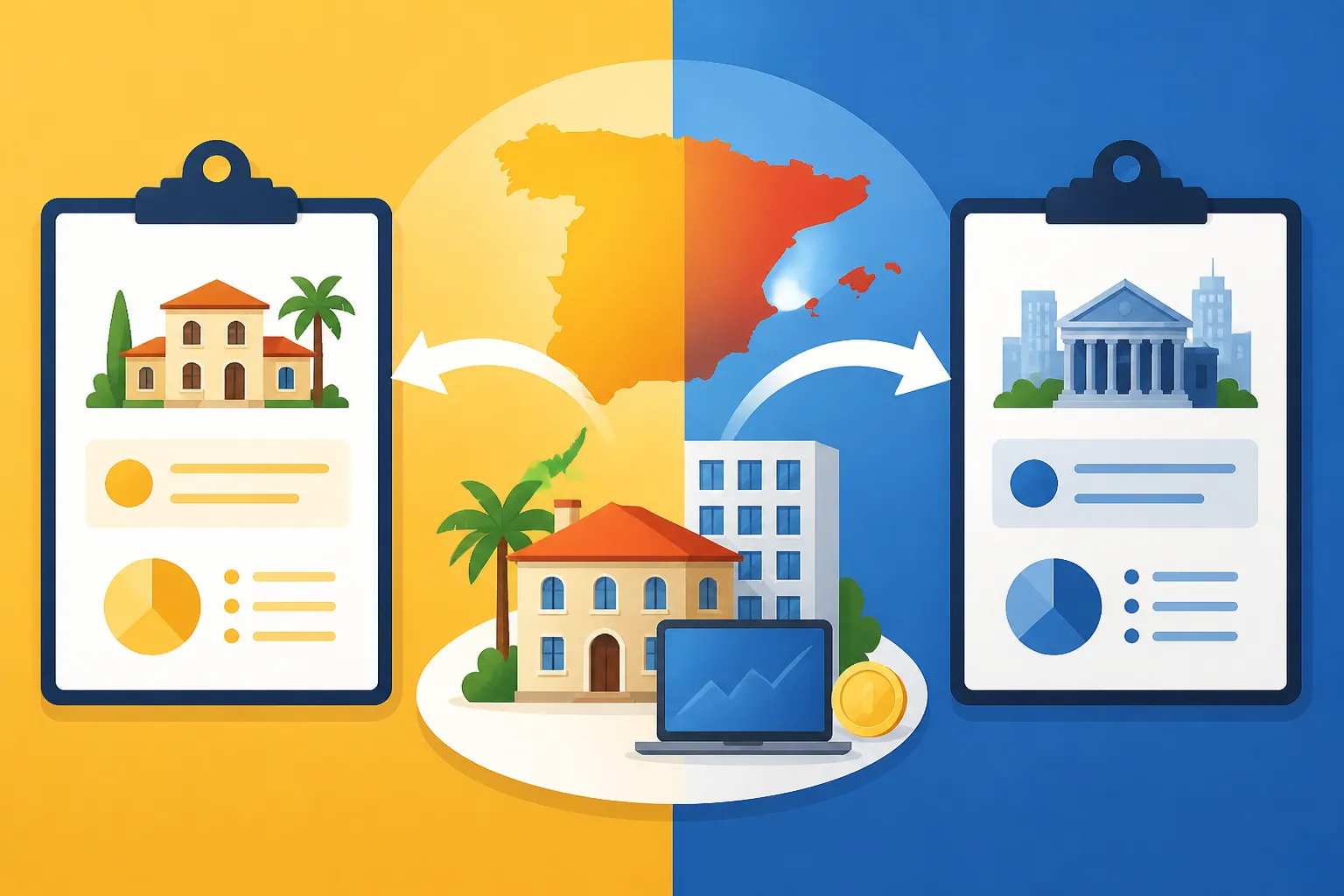
It's clear by now that both Modelo 720 and FBAR demand reporting of your foreign financial life, but they do so for different governments and with different scopes. This is precisely why many US expats in Spain feel like they're caught in a double-reporting trap. While the underlying goal for both is transparency regarding assets held abroad, the nuances in definitions, thresholds, and enforcement make them unique and non-interchangeable.
Comparing Thresholds and Scope
The most obvious difference lies in the reporting thresholds and the specific assets they target.
| Feature | Spain's Modelo 720 | US FBAR (FinCEN Form 114) |
|---|---|---|
| Purpose | Inform Spanish tax authorities of foreign assets | Inform US Treasury of foreign financial accounts |
| Who Files | Spanish tax residents with assets above thresholds | US Persons with financial interest/signature authority over foreign accounts |
| Reporting Threshold | €50,000 per asset category (bank, investments, real estate) | Aggregate total of $10,000 at any point during the year across all accounts |
| Assets Covered | Bank accounts, investments, life insurance, real estate | Bank accounts, brokerage accounts, mutual funds, cash-value insurance |
| Real Estate | Yes, direct ownership of foreign property reported | No, direct ownership of foreign property NOT reported |
| Filing Frequency | Initial filing, then only if value increases by >€20k or new assets | Annually, if threshold is met |
| Currency | Euros | US Dollars |
| Filing Method | Online via Agencia Tributaria digital certificate | Online via BSA E-Filing System (FinCEN website) |
As you can see, the Modelo 720 is broader in terms of asset types, specifically including real estate, and has higher per-category thresholds. The FBAR, on the other hand, has a much lower aggregate threshold and focuses exclusively on financial accounts, but requires annual filing if that threshold is met. The definitions of "account" or "asset" also aren't perfectly aligned, which can lead to confusion. For example, a foreign pension scheme might be considered an "investment" for Modelo 720, but a "financial account" for FBAR. This is why having a clear understanding of both sets of rules is critical for US citizens living in Spain. Don't forget, there are also other US reporting requirements, like FATCA Form 8938, which has higher thresholds and covers a broader range of non-financial assets. For a comprehensive overview, you might find Foreign Income Reporting in Spain: What Residents Need to Know helpful.
Reporting Mechanisms and Deadlines
The process for reporting each form is also distinct.
-
Modelo 720: This form is typically filed online through the Agencia Tributaria's website. To do so, you'll need a digital certificate (Certificado Digital) or Cl@ve PIN, which can be an administrative hurdle in itself. The deadline for filing the Modelo 720 is March 31st of the year following the reporting year. So, for assets held in 2023, the deadline would be March 31st, 2024. Remember, if you filed previously and the value of an asset category hasn't increased by more than 20,000 euros, you may not need to file again that year.
-
FBAR: The FBAR is filed electronically through the FinCEN website's BSA E-Filing System. It's not filed with your regular IRS tax return. The deadline for filing the FBAR is April 15th of the year following the reporting year, but a common extension until October 15th is automatically granted if you fail to file by April 15th. This means that if you're a US expat, you generally have until October 15th to file your FBAR, aligning it closer to the extended deadline for your US income tax return.
Missing these deadlines can trigger penalties, even if you eventually file. The administrative burden of obtaining digital certificates for Spanish bureaucracy can be a significant hurdle for new expats. If you need help with this, you can always connect with Taxes for Expats for assistance with both your Spanish and US tax obligations.
Why You Might Need to Report the Same Asset Twice
This is the core frustration, isn't it? Why report the exact same bank account or investment portfolio to two different countries? The simple answer is: because they are two different sovereign nations with different tax systems and different regulatory interests.
-
Spain's Interest: As your country of tax residency, Spain has a legitimate interest in knowing about your global wealth to ensure you're compliant with their tax laws. This includes ensuring that any income generated from those foreign assets is declared on your Spanish income tax return (IRPF) and that you are not hiding assets from their purview. The Modelo 720 is a powerful tool for them to gain that visibility.
-
US Interest: The United States, uniquely among developed nations, practices citizenship-based taxation. This means that as a US citizen, your worldwide income and assets are subject to US tax and reporting requirements, regardless of where you live. The FBAR (along with FATCA) serves as a critical mechanism for the US Treasury to monitor potential tax evasion by US Persons holding assets abroad. They want to know what you have, even if you are diligently paying taxes on it in Spain.
So, while it feels redundant and can be incredibly frustrating, you are essentially complying with two separate legal frameworks. Each government has its own reasons for requiring this information, and neither one necessarily cares that the other is asking for similar data. It's a reality of being a US expat in Spain, and one that highlights the critical need for careful planning and professional advice from experts in Taxes for Expats.
Common Pitfalls and How to Avoid Them for US Expats in Spain
Navigating these dual reporting requirements is tricky. Many US expats in Spain, especially those new to the system, stumble into common pitfalls that can lead to unnecessary stress, audits, and costly penalties. Being forewarned is being forearmed, so let's look at some of these traps and how to steer clear of them.
The Trap of Procrastination and Misinformation
It’s easy to put off dealing with complex tax forms, especially when you're settling into a new country or grappling with language barriers. However, procrastination is perhaps the biggest pitfall when it comes to Modelo 720 and FBAR. These are not forms you can whip out the night before the deadline. They require gathering detailed information, often from multiple sources in different languages, and careful valuation.
Another major trap is relying on misinformation from well-meaning but unqualified friends or online forums. While expat communities are fantastic for support, tax advice must come from professionals who understand the intricate interplay of Spanish and US tax law. What was true for one expat's situation might be entirely different for yours due to residency status, asset types, or individual circumstances. Misinformation can lead to under-reporting, over-reporting, or worse, non-filing, any of which can have serious repercussions. Always verify information with a qualified professional, like those at Taxes for Expats, who specialize in cross-border taxation.
Currency Conversion and Valuation Challenges
Both forms require reporting values in specific currencies (euros for Modelo 720, US dollars for FBAR), which means you'll almost certainly need to perform currency conversions. This isn't just a simple calculation; it requires using the correct exchange rate on the correct date.
- Modelo 720: For bank accounts, you need the balance as of December 31st and the average balance of the last quarter. For investments, the valuation as of December 31st.
- FBAR: You need the maximum value of each account at any time during the year, converted to US dollars using the Treasury's published exchange rate for December 31st of the reporting year.
Imagine you have a US stock portfolio that fluctuates wildly throughout the year. You need to track its highest point in USD for FBAR, and its year-end value in EUR for Modelo 720. This can be time-consuming and requires diligent record-keeping. Errors in conversion or valuation can lead to discrepancies that might flag your forms. For those who aren't fluent in financial calculations across currencies, this can be a significant source of anxiety.
Beyond Modelo 720 and FBAR: Other Reporting Obligations
While Modelo 720 and FBAR are often the first foreign asset reporting requirements expats encounter, they are by no means the only ones. It's crucial to understand that they are just disclosure forms, not tax forms for income.
- US Tax Return (Form 1040): As a US citizen, you're still obligated to file an annual US tax return, even if you don't owe any tax due to mechanisms like the Foreign Earned Income Exclusion or foreign tax credits. Your worldwide income must be reported here. Spanish Income Tax (IRPF) 101: Who Pays and When and How to File a Spanish Tax Return (Renta) as a New Resident cover income tax in Spain.
- FATCA (Foreign Account Tax Compliance Act) – Form 8938: This is an IRS form that US individuals must file with their income tax return if they hold specified foreign financial assets exceeding certain thresholds. While it overlaps with FBAR, it has different thresholds and includes a broader range of assets (like ownership interests in foreign entities, not just accounts). It's very possible to need to file both FBAR and Form 8938.
- Spanish Income Tax (IRPF): Your annual Spanish tax declaration requires you to report your worldwide income, which would include any interest, dividends, or capital gains from your foreign assets reported on Modelo 720.
- Wealth Tax and Solidarity Tax: Depending on the region you reside in Spain, and the value of your total worldwide assets (both Spanish and foreign), you may be subject to Spain's Wealth Tax (Impuesto sobre el Patrimonio) or the temporary Solidarity Tax for large fortunes. The Modelo 720 provides the tax authorities with the data to assess these taxes. You can learn more about these in Wealth Tax and Solidarity Tax in Spain: Overview for Foreigners.
The takeaway here is that Modelo 720 and FBAR are foundational, but they are pieces of a larger puzzle. Neglecting any part of this puzzle can lead to significant headaches. This multi-layered compliance environment underscores the need for expert advice, such as that provided by Taxes for Expats.
Strategies for Seamless Compliance: Making Sense of Dual Reporting
Given the complexities and the potential for hefty penalties, the goal for any US expat in Spain is seamless compliance. It might sound like an impossible dream when you're dealing with two different governments, but with the right strategies and support, it's absolutely achievable. It's about being proactive, organized, and leveraging expertise.
The Role of Professional Tax Advice
Honestly, this isn't the time to go it alone. The single best strategy for managing Modelo 720 and FBAR, along with all your other dual tax obligations, is to engage with a professional tax advisor specializing in expat taxes. These aren't just any accountants; they are specialists who understand the intricate, often conflicting, rules of both the US and Spanish tax systems.
Think of it this way: you wouldn't try to perform surgery on yourself, right? Tax compliance for expats is complex surgery. A specialized service like Taxes for Expats can provide several critical benefits:
- Expert Knowledge: They are up-to-date on the latest changes in tax law for both countries, including treaties and reporting requirements.
- Error Prevention: They know the common pitfalls and can help you avoid costly mistakes in valuation, categorization, and filing.
- Time Savings: Gathering all the information and correctly filling out these forms is incredibly time-consuming. An expert handles the heavy lifting, freeing you up to enjoy your life in Spain.
- Peace of Mind: Knowing that your tax affairs are in order, handled by professionals, offers invaluable peace of mind. You won't be constantly worrying about missing a deadline or incurring a penalty.
- Optimized Filings: They can help you apply strategies like the Foreign Earned Income Exclusion or foreign tax credits to minimize your overall tax burden across both countries.
Trying to save a few euros by doing it yourself can end up costing you thousands in fines and headaches. Consider it an essential investment in your financial security and mental well-being while living abroad. Choosing a Gestor or Tax Advisor in Spain: What to Look For might offer useful context for selecting professional help.
Maintaining Impeccable Records
Regardless of whether you use a professional or attempt some filings yourself, maintaining meticulous records is non-negotiable. This is your first line of defense in case of an audit or inquiry from either the Spanish or US tax authorities.
What kind of records should you keep?
- Bank and Brokerage Statements: Keep all monthly and annual statements for every foreign account. These will be essential for determining year-end balances, average balances, and maximum values.
- Property Deeds and Purchase Documents: For real estate, have copies of your purchase agreements, deeds, and any documents related to improvements or sales.
- Valuation Documentation: If you have complex investments, keep records of how their value was determined at year-end or at their maximum for the year.
- Currency Exchange Rates: While official rates are often used, keeping records of how you converted values can be helpful.
- Previous Filings: Always keep copies of all previously filed Modelo 720s and FBARs, along with any supporting documentation.
- Correspondence: Any letters or communications from tax authorities in either country should be filed and easily accessible.
It's a good practice to keep both physical and digital copies, securely backed up. A dedicated folder (digital or physical) for "Tax Docs – Spain & US" will save you immense hassle down the line.
Planning Ahead for Changes in Financial Situations
Life is dynamic, and your financial situation in Spain will likely change over time. Being proactive and planning for these changes is another pillar of seamless compliance.
- New Accounts or Investments: If you open a new bank account back home, or make a significant new investment abroad, be aware of the reporting implications for the following year.
- Large Transfers: Moving large sums of money between accounts, or to and from Spain, can sometimes trigger flags. Be prepared to explain the source and destination of funds.
- Retirement: As you approach retirement, or if you're already retired, the nature of your income and assets might change (e.g., drawing down pensions, selling property). Understand how these changes impact your reporting.
- Inheritance: Receiving an inheritance from abroad can have significant tax and reporting implications in both Spain and the US. Get advice before the funds arrive if possible.
- Changes in Residency Status: If you consider leaving Spain, or changing your US residency status (e.g., renouncing citizenship), this has profound tax consequences.
Don't wait until the last minute to consider these impacts. Regular check-ins with your tax advisor from Taxes for Expats can help you anticipate issues and plan accordingly, ensuring you stay compliant no matter how your financial life evolves in Spain. It might seem like a lot of hoops to jump through, but staying ahead of the game with the right professional support makes all the difference.
Disclaimer
This article is for general informational purposes only and does not constitute professional advice. Laws, prices and regulations vary by location and change over time. Consult a qualified professional for guidance on your specific situation.