Parking at Spanish Hotels: Why ‘Parking Available’ Often Means Paid
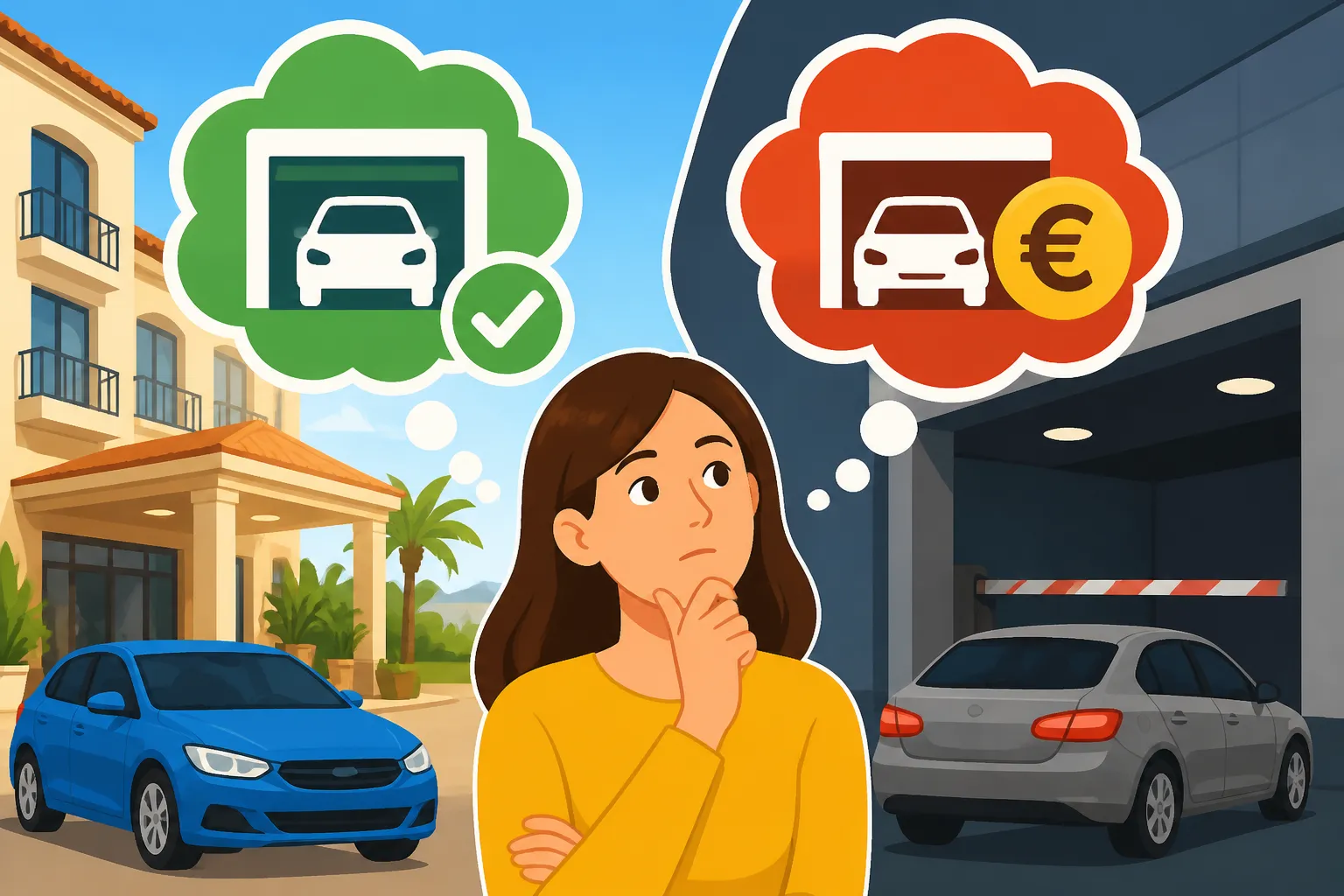
Oh, the classic Spanish hotel parking conundrum! Many expats and tourists recognise that look – that moment when you pull up to your hotel, tired after a long drive, spot the little "P" symbol, and think, "Aha! Free parking!" Only to then be told at reception that "parking available" actually means "parking available… for a fee." And often, quite a hefty one. It’s one of those little cultural quirks that can really catch you off guard, turning a smooth arrival into a frustrating start to your trip.
Disclosure: This post may contain affiliate links. We may earn a commission at no extra cost to you if you make a purchase through these links. Read full disclosure.
This guide is here to shed light on exactly what "parking available" really means at hotels across Spain. We'll dive into why it's almost always a paid service, what options you might encounter, and most importantly, how you can use smart planning tools like Booking.com to avoid those unwelcome surprises and keep your budget in check. Because, let's be honest, nobody wants to start their Spanish adventure feeling like they've been misled, especially not after battling city traffic!
The Reality of "Parking Available" in Spain
When you’re browsing hotel listings, whether for a quick city break or a longer stay, seeing that "P" for parking is often a huge relief. It implies convenience, security, and one less thing to worry about. But in Spain, that simple icon carries a very different implication than in many other countries. It's not a promise of a complimentary spot, but rather an indication that, yes, the hotel possesses a space where your vehicle can rest—for a price.
Unpacking the Spanish Interpretation of "Parking Available"
Let's talk about semantics, shall we? In English, "parking available" often carries an unspoken assumption of inclusion, particularly when it comes to hotel amenities. You might think, "Well, if they have it, and it's not explicitly priced, it must be part of the package." But in Spain, the word "disponible" (available) simply means it exists. It doesn't imply free of charge, complimentary, or included in your room rate. It just means the service is offered. Think of it like a hotel saying "restaurant available" – you wouldn't expect your dinner to be free, right? The same logic, frustrating as it can be for foreigners, often applies to parking.
This distinction is crucial, especially when you're navigating bustling Spanish cities where parking is genuinely a hot commodity. Finding a safe, secure spot for your car can be a monumental task, and hotels that offer this service are providing a valuable, premium amenity. They've invested in underground garages, security, and sometimes even a valet service, and these costs are naturally passed on. It's a fundamental difference in approach that can be hard to wrap your head around if you're used to sprawling hotel lots in other parts of the world where space is less constrained.
The Cost of Convenience: Why Hotel Parking Isn't Free
So, why the almost universal charge for hotel parking in Spain? It boils down to a few key factors that highlight the unique urban landscape and operational realities here:
Firstly, space is at a premium, especially in historic city centers. Most Spanish hotels, particularly those housed in charming old buildings, weren't designed with vast car parks in mind. Any parking they do offer is often in a custom-built, multi-level underground garage, which is incredibly expensive to construct and maintain. These aren't just simple surface lots; they often involve complex engineering and dedicated staff.
Secondly, security and upkeep are constant expenses. These parking facilities are typically monitored, well-lit, and secured, offering peace of mind that street parking simply cannot. There are costs associated with security cameras, lighting, cleaning, ventilation systems, and potential staff for managing entries and exits or even providing valet services. These aren't minor expenses, and they contribute to the overall fee.
Thirdly, high demand in urban areas means that any dedicated parking spot is incredibly valuable. In cities like Madrid, Barcelona, Valencia, or even smaller, popular destinations like Seville or Granada, finding street parking can feel like winning the lottery – and even then, it's often metered (zona azul or zona verde, which we'll discuss later). Hotels know that guests who arrive by car are willing to pay for the convenience and safety of on-site parking, especially after a long journey or when they have luggage to unload. It's a convenience that commands a price because the alternative is often much more challenging, time-consuming, and potentially risky.
Common Parking Scenarios at Spanish Hotels
Navigating the parking situation at Spanish hotels can feel like a maze, with different establishments offering various solutions, each with its own set of rules and, you guessed it, costs. Understanding these common scenarios will empower you to make informed decisions and avoid unpleasant surprises.
On-Site Garages and Their Fees
This is perhaps the most straightforward, yet often the most misunderstood, parking option. Many hotels, especially those in prime urban locations, boast an aparcamiento propio or garaje del hotel – their own dedicated parking facility. These are almost always underground and offer direct access to the hotel lobby via elevator, making them incredibly convenient, particularly if you have a lot of luggage or are traveling with children.
However, this convenience comes at a price. The fees are typically charged per night, though some may offer hourly rates for short stays or a slightly discounted package if you stay for multiple days. It’s rare for these to be free of charge, as mentioned earlier. The hotel's website or, even better, a reliable booking platform like Booking.com, should explicitly state this cost. You’ll usually find it under the "Facilities" section, sometimes buried in the "Fine Print" or "Important Information" part of the listing. My advice? Don't assume. Always, always check for a specific figure or at least a clear "extra charge applies" note.
The beauty of using a platform like Booking.com here is that many hotels are quite transparent about these charges on their detailed listing pages. You can often see the exact daily rate, whether a reservation is required, and if there are any size restrictions for vehicles, all laid out clearly, allowing you to compare options effectively before you commit.
Nearby Public Parking and Agreements
Sometimes, a hotel simply doesn't have the physical space for its own parking garage. This is especially true for charming boutique hotels in very old, historic neighborhoods. In these cases, they often have an agreement with a parking público cercano – a nearby public parking lot or garage.
Here's how this usually works: The hotel will provide you with directions to a public car park a short walk away. They might offer a discounted rate (often validated at reception) or sometimes even cover a portion of the cost, but generally, you'll still be paying. It's not free, but it's a vetted, relatively convenient solution compared to trying to find a spot yourself. You drive in, take a ticket, and then present it to the hotel staff who will apply the agreed-upon discount when you check out, or advise you on how to pay at the public garage.
The challenge here is that while the parking is "available," it's not directly at the hotel, and the walk, especially with luggage, might be further than you'd like. Also, these public garages can fill up quickly during peak season or local events. Again, Booking.com listings can be a lifesaver, as they often detail if parking is off-site, how far away it is, and whether a reservation is needed. It’s a good idea to confirm these details with the hotel directly through the platform's messaging system if you're unsure.
Street Parking: The Wild Card
Ah, street parking in Spain. This is where things get truly complicated and where foreigners often fall foul of local regulations or simply give up in frustration. Hotels generally do not "offer" street parking as an amenity, simply because they have no control over it. If you choose to park on the street near your hotel, you're on your own.
In most Spanish cities, street parking falls into several categories:
- Zona Azul (Blue Zone): These are designated paid parking spots, usually for a limited duration (e.g., 1 or 2 hours), intended for short-term turnover. You pay at a machine (parquímetro) or via an app. Fines are issued quickly if you overstay or don't pay.
- Zona Verde (Green Zone): Often found in residential areas, these spots are primarily for residents with a special permit. Non-residents can usually park here, but for a higher fee and often a shorter maximum duration than blue zones.
- Zona Blanca (White Zone): These are the holy grail – free parking spots with no time limits. However, in any major city or tourist hotspot, finding one is rarer than spotting a unicorn. You'll typically only find these on the distant outskirts or in very small, rural towns.
- Disabled Spots, Loading Zones, Bus Stops, etc.: These are strictly prohibited, and fines/towing are almost guaranteed if you park there.
Relying on street parking near your hotel in a city is a risky gamble. Not only is it hard to find a spot, but you'll constantly be worrying about parking meters, time limits, and the security of your vehicle. For peace of mind, especially when on holiday, it’s usually worth considering the other options.
How to Avoid Parking Surprises and Plan Ahead
Nobody wants their dream Spanish holiday to start with a parking headache. The good news is that with a bit of proactive planning, you can navigate the hotel parking situation like a seasoned expat. It’s all about asking the right questions and knowing where to look for reliable information.
The Golden Rule: Always Verify Before You Book
This is perhaps the single most important piece of advice I can give you regarding parking in Spain. Never assume. If a hotel listing simply states "parking available" without a price or specific details, that's your cue to dig deeper. Think of it as a friendly warning that you need more information.
- Check the "Fine Print" or "Important Information" sections: Many booking sites, especially Booking.com, include detailed notes that specify parking costs, whether a reservation is needed, and if it's on-site or off-site. These sections are often overlooked but are treasure troves of practical information.
- Read recent guest reviews: Other travelers' experiences can be incredibly insightful. Has anyone complained about hidden parking fees? Did someone mention how difficult it was to find the garage entrance? Reviews often paint a realistic picture.
- Contact the hotel directly: If you still can't find clear information, use the hotel's contact details or the messaging system on your booking platform to send a direct query. Ask explicitly: "Is parking available? What is the daily cost? Is it on-site? Do I need a reservation?" Getting the answers in writing is always best.
This is where Booking.com truly shines as your hero. Its platform allows you to filter your search specifically for hotels that offer parking, and crucially, once you click on a listing, it often presents the parking information—including the daily fee—in a prominent, standardized format. This makes it incredibly easy to compare not just room rates, but total costs, including that often-overlooked parking charge, across multiple hotels simultaneously. It saves you the hassle of clicking through countless individual hotel websites.
Budgeting for Parking Costs
Given that hotel parking in Spain is almost always a paid amenity, it's vital to factor this into your overall travel budget. Don't just look at the room rate; add in an estimated daily parking cost. Depending on the city and the hotel, you could be looking at anything from, say, 15 to 35 euros per night, sometimes even more in prime locations like central Madrid or Barcelona. Over a few nights, this can add up significantly and eat into your fun money. Cost of Living in Spain: Realistic Budgets and Savings Tips
Consider these questions as you plan:
- How many nights will you need parking? Multiply that by the estimated daily rate.
- Is having the car always accessible essential, or can you park it and forget it?
- Are you traveling during peak season when parking demand (and potentially prices) might be higher?
Sometimes, realizing the full cost of parking might lead you to adjust your plans, perhaps by choosing a slightly cheaper hotel with more affordable parking, or by opting for alternatives altogether.
Alternatives to Hotel Parking
If the thought of expensive hotel parking leaves a sour taste, remember you have other options to consider for your trip to Spain:
- Public Transport is Your Friend: Many Spanish cities boast excellent, efficient public transport networks. Once your car is parked (perhaps in a cheaper, long-term public garage slightly outside the city center), you can rely on metros, buses, and trams to get around. This eliminates the stress of driving in unfamiliar city traffic and the constant hunt for street parking. Driving, Transport, and Getting Around Spain: Practical Guide
- Park and Ride: Some larger cities have dedicated "park and ride" facilities on their outskirts. These allow you to leave your car for an extended period at a much lower daily rate than city-center garages, with easy connections to public transport.
- Consider Not Renting a Car: For city-centric trips, do you actually need a car? Spain's train network is fantastic for inter-city travel, and within cities, public transport, walking, and ride-sharing services are usually more than sufficient. You might find that the cost of car rental, fuel, and parking far outweighs the convenience for certain itineraries. Traveling Around Spain: Trains, Buses, Flights, and Car Hire
- Search for Hotels in Residential Areas: Hotels in slightly more residential neighborhoods, a bit further from the absolute city center, might offer cheaper or even, on rare occasions, free parking options due to less demand. Just be sure to check public transport links to the attractions you want to visit.
Using Booking.com to Master Hotel Parking in Spain
Okay, so we've established that "parking available" is a red herring and that budgeting for parking is a must. Now, let's talk about how you can actually win at this game, and Booking.com is a fantastic tool to help you do just that. It's not just for finding a bed, it’s a powerful platform for uncovering those crucial logistical details that make or break your trip.
Filtering and Finding Parking-Friendly Stays
One of Booking.com's strongest features is its robust filtering system. When you start your search for accommodation in any Spanish city, don't just put in your dates and hit enter. Immediately look for the "Filter by" options, usually on the left-hand side of the page.
Here’s your step-by-step guide:
- Enter your destination and dates.
- Scroll down the filter menu until you see "Facilities" or "Amenities."
- Find "Parking" and select it. You might even see options like "Private parking" or "Street parking" – choose what's most relevant to your needs, but "Parking" will generally show you anything offered.
- Watch the results narrow down. Now you're only seeing hotels that claim to have parking.
This initial filter is a great starting point, but it's not the end of your investigation. It simply tells you that parking exists as an option. The next step is to dive into the individual hotel listings to uncover the all-important cost and details.
Deciphering Parking Information on Listings
Once you've filtered your search results, click on a promising hotel to open its full listing page. This is where the real detective work begins, but don't worry, Booking.com makes it relatively easy.
Look for these key phrases and sections:
- "Parking": This will be a header, often with a clear list of details underneath.
- "Private parking is possible on site (reservation is not needed) and charges are applicable." This tells you it's on their property, you don't need to book ahead, and you WILL pay.
- "Public parking is available at a location nearby (reservation is not needed) and charges are applicable." This signals off-site parking, probably a public garage, and yes, it’s paid.
- "Parking cost: EUR [Amount] per day." This is the golden ticket! If you see a specific daily rate, you've got your answer. It's often presented clearly right under the "Parking" section.
- "The fine print" or "House rules": Sometimes the detailed information, including any parking restrictions or specific costs, is nestled in these sections. It’s worth a quick scroll.
Booking.com’s standardized layout is a huge advantage here. Unlike hopping from one bespoke hotel website to another, where parking information might be hidden in obscure FAQs or simply omitted, Booking.com tries to present this data in a consistent way. This consistency makes it much easier for you to quickly scan and compare crucial parking details across different properties, allowing you to budget accurately and choose the best option for your vehicle.
Leveraging Booking.com's Messaging System
Even with all the information on the listing, sometimes you might still have a lingering question. Perhaps you have an oversized vehicle, or you want to know the exact height restrictions of an underground garage. This is where Booking.com’s messaging system comes in handy.
On most hotel listings, there's an option to "Contact property" or "Ask a question." Use this! Send a polite message to the hotel asking for clarification on any parking details that are still vague. For instance:
- "Hola! We are arriving by car on [Date] and would like to confirm the daily cost of your on-site parking and if a reservation is required. Also, could you please confirm the maximum height for vehicles in your garage?"
Getting these answers directly from the hotel, through the booking platform, provides you with a written record and ensures there are no misunderstandings when you arrive. It’s a proactive step that will give you complete peace of mind and help you avoid those frustrating moments at check-in.
Remember, exploring Spain by car can be an incredibly rewarding experience, offering the freedom to discover hidden gems and picturesque villages. But a little bit of upfront planning, especially when it comes to parking, goes a very long way in ensuring your trip is smooth and enjoyable. Don't let a parking surprise be the reason for a bad mood – use the tools available, be proactive, and embrace the adventure!
Parking Options at Spanish Hotels: A Quick Comparison
| Parking Type | Description | Typical Cost | Key Considerations |
|---|---|---|---|
| On-Site Hotel Garage | Dedicated, often underground, secure facility directly at hotel. | Paid, daily rate | Most convenient, secure, but almost always charged. Confirm exact fee. |
| Nearby Public Parking | Hotel has agreement with a public garage a short walk away. | Paid, sometimes discounted | Less convenient than on-site, might be a walk, still paid. Check distance. |
| Street Parking (Zona Azul/Verde) | Public street parking regulated by local city zones. | Paid, hourly/limited time | Difficult to find, risk of fines, less secure. Rarely recommended in cities. |
| Street Parking (Zona Blanca) | Free, unregulated street parking. | Free | Extremely rare in city centers, usually on outskirts. |
Disclaimer
This article is for general informational purposes only and does not constitute professional advice. Laws, prices and regulations vary by location and change over time. Consult a qualified professional for guidance on your specific situation.