Semana Santa Bookings in Spain: Which Cities Sell Out and When
Ah, Semana Santa in Spain! It’s one of those experiences that draws you in, fills you with awe, and then promptly makes you tear your hair out trying to find a place to stay. If you’ve ever dreamed of witnessing the solemn processions, the haunting music, and the incredible devotion, you know the struggle is real: accommodations in the most sought-after cities vanish faster than a churro on a Sunday morning. This guide is here to walk you through the chaos, pinpoint exactly where the demand is highest, and arm you with the best strategies to secure your spot for this truly unique Spanish tradition, often with the help of reliable platforms like Booking.com.
Disclosure: This post may contain affiliate links. We may earn a commission at no extra cost to you if you make a purchase through these links. Read full disclosure.
The Unforgettable Draw of Semana Santa: Why It's More Than Just a Holiday
Semana Santa, or Holy Week, isn't just a religious observance; it's a profound cultural spectacle that transforms cities across Spain. For many expats and tourists, it's an opportunity to witness a deeply ingrained tradition that blends solemnity, artistry, and community spirit in a way few other events do. But this isn't a passive observation; it's an immersive experience that pulls you into its rhythm, making it an absolute must-see for anyone living in or visiting Spain.
A Rich Tapestry of Tradition and Emotion
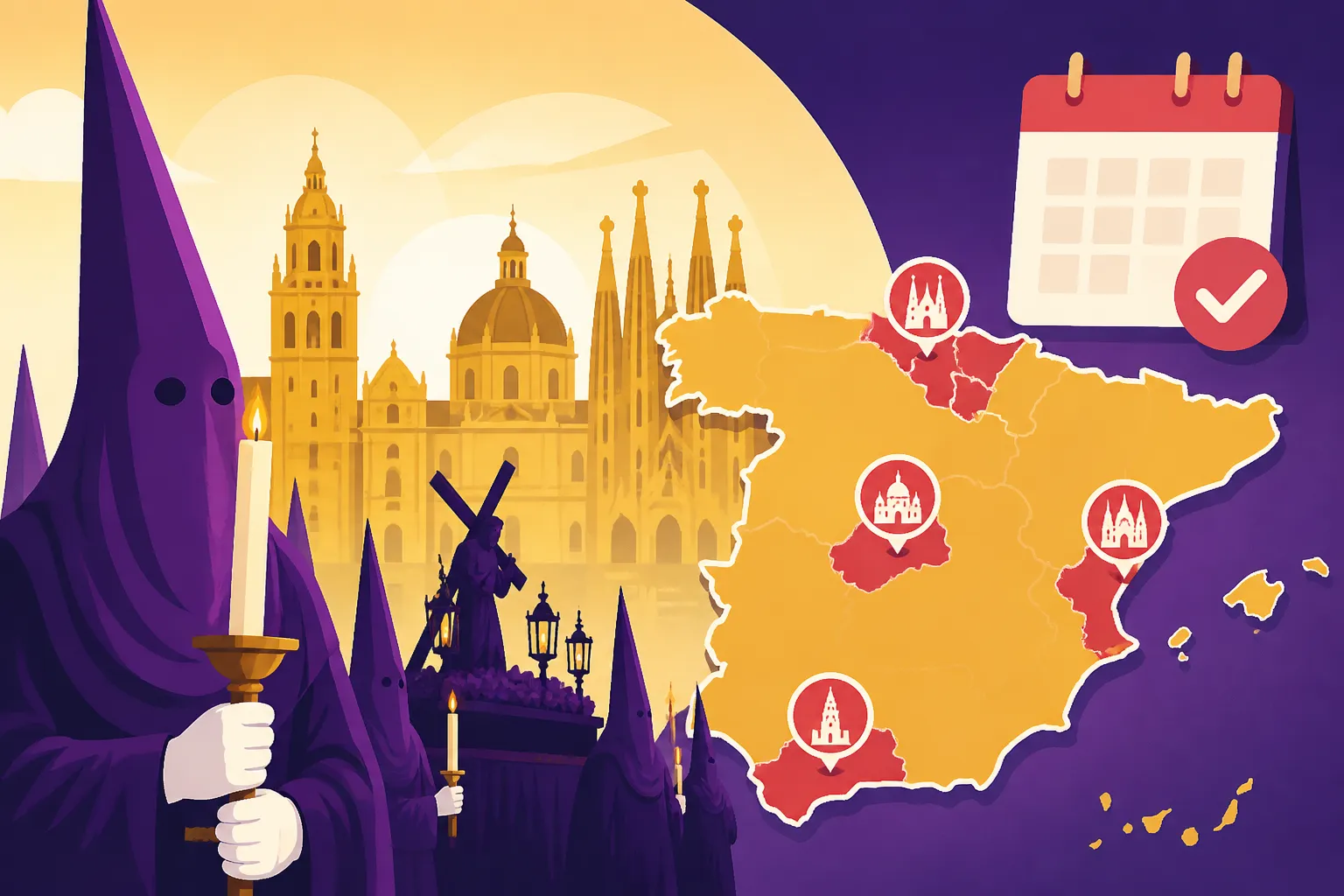
The sheer emotional depth of Semana Santa is what makes it so captivating. Imagine ornate, centuries-old religious floats (pasos) – some weighing over a metric ton – carried on the shoulders of dozens, sometimes hundreds, of penitents (costaleros) who move with a slow, hypnotic sway. These pasos depict scenes from the Passion of Christ or the Virgin Mary, often adorned with incredible floral arrangements and flickering candles, creating a moving tableau that winds through narrow streets. The air is thick with the scent of incense and orange blossom, punctuated by the mournful yet beautiful saetas – flamenco-style laments sung from balconies, echoing through the night. It’s an assault on the senses in the most magnificent way possible, a truly visceral experience.
The traditions vary from region to region, but the core essence remains: public displays of faith, reverence, and penitence. From the silent, hooded figures of the nazarenos (penitents) processing in near-darkness to the intricate musical scores played by brass bands, every element is meticulously planned and executed, often with a history stretching back hundreds of years. This isn't a show put on for tourists; it's a living, breathing tradition that has been passed down through generations, and to be present is to be part of something truly ancient and powerful.
The Spectacle That Changes a City
For the duration of Holy Week, particularly from Palm Sunday to Easter Sunday, entire cities are transformed. Daily life shifts to accommodate the constant flow of processions. Roads are closed, local businesses adjust their hours, and the normal hustle and bustle gives way to a more reverent, anticipatory atmosphere. Locals line the streets for hours, sometimes days in advance, to secure the best vantage points. Balconies overlooking the processional routes become prime real estate, often rented out for exorbitant sums for the week.
This transformation is precisely why accommodation becomes such a hot commodity. When a city's population swells with visitors, both domestic and international, the available beds simply can't keep up. The demand isn't just for a place to sleep; it’s for a base from which to experience the events, ideally close to the heart of the action. This intense focus on location, combined with the limited supply, creates a booking frenzy that can feel overwhelming, especially for those unfamiliar with Spain's unique holiday rhythms. You really need to be prepared, and using a platform like Booking.com early can save you a lot of grief.
The Epicenter of Emotion: Top Cities That Always Sell Out
When it comes to Semana Santa, some cities are simply in a league of their own. They are the main attractions, the places whose names immediately come to mind when you hear "Holy Week in Spain." These destinations, rich in tradition and breathtaking spectacle, predictably become booking battlegrounds, with accommodations disappearing months in advance. If you've got your heart set on one of these, you need to be seriously on the ball.
Seville: The Undisputed Queen of Semana Santa
Ah, Sevilla. There's a reason it's often called the capital of Semana Santa. The city takes on an almost ethereal glow during Holy Week, with its narrow, winding streets becoming stages for some of the most elaborate and deeply emotional processions in Spain. The pasos here are incredibly intricate, often adorned with velvet, gold, and priceless jewels, carried by costaleros who move with a distinct, rhythmic shuffle called el paso sevillano. The sheer number of hermandades (brotherhoods) and their processions is astounding, often running late into the night and emerging again before dawn. The Madrugá – the dawn procession between Thursday and Friday – is particularly famous, drawing immense crowds and an almost feverish devotion.
Because of this unparalleled reputation, Seville is the first city to feel the booking crunch. Hotels, hostels, and rental apartments, especially those in the historic center (around the Cathedral, Triana, or Alameda), are typically booked solid a year in advance. We’re talking about people reserving their spot for next year as soon as this year’s Semana Santa finishes. Prices skyrocket, and even finding a room far outside the city center can be a challenge. If Seville is your dream, your only real option is to plan ridiculously far ahead and use a comprehensive platform like Booking.com to track availability and compare prices across different neighborhoods. Don't rely on last-minute miracles here; they simply don't happen.
Málaga: Passion by the Sea
Málaga offers a distinctly different, yet equally powerful, Semana Santa experience compared to Seville. While Seville is famed for its solemnity, Málaga's processions are often characterized by a more boisterous, passionate atmosphere. Here, the floats are massive, often carried on wide wooden platforms that require hundreds of hombres de trono (throne bearers) to maneuver them through the streets. The crowds are huge, often singing and cheering, and the sheer scale of the tronos is truly impressive, some so tall they have to be tilted to clear balconies. The arrival of the "Christ of Mena" escorted by legionaries on Holy Thursday is a particularly iconic and moving moment that draws massive crowds.
Like Seville, Málaga's popularity during Semana Santa means accommodations, especially along the main Alameda Principal and the old town, become extremely scarce very quickly. The city's coastal charm combined with its vibrant Holy Week traditions makes it a dual magnet for visitors. Booking a room in Málaga requires foresight, almost as much as Seville, albeit perhaps with a slightly longer window of opportunity compared to its Andalusian neighbor. Again, don't dilly-dally; secure your spot through Booking.com well in advance to avoid disappointment, focusing on areas within easy walking distance of the main routes.
Other High-Demand Destinations: Beyond Andalusia's Giants
While Seville and Málaga are often the first to sell out, several other Spanish cities hold their own in terms of Semana Santa fervor and subsequent accommodation scarcity.
- Granada: Nestled beneath the Alhambra, Granada's Semana Santa is incredibly picturesque, with processions winding through the Albaicín's narrow, cobbled streets and the Sacromonte caves. The contrast of the ancient Moorish architecture with the Christian processions is stunning. The city's unique topography adds a challenging element for the costaleros and an intimate, almost claustrophobic, beauty for spectators. Given its smaller size and immense charm, Granada also sees a rapid sell-out of hotels and apartamentos turísticos (tourist apartments).
- Zamora: In stark contrast to the Andalusian flair, Zamora in Castile and León offers a much more austere, silent, and traditional Semana Santa. Its medieval setting, combined with ancient brotherhoods and profoundly moving processions (especially those that happen at night or in the early hours of the morning), attracts a dedicated following. The cold, crisp air and the sound of Gregorian chant add to the solemn atmosphere. It's less flashy than the south, but deeply spiritual. While perhaps not as globally known as Seville, its unique character means its limited accommodation fills up just as quickly, often with returning visitors year after year.
- Valladolid: Also in Castile and León, Valladolid's Semana Santa is renowned for its incredible collection of polychrome wooden sculptures, many of which are masterpieces by famous Spanish artists. These sculptures are often paraded unadorned, allowing their artistic and emotional power to speak for itself. The processions here are marked by profound reverence and silence. As a city with a smaller tourism infrastructure compared to major metropolises, its hotels can become fully booked surprisingly early due to the highly prized nature of its Holy Week art.
| City | Unique Semana Santa Character | Booking Difficulty (1-5, 5=Hardest) | Typical Booking Lead Time |
|---|---|---|---|
| Seville | Elaborate, emotional, grand pasos, rhythmic movement, flamenco saetas, iconic Madrugá. | 5 | 9-12+ months in advance |
| Málaga | Passionate, large tronos, enthusiastic crowds, military presence (Legion). | 4.5 | 8-12 months in advance |
| Granada | Picturesque routes through historic neighborhoods (Albaicín), challenging hills, stunning backdrop. | 4 | 6-9 months in advance |
| Zamora | Austere, silent, medieval setting, Gregorian chant, deeply traditional. | 3.5 | 6-8 months in advance, often repeat bookings |
| Valladolid | Focus on artistic wooden sculptures (imaginería), solemn and respectful processions. | 3.5 | 6-8 months in advance, smaller supply can go quickly |
| Cáceres | Atmospheric, through UNESCO World Heritage old town, silent and intimate. | 3 | 5-7 months in advance |
These cities represent the pinnacle of Semana Santa experiences, and as such, they command the highest demand for accommodation. If one of these is on your bucket list, remember the golden rule: early bird gets the paso view! Booking.com provides an excellent platform to start your search well in advance, often allowing you to filter by location, price, and even cancellation policies, which can be a lifesaver when planning so far ahead.
Beyond the Big Names: Where to Find Authenticity (and Availability)
While the grand spectacles of Seville and Málaga are undeniably magnetic, Spain offers a vast tapestry of Semana Santa traditions. Many smaller cities and towns, often overlooked by the masses, provide equally authentic and deeply moving experiences without the intense booking pressure and inflated prices of the major hubs. Exploring these alternatives can be a revelation, offering a more intimate glimpse into local customs and often, a much easier time finding a comfortable bed.
Regional Gems with Distinctive Flavors
Stepping away from the biggest names doesn't mean compromising on authenticity or spectacle. In fact, it often means encountering unique regional variations that are just as, if not more, captivating.
- León: Like Zamora and Valladolid, León offers a more Castilian approach to Semana Santa – solemn, respectful, and deeply rooted in tradition. Its historic center, dominated by the stunning Gothic Cathedral, provides a dramatic backdrop for processions featuring ornate pasos and hooded papones (the local name for penitents). What sets León apart is its strong sense of community and the heartfelt atmosphere, often accompanied by the distinct sound of local bagpipes (dulzainas). You’ll find that while popular, booking is generally less frenetic than in Andalusia. Using Booking.com here can often yield more options and better value, allowing you to compare hotels and guesthouses more easily.
- Murcia: In the southeast, Murcia's Semana Santa is famous for its "Salzillo" processions, featuring sculptures by the renowned 18th-century artist Francisco Salzillo. These vibrant and colorful parades are known for their "Caramelos" tradition, where nazarenos hand out sweets to children along the route, adding a unique, lighter touch to the solemnity. The warmer climate and distinct regional culture make it a fantastic alternative, and while it gets busy, it’s far less competitive for accommodation than Seville.
- Salamanca: A stunning university city with ancient sandstone buildings, Salamanca's Semana Santa is particularly atmospheric. The golden hues of its plazas and cathedrals at dusk create an incredible canvas for the torchlit processions. Its student population ensures a lively vibe outside of the solemn hours, offering a balance between tradition and contemporary life. Accommodation here, especially outside the absolute peak days, might be more manageable than in the southern giants, and you could find some real gems by searching on Booking.com.
- Cartagena (Murcia): This naval city boasts one of the most meticulously organized Semana Santa celebrations. The nazarenos of Cartagena wear distinct uniforms and march with military precision, reflecting the city's maritime heritage. The pasos are beautifully adorned with fresh flowers, and the processions are known for their solemn orderliness. It's a different energy, very disciplined and precise, and offers a compelling experience away from the Andalusian crowds.
These cities provide a fantastic opportunity to experience Semana Santa in a rich, meaningful way without the crushing crowds and competitive booking environment of Seville or Málaga. They offer a chance to connect with local traditions more intimately and often come with the added bonus of exploring charming, historic towns in their own right.
The Charm of Smaller Towns: An Intimate Glimpse
For an even more authentic and serene experience, consider venturing into Spain's smaller towns. Almost every town and village across Spain has its own version of Semana Santa, ranging from humble local processions to surprisingly elaborate displays for their size. These smaller celebrations are where you truly feel part of the community, where the reverence is palpable, and where finding a room doesn't feel like winning the lottery.
Imagine a procession slowly making its way through the cobbled main square of a pueblo blanco (white village) in Andalusia, or a quiet, ancient ritual in a village in Extremadura. You might not see the colossal pasos or the massive crowds, but you’ll witness a heartfelt devotion and a sense of shared tradition that can be incredibly moving.
- Jerez de la Frontera (Andalusia): While larger than a village, Jerez is often overshadowed by Seville and Málaga but boasts a rich Semana Santa tradition intertwined with its flamenco and sherry culture. Its processions are grand but often feel more accessible.
- San Cristóbal de La Laguna (Tenerife, Canary Islands): If you're looking for a unique setting, this UNESCO World Heritage city offers a distinct island take on Semana Santa, with processions winding through its colonial streets.
- Chinchón (Madrid Region): Known for its picturesque main square, Chinchón hosts modest but charming processions, offering an easy day trip or overnight stay from Madrid without the capital's bigger-city intensity.
Booking accommodation in these smaller towns is generally far less stressful. You might find cozy casas rurales (country houses), charming pensiones (guesthouses), or small boutique hotels that still have availability even a few months out. For these hidden gems, Booking.com is still an invaluable tool, as it aggregates many smaller, independent accommodations that might not have their own sophisticated online booking systems. You can often filter by "guesthouse" or "farm stay" to find these more intimate options, and the reviews from previous guests are particularly helpful for discerning quality in less-known locales. Plus, the prices will almost certainly be much more budget-friendly, allowing you to enjoy the festivities without breaking the bank.
Navigating the Booking Frenzy: Strategies for Securing Your Spot
So, you’ve decided where you want to experience Semana Santa. Now comes the crucial part: actually booking your accommodation. This isn’t a task for the faint of heart, especially if you’re aiming for the most popular cities. You need a strategy, a keen eye, and the right tools. Think of it less like booking a regular holiday and more like planning for a major event like the Olympics – anticipation and swift action are key.
Timing is Everything: When to Click 'Reserve'
Let's be brutally honest: for cities like Seville and Málaga, you should be looking to book as soon as humanly possible. We're talking about a year in advance, or at the very least, 9-10 months before Holy Week begins. Many serious aficionados of Semana Santa will book their accommodation for the following year as they are packing up to leave this year's festivities. It's a hardcore commitment, but it’s often the only way to guarantee a good spot, especially if you have specific requirements (like a balcony view or proximity to a particular procession route).
For other popular cities like Granada, Zamora, or Valladolid, a lead time of 6-9 months is generally advisable. You might still find options closer to the date, but they will likely be more expensive, less conveniently located, or both. For the smaller towns and regional gems, you can often get away with booking 3-5 months out, though even then, if you spot something perfect, don't hesitate.
Here’s a rough guide to booking windows:
- 12+ months out: Seville, Málaga (for prime locations, especially if you want specific dates or apartment types)
- 9-12 months out: Córdoba, León, Salamanca (for good central locations)
- 6-9 months out: Granada, Zamora, Valladolid, Murcia, Cartagena, Cáceres (decent selection, central locations still possible)
- 3-6 months out: Smaller towns, or less central/more budget options in the popular cities (limited choice)
- Less than 3 months out: Prepare for very few options, potentially high prices, or having to stay quite far from the action.
The key takeaway is this: there is no such thing as "too early" for Semana Santa bookings. Mark your calendar, set reminders, and be proactive.
Leveraging Online Booking Platforms
In this digital age, online platforms are your best friends. Gone are the days of calling individual hotels hoping someone speaks English. Websites like Booking.com are absolutely invaluable for navigating the Semana Santa accommodation landscape.
Here’s why Booking.com is your hero in this scenario:
- Massive Inventory: Booking.com lists a huge range of accommodation types, from luxury hotels to boutique guesthouses, apartments, and even hostels. This is crucial when popular areas are saturated. You might find a small, independent pensión on Booking.com that you'd never discover otherwise.
- Advanced Filters: This is where you can save yourself a ton of time. You can filter by:
- Location: Pinpoint exactly how close you want to be to the Cathedral, a specific plaza, or a particular neighborhood.
- Price: Essential for managing your budget, especially when prices are inflated.
- Accommodation Type: If you want an apartment with a kitchen versus a hotel room, you can specify this.
- Guest Reviews: Invaluable for getting a real sense of a place before committing, especially if you're booking so far in advance.
- Free Cancellation: This is a huge one. Given that you’re booking so far ahead, your plans might change. Many properties on Booking.com offer free cancellation up to a certain date, which provides peace of mind. Always check the terms, but this feature is a game-changer.
- Visual Planning: The map view on Booking.com is excellent. You can see exactly where each property is located relative to the major processional routes and landmarks. This allows you to visualize your stay and understand walking distances.
- Notifications and Alerts: Some platforms allow you to set alerts for when properties become available or prices change. While not always foolproof, it can be useful for highly competitive areas.
When searching, try flexible dates if possible (though Semana Santa is fixed, you might adjust your arrival/departure to snag a better deal). Also, consider booking for slightly longer than you need, again, if the cancellation policy allows it, to ensure you get the peak days, and then adjust later. Remember, a little flexibility on your part can open up many more options on Booking.com.
The Power of Flexibility and Persistence
Sometimes, even with the best planning, your dream spot might be elusive. This is where flexibility and persistence come into play.
- Consider slightly outside the absolute center: In cities like Seville, staying in neighborhoods like Triana, Macarena, or Nervión can be a great alternative. They are still well-connected by public transport (though that also gets busy!) and often have their own significant processions, offering a more local experience. You'll likely find more availability and better prices on Booking.com in these areas.
- Look for different accommodation types: If hotels are booked solid, expand your search to apartamentos turísticos (tourist apartments), hostales (smaller, often family-run hotels, not necessarily hostels with dorms), or even rural accommodations just outside the city.
- Be patient, but decisive: Sometimes, new inventory appears, or cancellations happen. Keep checking Booking.com regularly. However, if you find something that meets your needs and has a good cancellation policy, don’t hesitate – book it! You can always cancel if something better comes along.
- Consider a split stay: Perhaps you stay in a less central area for the full week, or spend a few days in a prime location and then move to a smaller, quieter town for the remainder.
Remember, the goal is to experience Semana Santa, and there are many ways to do it. With a smart strategy and the right tools like Booking.com, you can absolutely secure your place amidst this incredible Spanish tradition.
Accommodation Realities: Types, Pricing, and What to Expect
Once you embark on the hunt for Semana Santa accommodation, you quickly realize it's not a normal market. Demand dictates pricing, and the types of places available can be quite different from what you might find during other times of the year. Understanding these realities will help manage your expectations and guide your booking decisions.
Understanding the Price Surge
Let's not mince words: Semana Santa is peak season, and prices reflect that. Accommodation costs in popular cities can easily double, triple, or even quadruple compared to off-peak rates. This isn't just opportunistic pricing; it's a fundamental economic principle of supply and demand during one of Spain's most famous and visited events.
- Hotels: Expect significantly higher rates, often with minimum stay requirements (e.g., you can't just book for two nights; it might be a four or five-night minimum). Many hotels will require full upfront payment and have strict non-refundable policies for this period, so always check the terms on Booking.com very carefully. A hotel room that might cost €80 in November could easily be €250-€400+ during Semana Santa.
- Apartments/Vacation Rentals: These are incredibly popular for families or groups and offer the flexibility of a kitchen. They also see a massive price increase and are often booked earliest, sometimes with even longer minimum stay requirements (e.g., the entire week). While they can offer more space and amenities, don't expect them to be a budget-friendly alternative during this period.
- Hostels: Even hostels, which are usually a budget traveler’s haven, will raise their prices considerably, and dorm beds will still fill up rapidly. Private rooms in hostels will be particularly sought after.
- Guesthouses (Pensiones/Hostales): These smaller, often family-run establishments can sometimes offer slightly better value than full-service hotels, but their limited number of rooms means they, too, vanish quickly.
It's vital to budget accordingly for accommodation during Semana Santa. Don't be surprised by the figures; factor them into your overall trip cost. Being prepared for the higher prices will save you from sticker shock and allow you to make quicker decisions when a suitable option does appear on Booking.com.
Location, Location, Location: Proximity vs. Peace
During Semana Santa, where you stay can profoundly impact your experience. Proximity to the main processional routes is gold, but it comes with trade-offs.
- Heart of the Action (e.g., Seville's Centro, Málaga's Alameda): Staying directly on a processional route, or within a block or two, is incredible. You can literally step out your door and be amidst the spectacle. Some apartments even offer balcony views (which you'll pay handsomely for). The downside? It’s loud, crowded, and often impossible to move around easily. Streets will be blocked for hours, and getting to and from your accommodation can be an exercise in patience and navigation through dense crowds. Forget about quiet nights until the very early hours once the last procession has passed.
- Slightly Outside the Core (e.g., Seville's Triana, Granada's Realejo): These neighborhoods are typically a 10-20 minute walk from the absolute epicenter of the main routes. They offer a fantastic compromise: you’re close enough to easily access the main events, but you also get a bit of respite. These areas often have their own local processions which can be just as charming and less crowded. Prices might be a touch more reasonable, and general mobility within the neighborhood will be easier. Booking.com's map feature is extremely useful for identifying these sweet spots.
- Further Out (e.g., outer districts, neighboring towns): If you're on a tighter budget or have left booking too late, you might end up in a district further afield or even a neighboring town. This usually means relying on public transport or taxis, which will be packed and prone to delays during Semana Santa. While you save money, you trade convenience and some of the immersive atmosphere. If this is your situation, research public transport routes meticulously and factor in significant travel time to and from the events.
When comparing options on Booking.com, pay close attention to the address and use a map tool to see its exact distance from the key Semana Santa landmarks or processional paths. Read reviews that specifically mention noise levels or accessibility during peak times, as previous guests often leave valuable insights.
Essential Preparations: Beyond the Bed, Beyond the Booking
Securing your accommodation is a massive hurdle overcome, but don't stop there. Semana Santa in Spain is an all-encompassing experience that requires a bit more planning than your average vacation. Thinking ahead about logistics, language, and cultural nuances will ensure you can fully immerse yourself in this incredible tradition without unnecessary stress.
Navigating Crowds and Closures
The sheer number of people attending Semana Santa in popular cities is staggering. This means crowds, road closures, and disruptions to normal city life.
- Mobility is Key: Forget about driving a car in the city center during Semana Santa. Major roads will be closed, parking will be non-existent, and traffic will be gridlocked even outside the core. Plan to walk a lot. Wear comfortable shoes – seriously, this is non-negotiable! If your accommodation is booked through Booking.com, check its exact location on a map to gauge your walking distances from main attractions.
- Public Transport: While operating, buses and metros will be incredibly busy and routes might be diverted. Allow ample time for any journey. Taxis will also be in high demand, and surge pricing is common.
- Restaurant Bookings: Many popular restaurants will be fully booked, or have long queues. Consider making reservations well in advance, especially for evening meals. Alternatively, embrace the tapas culture and pop into various bars, or grab food from local markets.
- Shop Closures: Be aware that many shops, especially smaller, independent ones, will close for parts of the day or even the entire Holy Week. Supermarkets generally have reduced hours. Plan ahead for any essentials you might need. If you're staying in an apartment booked through Booking.com, having a kitchen means you can stock up on groceries. For more on how public holidays affect daily life, check out our guide on Spanish Holidays and Public Closures: Planning Errands in 2026.
Being mentally prepared for crowds and planning your movements around them will significantly enhance your experience. Embrace the energy, but also know when to duck into a side street for a moment of calm.
Language, Etiquette, and Cultural Sensitivity
While many people in tourist-heavy areas speak some English, knowing a few basic Spanish phrases will go a long way, especially during a deeply traditional event like Semana Santa.
- Essential Phrases: Practice phrases for asking for directions, ordering food, expressing thanks, and politely asking for space. Even a simple "¡Por favor!" (Please!) and "¡Gracias!" (Thank you!) will be appreciated. For more practical phrases, see our guide on Spanish Language and Everyday Communication for Visitors.
- Respectful Observation: Semana Santa is a solemn religious event. While it’s a public spectacle, remember that for many, it's a profound act of faith. Dress respectfully (avoid overly revealing clothing, especially if entering churches), maintain a quiet demeanor during processions, and refrain from pushing and shoving to get a photo. Be aware of your surroundings and try not to block views for locals who may have been waiting for hours.
- Tipping and Local Customs: While tipping isn't as ingrained in Spain as in some countries, rounding up the bill or leaving a small amount for good service is always appreciated. Understand Spanish Meal Times and Dining Etiquette Explained to avoid awkward moments.
Showing respect for local customs and traditions will not only make your experience more enjoyable but also help you connect more authentically with the spirit of Semana Santa.
Transport to and From Your Destination
Once your accommodation is secured, don't forget about how you're actually getting to Spain!
- Flights: Book flights well in advance, as prices for peak Semana Santa travel will also be higher. Consider flying into a slightly less popular airport if your destination allows, then taking a train or bus.
- Trains (AVE): Spain's high-speed rail network is excellent, but like everything else, trains will be busy. Book your AVE tickets as soon as they become available to get the best prices and ensure a seat. Our guide on How to Buy AVE Train Tickets in Spain and Save Money can help you navigate this.
- Buses: Long-distance buses are another viable option, often more economical, but again, book ahead.
- Car Rental: While not recommended for city centers during Semana Santa, if you plan to explore smaller towns or the surrounding region, a rental car might be useful. However, secure it early, and be aware of parking challenges. You can find more comprehensive advice on Traveling Around Spain: Trains, Buses, Flights, and Car Hire.
By planning these logistical details in advance, you can focus on soaking up the incredible atmosphere of Semana Santa, knowing that you've got all your ducks in a row. And remember, Booking.com isn't just for hotels; it’s your first step to a stress-free Semana Santa experience, setting the foundation for a truly unforgettable journey.
Disclaimer
This article is for general informational purposes only and does not constitute professional advice. Laws, prices and regulations vary by location and change over time. Consult a qualified professional for guidance on your specific situation.