Excess Baggage vs Air Freight vs Courier: Sending 50-200kg to Spain
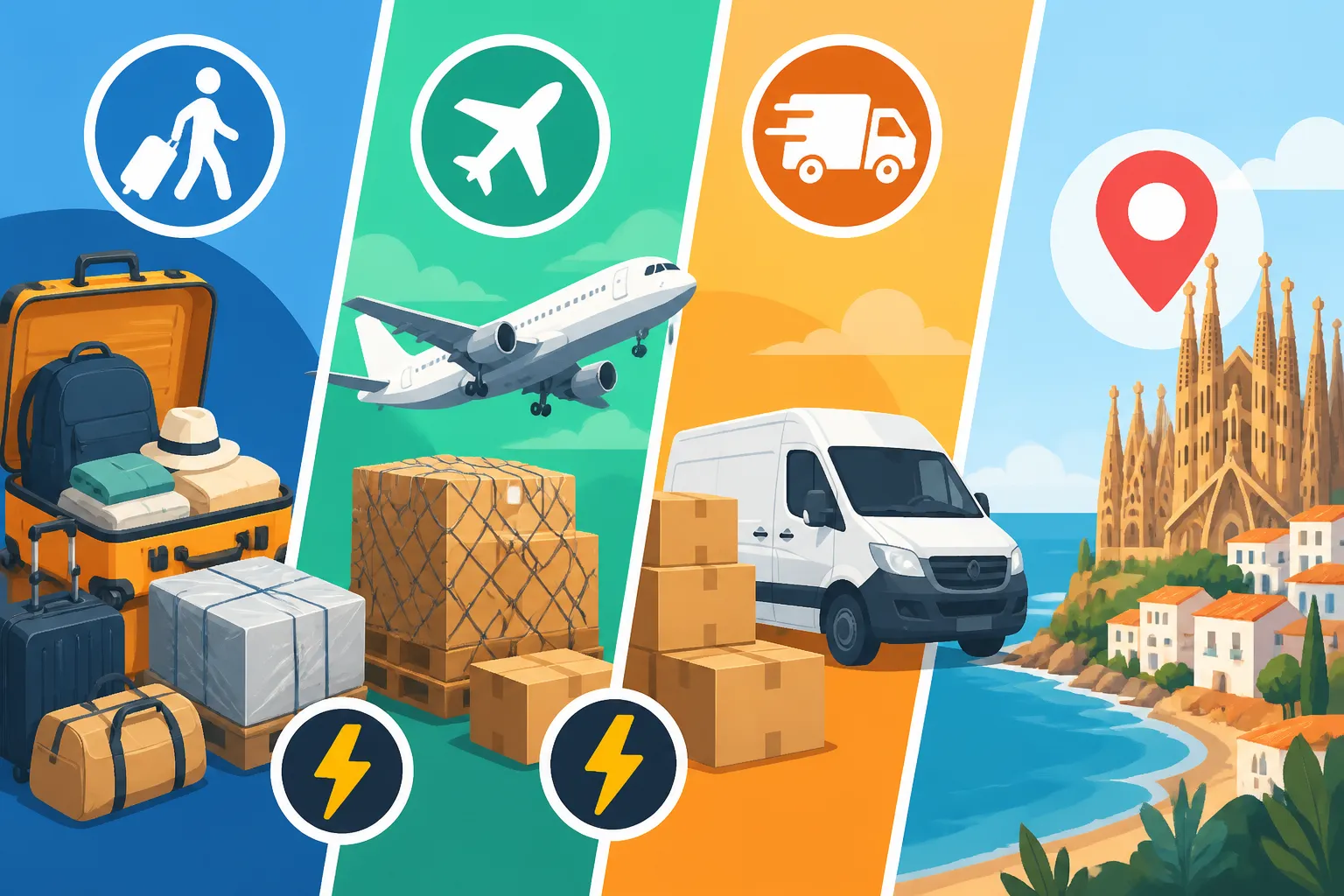
Oh, the joy of moving to Spain! Sun, tapas, siestas… and then the absolute headache of figuring out how to get all your earthly possessions across borders without selling a kidney. If you're anything like I was, staring at a pile of boxes weighing between 50 and 200 kilograms, the question isn't if you'll get them there, but how – and for how much. This guide is going to walk you through the nitty-gritty of excess baggage, air freight, and courier services, helping you pick the least painful path for your move to Spain.
Disclosure: This post may contain affiliate links. We may earn a commission at no extra cost to you if you make a purchase through these links. Read full disclosure.
The Expat's Dilemma: Navigating the 50-200kg Shipping Puzzle to Spain
Moving a significant amount of belongings, say between 50 and 200 kilograms, isn't just about packing boxes; it's about navigating a labyrinth of logistics, costs, and often, confusing terminology. It’s that tricky middle ground – too much for a few extra suitcases, but perhaps not quite enough for a full-blown international removal service. This specific weight range often leaves expats scratching their heads, wondering if they should bite the bullet with airline fees, delve into the world of cargo, or simply trust a parcel service. Believe me, I've lived through the anxiety of items arriving late, or worse, getting held up in customs. The goal here is to help you understand each option so you can make an informed decision and avoid those dreaded surprises.
When you're looking at this amount of weight, you're usually talking about more than just clothes. Maybe it's a few cherished books, your favorite kitchen gadgets, some specific clothing you can't live without, or even essential work tools. These aren't items you can easily replace upon arrival, and the thought of leaving them behind can be heartbreaking. The costs associated with each shipping method can vary wildly, and what looks cheap on the surface might hide a whole host of unexpected fees and complexities once you dig a little deeper. We're going to break down these options, highlighting where each one shines, and where it might just cause you more stress than it's worth.
Option 1: The High-Cost Convenience of Excess Baggage
Let's kick things off with the most immediate, and often most tempting, option: bringing everything with you on the plane as excess baggage. On paper, it sounds simple. You pack, you check it in, and it arrives with you in Spain. What could be easier? Well, my friend, the devil, as always, is in the details – and the price tag.
Understanding Airline Policies and Costs
Every airline has strict policies regarding checked baggage, both in terms of weight per bag and the number of bags allowed. Most standard economy tickets include one checked bag, typically weighing up to 23 kg (50 lbs). Any bag over this or any additional bags will incur excess baggage fees. These fees are usually charged per bag or per kilogram, and they escalate quickly.
For example, imagine you have 100 kg you want to bring. That's at least four or five extra bags beyond your allowance, even if you manage to keep each one under the 23 kg limit. Some airlines might have an upper limit of 32 kg for any single piece of luggage, and anything heavier than that might simply not be accepted, or require pre-approval as special cargo. The cost per extra kilogram can range anywhere from €10 to €30 or even more, depending on the airline, your route, and whether you pay online in advance or at the airport. If you're paying €20 per kilo for 100 kg, you're suddenly looking at €2,000 just for your bags, on top of your flight ticket. It’s an eye-watering sum that most expats simply can’t afford.
Pros and Cons for Your Spain Move
The biggest pro of using excess baggage is undeniably convenience. Your items arrive at the same time you do, minimizing the logistical dance of tracking shipments and dealing with customs clearance after you land. You simply pick them up from the baggage carousel, load them onto a trolley, and you're good to go. This can be incredibly appealing, especially if you're arriving at a smaller airport in Spain where dedicated cargo facilities might be less accessible or efficient.
However, the cons are significant, especially for our 50-200 kg range. Firstly, the cost, as discussed, is often exorbitant. You’re paying for speed and simplicity, but at a premium that can quickly outweigh the value of the items you’re bringing. Secondly, packing can be a nightmare. You’re limited by suitcase size and weight, meaning you might have to distribute heavy items across many smaller bags, or forgo bulky but light items altogether. Thirdly, customs. While generally straightforward for personal belongings accompanying you, very large quantities of new items could raise questions, and you’re relying on the general ease of passenger customs, which isn't designed for large-scale imports. Lastly, the physical burden. Hauling 100-200 kg worth of luggage through an airport, onto public transport, or into a taxi can be utterly exhausting, especially after a long flight, and particularly if you're travelling alone or with small children. Trust me, arriving in Madrid or Barcelona and facing that kind of physical challenge when you're already jet-lagged is not how you want to start your new life in Spain.
Option 2: Air Freight – The Budget-Friendly Bulk Mover (with a Catch)
Now, let's talk about air freight, or cargo. This is often the sweet spot for that 50-200 kg range, offering a balance between cost and speed that excess baggage simply can't match. It's essentially sending your belongings via cargo plane, separately from your passenger flight.
How Air Freight Works for Personal Effects
Air freight typically operates on a "port-to-port" or "airport-to-airport" basis, though many companies offer "door-to-airport" or even "door-to-door" services. The process usually involves:
- Booking: You contact a freight forwarder (a company that specializes in organizing shipments). They'll need details on the weight, volume, and type of items you're sending. This is where services like Sirelo really shine, as they can help you compare quotes from multiple reputable freight forwarders, saving you hours of research and ensuring you get competitive pricing.
- Packing: You pack your items, often into robust boxes, crates, or even on pallets, depending on the volume and fragility. Ensure everything is clearly labeled with your name, contact details, and the destination address in Spain.
- Pickup/Drop-off: The freight forwarder will either pick up your packed items from your home (door-to-airport service) or you’ll drop them off at their depot or a designated airport cargo terminal.
- Customs Documentation: This is crucial. You’ll need to provide a detailed inventory list (packing list), a copy of your passport, and often your Spanish NIE number or residency permit. The freight forwarder will handle the actual customs declaration on your behalf, but you must provide accurate information. For personal effects, you typically won't pay import duties if you're moving to Spain and have owned the items for a certain period (usually 6 months or more).
- Transit: Your goods fly to a major airport in Spain, such as Madrid-Barajas (MAD) or Barcelona-El Prat (BCN).
- Customs Clearance & Collection: Once your items arrive, they go through Spanish customs. This can take a few days. The freight forwarder will notify you when they're cleared. If you opted for airport-to-airport, you’ll then need to collect them from the cargo terminal yourself, which often requires arranging your own transport, potentially a large van, and navigating customs paperwork at the airport. If you chose door-to-door, they'll be delivered directly to your new home in Spain.
Pros and Cons of Air Freight
The pros of air freight are compelling for quantities between 50-200 kg:
- Cost-Effective for Volume: Per kilogram, air freight is significantly cheaper than excess baggage, especially for larger quantities. The pricing model often favors bulk.
- Faster Than Sea Freight: While not as immediate as accompanying baggage, air freight is much faster than sending goods by sea, typically taking 5-10 business days for transit and customs. This means your essential items can arrive relatively quickly after you do.
- Professional Handling: Freight forwarders specialize in international shipping, meaning they can guide you through customs requirements and handle the complexities of logistics. This reduces a huge amount of stress that comes with moving to Spain.
- Less Physical Burden: You don't have to lug heavy suitcases through airports. The professionals handle the heavy lifting.
However, there are also some cons:
- Customs Complexity: While the forwarder helps, you're still responsible for providing accurate documentation. Any mistakes can lead to delays or additional fees. Understanding the nuances of importing personal belongings to Spain can feel like a bureaucratic nightmare.
- Collection Headaches (Airport-to-Airport): If you choose airport-to-airport service to save money, collecting your items from a cargo terminal can be a major hassle. These terminals are often far from the passenger terminals, require specific vehicle access, and involve more paperwork on your part.
- Minimum Charges: Some air freight services have minimum weight or volume charges, so if your shipment is at the lower end of the 50kg range, it might not be as cost-effective as you expect.
- Packing Standards: Freight companies often have specific packing requirements to ensure items are secure for transit, which might mean investing in sturdier boxes or even crating.
Comparing air freight options through a platform like Sirelo ensures you understand all these variables upfront, preventing nasty surprises.
Option 3: Courier Services – Door-to-Door Speed and Simplicity
Finally, let’s consider international courier services. Think big names like DHL, FedEx, UPS, or even national postal services offering express international shipping. These services offer unparalleled convenience, typically providing a full door-to-door experience.
How International Courier Services Operate
Courier services are built on efficiency and ease of use. For quantities between 50-200 kg, you’re usually looking at multiple parcels. Here’s the general rundown:
- Online Quoting & Booking: You’ll input the dimensions and weight of each parcel, along with the origin and destination addresses, into their online system. They’ll give you an instant quote and estimated transit time.
- Packing: You pack your items into individual boxes. Courier services have specific size and weight limits per parcel (often around 25-30 kg per box, but some go higher), so you'll need to split your 50-200 kg across several packages. Ensure your boxes are robust and well-sealed.
- Pickup: The courier company will usually pick up the parcels directly from your home or office.
- Tracking: All parcels come with detailed tracking, allowing you to monitor their journey from door to door.
- Customs: For personal effects, you’ll usually complete an online customs declaration for each package, declaring the contents and their value. The courier company will handle the formal submission to Spanish customs. Again, for personal belongings of a resident, duties are often waived, but accurate declarations are paramount.
- Delivery: The parcels are delivered directly to your address in Spain.
Pros and Cons of Courier Services
The pros of using a courier service are quite clear:
- Ultimate Convenience: This is the big one. Door-to-door pickup and delivery means minimal effort on your part, saving you the hassle of airport runs or arranging separate transport in Spain. This is a huge relief when you’re dealing with the stress of Setting Up Your Life in Spain.
- Speed: Courier services are generally very fast, often delivering within 2-5 business days internationally, sometimes even faster depending on the service level chosen.
- Excellent Tracking: Real-time tracking gives you peace of mind, allowing you to know exactly where your boxes are at any given moment.
- Customs Assistance: Reputable couriers have dedicated customs teams that can assist with paperwork and declarations, often simplifying the process compared to doing it entirely yourself.
However, there are also some important cons:
- Cost: While convenient and fast, courier services are generally the most expensive option per kilogram after excess baggage, especially for larger quantities of parcels. The cost can quickly add up when you have 5-10 boxes weighing 20kg each.
- Parcel Limits: You must adhere to individual parcel weight and size limits. This might force you to break down your belongings into many smaller boxes, which can be a packing challenge.
- Not Ideal for Very Bulky Items: If you have irregularly shaped or very large items (e.g., a bicycle, a large piece of art), courier services might not be suitable, or they could incur significant oversized item surcharges.
- Potential for Multiple Deliveries: If you send many boxes, they might not all arrive on the same day, which can be a minor inconvenience.
For navigating multiple quotes from various courier companies, platforms like Sirelo can be incredibly useful. They streamline the process, allowing you to compare options side-by-side to find the best fit for your budget and timeline.
Making Your Choice: Cost, Speed, and Sanity for Your Spain Shipment
So, you've got 50-200 kg of treasured items, and you're moving to Spain. Which option should you choose? It really boils down to balancing three key factors: cost, speed, and how much personal effort (and sanity) you're willing to expend.
A Side-by-Side Comparison
Let's put these options into a table to give you a clearer picture:
| Feature | Excess Baggage | Air Freight | Courier Services |
|---|---|---|---|
| Weight Range | Up to 2-3 extra bags (max ~75-100 kg total) | Ideal for 50-500+ kg | Ideal for 1-10 parcels (up to ~200 kg total) |
| Cost (per kg) | Very High | Moderate (cheaper for bulk) | High (varies by speed and number of parcels) |
| Speed | Immediate (arrives with you) | 5-10 business days (transit + customs) | 2-7 business days (door-to-door) |
| Convenience | High (at airport), Low (physical effort) | Medium (requires coordination/possible pickup) | Very High (door-to-door) |
| Customs | Generally simple (accompanying items) | Handled by forwarder (requires documentation) | Handled by courier (online declarations) |
| Tracking | Limited to airline bag tags | Basic tracking from forwarder | Detailed real-time tracking |
| Best For | Small, critical items you need immediately | Non-urgent, heavier items (50-500kg) | Urgent, non-oversized items in multiple boxes |
| Packing | Airline-specific bag limits | Robust boxes/crates, possibly pallets | Individual strong boxes (courier limits apply) |
Deciding What's Best for You
When staring at this table, ask yourself:
- What's your budget? If money is no object, excess baggage might seem tempting for its immediacy, but it's rarely the most sensible financial choice for this weight range. If you're budget-conscious, air freight (especially port-to-port if you're prepared for the pickup) offers the best value per kilogram for bulk. For a balance of convenience and manageable cost, door-to-door air freight services, or even courier services for the lower end of the weight range, are worth exploring.
- How quickly do you need your items? If you absolutely cannot wait a week for certain essentials, you might grudgingly pay for some excess baggage. Otherwise, both air freight and courier services offer reasonable transit times that allow you to settle in for a few days before your items arrive.
- How much hassle are you willing to endure? If you thrive on logistics and want to save every penny, managing an airport cargo pickup might be for you. If the thought of more paperwork and pickups makes you want to lie down and cry, then the door-to-door ease of a courier or full-service air freight is likely worth the extra cost. Remember, you'll already be busy with things like sorting out your NIE, TIE & Empadronamiento: Essential IDs and Registrations in Spain and finding your feet.
For most expats moving 50-200 kg to Spain, air freight or a consolidated courier shipment often proves to be the most practical and cost-effective solution. The key is to compare multiple quotes and understand exactly what's included in the price.
This is precisely where a platform like Sirelo becomes your best friend. Instead of spending hours hunting down individual quotes from different freight forwarders and couriers, Sirelo allows you to enter your shipment details once and receive comparative quotes from various trusted moving companies. This takes the guesswork out of the process, helping you find a reliable and affordable option that suits your specific needs for shipping to Spain. Think of it as your personal moving assistant, connecting you with the best services whether you're sending a few boxes or the contents of your entire apartment. Using Sirelo not only saves you time but often saves you money by ensuring you get competitive bids, and it provides peace of mind knowing you're working with vetted professionals who understand international customs and logistics. Don't underestimate the value of that peace of mind when undertaking a major move!
Remember to also think about other aspects of your financial planning, such as the Cost of Living in Spain: Realistic Budgets and Savings Tips and having a solid Financial Checklist for Moving to Spain: First 90 Days ready. These costs add up, and smart shipping can save you a significant amount.
Disclaimer
The information provided in this guide is for general informational purposes only and does not constitute professional advice. Shipping regulations, customs duties, and service offerings can change. Always consult with specific airlines, freight forwarders, or courier companies and verify current policies, costs, and documentation requirements directly with them or with a qualified moving professional before making any decisions. We recommend obtaining several quotes and reviewing all terms and conditions carefully.