Moving to Spain from Ireland: Sea and Road Routes Compared
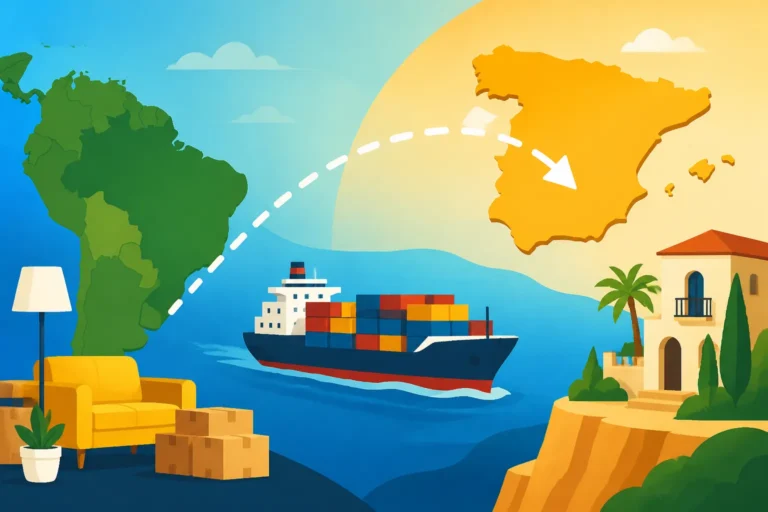
So, you've fallen for the sun-drenched allure of Spain, trading the emerald isle for golden beaches and vibrant plazas? Fantastic! But now comes the logistical headache: how do you actually get your life from Ireland to your new Spanish abode? The journey across the sea, whether by direct ferry, combined road and ferry, or dedicated sea freight, can feel incredibly daunting. This guide is here to break down the complexities of sea and road routes, helping you understand your options for a smoother transition to your new Spanish chapter.
Disclosure: This post may contain affiliate links. We may earn a commission at no extra cost to you if you make a purchase through these links. Read full disclosure.
The Big Move from Ireland to Spain: Why Logistics Matter
Packing up your life and moving it across a body of water is a completely different beast than a local relocation. Ireland, being an island, presents unique challenges when your destination is another country across the continent. You can't just load a van and drive straight through, can you? This geographical reality shapes every decision you'll make regarding transporting your household goods.
Understanding the Geographic Challenge
When you're looking at a map, the distance between Ireland and Spain might not seem that vast, but the English Channel and the Bay of Biscay are significant watery hurdles. Unlike moving from, say, Germany to Spain, where it's largely a continuous drive, your Irish departure means a maritime leg is unavoidable. This isn't just about the physical distance; it's about the additional planning required for ferry crossings, potential trans-shipments, and customs clearances that might differ from purely land-based moves within the EU. The psychological barrier of an overseas move can be substantial, making reliable logistics even more crucial.
Your Options: Sea Freight, Road Freight, or a Hybrid Approach
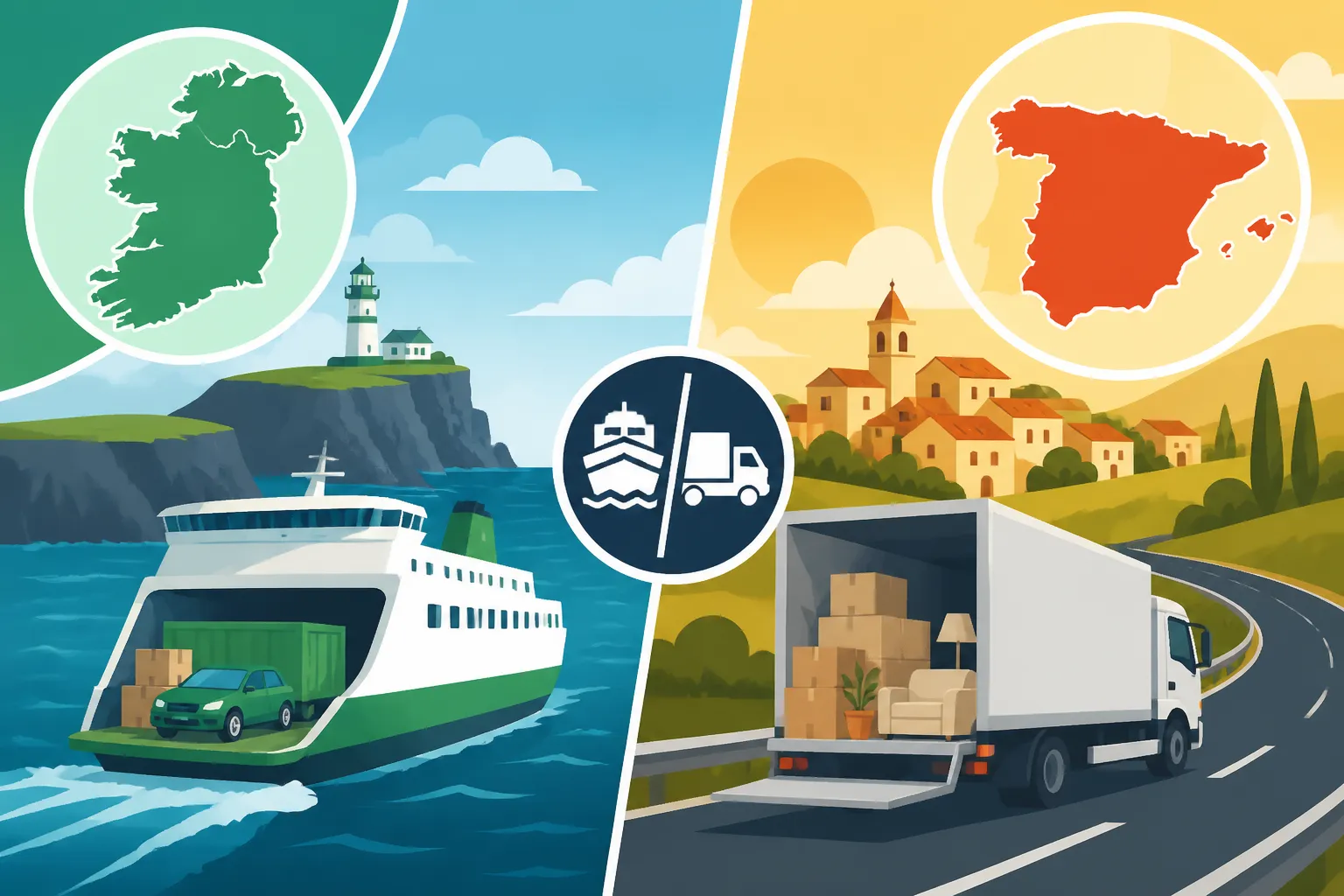
Essentially, you have two primary methods for moving your belongings from Ireland to Spain, though they often intertwine. You can opt for dedicated sea freight, where your goods travel almost exclusively by ship, or road freight, which typically involves a truck taking a ferry for part of the journey before continuing by land. Sometimes, a hybrid approach emerges, especially if your removal company combines different transport modes to optimize for cost or speed. Each method has its own set of advantages and disadvantages, depending on the volume of your items, your budget, and your timeline.
Sea Freight from Ireland to Spain: The Steady Sail
Imagine your belongings leisurely cruising across the waves. That's essentially what sea freight offers. It's often the go-to for larger moves or when time isn't of the essence. While it sounds simple, there's a good deal of coordination involved at both ends of the journey.
How Sea Freight Works for Household Goods
When you choose sea freight, your items will be professionally packed and loaded into shipping containers. There are two main approaches here:
- Full Container Load (FCL): This means you get an entire container (typically 20-foot or 40-foot) dedicated solely to your belongings. It's the most secure and often fastest method within sea freight, as your goods aren't mixed with others. This is ideal if you're moving a large family home's worth of items.
- Less than Container Load (LCL): If you're moving a smaller apartment or just a selection of items, an FCL might be overkill and too expensive. With LCL, your belongings are consolidated with other people's goods into one container. This saves you money, but it does mean your items might experience a bit more handling and the transit time can be longer as the container needs to be filled and then deconsolidated at the destination port.
Once packed, your items will be transported to an Irish port, likely Dublin or Cork. From there, they'll embark on a vessel bound for a major Spanish port like Bilbao, Santander, or Valencia. The journey itself involves careful scheduling and adherence to maritime shipping lanes. Upon arrival in Spain, the container is unloaded, and your items are then cleared through customs before being delivered to your new address. Navigating this can feel like a labyrinth, which is why a trusted moving service is invaluable. For more details on what to expect, check out our guide on how to ship personal belongings to Spain: customs and timing.
Pros and Cons of Shipping by Sea
Like any shipping method, sea freight has its bright sides and its potential pitfalls:
Pros:
- Cost-Effective for Volume: If you're moving a substantial amount of household goods, sea freight generally offers the best value per cubic meter. The larger your shipment, the more economical it becomes compared to other methods.
- Environmental Considerations: While any international move has an environmental footprint, shipping by sea often has a lower carbon footprint per item compared to air or long-haul road transport.
- Capacity for Bulky Items: Planning to bring that grand piano or an oversized antique wardrobe? Sea containers are built to handle large, heavy, and unusually shaped items that might be problematic for road transport.
- Less Urgent Moves: If you have ample time before you need your belongings (typically several weeks to a couple of months), the slower pace of sea freight won't be an issue.
Cons:
- Longer Transit Times: This is the big one. Depending on the route, consolidation, and customs, sea freight can take anywhere from 3-6 weeks, sometimes even longer. This means you'll need to live without many of your possessions for a significant period.
- Less Flexibility: Once your container is loaded and on its way, there's very little room for schedule changes or re-routing. You're locked into the ship's journey.
- Potential for Delays: Weather, port congestion, customs inspections, and unforeseen logistical issues can all add unexpected delays to your shipment.
- More Handling (especially LCL): With LCL shipments, your items are loaded and unloaded multiple times (from your home to the warehouse, into the container, out of the container at the destination port, onto a smaller delivery vehicle). Each step is a point of potential risk, although professional movers take great care.
Ideal Scenarios for Sea Freight
So, when does sea freight truly shine? It's your ideal solution if:
- You're Moving a Full Household: If you're transplanting an entire home, furniture, appliances, and all the accumulated treasures, FCL sea freight is often the most sensible and economical choice.
- Your Timeline is Flexible: You're happy to wait a few weeks for your belongings to arrive. Perhaps you're staying in temporary accommodation in Spain, or you've planned to buy essentials locally while your shipment is en route.
- Budget is a Key Factor for Large Volumes: You're looking to get the most bang for your buck on a big move, and a slightly longer wait is a worthwhile trade-off for significant cost savings.
- You Have Many Large/Heavy Items: If your possessions include bulky or particularly heavy items that would incur prohibitive costs or logistical challenges via road, a shipping container is designed for just such cargo.
Road Freight from Ireland to Spain: The Scenic (and Sometimes Quicker) Drive
For many expats moving from Ireland to Spain, road freight (which includes a ferry crossing) often feels like a more direct, albeit complex, option. It typically balances speed and cost, making it a popular choice.
The Mechanics of Road Freight via Ferry
Since there isn't a direct land bridge from Ireland to Spain (wouldn't that be something?), road freight always involves at least one significant ferry crossing. Here's how it usually works:
- The Ferry Link: Your removal company will pack and load your belongings onto a dedicated removal truck. This truck will then take a ferry, typically from an Irish port (like Cork or Dublin) to a port in France (such as Cherbourg or Roscoff). Sometimes, movers opt for a "land bridge" approach, taking a shorter ferry to the UK, driving across, and then taking another ferry from the UK to France or directly to Spain (though direct UK-Spain routes are less common for removal trucks).
- Driving Through France: Once the truck disembarks in France, it begins the long drive down through the French countryside, crossing the Pyrenees into Spain. This journey is carefully planned by professional drivers, adhering to road regulations, rest stops, and efficient routing.
- Dedicated vs. Groupage: Similar to sea freight, road freight offers different service levels:
- Dedicated Load: Your belongings are the only ones on the truck, giving you maximum flexibility on collection and delivery dates and often faster transit times. This is more expensive but ensures your items aren't mixed.
- Groupage (or Part Load): Your items share space on a truck with other customers' shipments heading in the same general direction. This is more economical for smaller moves but requires more flexibility on your part for collection and delivery schedules, as the route is optimized for multiple drops.
The beauty of this method is the door-to-door service, meaning your items are handled minimally from your old front door in Ireland to your new one in Spain. For broader information on driving in Spain, including road rules and fines, you might want to look into our guide on driving in Spain: road rules, fines, and what surprises expats.
Pros and Cons of Transport by Road (with Ferry Link)
This blend of land and sea transport has its own set of advantages and disadvantages:
Pros:
- Faster Transit Times: Generally, road freight combined with ferries is quicker than pure sea freight, often taking 7-14 days. This means you'll be reunited with your belongings much sooner.
- Door-to-Door Service: The truck collects directly from your Irish home and delivers directly to your Spanish home, often with the same team managing the entire process. This reduces handling and offers convenience.
- Greater Flexibility (especially dedicated loads): While schedules still need to be coordinated, road freight can sometimes offer more flexibility in picking specific collection or delivery dates, especially if you opt for a dedicated truck.
- Suitable for Various Load Sizes: Whether you have a few boxes (groupage) or a small apartment (dedicated van), road freight can accommodate a range of shipment sizes effectively.
Cons:
- Higher Cost for Very Large Moves: For a full house, dedicated road freight can become more expensive than sea freight due to fuel costs, driver hours, and multiple ferry fees.
- Fuel and Ferry Costs: These can be significant factors in the overall price, especially with volatile fuel prices and the cost of multiple ferry crossings.
- Potential for Road Delays: Traffic, breakdowns, weather conditions, or unforeseen road closures can all impact transit times, though professional companies build in buffers.
- Weight Restrictions: While generous, trucks do have weight limits, which could be a factor if you're transporting extremely heavy items, though this is rarely an issue for typical household moves.
When Road Freight is Your Best Bet
Road freight with a ferry connection is often the preferred choice for those who:
- Need Their Belongings Sooner: If you're keen to settle into your new place quickly and need your items within a couple of weeks, this is your faster option.
- Are Moving a Smaller Apartment or a Select Number of Items: Groupage services are perfectly tailored for these scenarios, offering a cost-effective way to move less than a full household.
- Prefer Direct Handling and Less Trans-shipment: The idea of your possessions staying with one crew or on one vehicle for most of the journey brings peace of mind to many.
- Value Convenience: The simplicity of door-to-door service without multiple collection points or port transfers is a huge draw. If you're still working through your Spain relocation checklist: first 30 days for new residents, having your belongings arrive efficiently can take a huge weight off your mind.
Choosing Your Moving Partner: The Sirelo Advantage
Now that you understand the routes, the next critical step is finding the right people to make it happen. This is where many expats hit a wall, overwhelmed by options and the fear of choosing wrong.
Navigating the Spanish Moving Market
Finding a reliable international mover that specializes in routes from Ireland to Spain can feel like a full-time job. You need a company that not only handles the physical transport but also understands the intricacies of customs clearance in Spain, has appropriate insurance, and can offer realistic timelines. Getting quotes can be a bewildering process, with varying service levels, hidden fees, and different ways of calculating volume and weight. The complexities of international shipping mean you need more than just a "man with a van"; you need an established, trustworthy partner.
How Sirelo Simplifies Your Move to Spain
This is where Sirelo truly shines as your ultimate moving ally. Instead of you spending countless hours searching for individual moving companies, making calls, and deciphering jargon, Sirelo streamlines the entire process. Think of it as your personal moving assistant, connecting you with vetted, reputable international movers who specialize in routes from Ireland to Spain.
Here’s how Sirelo makes this process straightforward: You simply tell them what you need – your current location in Ireland, your destination in Spain, and an estimate of your belongings. Sirelo then provides you with multiple, free, no-obligation quotes from pre-screened moving companies. This means you can:
- Compare Apples to Apples: See different service offerings side-by-side, from basic transport to full-service packing and unpacking.
- Read Real Reviews: Benefit from the experiences of other expats who have used these movers, gaining valuable insights into their reliability and customer service. The transparency Sirelo offers is invaluable when making such a big decision.
- Save Time and Stress: Instead of hunting for movers, the movers come to you, allowing you to focus on other aspects of your move to Spain.
- Find the Best Fit for Your Budget and Needs: Whether you prioritize speed, cost, or a specific type of service, using Sirelo helps you identify the best option quickly.
Using Sirelo to find the best fit means you're not just getting quotes; you're getting peace of mind. They take the guesswork out of finding reliable movers, ensuring your possessions are in good hands from the moment they leave your Irish home until they arrive at your new Spanish one. When you're dealing with all the other paperwork like your NIE, TIE & Empadronamiento: essential IDs and registrations in Spain, you want this part of the move to be as hassle-free as possible. Start your stress-free move by using Sirelo to compare quotes today and find the perfect partner for your journey to Spain.
Essential Considerations for Any Route
Regardless of whether you choose sea or road freight, there are some non-negotiable elements you need to consider:
- Insurance: Never, ever skimp on comprehensive transit insurance. Accidents happen, and while professional movers are careful, unforeseen circumstances can occur. Make sure you understand exactly what your policy covers and for how much.
- Customs: Familiarize yourself with Spanish customs regulations for importing household goods. Generally, personal effects can be imported duty-free if you're establishing residency and have owned them for at least six months. This requires specific documentation. More on this in the next section, but also consider checking our guide on Spain immigration appointments & paperwork: how to avoid delays, as customs can sometimes be linked to your residency timeline.
- Packing Services: Consider professional packing, especially for fragile or valuable items. Movers have specialized materials and expertise that can prevent damage during transit.
- Storage Options: What if your new home isn't ready when your items arrive? Ask your mover about storage solutions, either in Ireland or Spain.
- Timing: Be realistic about transit times. Don't book delivery for the day you land, anticipating potential delays. Give yourself a buffer! For general visa and residency information that might impact your overall timeline, consult our guide on Spain visas & residency: complete guide for foreigners.
Practicalities and Paperwork for Your Belongings
Beyond choosing the transport method, the actual administrative steps are crucial for a smooth entry of your belongings into Spain. Ignoring these details can lead to significant delays and unexpected costs.
Customs and Import Regulations
This is probably the most nerve-wracking part for many. The good news is that if you're genuinely moving your primary residence to Spain, you can usually import your personal effects duty-free. However, this isn't automatic; you need to prove your intent and adhere to specific rules.
- Eligibility for Duty-Free Import: To qualify, you must have owned and used the items for at least six months prior to your move. You must also be establishing your normal place of residence in Spain and import the goods within 12 months of your arrival (or within 12 months of obtaining your Spanish residency, whichever is later).
- Key Documents Required:
- Proof of Residency: This is paramount. You'll need your Spanish residency card (TIE) or, if you haven't received it yet, a valid visa (e.g., Non-Lucrative Visa, Digital Nomad Visa) and proof of your application for residency. Your NIE number is also essential.
- Detailed Inventory List: This needs to be precise and in Spanish, listing every item you're importing, its estimated value, and number of boxes. It's not enough to say "misc household goods." Your moving company can often help with this, but you are ultimately responsible for its accuracy.
- Passport: A copy of your passport is always required.
- Empadronamiento: Proof of registration at your new Spanish address is often requested.
- Modelo 050: This is a Spanish customs form that your moving company will typically help you prepare and file.
- Removal Company Documentation: Bills of lading, consignment notes, and other transport documents.
An accurate and complete inventory is critical. Don't try to sneak in anything new or things you plan to sell. Customs officials are thorough, and discrepancies can lead to delays, fines, or even confiscation. It’s also wise to check current regulations before you move, as rules can change. For a deeper dive into essential IDs, our piece on NIE, TIE & Empadronamiento: essential IDs and registrations in Spain is a must-read, as is our general overview of Spain immigration forms explained: EX-15, EX-17, EX-18, EX-01.
Packing Like a Pro for an Overseas Move
This isn't just about putting things in boxes; it's about protecting them for a long journey.
- Invest in Quality Materials: Don't use flimsy boxes or old newspaper. Use sturdy double-walled moving boxes, bubble wrap, packing paper, and proper packing tape. Professional movers will use specialized materials for electronics and fragile items.
- Categorize and Label Everything: Label boxes clearly with their contents (e.g., "Kitchen – Pots & Pans"), the room they belong in at your new home, and whether they are fragile. Numbering your boxes and keeping a master list helps you track everything.
- Separate Essentials: Pack a separate suitcase or a few boxes with essentials you'll need immediately upon arrival in Spain. Think toiletries, a change of clothes, important documents, chargers, and anything you can't live without for a few weeks.
- Prohibited Items: Be aware of items you cannot ship internationally, such as aerosols, flammable liquids, perishable foods, firearms, and illegal substances. Your moving company will provide a comprehensive list.
Temporary Storage and Delivery Challenges
Sometimes, even with the best planning, your new apartment might not be ready precisely when your shipment arrives. This is where contingency planning comes in.
- Storage Solutions: Discuss temporary storage options with your moving company. They might offer short-term storage at their depot in Spain, or you could arrange independent storage. This flexibility can be a lifesaver.
- Access Issues: Spanish cities, particularly older ones, are famous for their narrow streets, pedestrian zones, and lack of elevators in older buildings. Inform your moving company about any potential access challenges at your delivery address (e.g., "no lift," "narrow street," "parking restrictions"). They might need to use a smaller vehicle for the final leg or arrange for a furniture hoist, which can incur extra costs but prevents headaches. Our pillar article on Housing & Living offers general tips for adapting to these realities. If you're renting, it's also worth revisiting your rental agreement, as covered in renting in Spain: contracts, deposits, and tenant rights, to ensure you understand access rules.
| Feature | Sea Freight (LCL/FCL) | Road Freight (with Ferry) |
|---|---|---|
| Cost | Generally cheaper for large volumes (full house) | Can be more expensive for very large volumes; good for medium/small |
| Speed | Slower (3-6+ weeks) | Faster (7-14 days usually) |
| Door-to-Door | Yes, but often involves multiple handling points at ports | Yes, typically more direct handling from origin to destination |
| Best For | Full house moves, non-urgent, heavy/bulky items | Small to medium moves, more urgent, fewer very heavy items |
| Flexibility | Less flexible once loaded | More flexible for scheduling (especially dedicated) |
| Handling | More handling points for LCL; less for FCL | Generally fewer handling points overall |
| Primary Route | Direct sea journey (e.g., Dublin to Bilbao) | Ferry (Ireland-France), then road through France to Spain |
Final Thoughts on Your Irish-to-Spanish Adventure
Moving from Ireland to Spain is an incredible adventure, full of promise for a new life under the sun. While the logistics of getting your household from point A to point B can feel like climbing Mount Everest, it's absolutely manageable with the right approach and the right partners. Whether you choose the steady pace of sea freight or the quicker journey of road transport (with its essential ferry link), thorough planning and understanding the process are your best tools.
Don't let the administrative side overshadow the excitement of your move. By being prepared, understanding customs, and critically, by using a service like Sirelo to find reputable movers and compare quotes, you can significantly reduce the stress. Focus on the dream, pack wisely, and let the professionals handle the heavy lifting. Spain awaits!
Disclaimer
Please note that while this guide provides comprehensive information, immigration, customs, and moving regulations can change. Always verify the latest requirements with official Spanish government sources, your chosen moving company, and relevant authorities before making your move. This article is for informational purposes only and does not constitute legal or professional advice.