How Many Days Does the Camino de Santiago Take?
Ah, the Camino de Santiago! Just hearing those words probably brings to mind images of ancient paths, stunning landscapes, and that deep sense of personal accomplishment. For many of us expats, or even seasoned tourists in Spain, the idea of walking the Camino is a beautiful dream. But then reality hits: "How many days do I actually need?" It’s not just a simple question, is it? It’s laced with worries about vacation time, physical limits, juggling responsibilities, and the sheer logistics of it all. You're trying to figure out if it's even feasible amidst your busy life, and trust me, I've been there. This guide is going to cut through the noise and give you a realistic breakdown of how much time you truly need for the Camino, factoring in all those real-world concerns.
Disclosure: This post may contain affiliate links. We may earn a commission at no extra cost to you if you make a purchase through these links. Read full disclosure.
How Many Days Does the Camino de Santiago Really Take?
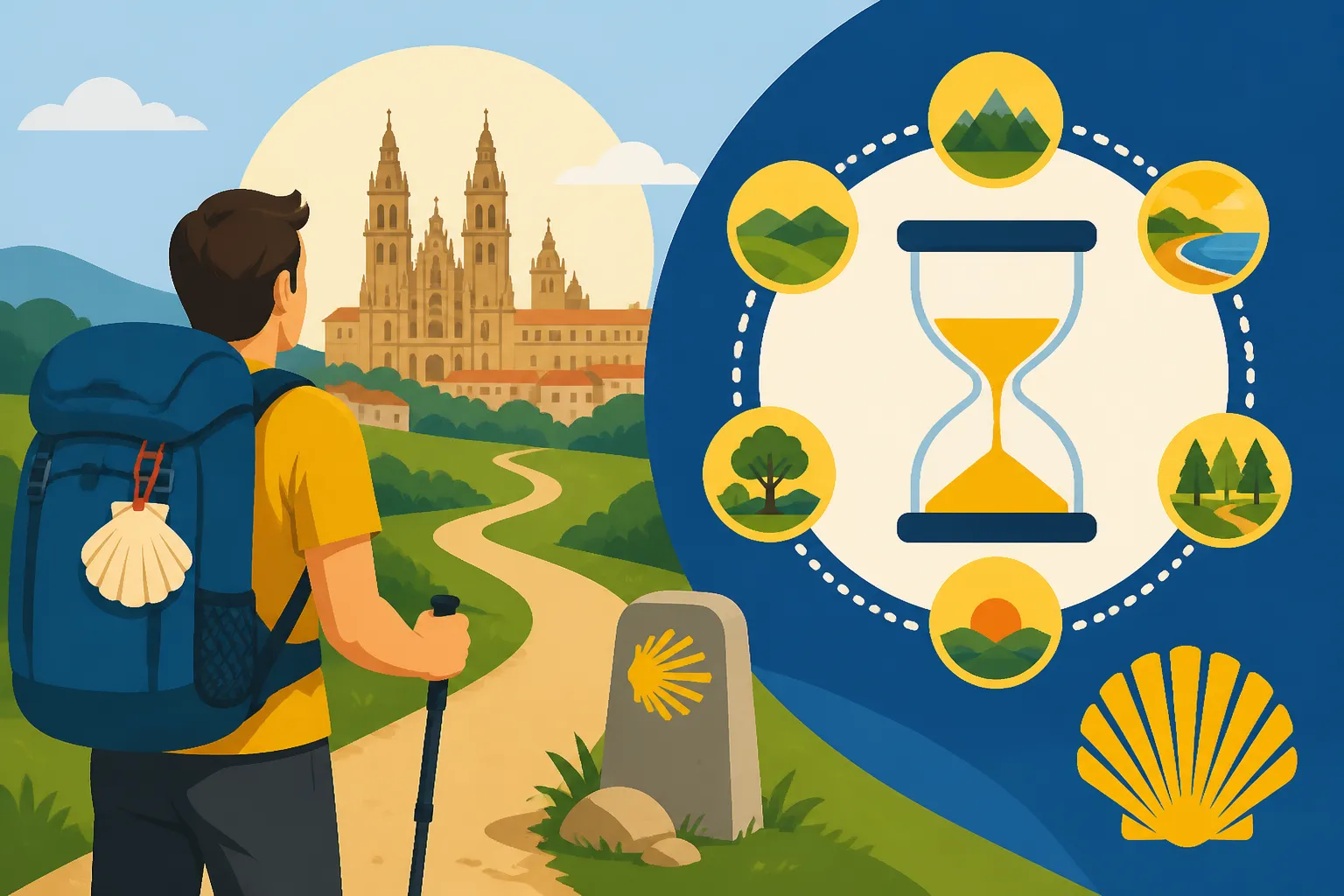
When you first start researching the Camino de Santiago, you might feel overwhelmed, or even a little inadequate, by the sheer number of routes and the varying lengths people talk about. Forget the "everyone does it in a month" myth; that's simply not true for most people, especially those of us with limited time. The honest answer to "how many days" is: it depends entirely on which Camino route you choose and how much of it you decide to walk. Most pilgrims aim for at least 100 km, as this is the minimum distance required to receive the Compostela certificate upon arrival in Santiago de Compostela. But even that 100 km can take anywhere from 4 to 7 days, depending on your pace.
Understanding the Different Routes and Their Durations
Spain is a country of diverse landscapes and rich history, and the Camino reflects that with a network of ancient pilgrimage routes, not just one single path. Each route offers a unique experience, and consequently, a different time commitment. Thinking about it like planning a larger trip around Spain, say exploring different regions, can help put it in perspective. Just as you wouldn't expect to see all of Andalusia in a single weekend, you can't expect to walk all the historic Camino routes in a few weeks.
The most famous, and often the busiest, is the Camino Francés (French Way). It traditionally starts from St. Jean Pied de Port in France and covers approximately 780 km. Walking the entire Francés usually takes between 30 to 35 days for most pilgrims, averaging about 20-25 km per day. However, many people choose to walk only sections of it. The last 100 km from Sarria to Santiago is by far the most popular section, often taking 5-7 days. Then you have the Camino Portugués (Portuguese Way), which is gaining immense popularity. The full central route from Lisbon is about 620 km (25-30 days), while the coastal route is slightly shorter. Many pilgrims start from Porto, which is about 260 km and typically takes 10-14 days, or even just Tui for the final 100 km, taking about 5-6 days.
Don't forget the quieter, equally beautiful routes like the Camino del Norte (Northern Way), a stunning but challenging coastal path of about 825 km, usually requiring 35-40 days. Or the Camino Primitivo (Original Way), often considered the most authentic and physically demanding, at around 320 km, taking 13-17 days. And for those looking for something shorter after reaching Santiago, there's the Camino de Fisterra y Muxía, an extension to the "End of the World," which adds another 3-4 days to your journey. Each route has its own character, challenges, and, crucially, time commitment, similar to how planning a road trip might see you choosing between the mountains of Galicia or the beaches of the Mediterranean.
Factors Influencing Your Camino Timeline
Your personal timeline for the Camino isn't just about the distance; it's a deeply personal decision influenced by several key factors. Thinking about these beforehand will save you a lot of grief and help you enjoy the journey rather than feeling constantly rushed or, conversely, bored.
Firstly, physical fitness is paramount. Are you a seasoned hiker who can comfortably tackle 30 km a day with a pack, or are you more accustomed to leisurely strolls? If you're new to long-distance walking, starting with shorter days (15-20 km) will prevent injuries and allow you to truly soak in the experience. Don't underestimate the impact of walking day after day, often on varied terrain. Your desired pace is also crucial. Do you want to race to Santiago, or do you envision long lunches, siestas, and time for reflection? Many expats living in Spain often wish they could slow down more, even in daily life, and the Camino offers that chance. If you plan to visit churches, museums, or simply linger in charming villages, you’ll need to build in extra time.
Budget and accommodation choices can also subtly affect your pace. If you're relying solely on albergues (pilgrim hostels), you might find yourself walking at a similar pace to others to secure a bed, especially in peak season on popular routes. If you prefer to book private accommodation via platforms like Booking.com, you have more flexibility to choose shorter walking days or add rest days without worrying about losing a pre-booked bed. Finally, your purpose for walking plays a huge role. Is it a spiritual journey, a physical challenge, a social experience, or simply a way to see Spain? If deep introspection is your goal, rushing through it won't serve you well. If it's mainly for the physical challenge, you might push for longer days.
Planning Your Camino de Santiago Journey
Once you've wrapped your head around the different routes and the variables, it's time to get down to the nitty-gritty of planning your specific journey. This is where the magic (and sometimes the stress!) of logistics comes into play. You’ll be thinking about how you’ll get to your starting point, where you’ll sleep, and how to manage your daily miles. It’s not just putting one foot in front of the other; it’s about crafting an experience that suits you.
Choosing a Starting Point and Distance
The beauty of the Camino is its flexibility. You don't have to walk hundreds of kilometers to have a profound experience. As mentioned, the 100 km minimum for the Compostela is a popular target, and many routes offer excellent starting points for this.
For example, on the Camino Francés, Sarria is the quintessential starting point for the final 100 km. From there, most pilgrims take 5-7 days to reach Santiago, walking manageable distances of 18-25 km daily. If you want a slightly longer experience but still have limited time, starting further back in Ponferrada (around 200 km) would add another 5-7 days, bringing your total to 10-14 days. This gives you more time to get into the rhythm, enjoy the scenery, and meet fellow pilgrims without the intensity of the full route.
On the Camino Portugués, Tui is the standard starting point for the final 100 km, taking around 5-6 days. If you have 1.5 to 2 weeks, starting in Porto is an excellent choice, offering about 260 km of walking that can be completed in 10-14 days comfortably, including a rest day or two. When you're thinking about how to get to these starting points, platforms like Omio can be incredibly useful. You can easily search for train or bus tickets from major Spanish cities like Madrid or Barcelona directly to towns like Sarria or Porto, streamlining your travel logistics before the walk even begins. For more insights on this, check out our guide on how to plan travel around Spanish public holidays, as transport can get tricky during those times.
Typical Section Durations for Popular Routes
To help you visualize the commitment, here's a table outlining common sections of popular Camino routes and their typical durations for an average pilgrim (walking 20-25 km/day, including a few rest days if the section is longer).
| Camino Route (Section) | Approximate Distance | Typical Walking Days | Notes |
|---|---|---|---|
| Camino Francés | |||
| St. Jean Pied de Port to Santiago | 780 km | 30-35 days | The full iconic route. |
| León to Santiago | 310 km | 12-15 days | Popular for a 2-week trip. |
| Sarria to Santiago | 115 km | 5-7 days | The minimum for the Compostela, often busy. |
| Camino Portugués | |||
| Porto (Central) to Santiago | 260 km | 10-14 days | A great balance for a 1-2 week trip. |
| Tui to Santiago | 120 km | 5-6 days | Final stretch, often paired with the Coastal route. |
| Camino Primitivo | |||
| Oviedo to Santiago | 320 km | 13-17 days | Challenging but incredibly rewarding. |
| Camino del Norte | |||
| Irún to Santiago | 825 km | 35-40 days | Coastal views, more challenging terrain. |
| Santander to Santiago | 450 km | 20-25 days | A significant portion of the Northern Way. |
| Camino de Fisterra y Muxía | 90 km (+29km to Muxía) | 3-4 days | An extension after Santiago, to the "End of the World." |
Remember, these are guidelines. Your actual pace will depend on your energy levels, how much sightseeing you do along the way, and whether you succumb to the temptation of a long, leisurely lunch in a picturesque village – something I wholeheartedly encourage! You can even find organized tours that handle luggage transfers and pre-booked accommodation, often curated by companies like GetYourGuide, which can reduce planning stress if you're on a tighter schedule or prefer a more structured experience.
Realistic Expectations and Pacing
The romantic ideal of the Camino often clashes with the reality of tired feet, blisters, and the daily grind of walking. As expats, we often come to Spain with a certain picture in mind, only to find the reality is richer, more complex, and sometimes more challenging than anticipated. The Camino is no different. Setting realistic expectations, especially around pacing and rest, is crucial for an enjoyable and transformative experience.
The Importance of Rest Days
I cannot stress this enough: build in rest days! Many first-time pilgrims make the mistake of planning to walk every single day, only to find their bodies screaming for a break by day four or five. A rest day isn't a sign of weakness; it's a smart strategy for longevity and enjoyment. Imagine trying to see all of Madrid's art museums without a single break – you'd be exhausted and probably wouldn't appreciate much. The Camino is a marathon, not a sprint.
A well-placed rest day allows your muscles to recover, blisters to heal (and believe me, you'll likely get them!), and your mind to process the journey. It also gives you the opportunity to explore a particularly charming town more thoroughly, do laundry without rushing, or simply relax with a coffee in a plaza. For longer routes (anything over 7-10 days), I'd recommend a rest day roughly every 5-7 walking days. If you're walking the full Camino Francés, you might even consider two rest days in places like León or Burgos. It makes all the difference in arriving in Santiago feeling refreshed, rather than completely depleted.
Managing Logistics and Accommodation
The logistical side of the Camino can be a source of stress, especially if you're unfamiliar with Spanish systems or traveling during peak season. Deciding on your daily distance often directly impacts your accommodation strategy.
If you're opting for traditional albergues, especially during busier months (April-May, September-October), you might feel pressured to walk longer distances to reach a town with available beds. Albergues operate on a first-come, first-served basis for the most part, though some now allow online booking. This means arriving early is often key, which might push you to walk faster than you'd prefer. For those who prefer a bit more comfort and certainty, booking private rooms in hostales, pensiones, or small hotels is a game-changer. Websites like Booking.com are invaluable here, allowing you to secure a room in advance, guaranteeing a comfortable night's sleep regardless of how quickly you walk that day. This approach offers far more flexibility in your daily distances and allows for spontaneous rest days without the fear of being stranded.
Beyond accommodation, consider how you’ll manage your gear. While many pilgrims carry their own backpacks, services are available to transport your main pack from one stage to the next for a small fee. This can significantly lighten your load and make longer days more manageable, freeing you to focus on the walk and the scenery.
Beyond the Walk: Immerse, Don't Rush
One of the greatest gifts of living in Spain is the culture of slowing down, savoring moments, and truly engaging with your surroundings. The Camino de Santiago offers an unparalleled opportunity to embrace this on a deeper level. It’s not just about reaching Santiago; it’s about the journey itself, the people you meet, and the villages you pass through. Rushing defeats the very purpose of this profound experience.
Integrating Cultural Experiences
Many pilgrims focus solely on walking, but to do so is to miss a huge part of what makes the Camino so special. Each town and village along the routes is steeped in history, offering charming churches, ancient monasteries, local markets, and incredible regional cuisine. Imagine arriving in a town, quickly grabbing a sandwich, and then rushing off, only to miss out on trying the local Galician seafood, or stumbling upon a small, lively plaza where locals are enjoying their tapas. This is where the expat in me really screams, "Don't skip the food!" Our guide on Spanish food and drink: a practical culture guide can prepare you for the culinary delights you might encounter.
Build in time to explore. Dedicate an afternoon to wander through the narrow streets, visit a cathedral, or simply sit at a café and people-watch. These moments of cultural immersion are often as memorable as the walking itself. They connect you to the living history of Spain and the spirit of the Camino. Consider even taking a short break from walking to join a local walking tour offered through platforms like GetYourGuide, which can give you historical context for the places you're passing through, enriching your understanding without requiring you to carry a heavy guide book.
Budgeting Time for Unexpected Delays
Life, and especially travel in Spain, rarely goes exactly according to plan. The Camino is no exception. Unexpected delays can crop up: perhaps an injury means you need an unplanned rest day, a particularly beautiful spot makes you want to linger longer, or you fall in with a fantastic group of pilgrims and want to adjust your pace to stay with them. If you’ve planned your trip down to the wire, with no buffer days, these unexpected joys or challenges can quickly become sources of immense stress.
Always build in a contingency. For a week-long Camino trip, add an extra day or two. For a two-week trip, perhaps three or four extra days. These buffer days can be used for unscheduled rest, deeper exploration, or simply as a cushion against unexpected events like a bus strike or a sudden change in weather. Remember that even understanding Spanish medical terminology can be a challenge, so allowing for extra time if you need to visit a pharmacy or a doctor is always a good idea. This flexibility transforms potential headaches into opportunities for deeper connection and enjoyment. The Camino is about letting go, and having a flexible schedule is a great way to practice that.
Ultimately, the best advice for planning your Camino de Santiago journey is to listen to yourself, your body, and your inner voice. It's not a race. It's a pilgrimage, a journey, an experience that will stay with you long after you've arrived in Santiago. Plan realistically, build in flexibility, and allow yourself to truly be present on the path. Buen Camino!
Disclaimer
The information provided in this guide is for general informational purposes only and does not constitute professional advice. While we strive to provide accurate and up-to-date information, circumstances can change. Always verify current regulations, prices, and availability with official sources and service providers before making any travel plans or decisions.