How to Start the Camino de Santiago: Routes for Beginners
So, you've heard the whispers, seen the photos, and perhaps felt that tug in your soul – the call of the Camino de Santiago. It's a dream for so many expats and travelers in Spain, a journey of self-discovery, stunning landscapes, and unforgettable camaraderie. But let's be honest, staring at maps of countless routes, trying to figure out where to even begin can feel as overwhelming as planning a full-blown international move. Don't fret, because this guide is here to walk you through the first, most crucial steps of embarking on your very own Camino adventure, focusing on the best routes for true beginners.
Disclosure: This post may contain affiliate links. We may earn a commission at no extra cost to you if you make a purchase through these links. Read full disclosure.
Understanding the Camino de Santiago for First-Timers
When you hear "Camino de Santiago," you might picture one specific path, but that's not quite right. It's actually a vast network of ancient pilgrim routes, all leading to the cathedral in Santiago de Compostela, where the remains of St. James the Apostle are believed to rest. For centuries, people have walked these paths for spiritual, religious, or deeply personal reasons. Today, it’s a melting pot of cultures, motivations, and experiences, attracting millions.
What Exactly is "The Camino"?
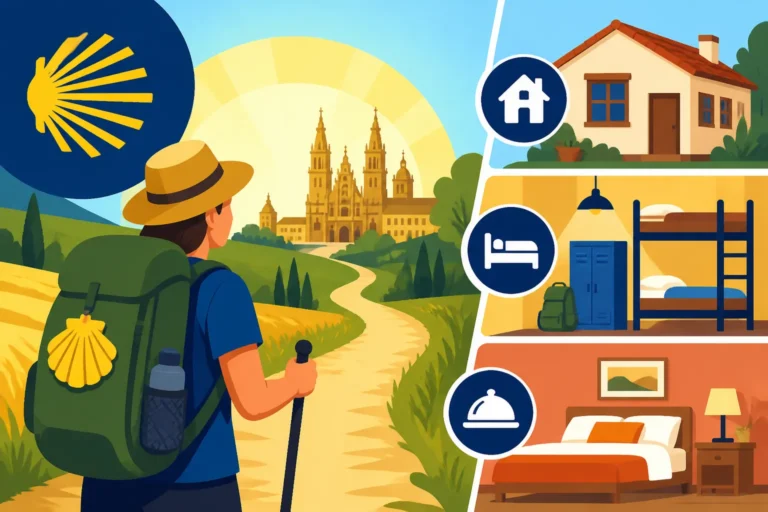
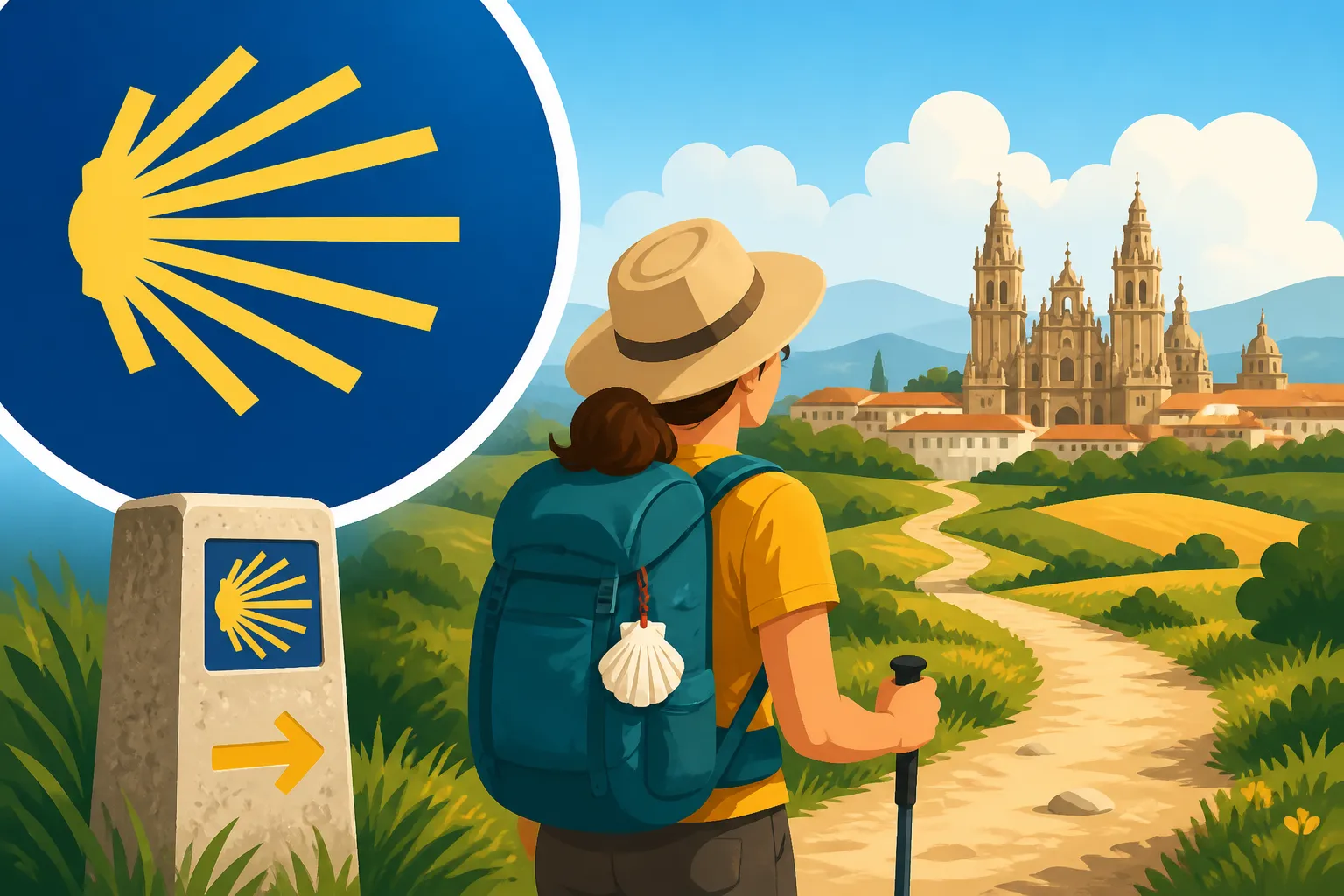
Imagine an intricate web of trails crisscrossing Spain, Portugal, and even France. Each path has its own character, history, and level of difficulty. The beauty of it is that there's no single "right" way to do the Camino. You can walk for a few days, a week, or even months, depending on your time and ambition. What unites all these paths is the journey, the distinctive scallop shell symbols guiding you, and the incredible sense of community you'll find along the way. It's not just a walk; it's an experience that truly changes many people. I've seen countless friends, initially skeptical, return from their Camino journeys with a newfound glow and a stack of stories they'll tell for years.
The most famous route, and often the first that comes to mind, is the Camino Francés, or the French Way. However, many other routes exist, such as the Camino Portugués, the Camino del Norte, and the Camino Primitivo, each offering a unique flavor of Spain's diverse landscapes and cultures. For a first-timer, the sheer variety can be a bit much to take in, which is precisely why focusing on routes known for their accessibility and infrastructure is key.
Why Choose a "Beginner-Friendly" Route?
If you're new to long-distance walking, or even if you just haven't done much multi-day trekking, diving headfirst into a rugged, isolated path might not be the best introduction. A "beginner-friendly" route, in my experience and that of many other expats, offers several advantages:
- Manageable Distance and Terrain: These routes often allow you to complete shorter sections, typically the last 100 kilometers, which is the minimum required to obtain the official Compostela certificate. The terrain is generally less challenging, with well-maintained paths and fewer steep climbs.
- Excellent Infrastructure: You'll find plenty of albergues (pilgrim hostels), private guesthouses, restaurants, and shops along these paths. This means less worry about where your next meal or bed will come from, and more focus on the journey itself.
- Social Support System: Because these routes are popular, you'll encounter many other pilgrims. This creates a wonderful social atmosphere, making it easy to make friends, share experiences, and even walk together if you choose. The Camino community is truly special, and for a first-timer, having others around can be incredibly reassuring.
- Accessibility to Starting Points: Getting to the start of these routes is usually straightforward, with good public transport links from major Spanish cities. This minimizes travel stress before you even lace up your boots.
When I first considered the Camino, I pictured myself lost in the wilderness, but then I learned about the more accessible routes. That knowledge alone made the dream feel achievable, not just a distant fantasy for seasoned hikers.
Top Camino Routes for Your First Adventure
Alright, let's get down to the brass tacks: which routes are perfect for dipping your toes into the Camino experience? Based on popularity, infrastructure, and ease of access, three routes stand out for beginners who want to earn their Compostela.
The French Way (Camino Francés) – Sarria to Santiago
This is, hands down, the most popular starting point for those aiming for the 100-kilometer minimum to receive the Compostela. Sarria, a charming town in Galicia, marks the beginning of the final stretch of the iconic Camino Francés.
- Why it's popular for beginners: The section from Sarria is incredibly well-trodden, meaning the path is clearly marked, and services are abundant. You're never far from a village, a café, or an albergue. It typically takes about 5-7 days to complete this stretch, making it ideal for those with limited time. The terrain is mostly rolling hills through beautiful Galician countryside, including forests, small farms, and historic hamlets. It’s challenging enough to feel like an accomplishment but not so grueling that it will break a beginner.
- Logistics (Sarria access, accommodation): Getting to Sarria is relatively easy. You can take a train or a bus from major cities like Madrid or Santiago de Compostela itself. Companies like Omio can help you find the best connections, offering a clear overview of train and bus schedules to get you right to your starting line. Once in Sarria, you'll find plenty of shops to pick up any last-minute essentials, and many albergues are ready to stamp your newly acquired credencial (pilgrim passport). While many albergues operate on a first-come, first-served basis, especially during peak season, booking ahead for your first night through platforms like Booking.com can ease arrival day anxieties.
- What to expect (crowds, social aspect): Be prepared for crowds, especially during peak summer months (July and August) and around Easter. While some find this detracting, for a beginner, it means a guaranteed social experience. You'll meet people from all over the world, sharing stories, laughter, and sometimes a few blisters. The camaraderie is truly one of the highlights of this route. You'll often find yourself walking alongside new friends, even if only for a day, creating memories that last a lifetime. Many of my friends who did this route loved the buzzing atmosphere and the ease of falling into conversation with fellow pilgrims.
The Portuguese Way (Camino Portugués) – Central Route from Tui
If you're looking for something a little less crowded than Sarria but still boasts excellent infrastructure and an achievable distance, the Central Portuguese Way, starting from Tui, Spain, is a fantastic choice. This route generally takes about 6-7 days to complete the 119 kilometers to Santiago.
- Why it's a great alternative (less crowded, coastal options): The Portuguese Way offers a distinct cultural flavor, crossing from Portugal into Spain at the border town of Tui (a popular Spanish start for the Compostela). It's incredibly scenic, passing through vineyards, forests, and historic towns like Pontevedra and Padrón. While still popular, it generally sees fewer pilgrims than the Sarria section of the French Way, offering a slightly more serene experience without feeling isolated. There's also a Coastal Portuguese Way that offers stunning ocean views, although the Central route from Tui is often preferred for first-timers due to its slightly more consistent path.
- Logistics (Tui access, terrain): Tui is a border town, accessible by bus from Vigo or other Galician cities. The terrain is varied but generally gentle, with some paved sections, dirt tracks, and cobblestones. It's well-marked with both yellow arrows and blue/white shell symbols characteristic of the Portuguese Camino. You'll find a good spread of albergues and private accommodations, though booking ahead during busy periods is always a smart move. For those planning their journey, considering how to navigate public transport effectively will be key. My post on "Traveling Around Spain: Trains, Buses, Flights, and Car Hire" might be useful here.
- What to expect (culture, food): Prepare for a delightful immersion in Galician and Portuguese culture. The food is incredible – think fresh seafood, rich stews, and those famous pastéis de nata if you venture further south into Portugal. The language changes subtly as you move, adding another layer to the experience. It’s a slightly different vibe than the French Way, perhaps a touch more reflective for some, while still maintaining that wonderful Camino spirit.
The English Way (Camino Inglés) – Ferrol to Santiago
For those with even less time, or who prefer a shorter, focused pilgrimage, the Camino Inglés (English Way) starting from Ferrol is an excellent option. This route is typically completed in 5-6 days, covering just over 110 kilometers.
- Ideal for shorter trips or those arriving by air: Historically, pilgrims from England and Ireland would arrive by boat in the ports of Ferrol or A Coruña and walk from there. Today, it’s perfect for pilgrims who want the full Camino experience without committing to a week or more on the path. It's also incredibly convenient if you're flying into Santiago de Compostela Airport (SCQ), as Ferrol is a relatively short bus ride away.
- Logistics (Ferrol access, distance): Ferrol is a naval city on the coast, easily reached by bus from Santiago de Compostela. The route is well-marked and winds through pleasant Galician coastal landscapes and inland forests. The overall distance is very manageable, making it less physically demanding for those who might not have extensive training time. While perhaps not as densely populated with services as the Sarria stretch, it still offers ample accommodation and eateries.
- What to expect (historic feel, good infrastructure): The English Way feels steeped in maritime history, with beautiful coastal sections and a distinct Galician charm. It’s generally quieter than the Sarria route, offering a more tranquil pilgrimage experience for those seeking solitude, but still with enough fellow pilgrims to share a meal or a conversation with. The infrastructure is robust, with enough options for accommodation and places to eat. It’s a truly underrated gem for first-timers.
Planning Your First Camino: Essential Steps
Deciding on a route is just the first step. Now comes the nitty-gritty of planning, which, let's be honest, can sometimes feel like a bureaucratic hurdle race in Spain. But trust me, a little preparation goes a long way.
Getting Your Credentials and Passport
This is perhaps the most iconic piece of Camino paraphernalia you’ll need: the credencial del peregrino, or pilgrim's passport. It's a small booklet that you get stamped at various points along the Camino – albergues, churches, cafés, town halls – to prove your progress.
- Explain the "credencial" and "Compostela": The credencial is your official document. You need to collect at least two stamps per day for the last 100 kilometers (if walking) or 200 kilometers (if cycling) to be eligible for the Compostela. The Compostela is the official certificate of completion, issued by the Pilgrim's Office in Santiago. It's not a race, but for many, it's a cherished memento of their journey.
- Where to get it: You can usually obtain your credencial at pilgrim associations in your home country, specific churches, or at the start of most major Camino routes (e.g., in Sarria, Tui, or Ferrol). I highly recommend getting it before you start, if possible, to save time on your first day. You’ll usually pay a small fee, often just a couple of euros.
Accommodation: Albergues, Hostels, and Hotels
The Camino is famous for its albergues, which are pilgrim-specific hostels. They are simple, communal, and often incredibly cheap, typically ranging from €8 to €15 per night.
- Describe albergue culture: Albergues offer dormitory-style sleeping, often with bunk beds, shared bathrooms, and sometimes a communal kitchen. They're a fantastic way to meet fellow pilgrims and fully immerse yourself in the Camino spirit. However, they can be noisy, and privacy is minimal. For those needing a bit more comfort, many towns also offer private hostels, casas rurales (rural guesthouses), or hotels. Platforms like Booking.com are invaluable here for securing private rooms, especially if you're traveling during peak season or just want a guaranteed good night's sleep after a long day of walking. My previous piece on "Accommodation in Spain: Hotels, Hostels, and Rentals" delves deeper into what to expect from various lodging types.
- Tips for booking (especially for popular routes/seasons): While some pilgrims prefer the spontaneity of finding an albergue each evening, for popular routes like Sarria to Santiago, especially in busy months, it’s wise to book ahead, at least for your first few nights. This saves you the stress of arriving tired and finding everything full. Many albergues don't take reservations, but the private options do. If you're really committed to the albergue experience, try to arrive early in the afternoon to secure a spot.
Packing Smart for the Path
This is where many first-timers (including myself, once upon a time!) make mistakes. Less is truly more on the Camino. Every extra gram feels like a kilogram by the end of the day.
- Emphasize light packing: Aim for your backpack to be no more than 10% of your body weight. You'll wear the same clothes repeatedly, so focus on quick-drying, breathable fabrics. A good pair of broken-in walking shoes or boots is non-negotiable – do not buy new ones right before your trip!
- Key items (shoes, layers, first-aid): Think in layers for clothing, regardless of the season. Always pack a lightweight rain jacket and trousers. A small first-aid kit with blister treatment, pain relievers, and any personal medications is crucial. Don't forget sunscreen, a hat, and a water bottle (or two!). A quick-dry towel, toiletries, and flip-flops for albergue showers are also essentials. Consider checking out tips on "What to Pack for a Beach Trip in Southern Spain" for inspiration on lightweight, quick-dry clothing that could easily translate to Camino wear.
- Don't forget: Phone charger, portable power bank, earplugs (a lifesaver in albergues!), and a headlamp. A small notebook and pen can be lovely for journaling your thoughts or collecting contact info from new friends.
Training Your Body and Mind
The Camino is a physical challenge, even the shorter, beginner-friendly routes. Don't underestimate it.
- Physical preparation: Start walking! Gradually increase your distance and incorporate some hills if possible. Wear the shoes you plan to use on the Camino to break them in thoroughly. Doing a few longer walks (15-20km) with your packed backpack will give you a realistic idea of what to expect. Focus on strengthening your core and legs too – simple exercises can make a big difference. If you're interested in general fitness and outdoor activities, my article on "Hiking in Spain: Popular Trails and How to Prepare" offers some great advice that directly applies to Camino training.
- Mental preparation for challenges: The Camino is as much a mental journey as it is physical. There will be days when your feet ache, the weather is bad, or you feel lonely. Prepare for these moments. Remind yourself why you're doing it. The mental fortitude you build on the Camino is truly rewarding. Embrace the discomfort, for it is often in these moments that you learn the most about yourself.
Transport to the Starting Point
Getting to your chosen starting town is often the biggest pre-Camino logistical puzzle. Spain has an excellent public transport network, making this quite straightforward.
- Mention options like trains, buses, flights: Depending on your arrival airport (likely Santiago de Compostela, Madrid, or Porto if you're coming from abroad), you'll use a combination of trains and buses. For instance, if you fly into Santiago, you can easily catch a bus to Ferrol for the English Way, or a train/bus to Sarria for the French Way. For a comprehensive look at getting around the country, my guide on "Traveling Around Spain: Trains, Buses, Flights, and Car Hire" is an excellent resource.
- Integrate Omio: Websites and apps like Omio are fantastic for comparing and booking bus and train tickets across Spain. They make it incredibly easy to find the most efficient and affordable way to reach your specific starting point, whether it's Sarria, Tui, or Ferrol, saving you time and hassle. You can often see multiple options and choose what works best for your schedule and budget.
Practical Tips for a Smooth Journey
You've planned your route, packed your bag, and bought your tickets. Now, let's talk about the practicalities of being on the path itself.
Budgeting for Your Camino
The Camino can be done on a shoestring budget, making it one of the most affordable long-distance treks in the world.
- Daily costs (food, accommodation): If you stay exclusively in municipal or parish albergues and prepare some of your own food, you can often manage on €30-€40 per day. This includes your bed, a simple breakfast, a packed lunch, and a pilgrim's dinner (a set menu often offered at a reduced price for pilgrims). If you opt for private rooms, eat out more, or enjoy a few more beers, your budget will naturally increase. It’s always wise to have a bit of extra cash for unexpected expenses. For more general financial planning in Spain, consider my article on "Money for Travel in Spain: Cards, Cash, and ATMs."
- Unexpected expenses: Blisters requiring extra bandages, a laundry service (some albergues have them), a spontaneous ice cream, or perhaps needing to buy a new piece of gear if something breaks. It's wise to have an emergency fund. Some pilgrims also choose to use baggage transfer services, where a local company moves your main backpack between accommodations for a fee (usually €5-€10 per day), allowing you to walk with just a small day pack. This is a popular option, especially for beginners who want to ease into the physical demands.
Staying Healthy and Safe
Your well-being on the Camino is paramount. A happy pilgrim is a healthy pilgrim!
- Foot care: This cannot be stressed enough. Your feet are your most important asset. Change your socks daily, air your feet out during breaks, and treat any hot spots or blisters immediately. Compeed patches are your best friend. A small tube of Vaseline can also help prevent chafing.
- Hydration: Carry enough water, especially in warmer months. Dehydration can quickly zap your energy. Many towns have public fountains, but always ensure the water is potable ("agua potable").
- Emergency numbers: While the Camino is generally very safe, it's always good to be prepared. Spain's universal emergency number is 112, which connects you to police, ambulance, or fire services. Make sure your phone is charged and consider having a European SIM card for easy access. My guide on "Emergency Numbers in Spain: 112 and When to Use It" offers more details on how to use these services effectively.
- Sun protection: The Spanish sun, even in spring and autumn, can be intense. Sunscreen, a hat, and sunglasses are essential.
Navigating and Communicating
Getting around is surprisingly easy, but a few tips can help.
- Apps, shell markers: The Camino is incredibly well-marked with iconic yellow arrows and scallop shell symbols. You won't get lost easily. However, having a Camino app on your phone (like Buen Camino or Gronze.com) can be very helpful for checking distances, finding albergues, and seeing elevation profiles. Don't rely solely on your phone, though; sometimes the battery dies, or signal drops.
- Basic Spanish phrases: While you'll find some English speakers, especially in larger towns and popular albergues, knowing some basic Spanish phrases will greatly enhance your experience. Simple greetings like "Hola," "Gracias," "Por favor," and "Buen Camino!" (the traditional greeting among pilgrims) go a long way. Being able to ask for "agua" (water), "café" (coffee), or "la cuenta" (the bill) will make daily life much smoother. My post on "Spanish Language and Everyday Communication for Visitors" has some fantastic beginner phrases. If you want to dive deeper, "How to Learn Enough Spanish for a Two-Week Trip" could be a great starting point.
- Using GetYourGuide: While many prefer a completely independent Camino, some beginners might appreciate the added support for certain aspects. Platforms like GetYourGuide offer options for guided Camino sections or even specialized transfers from airports to your starting point, which can be a relief if you're feeling a bit daunted by the initial logistics. They also offer various tours in Santiago itself, perfect for celebrating your arrival.
The Camino de Santiago is an incredibly rewarding journey, a true highlight for anyone living in or visiting Spain. Don't let the initial planning overwhelm you. Choose one of these beginner-friendly routes, take a deep breath, and trust that the path, and the wonderful people you'll meet, will guide you. Buen Camino!
| Route Section | Starting Town | Distance (approx.) | Typical Days | Key Feature for Beginners | Expected Crowds |
|---|---|---|---|---|---|
| French Way (Final Stretch) | Sarria, Spain | 115 km | 5-7 | Best infrastructure, very social | High (especially peak season) |
| Portuguese Way (Central) | Tui, Spain | 119 km | 6-7 | Distinct culture, varied scenery | Medium |
| English Way | Ferrol, Spain | 110 km | 5-6 | Shorter, coastal charm, good for limited time | Low to Medium |
Disclaimer
The information provided in this guide is for general informational purposes only and does not constitute professional advice. While we strive to provide accurate and up-to-date content, circumstances on the Camino de Santiago can change. Always verify information with official sources, pilgrim associations, and local authorities. Personal safety, physical preparation, and travel insurance are your responsibility.