Student Visa Renewals in Spain: Timing and Requirements
Disclosure: This article contains affiliate links. If you buy through them, we may earn a commission at no extra cost to you. Read our full disclosure.
The dreaded expiry date on your TIE is approaching, and the familiar knot of Spanish bureaucracy anxiety is tightening in your stomach. I remember sitting in a cramped café in Madrid, frantically refreshing the appointment page while my residency card sat inches away from turning into a plastic pumpkin. This guide solves the complex puzzle of student visa renewals, ensuring you stay legal without losing your sanity.
Understanding the Legal Window for Renewal
In Spain, the process of renewing your right to stay as a student is formally known as the Prórroga de Estancia por Estudios. It is not technically a "visa renewal" because the visa is what got you into the country; the prórroga is what keeps you here. The timing of this application is the most critical factor in your success. You are legally allowed to submit your application 60 days before your card expires and up to 90 days after it has expired.
However, do not let that 90-day grace period lure you into a false sense of security. While the law allows for a late submission, doing so can result in a fine, and more importantly, it leaves you in a legal limbo where you cannot easily travel or prove your status to potential landlords. Applying within the 60 days prior to expiry is the gold standard for a stress-free transition. If you are also planning a move to a different city for a new Master’s or PhD program, the logistical overhead increases, and you might want to look into services like Sirelo to handle the physical transition while you focus on the digital paperwork.
Once your application is submitted, you enter a state of "administrative silence." Under Spanish law, if the authorities do not respond within 90 days, the application could be considered "favorable" by default, though in practice, you always want that official resolution. During this waiting period, your expired TIE remains valid for the purposes of staying in the country, but you will need additional documents if you plan to cross borders. Understanding the nuances of this stage is as important as the Spain Student Visa: Application Steps and Common Mistakes you likely navigated when you first arrived.
Core Requirements for a Successful Extension
The Spanish government needs to see two main things: that you actually studied during your last period of residency and that you have the means to continue doing so. This is where most rejections happen. You cannot simply stay in Spain indefinitely by jumping from one low-effort course to another; there must be a sense of academic progression or continuity that justifies your presence.
Proving Academic Achievement
To renew, you must provide a Certificado de Aprovechamiento (Certificate of Achievement) from your previous school. This document must explicitly state that you passed your exams or successfully completed the research goals for the previous year. If you failed a significant portion of your credits, the Extranjería (Immigration Office) might deny your renewal on the grounds that you are not fulfilling the purpose of your stay.
In addition to the past year’s results, you need a letter of admission for the upcoming academic year. This is easy if you are continuing the same degree, but if you are switching schools or starting a new program, the authorities will check if the new course is at the same level or higher than the previous one. For instance, moving from a Bachelor’s to a Master’s is perfect. Moving from a Master’s to a basic Spanish language course can sometimes trigger a red flag. If you are moving between regions for a new school, using a specialized mover like Sirelo can help you transition quickly so you can register your new address with the local town hall.
Financial Sufficiency and the IPREM
You must prove you have enough money to live in Spain without working. The benchmark is the IPREM (Indicador Público de Renta de Efectos Múltiples). Generally, students must show 100% of the IPREM for every month of their stay. For a standard 12-month renewal, this means having a substantial balance in your bank account. The authorities prefer to see a Spanish bank statement showing a history of funds rather than a single large deposit made yesterday.
If your funds are coming from parents or sponsors abroad, you will need a notarized letter of support. If that letter is not in Spanish, it must be translated by a Traductor Jurado. Using a service like Translayte is highly recommended here, as they specialize in the specific formatting requirements that Spanish immigration officers look for. They ensure your financial evidence is presented clearly and legally, minimizing the chance of an unfavorable result due to a technicality in the Proof of Funds for Spain Visas: Accepted Bank Statements and Formats.
Comprehensive Health Insurance
One of the most common reasons for a "requerimiento" (a formal request for more documents) is inadequate health insurance. For a student renewal, your policy must have no "carencia" (waiting periods) and no "copagos" (co-payments). It must offer a level of coverage equivalent to the Spanish National Health System, including repatriation of remains.
Standard travel insurance or basic private policies usually won't cut it. Many expats opt for providers like Innoinsure because they offer specific "Expat/Student" policies that are pre-approved by immigration offices. Having a policy from Innoinsure ensures that you don't get stuck in a back-and-forth with an official who doesn't recognize your international provider. This is a non-negotiable part of the Health Insurance for Spain Visas: Coverage Rules and Policy Checklist that you must satisfy to get that favorable resolution.
The Paperwork Checklist
Organizing your folder is half the battle. Spanish officials are famously particular about the order and completeness of your dossier. If you are filing in person, bring a photocopy of every single page, including your passport. If you are filing digitally, which is the preferred method now, ensure every scan is high-resolution and under the size limit allowed by the platform.
| Document Required | Purpose | Notes |
|---|---|---|
| Form EX-00 | Official Application | Must be signed and filled in duplicate if in person. |
| Tasa 790-052 | Payment of Fee | Pay at a bank first and bring the stamped receipt. |
| Full Passport Copy | Identity Proof | Every single page, even the blank ones. |
| Certificado de Aprovechamiento | Academic Proof | Must show you passed your previous year. |
| Matricula/Letter of Admission | Future Intent | Proof of enrollment for the new academic cycle. |
| Bank Statements | Financial Means | Showing at least 100% of the IPREM monthly. |
| Insurance Policy | Health Coverage | Must have no co-pays or waiting periods. |
| Empadronamiento | Local Residency | Must be updated if you have changed addresses. |
If any of your documents, such as a scholarship grant or a foreign bank letter, are in English or another language, the immigration office will not accept them without a sworn translation. This is a legal requirement in Spain. Services like Translayte can handle these translations quickly, which is vital when you are working within that 60-day window. Remember, a regular translation is just paper; a Traducción Jurada with the translator's official stamp is a legal document. Ensure you've checked the Spain Visa Translations & Apostilles: What Needs Legalization? requirements to see if you also need an Apostille on your foreign documents.
Digital Filing vs. Cita Previa
In the old days, you had to wake up at 8:00 AM on a Friday and pray to the gods of the internet for a Cita Previa (appointment). While you can still do this, it is increasingly difficult to find slots in cities like Barcelona, Madrid, or Valencia. The "pro" move is to apply electronically via the Mercurio platform.
To use Mercurio, you must have a Certificado Digital. This is a digital file installed in your browser that proves your identity. Getting one involves a quick trip to a government office once, but once you have it, you can renew your residency from your couch. This is perhaps the single best piece of advice for any expat: get your digital certificate as soon as you have your first TIE. It allows you to skip the months of waiting for an appointment and lets you upload your documents directly to the immigration system. If you haven't set this up yet, look into How to Get a Digital Certificate (Certificado Digital) for Immigration Paperwork immediately.
Filing digitally also creates a digital trail. You get a "resguardo" (receipt) with a timestamp the moment you submit. This receipt is your legal proof that you are in the process of renewing, which is essential if you get stopped by police or need to show your status to a bank. If you still prefer the in-person route, be prepared for the "appointment hunt." You might find yourself searching for Spain Immigration Office Appointments: Booking Tips and Alternatives just to find a slot in a town three hours away because your local office is booked solid.
Navigating the TIE Fingerprinting Process
Once your renewal is "Favorable," the celebration should be brief because you aren't done yet. You now have a 30-day window to book a second appointment for your fingerprints (huellas). This is a separate process from the residency application itself. You are now applying for the physical card (the TIE) that proves your renewed status.
For this appointment, you will need to pay a different fee (Tasa 790-012), bring a fresh Spain Visa Photo Requirements: Size, Background, and Common Errors, and bring the printout of your favorable resolution. If you have moved since your last card was issued, you must also bring a new Certificado de Empadronamiento. If your move involved a cross-country haul, hopefully, Sirelo helped you get settled in time to have that Padrón ready.
After the fingerprinting, you will be given a receipt, and you’ll have to wait about 30 to 45 days to pick up the actual card. During this month of waiting, your old card is long expired, and your new one doesn't exist yet. This is the period where most students feel the most vulnerable, especially if they need to travel home for the holidays or a summer break. For more details on this final stretch, refer to How to Get the TIE Card in Spain: Fingerprints, Fees, and Pickup.
Traveling During the Renewal Period
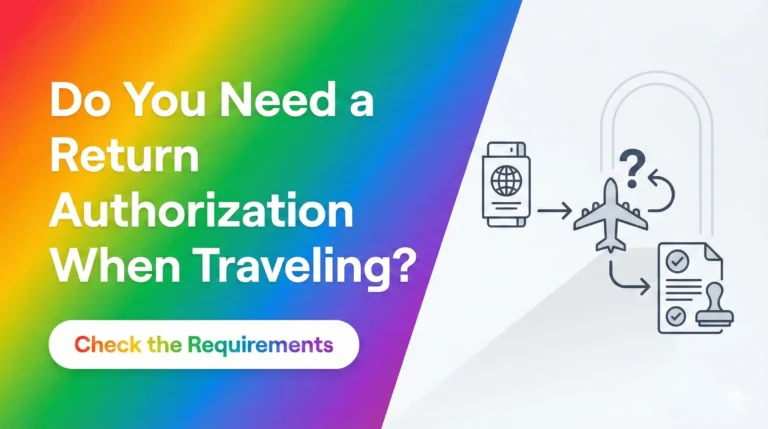
Can you leave Spain while your visa is being renewed? Yes, but it requires a specific document called an Autorización de Regreso. This is a paper that tells border control that you have a valid residency renewal in progress and are allowed to re-enter the country.
You can only apply for a Regreso once your renewal application is already in the system (either en trámite or favorable). It is valid for 90 days and only for entry back into Spain. Be careful: if you are flying back to Spain with a layover in another Schengen country (like Germany or France), the Autorización de Regreso might not be recognized by their border police, as it is a purely Spanish document. Always try to fly directly back into a Spanish airport if you are using one.
Keep in mind that getting an appointment for a Regreso can be just as hard as getting the residency appointment itself. Plan your trips well in advance. If your renewal is handled correctly with all documents—from your Innoinsure policy to your Translayte translations—the process should move quickly enough that you won't be stuck without a card for too long. If you are a first-timer, knowing How to Get a Spanish NIE Number: In Spain vs Abroad will give you the context of how these ID systems interlink during travel.
Avoiding Common Pitfalls and Rejections
The most common reason for rejection is simply missing information. If the office finds something wrong, they will issue a "requerimiento." You usually have 10 business days to provide the missing document. If you filed digitally, you will get this notification via your digital portal; if you filed by mail, it might come as a physical letter, which is much slower and riskier.
Another pitfall is the expiration of the Empadronamiento. Some offices want a certificate that was issued within the last 3 months. Even if you haven't moved, you might need to go back to the Ayuntamiento to get a fresh copy. Keeping your local registration updated is vital, as explained in Empadronamiento in Spain: How to Register Your Address.
Finally, ensure your insurance is bulletproof. Using a recognized provider like Innoinsure removes the "subjective" element of an officer's decision. They see the logo, they know the policy meets the requirements, and they move on to the next document. In the world of Spanish bureaucracy, making the official's job easier is the fastest way to get your "Favorable."
Disclaimer
This guide is for informational purposes only and does not constitute legal advice. Immigration laws and regional practices in Spain are subject to frequent changes. Always consult with a qualified legal professional or the official Extranjería website for the most current requirements and procedures regarding your specific situation.