Spanish CV Photo: When It’s Expected and When to Skip It
Disclosure: This article contains affiliate links. If you buy through them, we may earn a commission at no extra cost to you. Read our full disclosure.
Sending out fifty perfectly translated American resumes and hearing absolutely nothing back is a soul-crushing way to start your Spanish job hunt. I spent my first month wondering if my degree was useless before a local recruiter laughed at my faceless document. This guide breaks down exactly when you must include a photo on your Spanish CV, the unwritten rules for taking one, and the rare cases when you should skip it entirely.
The Culture Shock of the Spanish CV Photo
When moving from an Anglo-Saxon country to Spain, you bring a set of deeply ingrained professional habits that are legally and culturally incompatible with the Mediterranean job market. Understanding this clash is the first step toward landing an interview.
Why Employers Expect to See Your Face
In the US, the UK, or Canada, strict anti-discrimination laws usually forbid employers from asking for your age, nationality, or a photograph. If you submit a resume with a headshot to an American corporation, the HR department will likely throw it in the trash to avoid potential bias lawsuits.
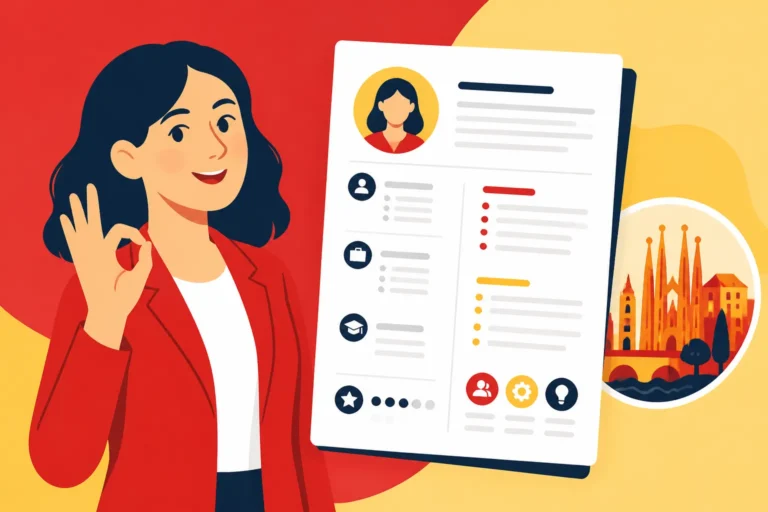
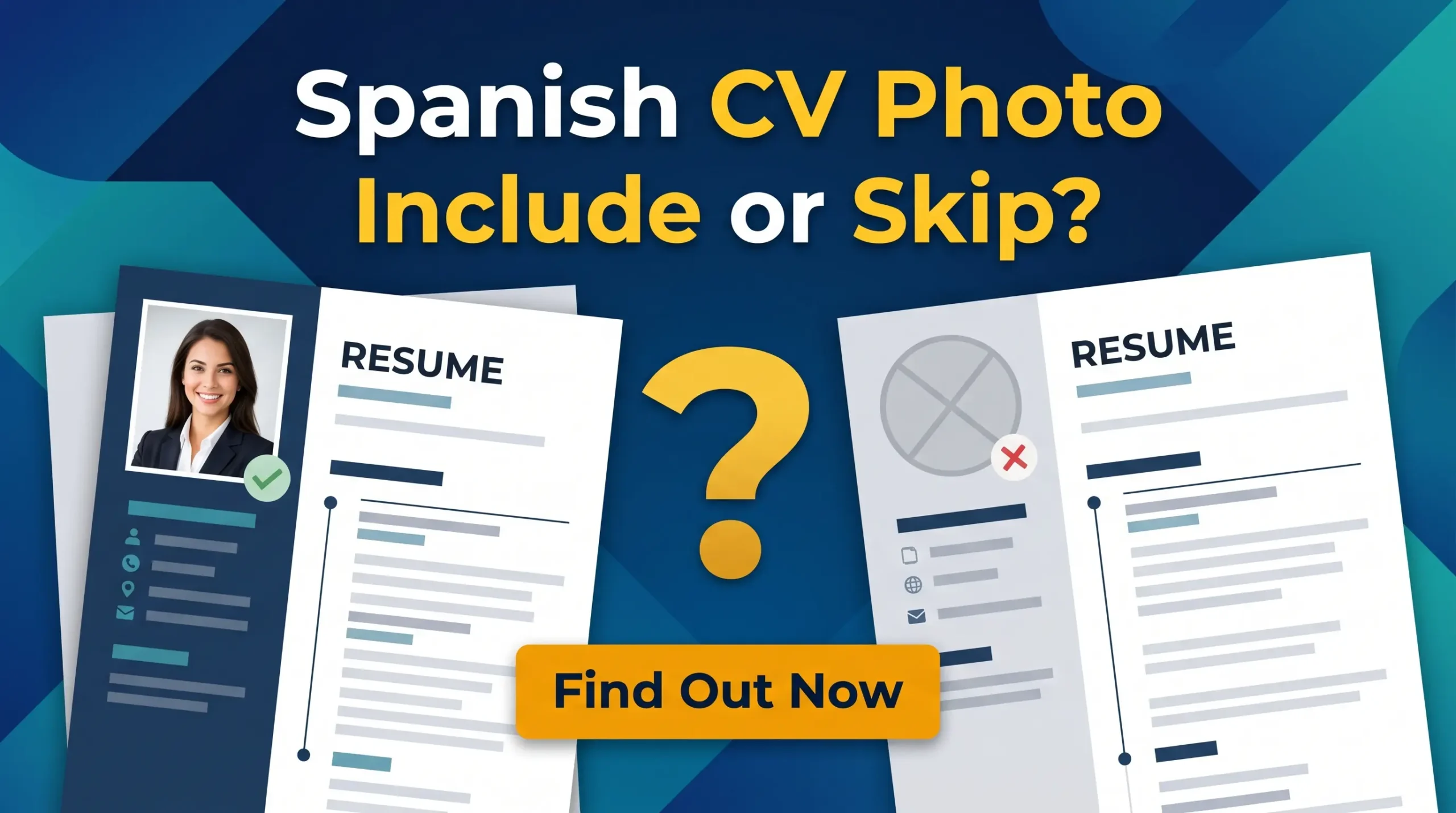
In Spain, the exact opposite is true. An anonymous, text-only resume is often viewed with intense suspicion. Spanish corporate culture places a massive emphasis on interpersonal relationships, approachability, and presentation. Recruiters genuinely want to see who they are potentially hiring. Leaving the photo off your resume signals that you are either hiding something, or worse, that you are a clueless foreigner who did not bother to learn local business customs. Understanding how to integrate this element seamlessly is a core component of How to Build a Spanish‑Style CV From Scratch (Template Guide).
The Cost of Corporate Photography
Realizing you need a headshot is one thing; actually getting a good one is another. A cropped selfie from a bar in Ibiza or a blurry photo from your graduation ceremony will get your application rejected instantly. You need a clean, professional corporate portrait.
If you just arrived in Spain, local photography studios often charge a premium for corporate headshots. Instead of draining your limited relocation budget on a studio in Madrid, you can take a high-resolution photo yourself against a white wall and hire a professional freelance photo editor in your home country to retouch it. Using Wise allows you to instantly pay that freelancer in their local currency without bleeding your savings through the terrible foreign exchange markups charged by legacy Spanish banks.

How to Take the Perfect Spanish CV Headshot
If you are going to put your face on your professional document, it needs to convey competence, approachability, and cultural awareness.
Dress Code and Body Language
Your headshot should not look like a mugshot or a passport photo. Passport photos require a rigid, unsmiling stare, which translates as hostile on a CV. You should look directly at the camera with a subtle, professional smile.
Your wardrobe should strictly match the industry you are targeting. If you are applying for a role in corporate banking or law, wear a suit jacket and tie or a formal blouse. If you are applying for a tech startup or a casual role, a clean, ironed button-down shirt is perfect. Knowing your industry is just as vital as knowing your visa limitations, a dynamic we explore in How to Find a Legal Part‑Time Job as a Student in Spain.
Backgrounds and Lighting
The technical execution of the photo matters just as much as your outfit. The background must be entirely neutral—solid white, light grey, or a soft, blurred office environment. Avoid outdoor backgrounds with trees or distracting street scenes. Ensure the lighting is bright and even, avoiding harsh shadows across your face.
Once your CV is visually perfect, you must ensure your spoken Spanish matches the professional image you just presented. When a recruiter calls you based on that great photo, you cannot freeze. Utilizing the advanced business vocabulary modules on SpanishPod101 ensures you understand standard corporate greetings and can confidently schedule an interview without awkwardly relying on a translation app. Practicing your listening comprehension with SpanishPod101 guarantees that when you walk into the office, you actually sound like the competent professional pictured on your resume.
When to Skip the Photo Entirely
While the photo is the golden rule for 95 percent of Spanish job applications, there are a few highly specific, modern exceptions where including a picture can actually hurt you.
Applying to Multinational Corporations
If you are applying to a massive US or UK-based multinational corporation that happens to have an office in Barcelona or Madrid (such as Google, Amazon, or international consulting firms), the rules shift. These massive entities often utilize global Applicant Tracking Systems (ATS) and enforce strict, company-wide anti-discrimination policies imported from their home countries.
If a job posting is written entirely in English and explicitly requests a “Blind CV” or an “Anglo-Saxon format,” you must absolutely remove your photo. Sending a photo to a strict multinational HR screening software might cause your application to be automatically rejected for compliance reasons. This is a common scenario when applying for highly competitive corporate training programs, a process we map out in How to Get a Spanish Internship Contract as a Foreigner.
Remote Tech Jobs and Startups
The second exception is the rapidly growing remote tech sector. Startups, international software agencies, and digital nomad hubs care exclusively about your GitHub repository, your coding portfolio, and your verifiable technical skills. They rarely care what you look like.
| Company Type | CV Language | Include a Photo? | Include Personal Data (Age, NIE)? |
| Traditional Spanish Firm | Spanish | Yes, mandatory | Yes, mandatory |
| Local Retail / Hospitality | Spanish | Yes, mandatory | Yes, mandatory |
| US/UK Multinational | English | No (Unless requested) | No (Email and Phone only) |
| Remote Tech Startup | English / Spanish | Optional (Usually No) | No |
Navigating the Job Hunt Logistics
With the photo debate settled, you must manage the heavy administrative reality of conducting a job hunt as an expat in Spain.
Including Personal Data Alongside the Photo
If you are applying to a traditional Spanish company, the photo never stands alone. It is always accompanied by a block of Datos Personales (Personal Data). You must include your date of birth, your nationality, your exact physical address, and your official foreigner identification number (NIE).
Placing your NIE directly next to your smiling photo proves to the employer that you are legally registered in the system and ready to sign a contract, removing their fear of dealing with immigration bureaucracy. Securing this vital number is the foundational step we decode in Getting an NIE for Employment or Study: Practical Overview. If you move flats during your job hunt, you must update your address on your CV instantly, a logistical process similar to the bureaucratic hurdle of ensuring your official documents match your residence, which we cover heavily in How to Extend a Spanish Student Visa: Renewal Checklist.
Financing the Job Hunt Transition
Finding a white-collar job in Spain takes time. The interview process is notoriously slow, often spanning several weeks and multiple rounds. You will need to survive for a significant period before securing an offer and receiving your first local paycheck.
You must carefully manage your domestic overhead during this vulnerable waiting period. Securing long-term accommodation requires handing over massive, multi-month deposits, a harsh financial reality we outline deeply in Renting an Apartment in Spain: A Guide for Expats. To cover these heavy upfront relocation costs before your first Spanish paycheck clears, using Wise allows you to instantly transfer your foreign savings into Euros at the real mid-market rate. Relying on Wise during your job hunt ensures you aren’t bleeding your limited startup funds dry through predatory international banking fees while you wait for the final offer letter.
When the offer finally arrives, the HR department will need a local Spanish IBAN to set up your nómina (payroll). Setting this up as a newcomer is an absolute bureaucratic necessity we decode in Opening a Bank Account in Spain: Step-by-Step for Foreigners. Finally, once your salary begins to flow in, you must learn to budget your new income against the reality of ongoing Spanish domestic expenses, a necessary survival skill detailed in Understanding Utility Bills in Spain. By understanding exactly how to present yourself visually on your CV and managing your logistics smartly behind the scenes, you can conquer the Spanish job market.
References
Primary sources (official)
- Servicio Público de Empleo Estatal (SEPE) – Orientación para el Currículum Vitae: https://www.sepe.es/
- Ministerio de Trabajo y Economía Social: https://www.mites.gob.es/
Other helpful sources
- InfoJobs – Consejos para la foto de tu currículum: https://orientacion-laboral.infojobs.net/
- Europass – Trabajar en España y formatos de CV: https://europass.europa.eu/en/country/work-spain
Disclaimer
The information provided in this guide is exclusively for educational and informational purposes and does not constitute official career, legal, or immigration advising. The expectations for CV formatting, including the inclusion of a photograph and personal identification details (such as age, nationality, and NIE), reflect standard corporate cultural practices in Spain but may vary drastically depending on the specific multinational corporation, technology startup, or industry. You should always ensure that your stated immigration status accurately reflects the legal allowances of your specific visa, and consult with a registered Spanish immigration lawyer (abogado de extranjería) to confirm your legal right to work before accepting any employment offer or signing a Spanish labor contract.