Best Way to Get a SIM Card in Spain as a New Arrival
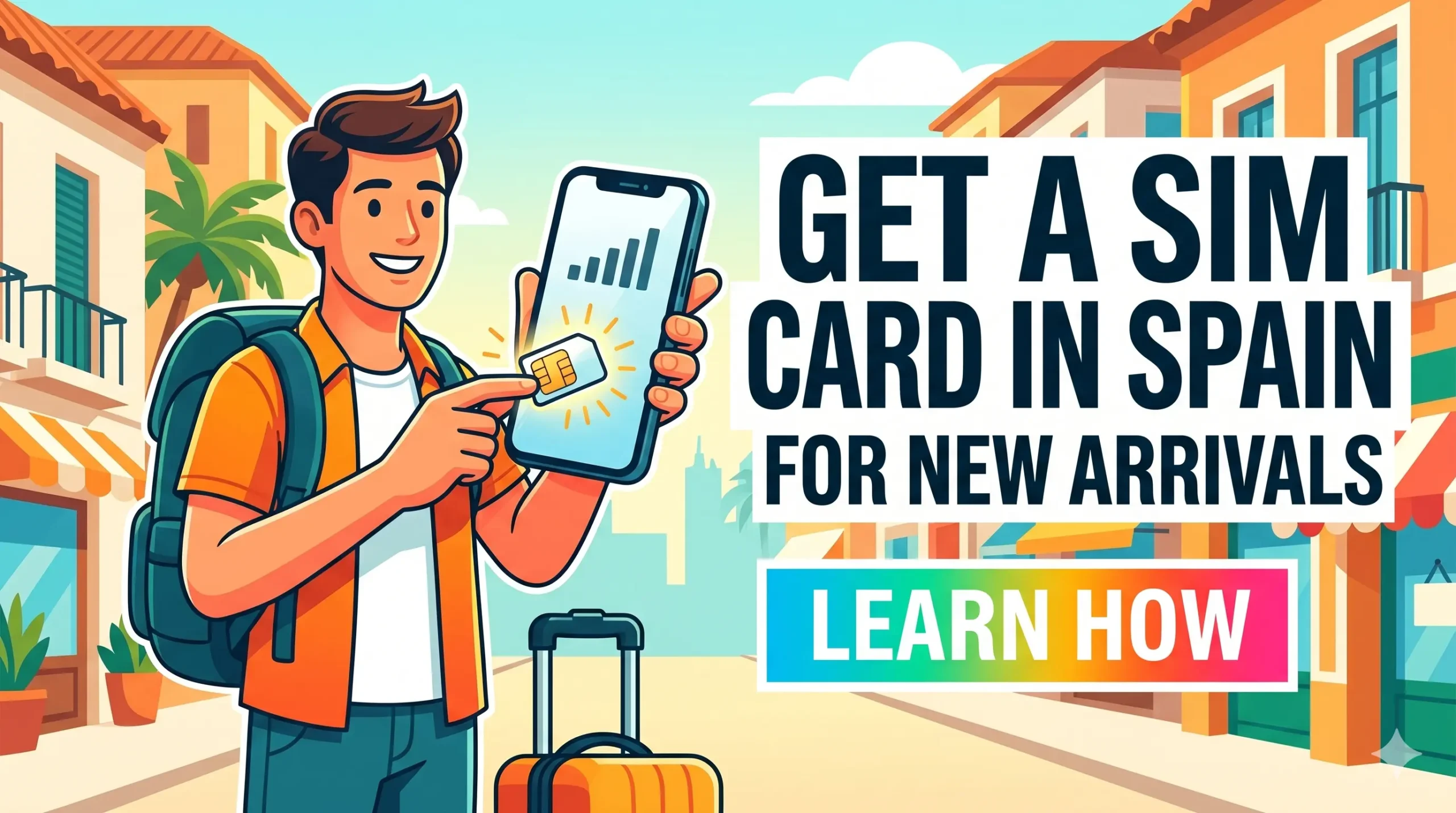
Landing at Barajas airport without a working data plan while your landlord waits for a WhatsApp message is a terrifying way to start your relocation. I spent my first afternoon in Madrid frantically searching for unsecured café Wi-Fi just to load a basic map. This guide breaks down the exact steps to secure a Spanish SIM card immediately without getting scammed.
Disclosure: This post may contain affiliate links. We may earn a commission at no extra cost to you if you make a purchase through these links. Read full disclosure.
Avoiding the Airport Tourist Trap and Getting Connected
The absolute worst place to buy your first Spanish mobile data plan is inside the airport terminal immediately after you clear customs. While the brightly lit kiosks are incredibly tempting when you feel disconnected from the world, you must understand the premium you are paying for that temporary convenience.
The Cost of Convenience at Arrivals
The kiosks stationed at airport arrivals typically push brands heavily marketed toward tourists, charging a massive premium simply because they know you are desperate to get online. You are paying a heavy tax for the convenience of activating a card while you wait for your luggage. The data allowances on these specific airport cards are usually incredibly small, and the per-gigabyte top-up fees are extortionate compared to what the exact same carrier offers at a retail store just ten minutes away in the city center.
If you buy a card at the airport, you are almost always purchasing a temporary tourist package that expires in thirty days and cannot be easily converted into a long-term plan. This means you will inevitably have to change your phone number a month later, disrupting all the local contacts and government appointments you just spent weeks setting up.
The Digital Bridge Before You Land
If your mobile phone is unlocked and supports it, the most stress-free way to guarantee you have data the second your plane touches down is to buy an e-SIM before you leave your home country. Downloading a digital data profile allows your phone to automatically connect to a Spanish network upon arrival, bypassing the airport kiosks entirely.
However, e-SIMs intended for travel are almost exclusively data-only. They do not come with a Spanish phone number starting with the +34 country code. You absolutely must have a local Spanish phone number to function in this country. Without a +34 number, you cannot receive the SMS verification codes required to finalize your local administrative tasks, such as setting up your finances, a process detailed in Opening a Bank Account in Spain: Step-by-Step for Foreigners. The digital e-SIM is merely a temporary bridge to help you navigate your first 48 hours until you can walk into a local neighborhood shop and secure a proper, physical Spanish SIM card.
Hardware Realities for Unlocked Phones
Many North American expats arrive in Spain completely unaware that their expensive smartphones are hardware-locked to their home carrier. If your phone is locked, it will simply reject any Spanish SIM card you insert into it.
If you discover your home phone is locked and your carrier refuses to unlock it, you need to solve that hardware problem immediately. You can quickly order a cheap, unlocked Android phone directly from Amazon Spain and have it delivered to a secure pickup locker near your temporary accommodation. Many expats also use Amazon Spain to order high-capacity power banks during their first few weeks, as navigating a new Spanish city on 4G all day while translating menus and reading maps will aggressively drain your battery before dinnertime.
Choosing Between Prepago and Contrato Mobile Plans
Spain divides its mobile telecommunications offerings into two rigid and distinct categories: prepaid and contract. As a brand-new arrival, your administrative limitations will temporarily force you into one category over the other, regardless of your personal preference.
The Flexibility of Prepaid Plans
A prepaid plan, known locally as prepago, is the ultimate starting point for a new expat. It requires zero financial commitment and bypasses the heavy bureaucracy associated with standard Spanish utility contracts. You simply walk into a mobile phone shop, present your physical passport, choose a data package, and pay upfront in cash or with a foreign credit card.
To keep the service active, you must top up your balance, known as a recarga. You can usually do this online via the carrier’s mobile app, at local supermarkets, or even at neighborhood tobacco shops. A prepaid card buys you the time you need to establish your residency without the intense pressure of setting up local direct debits. If your phone requires a specific pin tool to open the SIM card tray and you lost yours on the airplane, do not try to force it open with a paperclip; you can easily buy a universal SIM ejector tool kit on Amazon Spain for just a few euros to safely swap your cards.
Transitioning to a Permanent Contract
Eventually, you will want to transition to a permanent post-paid contract, known as a contrato. Contract plans offer significantly larger data allowances, post-paid monthly billing, subsidized phone upgrades, and far better European roaming options if you plan to travel outside of Spain. More importantly, getting a contract is usually the only way to bundle your mobile service with your home fiber optic internet once you secure long-term housing, a critical lifestyle milestone discussed heavily in Renting an Apartment in Spain: A Guide for Expats.
To secure a traditional contract with one of the legacy telecom providers in Spain, you generally must provide two things: a Spanish bank IBAN to set up the direct debit, and an official foreigner identity card to prove your legal residency status. Factoring in these bundled mobile and home internet costs is an essential part of managing your monthly budget, which you can map out using Cost of Living in Spain.
| Feature | Prepago Prepaid | Contrato Contract |
| Commitment Level | None Pay as you go | Usually 12 to 24 months |
| Required Identification | Passport | NIE or TIE strongly preferred |
| Payment Method | Cash, foreign card, manual top-ups | Spanish Bank IBAN Direct Debit |
| Data Allowance | Low to Medium | High to Unlimited |
| Best Suited For | First 1 to 3 months in Spain | Established long-term residents |
Navigating Spanish SIM Card Registration Requirements
Unlike some countries where you can buy an anonymous SIM card off a grocery store rack with cash and walk away, Spain has incredibly strict security regulations regarding telecommunications.
The Legal Obligation of Identity Verification
Under Spanish anti-terrorism laws, every single active SIM card must be registered to a verified, identified person. You cannot simply grab a card and activate it via a quick text message from your couch. A sales agent must physically or digitally verify your government-issued identification and link the specific serial number of the SIM card to your personal identity database.
For a prepaid card, a valid foreign passport is legally sufficient. However, you will often encounter untrained sales clerks in neighborhood mobile shops who will falsely insist that an NIE is legally required for a prepaid card simply because their computer software defaults to that option. Do not argue with them; if they refuse to accept your passport for a basic prepaid connection, simply walk out and go to a different store down the street.
Overcoming the Bureaucratic Hurdle for Contracts
The main frustration expats face is the agonizing gap between arriving in Spain and actually securing an appointment to get their official identification numbers. The government process is notoriously slow, a reality you can read about in Getting an NIE for Employment or Study: Practical Overview. Without an NIE, the legacy Spanish telecom companies will flat-out refuse to process a post-paid mobile contract or install home broadband.
If you are stuck in this bureaucratic limbo and need a reliable, post-paid plan immediately, I highly recommend looking into Tiekom. They are an expat-focused telecom provider that actively works to remove these roadblocks. Tiekom allows you to set up your mobile contract and home internet using just your passport, completely bypassing the agonizing wait for official residency documents. Furthermore, dealing with automated Spanish telecom customer service phone menus is an absolute nightmare for a newcomer; Tiekom offers direct, native English-speaking support, which significantly lowers your administrative stress during your first month.
Selecting the Right Mobile Network for Expats
Spain has an incredibly competitive telecommunications market. Understanding who actually owns the physical infrastructure versus who is simply renting tower space will help you choose a reliable provider that matches your travel habits.
Main Infrastructure Giants Versus Virtual Operators
There are currently four main companies that physically own and maintain the cellular towers and fiber optic cables across the Iberian Peninsula: Movistar, Orange, Vodafone, and Yoigo. If you sign up directly with these legacy brands, you will generally experience the fastest maximum speeds and the most comprehensive 5G rural coverage if you plan to explore the countryside. However, they are also the most expensive, they enforce rigidly long contracts, and their customer service is incredibly difficult to navigate if you are not fluent in Spanish.
The rest of the market consists of Mobile Virtual Network Operators. These are smaller companies that lease network space from the four main giants and resell it to consumers at deeply discounted rates. These virtual operators are fantastic for budget-conscious expats because they offer no-frills packages. The catch is that during times of extreme network congestion—like at a massive summer festival in Barcelona or a crowded beach in Alicante—the main network providers will prioritize their direct customers, temporarily slowing down the data speeds of the virtual operator customers.
Expat Friendly Telecommunications
For expats, finding a provider that offers the perfect balance of premium network reliability without the frustrating bureaucratic lock-in is key. This is another area where utilizing a service like Tiekom shines. They leverage top-tier Spanish mobile networks to ensure excellent coverage across the country, but they handle the billing and customer service through their own expat-friendly infrastructure.
When you are finally ready to settle into your new flat, you can seamlessly bundle your Tiekom mobile plan with your home broadband, a streamlined approach detailed in Best Internet Providers in Spain for Expats. This allows you to focus your energy on navigating other vital tasks, like deciphering your utility bills in Understanding Utility Bills in Spain or negotiating your move-in dates. Finally, if you are renting a car to drive out of the city center to view potential apartments or pick up your residency paperwork at the police station, navigating confusing Spanish highways requires your phone to be visible and fully charged. You can quickly order a reliable dash mount and a fast car charger with next-day delivery from Amazon Spain before you hit the road, ensuring your newly acquired Spanish data plan gets you exactly where you need to go safely.
References
Primary sources official
- Comisión Nacional de los Mercados y la Competencia (CNMC) – Telecommunications Regulator: https://www.cnmc.es/sectores-que-regulamos/telecomunicaciones
- Ministerio para la Transformación Digital y de la Función Pública – Telecom Information: https://digital.gob.es/
Other helpful sources
- INCIBE – Secure Telecommunications and Mobile Use: https://www.incibe.es/
- European Union – Roaming within the EU Guidelines: https://europa.eu/youreurope/citizens/consumers/internet-telecoms/mobile-roaming-costs/index_en.htm
Disclaimer
The information provided in this guide is exclusively for educational and informational purposes and does not constitute official legal or consumer protection advice. Spanish telecommunications regulations, data privacy laws regarding mandatory SIM registration, and specific telecom provider requirements for post-paid contracts are highly dynamic and subject to frequent updates by the CNMC. While we strive to ensure absolute accuracy regarding best practices, you should always thoroughly read the terms and conditions of any mobile contract, confirm roaming fair-use policies, and verify the accepted identification documentation directly with the commercializer before signing agreements or setting up direct bank debits.