Avoiding Utility Scams in Spain: Door-to-Door Sales Red Flags
Opening my apartment door to an aggressive man in a fake Endesa jacket who demanded to see my latest electricity bill is a terrifying expat rite of passage. I almost handed over my financial details simply because I didn’t understand the Spanish utility system. This guide breaks down exactly how door-to-door utility scams operate in Spain and how to protect yourself.
Disclosure: This post may contain affiliate links. We may earn a commission at no extra cost to you if you make a purchase through these links. Read full disclosure.
The Classic Spanish Door to Door Utility Scam
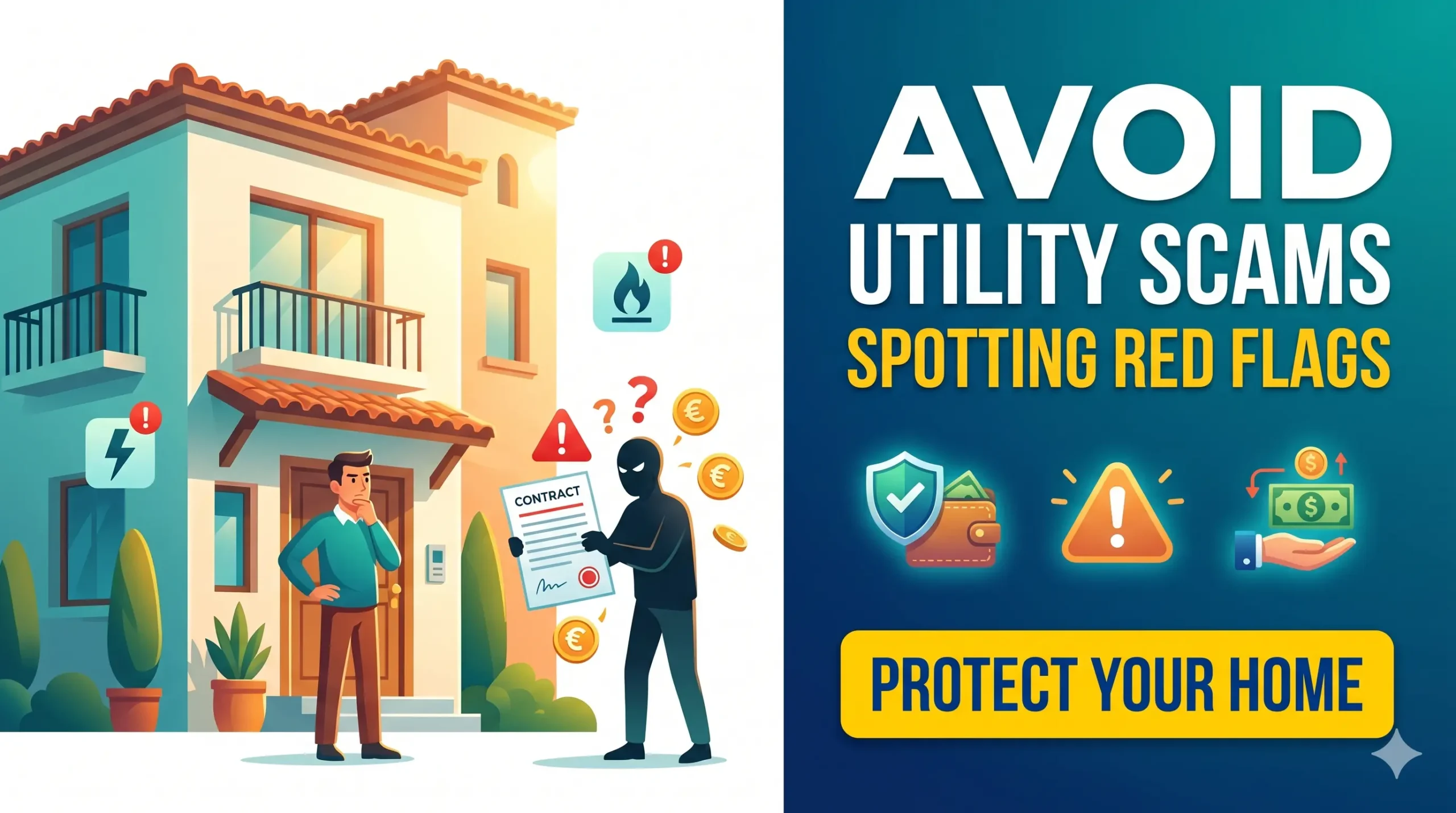
You are sitting in your living room, enjoying a quiet afternoon, when the intercom suddenly buzzes. A voice rapidly barks something in Spanish about “the electricity company” and a “mandatory meter update.” Before you know it, a sharply dressed representative with an official-looking clipboard is standing on your doormat. This is exactly how the most prevalent fraud targeting foreigners in Spain begins.
How the Inspector Trick Works
The scam artist relies on catching you completely off guard. They usually wear a lanyard with a generic badge and carry a tablet or a stack of official-looking documents. Their opening line is almost always designed to instill a subtle sense of panic. They might claim that your meter is misreporting data, that you are currently overpaying on an expired regional tariff, or that your neighborhood is undergoing a mandatory grid transition.
Once they have your attention, the trap is set. They will not ask you for money upfront. Instead, they will insist that to “verify your account” or “apply your legal discount,” they simply need to look at your most recent physical electricity bill. They know that handing over a piece of paper feels much safer to a consumer than handing over a credit card. However, in the Spanish utility market, that piece of paper is exactly what they need to hijack your account. Taking the time to master the terminology found on these documents is vital, which is why familiarizing yourself with Understanding Utility Bills in Spain is your first line of defense.
Once they have your bill in their hands, the scam is fully underway. They will quickly copy down your data, type it into their tablet, and ask for a quick signature to confirm their visit. You think you are signing a maintenance receipt; in reality, you are signing a binding twelve-month contract to switch your energy provider to a massively inflated flat-rate service.
Why Expats are the Perfect Target
Foreigners are disproportionately targeted by these aggressive sales tactics for several distinct reasons. First and foremost is the language barrier. When a scammer rattles off rapid-fire Spanish filled with technical electrical jargon, most expats become overwhelmed. We are socially conditioned to nod politely and agree rather than admit we have absolutely no idea what the person is saying. Scammers exploit this politeness ruthlessly.
Secondly, expats fundamentally misunderstand how Spanish infrastructure operates. In many countries, the company that owns the power lines is the same company that bills you. In Spain, these are completely separate entities. The distributor owns the meter, and the commercializer bills you. A scammer will exploit this confusion, claiming to be from the distributor but secretly switching your commercializer. Grasping this division of power is critical when Setting Up Electricity and Gas in Spain.
Finally, expats live in constant fear of administrative failure. We are terrified of accidentally breaking a rule and having our power cut off, resulting in massive reconnection fines that destroy our monthly budgets. Scammers leverage this fear, implicitly threatening that a failure to comply with their “inspection” will result in a loss of service. Knowing what standard utility costs look like, which you can map out via Cost of Living in Spain, helps you spot when a salesman is lying about your current rates.
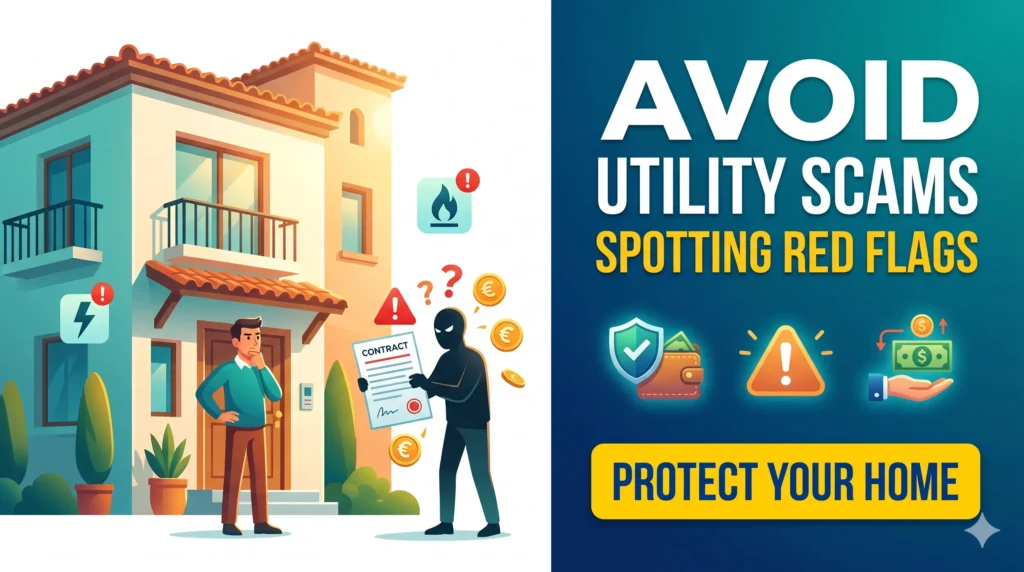
Major Red Flags to Watch For
While these scam artists are highly trained to look and sound like legitimate officials, their operations always rely on the exact same tactics. If you know what to look for, you can shut down the conversation immediately.
Demanding to See Your CUPS Number
The single biggest red flag is an unannounced visitor asking to see your physical utility bill. What they are actually looking for is your CUPS number (Código Universal de Punto de Suministro). Think of the CUPS as the permanent social security number for your apartment’s physical electricity meter. It is a long alphanumeric code starting with “ES” that is printed at the top of every invoice.
Armed with your name, your exact address, and your CUPS number, a malicious sales agent can legally initiate a transfer of your electricity supply to a different company without your explicit verbal consent. This predatory practice is known as “slamming.” A genuine representative of your current energy company would absolutely never ask for your CUPS number—they already have it in their database. Your CUPS should be guarded like a banking password, a rule you must remember if you ever voluntarily decide to read How to Switch Electricity Provider in Spain Step-by-Step.
If anyone knocks on your door asking to see your paperwork, simply tell them no. Legitimate utility companies conduct their business via secure emails, certified mail, or through your secure online client portal.
Fake Potencia Power Warnings
Another incredibly common tactic used to frighten expats involves the concept of contracted power limits. Scammers know that foreigners struggle to understand how electrical capacity works in Spain. They will aggressively tell you that your contracted power limit is either illegally high, meaning you face a massive penalty, or dangerously low, causing disruptions to the building’s grid.
They will offer to “fix” your contract on the spot using their tablet. In reality, there is nothing wrong with your electrical capacity; they are simply using technical jargon to force you into signing a new contract with the company they secretly represent. If you actually need to adjust your capacity, you must do it yourself through official channels, a process fully explained in How to Understand ‘Potencia’ on Your Spain Power Contract. Do not let a stranger diagnose your power needs from the hallway.
Pressure to Sign Updates on a Tablet
The final, fatal step of the scam always involves a digital signature. The visitor will produce a tablet or a smartphone and claim they need your signature to prove to their boss that they completed the neighborhood inspection, or to acknowledge that you received a mandatory tariff update notification.
Never sign a digital screen handed to you by a stranger. You have no idea what terms and conditions are hidden on the pages you aren’t seeing. In Spain, signing that tablet is legally binding. You are almost certainly authorizing a brand-new, twelve-month contract with hidden permanence clauses and astronomical cancellation fees. If a utility company genuinely needs to notify you of a legal change to your service, they are required by law to send it in writing with advanced notice.
How to Protect Yourself and Your Home
Living in a foreign language is exhausting enough without having to actively defend your front door from predatory salespeople. Implementing a few basic physical and digital security measures will keep you safe from utility fraud.
Physical and Digital Security Measures
Your very first line of defense is the street-level intercom. If you are not actively expecting a package delivery or a friend, do not buzz strangers into the building. Scammers often press every single button on the intercom panel until one naive neighbor lets them into the stairwell. Keeping the building secure is a collective responsibility, and understanding how these shared spaces are managed is covered in A Guide to Spanish Community Fees.
To take control of your front door, I highly recommend ordering a video doorbell from Amazon Spain. Being able to look at a screen and see a clipboard-wielding salesman allows you to simply ignore the knock altogether. To ensure your video doorbell actually works when someone rings, you need a flawless home network. I rely on Tiekom because their fiber optic internet is incredibly stable, ensuring my smart home security devices never disconnect when I need them most. If you don’t want to wire a smart doorbell, even mounting a cheap dummy security camera from Amazon Spain acts as a massive visual deterrent, causing most scammers to skip your door entirely.
Furthermore, these scammers are notoriously persistent. They will actually dig through communal recycling bins looking for discarded bills that display CUPS numbers. Buying a cross-cut paper shredder on Amazon Spain to thoroughly destroy your utility and banking documents before throwing them away is a mandatory expat survival tactic.
Finally, never engage in a debate at the door. If an agent makes a terrifying claim about your account, tell them to wait outside while you check your official portal using your Tiekom mobile data. Usually, the moment you pull out your phone to verify their claims directly with the real company, the scammer will quietly walk away and leave the building.
| Factor | Genuine Utility Visit | Door to Door Scam Artist |
| Notification | Sent via official letter/email days in advance | Unannounced knock on the door |
| Asking for Bills | Never. They already have your account data | Constantly demands to see a physical paper bill |
| Urgency Level | Zero pressure, routine physical maintenance | High pressure, threats of immediate disconnection |
| Signing Requests | May sign a paper work-order for a physical meter repair | Pressures you to sign a tablet for “tariff updates” |
Your Legal Rights Under Spanish Consumer Law
If you panicked and signed a tablet, take a deep breath. You are not stupid for falling for this; these scammers are highly trained manipulators. Under Spanish consumer protection laws, you are heavily protected against aggressive door-to-door sales tactics.
By law, you have a 14-day right of withdrawal, known as the derecho de desistimiento. This means you can cancel any contract signed outside of a commercial establishment within 14 days without providing any justification and without paying any penalty fees. If you realize you have been scammed, you must act immediately. Contact the new, fraudulent company in writing to invoke your right of withdrawal, and simultaneously call your original, legitimate provider to halt any transfer requests. If you need to quickly call your actual utility company while the scammer is still lingering in your neighborhood, having crystal-clear reception through your Tiekom mobile plan is essential to getting the issue resolved immediately.
If the fraudulent company gives you trouble, you can file a formal complaint with the CNMC (the National Markets and Competition Commission), which strictly monitors these abuses. If you are renting your apartment, you should also immediately notify your property owner that the utility account may be compromised, as they ultimately hold the rights to the physical property, an administrative dynamic outlined in Renting an Apartment in Spain: A Guide for Expats.
Ultimately, peace of mind comes from dealing with reputable businesses. You can also buy a simple ‘No comerciales’ (No solicitors) plaque on Amazon Spain to stick on your front door to ward off foot traffic. When setting up your life abroad, choosing a transparent, expat-focused company like Tiekom for your broadband and mobile needs ensures you never face hidden clauses, unlike the predatory tactics deployed by rogue utility agents. Stay vigilant, guard your bills, and never let anyone pressure you in your own home.
References
Primary sources (official)
- Comisión Nacional de los Mercados y la Competencia (CNMC) – Official Energy Sector Regulator: https://www.cnmc.es/
- Boletín Oficial del Estado (BOE) – General Law for the Defence of Consumers and Users: https://www.boe.es/buscar/act.php?id=BOE-A-2007-20555
Other helpful sources
- Endesa – Scams and Fraud Awareness Guide: https://www.endesa.com/en/light-and-gas-advice/the-electricity-bill/scams-and-fraud
- Instituto Nacional de Ciberseguridad (INCIBE) – Fraud and Cybersecurity Alerts: https://www.incibe.es/
Disclaimer
The information provided in this guide is for educational and informational purposes only and does not constitute official legal or consumer protection advice. Spanish consumer laws, the 14-day right of withdrawal (derecho de desistimiento), and the regulations monitored by the CNMC are subject to updates. If you believe you have been the victim of fraud or a victim of unauthorized utility slamming, you should contact the CNMC directly or consult a registered Spanish lawyer (abogado) specializing in consumer rights immediately to ensure your case is handled within the strict legal deadlines.