Living in Spain as a Foreigner: Complete Housing & Daily Life Guide
Disclosure: This article contains affiliate links. If you buy through them, we may earn a commission at no extra cost to you. Read our full disclosure.
Relocating to Spain offers a unique blend of vibrant culture and high quality of life, but the transition involves complex logistics. This guide covers essential steps for foreigners, from navigating the rental market and securing the mandatory Padrón to understanding healthcare options, banking, and the local daily schedule.
Navigating the Spanish Housing Market
Finding a place to live is the immediate priority and arguably the most stressful part of the relocation process. The Spanish housing market moves at lightning speed, particularly in major urban centers where demand far outstrips supply. Unlike in some other countries where you might have days to consider a property, in cities like Barcelona or Madrid, desirable apartments can be rented within hours of being listed.
To succeed, you must treat house hunting as a full-time job. The primary portals used by locals are Idealista and Fotocasa. When browsing these sites, you will encounter two main categories of listings: those managed by real estate agencies (inmobiliarias) and those rented directly by owners (particulares). While renting directly from an owner can save you on fees and paperwork, agencies often provide a layer of security and are more accustomed to dealing with foreign tenants. However, be prepared for strict solvency checks. Landlords will typically request your employment contract, your last three payslips (nóminas), and often your tax returns. If you have not yet started your job or are self-employed, you may be asked to provide a bank guarantee (aval bancario) or pay several months of rent in advance.
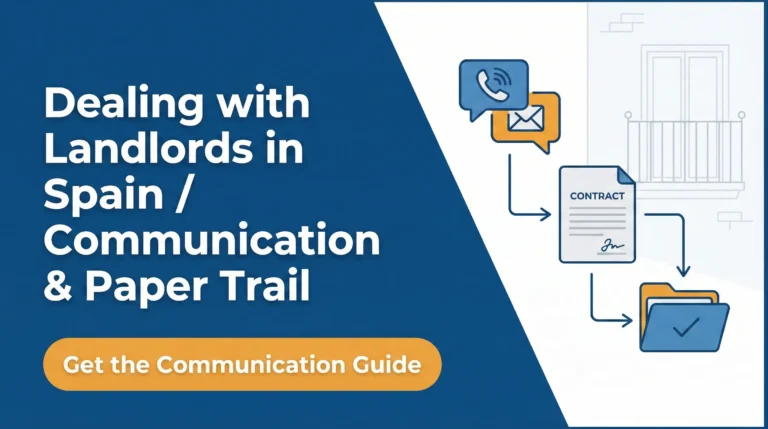
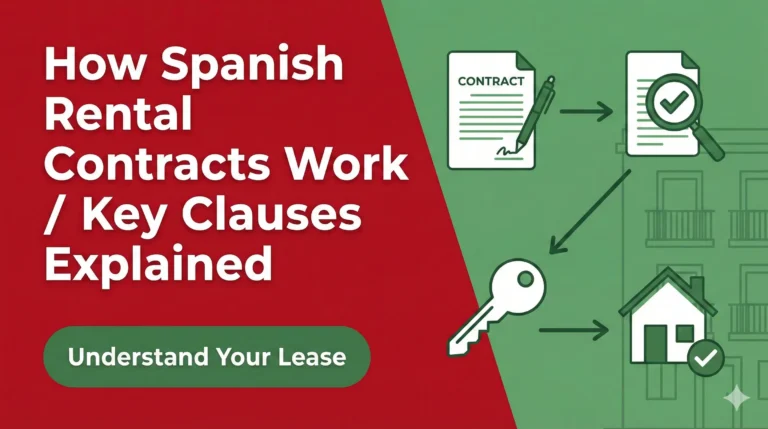
It is also vital to understand the legal distinction between long-term and temporary contracts. A standard long-term housing contract (vivienda habitual) offers significant tenant protections, including the right to extend the lease annually for up to five or seven years. In contrast, temporary contracts (alquiler de temporada) are designed for short stays and offer fewer rights. Unscrupulous landlords may try to push you into a temporary contract to avoid rent control regulations, so it is crucial to review the terms carefully. For a deeper understanding of the legal clauses and financial commitments involved, you should review our specific guide on Renting in Spain: Contracts, Deposits, and Tenant Rights, which breaks down the small print of lease agreements.
The All Important Padron Municipal
Once you have signed a lease, your very first administrative task must be to register on the municipal census, known as the Padrón. This is not optional; it is a legal requirement for anyone residing in Spain, regardless of nationality or visa status. The Padrón connects you to the city where you live and is the gateway to almost all other public services.
Without a Certificado de Empadronamiento, you cannot apply for your TIE (Foreigner Identity Card), you cannot register for public healthcare, and you cannot enroll your children in local schools. To register, you must book an appointment at your local town hall (Ayuntamiento) and present your passport and your new rental contract. If you are renting a room rather than an entire apartment, the process is slightly more complex, as you will need the primary tenant or landlord to attend the appointment with you to authorize your registration.
This simple document effectively proves you live in Spain. It is also relevant for certain legal processes, such as driving license exchanges or marriage applications. Because the certificate expires every three months for administrative purposes, you will become very familiar with your local town hall’s website. If you are unsure about the specific documents needed for your appointment, our detailed walkthrough on Empadronamiento in Spain: How to Register Your Address covers the nuances for both renters and owners.
Setting Up Your Home Utilities
With your housing secured and your address registered, the next step is making your new home functional. Utilities in Spain—electricity, gas, water, and internet—are generally reliable, but setting them up can be bureaucratic if you do not have a Spanish bank account yet.
Electricity bills in Spain can be confusing for newcomers due to the concept of “potencia” (contracted power). Unlike in many countries where you simply pay for what you use, in Spain, you also pay a fixed fee for the capacity of your connection. If you contract a power limit that is too low (e.g., 3.3 kW) and attempt to run the washing machine, oven, and air conditioning simultaneously, your power will trip. Conversely, paying for high power you do not need is a waste of money. Most modern contracts also include time-of-use tariffs, making electricity significantly cheaper during the night and on weekends.
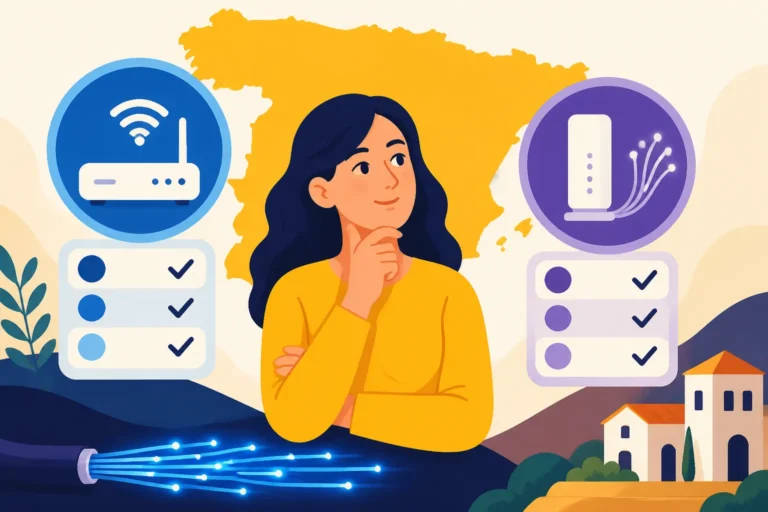
Internet connectivity in Spain is excellent, with fiber optic coverage extending even to many rural areas. Competition between providers like Movistar, Orange, Vodafone, and Digi keeps prices reasonable. However, installation appointments can sometimes take weeks, so it is wise to initiate this process as soon as you have your keys. For a full breakdown of how to read your energy bills and choose the right internet package, refer to our article on Utilities Setup in Spain: Electricity, Gas, and Water Basics.
Banking and Financial Logistics
Living in Spain without a local bank account is technically possible but practically very difficult. You will need a Spanish IBAN (International Bank Account Number) to set up direct debits (domiciliaciones) for your utility bills, gym memberships, and tax payments. While EU laws technically forbid discrimination against non-Spanish IBANs, many local utility companies’ computer systems simply do not accept them.
Opening an account as a newly arrived foreigner can be a hurdle. Banks are under strict anti-money laundering regulations and often require an NIE (Foreigner Identity Number) and proof of resident status to open a standard account. Some banks offer “non-resident accounts,” but these typically come with higher maintenance fees. Once you obtain your residency card (TIE), you should update your bank immediately to avoid your account being blocked.
Day-to-day banking in Spain is highly digital. The most essential tool you will need is “Bizum,” a mobile payment system integrated into most Spanish banking apps. It allows you to send money instantly to anyone in your contacts list using just their phone number. It is the standard way friends split dinner bills or pay for small items, effectively replacing cash in many social situations. If you are struggling with the documentation required to open your first account, our guide on Opening a Bank Account in Spain: Step-by-Step for Foreigners provides a roadmap to navigating the compliance requirements.
Managing Your Cost of Living
One of Spain’s major draws is its relatively affordable cost of living compared to northern Europe or North America. However, inflation has impacted prices, and costs vary significantly depending on your location. Life in Madrid, Barcelona, or San Sebastian is considerably more expensive than in Valencia, Seville, or Alicante.
Rent will always be your largest expense, but daily costs like groceries, transport, and leisure are generally reasonable. Public transport is heavily subsidized, and a monthly travel pass in a major city is very affordable. Dining out is also part of the culture and is priced to be accessible; the menú del día (menu of the day) remains a staple institution, offering a three-course lunch with wine or water for between €12 and €16.
To help you plan your monthly finances, the table below outlines typical expenses for a single person living in a major Spanish city (excluding rent).
Monthly Budget Estimates (Excluding Rent)
| Expense Category | Estimated Cost | Notes |
| Groceries | €250 – €350 | Local markets offer better value than supermarkets. |
| Utilities (Elec/Gas/Water) | €100 – €150 | Costs spike in summer (A/C) and winter (heating). |
| Internet & Mobile | €40 – €60 | Combined packages (fiber + mobile) offer the best value. |
| Public Transport | €30 – €50 | Monthly unlimited travel passes. |
| Dining & Leisure | €200 – €300 | Includes weekly dinners and social drinks. |
| Health Insurance (Private) | €50 – €80 | Optional if you have public access, but recommended. |
For a more granular look at expenses, including regional variations and tips for saving money, check our article on Cost of Living in Spain: Monthly Budget Guide for Expats.
Healthcare Access for Residents
Spain boasts one of the highest-rated healthcare systems in the world. As a resident, understanding how to access it is crucial. The system is split into two parallel streams: the public system (Seguridad Social) and the private sector.
If you are employed in Spain or are a registered freelancer (autónomo), you and your dependents are automatically covered by the public healthcare system. This coverage is comprehensive, free at the point of use, and includes everything from GP visits to complex emergency surgeries. To access it, you must apply for a Tarjeta Sanitaria (Health Card) at your local health center.
However, many expats choose to carry private health insurance as well. This allows you to bypass waiting lists for non-urgent specialists and provides access to a wider network of English-speaking doctors. Furthermore, if you are in Spain on a Non-Lucrative Visa or a Digital Nomad Visa, you are likely required to have comprehensive private insurance as a condition of your residency. For a detailed comparison of the two systems and advice on which policy to choose, read our guide on Spain Healthcare System for Expats: Public vs Private.
Understanding the Daily Schedule
Perhaps the most significant cultural adjustment for new residents is the Spanish timetable (horario). The rhythm of the day is shifted hours later than what most foreigners are accustomed to, and fighting against it is a recipe for frustration.
The morning work shift typically begins around 9:00 or 10:00 AM. A crucial part of the morning is the coffee break around 11:00 AM, which serves as a second breakfast. Lunch is the main meal of the day and is taken late, usually between 2:00 PM and 3:30 PM. In smaller towns and even in some city neighborhoods, you will find that shops close for a few hours in the afternoon (roughly 2:00 PM to 5:00 PM), although major chains and supermarkets remain open.
Dinner is a late affair. Restaurants rarely open their kitchens before 8:00 PM or 8:30 PM, and showing up then will likely mean dining in an empty room. locals typically arrive for dinner around 9:30 PM or 10:00 PM. Sundays are also treated differently; nearly all supermarkets and retail stores close on Sundays, meaning you must plan your grocery shopping for Saturday. Adapting to this schedule is essential for social integration and daily convenience.
Transportation and Getting Around
Spain has an extensive and reliable public transportation network. The high-speed train network (AVE) connects major cities like Madrid, Barcelona, Valencia, and Seville efficiently, often making trains a better option than flying. Within cities, metro and bus systems are clean, safe, and frequent.
If you plan to drive, be aware that parking in city centers is notoriously difficult and expensive. Blue and green zones indicate paid parking, and fines are issued promptly. Furthermore, if you are a resident from a non-EU country (like the US, UK, or Canada), your foreign driver’s license is typically only valid for the first six months of your residency. After that, you must exchange it for a Spanish one (if a treaty exists) or take the Spanish driving test from scratch—a rigorous process that involves theory and practical exams.
Daily Shopping and Commerce
Grocery shopping in Spain is a mix of modern supermarkets and traditional markets. Chains like Mercadona, Carrefour, and Lidl are ubiquitous, but the heart of Spanish food culture lies in the municipal markets (mercados). Here, you purchase fruit, vegetables, meat, and fish from individual stalls.
The quality of fresh produce in Spain is exceptional, and prices are often lower in markets than in supermarkets. When shopping at a market, remember the “turno” system. You must ask “Who is the last?” (¿Quién es el último?) to establish your place in the queue.
For non-food items, department stores like El Corte Inglés dominate the landscape, offering everything from electronics to fashion. However, Amazon is also widely used and offers fast delivery throughout the country.
Language and Bureaucracy
While you can survive in major tourist hubs speaking only English, thriving in Spain requires a command of the language. Dealing with utility companies, landlords, and government officials is almost exclusively done in Spanish. Moreover, in regions like Catalonia, the Basque Country, and Galicia, co-official languages are widely spoken and used in official communications.
One indispensable ally in navigating Spanish life is the Gestor. A gestoría is an administrative agency that handles paperwork on your behalf. For a monthly fee, a gestor can manage your taxes, social security registration, and vehicle transfers. Given the complexity of Spanish bureaucracy, hiring a gestor is often the most efficient way to ensure compliance and avoid headaches.
Living in Spain is a rewarding experience that offers a rich cultural tapestry and a relaxed approach to life. By mastering the housing market, securing your paperwork, and embracing the local schedule, you move beyond the role of a visitor and truly begin to call Spain home.
References
Primary sources (official)
- Administración General del Estado (General Access Point): https://administracion.gob.es/
- Agencia Tributaria (Tax Agency): https://sede.agenciatributaria.gob.es/
- Ministry of Inclusion, Social Security and Migration: https://www.inclusion.gob.es/en/
- Instituto Nacional de Estadística (INE): https://www.ine.es/
Other helpful sources
- Idealista (Real Estate Market Data): https://www.idealista.com/en/
- OCU (Organization of Consumers and Users): https://www.ocu.org/
Disclaimer
The information provided in this article is for educational and informational purposes only and does not constitute legal, financial, or real estate advice. Laws regarding rental contracts, immigration (such as the Padrón and TIE), and tax liabilities in Spain are subject to change. We recommend consulting with a qualified ‘gestor’, lawyer, or real estate professional before signing contracts or making significant financial commitments.