Spain Re‑Entry Rules for Residents: Traveling with TIE and Return Authorizations
Traveling outside Spain while your residency is in renewal requires careful planning. This guide explains how to use the Autorización de Regreso to re-enter legally, the risks of transiting through other Schengen countries with expired documents, and what to do if you lose your TIE card abroad.
Disclosure: This post may contain affiliate links. We may earn a commission at no extra cost to you if you make a purchase through these links. Read full disclosure.
The Golden Rule: The TIE is King
Before delving into the exceptions, let’s establish the baseline. The most secure way to travel in and out of Spain is with a valid, unexpired TIE card and your valid passport.
If your TIE has even one day of validity remaining on the date you return to Spain, you do not need any special permits.
- Example: Your TIE expires on January 15th. You travel to the US on December 20th and fly back on January 14th.
- Verdict: You are safe. You enter with your valid TIE.
However, if you return on January 16th, your TIE is expired. Even though you are “only one day late,” an airline agent is legally required to deny you boarding because you do not possess a valid document to enter the Schengen zone.

Traveling While Renewing: The “Limbo” Phase
When you submit a renewal application (for a Non-Lucrative Visa, Student Visa, or Work Permit), you receive a document called a Resguardo de Solicitud (Application Receipt).
Inside Spain
This receipt is powerful. It proves you are legally in Spain while the government decides your case. You can work (if eligible), study, and live your life.
Outside Spain
This receipt is weak.
- Border Control: Spanish border police know what the receipt is and will usually accept it if you are crossing a land border.
- Airlines: Most international airline staff do not read Spanish and do not know what a Resguardo is. They simply look for a valid visa or unexpired card. If they don’t see one, they don’t let you fly.
- Schengen Borders: French, German, or Dutch border guards are under no obligation to honor a Spanish renewal receipt. To them, you are a third-country national with an expired permit.
This is why, if your card is expired (or will expire while you are away), you strictly need an Autorización de Regreso.
What is the Autorización de Regreso?
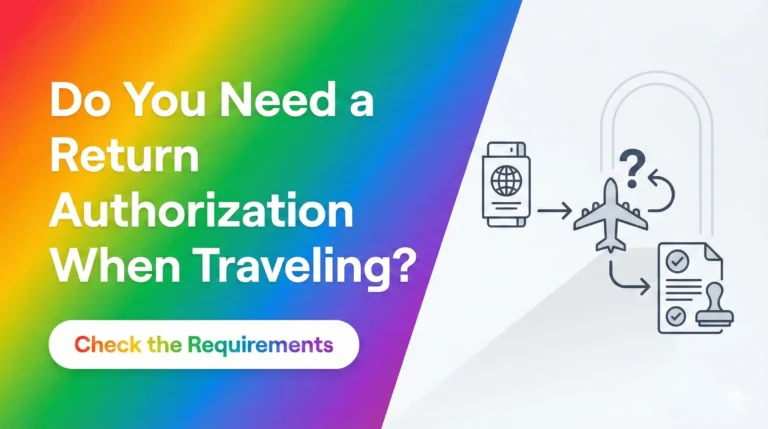
The Autorización de Regreso (Return Authorization) is a temporary travel document issued by the National Police. It allows a foreigner whose residency is being processed to leave Spain and enter again legally.
Key Characteristics
- Validity: It is valid for 90 days from the date it is issued.
- Scope: It authorizes entry only through Spanish borders. It is not a Schengen visa (more on this later).
- Usage: It is typically valid for one entry, though the law allows for it to be issued for multiple entries in specific circumstances. In practice, treat it as a single-use pass unless told otherwise.
Who Can Apply?
You are eligible for a Regreso in two main scenarios:
- Renewal Pending: You hold an expired TIE and have already submitted your renewal application.
- Duplicate Pending: You have a valid residency status, but your physical card was lost or stolen, and you have applied for a duplicate.
Who Can NOT Apply?
- Initial Applicants (Usually): If you have just arrived in Spain and are applying for your very first TIE card, you are generally not eligible for a Regreso unless you can prove “exceptional circumstances” (like a death in the family or urgent medical need). If you simply want to go on holiday while waiting for your first card, the police will usually say no.
- Irregular Status: If you did not submit your renewal on time (within the 90-day grace period after expiration) and are now in an irregular situation, you cannot get a Regreso.
The “Direct Flight” Rule: A Critical Warning
This is the single most common mistake expats make.
The Autorización de Regreso is NOT a valid Schengen Visa.
It is a Spanish national document. It authorizes you to cross the Spanish border, but it does not authorize you to cross the French, German, or Dutch border.
The Transit Trap
Imagine you are flying from New York to Madrid.
- Route A: New York -> Madrid (Direct).
- Result: Safe. You land in Madrid, show your passport and Regreso to the Spanish police. They stamp you in.
- Route B: New York -> Frankfurt -> Madrid (Layover).
- Result: DANGER. You land in Frankfurt. You must go through Schengen immigration in Frankfurt to transfer to the “domestic” flight to Madrid. The German police ask for your residence permit. You show an expired card and a Spanish paper receipt. The German officer may reject it, as it is not valid for Germany. You could be denied entry and sent back to New York.
The Rule: If you are traveling with a Regreso, you must fly directly into Spain from outside the Schengen zone. Avoid layovers in other EU countries.
How to Apply for the Return Authorization
Unlike the complex residency applications that take months, the Regreso is usually quick—often issued on the same day or within a few days.
Step 1: Book the Appointment
You must book an appointment at a National Police station (Comisaría de Policía).
- Go to the Spain Immigration Office Appointments: Booking Tips and Alternatives portal.
- Select your province.
- Select the procedure: “POLICIA – AUTORIZACIÓN DE REGRESO”.
- Tip: These appointments are easier to find than TIE fingerprint appointments, but they still fill up before holidays (Christmas/Summer). Book at least 2 weeks before your trip.
Step 2: Prepare the Documents
You will need originals and photocopies of:
- Application Form EX-13: Completed and signed. Select “Titular de autorización de residencia en periodo de renovación or prórroga”.
- Passport: Full valid passport (and copy of all pages).
- Expired TIE Card: If you still have it.
- Proof of Renewal: The receipt (Resguardo) proving you have submitted your renewal application (or the fingerprint receipt if you are waiting for the card).
- Proof of Travel: Printed flight tickets or booking confirmation. The police often require proof that you need to travel soon.
- Tasa 790 Code 012: The tax form.
- Fill it out online.
- Check the box for “Autorización de regreso”.
- Cost (2026): Approximately €10.72.
- Pay it at a bank and bring the stamped receipt.
Step 3: The Appointment
Go to the police station. The officer will review your documents.
- Instant Issue: In many police stations, they will print and stamp the Regreso right there.
- Delayed Issue: In busy cities like Madrid or Barcelona, they might tell you to come back in 2-3 days to pick it up.
Traveling with a Lost or Stolen TIE
What happens if you are already abroad (e.g., on holiday in Thailand or the US) and your wallet gets stolen with your TIE inside?
You cannot apply for an Autorización de Regreso from outside Spain.
If you try to fly back with just a police report of the theft, the airline will likely deny you boarding. You have two options:
Option 1: The “Visa for Lost ID”
You must go to the nearest Spanish Consulate in the country where you are.
- You apply for a specific visa often called a “Visa de Estancia por Pérdida de Tarjeta” (Visa for Loss of Card).
- Requirements: Police report of the theft, passport, and proof of your residency status (e.g., a copy of your TIE if you have it digitally, or your resolution letter).
- Timeline: This can take a few days to process.
Option 2: Tourist Entry (Privileged Passports Only)
If you hold a passport that allows visa-free tourism to Spain (like US, UK, Canada, Australia), you might be able to fly back as a “tourist.”
- The Risk: You are technically entering as a visitor. Once inside Spain, you must immediately go to the police to apply for a duplicate card.
- Warning: This resets your “Schengen Clock” in the system in a messy way. It is safer to contact the consulate, but in an emergency, many residents successfully re-enter this way, provided they don’t overstay the 90 days if their residency is somehow flagged as invalid.
EU Citizens and Family Members
If you are a citizen of the EU (French, German, etc.), you do not need a TIE or a Regreso. Your national ID card or passport is sufficient to enter Spain.
However, if you are a non-EU family member of an EU citizen (holding the Tarjeta Comunitaria):
- You follow the same rules as other foreigners.
- If your card is expired and you are renewing, you need a Regreso.
- The only exception is if you are traveling with your EU spouse. Under EU Directive 2004/38/EC, you have the right to enter if you can prove your relationship and identity at the border. However, airlines often do not understand this nuance and may still block you. Getting the Regreso is always the safer choice.
The EES (Entry/Exit System) Factor
The European Union’s automated Entry/Exit System (EES) is fully operational. This system biometrically tracks every entry and exit of non-EU nationals.
- Expired TIEs: If you scan a passport linked to an expired TIE, the gate may flag you as an overstayer.
- Manual Processing: When traveling with a Regreso, do not use the automated e-gates. Go to the manual booth. Hand the officer your passport and the Autorización de Regreso. They need to manually override the system to verify your legal status.
For more on how overstays are calculated and penalized, see Overstaying in Spain: Penalties, Grace Periods, and Next Steps.
Common Scenarios and FAQs
Can I travel while waiting for my first TIE?
Technically, your visa sticker in your passport is valid for 90 days (or the duration of the visa).
- If your visa is still valid: You can travel.
- If your visa has expired and you are waiting for the card: You are stuck. You usually cannot get a Regreso for initial cards unless you have a grave emergency. Plan to stay in Spain until you pick up your first card.
My Regreso expires while I am abroad. What do I do?
You are in trouble. The Regreso is not extendable from abroad. You will likely need to apply for a specialized re-entry visa at the consulate, similar to the lost card procedure.
Can I use the Regreso to visit France or Italy by car/train?
Legally, no. The Regreso is valid for Spain only.
- In Practice: There are rarely physical borders within Schengen. If you drive to France, you likely won’t be stopped. However, if you are stopped (e.g., police checkpoint), you technically do not have a valid document for France. You could be fined or ordered to leave France. Travel at your own risk.
Conclusion
The Autorización de Regreso is a humble sheet of paper, but for a resident in “renewal limbo,” it is the most valuable document you can own. It is the bridge between your old life and your new one, allowing you to maintain your connections abroad without sacrificing your status in Spain.
Do not gamble with border control. If your card is expiring, book your appointment, pay the €10 tax, and get the permit. And remember the golden rule: Fly Direct. A cheap layover in Frankfurt is not worth the risk of being stranded in Germany.
Once you return safely to Spain, your focus should return to finalizing your residency. Check the status of your renewal using the tips in How to Track Your Spain Residency Application Status Online and be ready to pick up your new TIE the moment it is ready.
References
Primary sources (official)
- Sede Electrónica de la Policía Nacional: Official portal for booking Autorización de Regreso appointments.https://sede.policia.gob.es/portalCiudadano/_en/tramites_extranjeria_tramite_autorizacionregreso.php
- Ministry of Inclusion, Social Security and Migration: Regulations on the Autorización de Regreso and Form EX-13.https://www.inclusion.gob.es/web/migraciones/modelos-de-solicitud/policia
- Regulation (EU) 2016/399 (Schengen Borders Code): Rules regarding third-country nationals and residence permits.https://eur-lex.europa.eu/legal-content/EN/TXT/?uri=celex%3A32016R0399
Other helpful sources
- Age in Spain: Guide to re-entry permissions and traveling while renewing.https://ageinspain.org/permission-to-re-enter-spain-autorizacion-de-regreso-guide/
- Legal Fournier: Updated 2026 guide on Regreso validity and requirements.https://legalfournier.com/en/appointments/return-authorization/
Disclaimer
The information provided in this article is for educational and informational purposes only and does not constitute legal advice. Border control policies, processing times, and airline regulations regarding the Autorización de Regreso are subject to change. We strongly recommend consulting with a qualified immigration lawyer or registered “gestor” before traveling with expired documents.