Spanish Email Templates: Asking for Information, Follow‑Ups, and Scheduling
Starting a professional life in Spain often feels like trying to crack a secret code where everyone else already has the key. I spent my first three months in Barcelona staring at a blinking cursor, terrified that a simple "Hola" would offend a recruiter or that "Estimados" was way too stiff for a startup. This guide provides the exact Spanish email templates you need to navigate inquiries, follow-ups, and scheduling without the paralyzing fear of a cultural faux pas.
Disclosure: This post may contain affiliate links. We may earn a commission at no extra cost to you if you make a purchase through these links. Read full disclosure.
Understanding the Tone Shift in Spanish Professional Correspondence
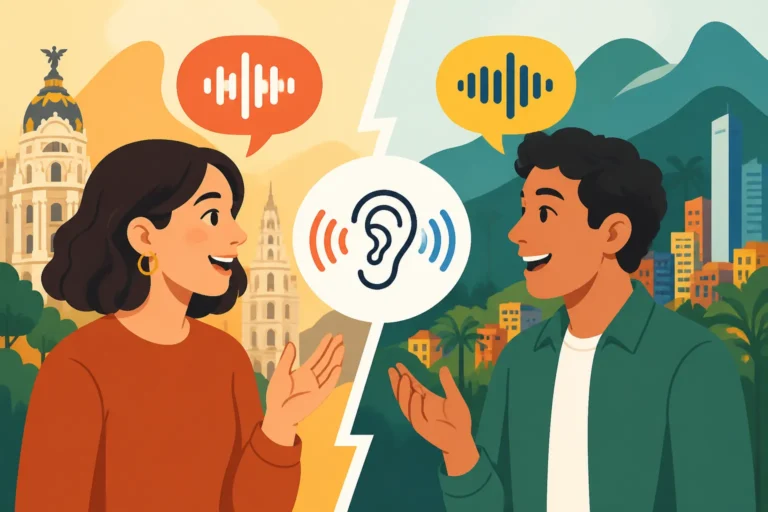
Before you copy and paste any template, we need to talk about the "formality scale" in Spain. Unlike the relatively straightforward professional English we use in the US or UK, Spanish business culture relies heavily on the relationship between "Usted" (formal you) and "Tú" (informal you). If you get this wrong, you don't just look like a non-native speaker; you can come across as either incredibly arrogant or strangely immature.
In my experience, when you are reaching out to a government office or a traditional university, "Usted" is your only safe bet. However, the tech scene in Madrid or Malaga has shifted dramatically toward "Tú." If the job description uses "nosotros" and feels "cool," you can lean into a more relaxed tone. But remember, it is always easier to start formal and be invited to use "Tú" than to start casual and have to apologize for being disrespectful. You can learn more about these subtle shifts in Spanish Workplace Communication: Meetings, Feedback, and Tone.
A common mistake is being too direct. In English, we value brevity. In Spain, brevity can be interpreted as coldness. You need to wrap your request in a layer of politeness—what I call the "courtesy cushion." This means acknowledging the person’s time before diving into your "I need X document" request.
Essential Email Templates for Asking for Information
Whether you are trying to figure out which master's program fits your visa or asking a hiring manager about the remote work policy, your first email sets the stage. You want to sound organized, respectful, and—most importantly—like someone who has done their homework.
Inquiring about a Job Opportunity or Internship
If you are reaching out to a company that hasn't posted a specific opening, or you need more details on a listing, use this structure. It strikes a balance between professional interest and personal initiative.
Template: General Information Request (Formal)
Asunto: Consulta sobre el proceso de selección – [Your Name]
Estimado/a [Name or "Responsable de Selección"]:
Le escribo porque sigo con gran interés la actividad de [Company Name] y me gustaría obtener más información sobre el proceso de incorporación de talento en su departamento de [Department Name].
Actualmente, estoy preparando mi documentación para [specific goal, like a visa or residency] y me gustaría saber si tienen previstas vacantes para perfiles con experiencia en [Your Skillset] en los próximos meses.
Agradezco de antemano su tiempo y quedo a su entera disposición para enviarle mi CV o concertar una breve llamada si fuera posible.
Atentamente,
[Your Name]
[Your Phone Number]
When sending these types of emails, make sure your background is ready for scrutiny. If you are applying for a highly regulated field, you might also need to know How to Translate Diplomas for Spain (Sworn Translator Guide) to ensure your credentials are taken seriously.
Asking a University or Language School for Details
Spanish administrative staff are often overwhelmed. If your email is a wall of text, it will go to the bottom of the pile. Use bullet points for your questions but keep the greeting formal.
Template: Academic Inquiry (Formal)
Asunto: Información sobre el Grado/Máster en [Program Name] – [Your Name]
A la atención del Departamento de Admisiones:
Me pongo en contacto con ustedes para solicitar información detallada sobre el Máster en [Program Name] para el próximo curso académico. Como estudiante internacional, tengo algunas dudas específicas sobre los requisitos de acceso:
- ¿Cuál es la fecha límite para la entrega de la documentación apostillada?
- ¿Existe alguna beca específica para alumnos de [Your Country]?
- ¿El centro facilita la carta de aceptación necesaria para el visado de estudiante?
Muchas gracias por su ayuda y por la labor que realizan.
Un cordial saludo,
[Your Name]
If you're at this stage, you're likely also drafting your How to Write a Motivation Letter for Spanish University Applications, so keep your tone consistent across all documents.
The Art of the Follow-Up without Being Annoying
Spanish bureaucracy and recruitment can move at a pace that feels glacial to outsiders. The "mañana" stereotype isn't always true, but the "next week" reality definitely is. Following up is expected, but there is a fine line between "interesado" (interested) and "pesado" (annoying).
I usually wait at least seven to ten business days before sending a nudge. If it’s a high-stakes job interview, you can move that up to three or four days. Using tools like SpanishPod101 can help you refine the specific vocabulary needed to sound urgent yet polite in these follow-ups.
Following Up After a Job Interview
You want to reiterate your value while checking the timeline. This is also a great place to link to your How to Follow Up After a Spanish Job Interview (Email Templates) for more specific variations.
Template: Post-Interview Nudge (Professional)
Asunto: Seguimiento de la entrevista para [Position] – [Your Name]
Hola, [Interviewer Name]:
Espero que estés teniendo una buena semana. Quería agradecerte de nuevo el tiempo que me dedicaste el pasado [Day of the week] para hablar sobre la posición de [Position].
Me quedé con una impresión muy positiva del equipo y del proyecto. Me pongo en contacto contigo simplemente para conocer si hay alguna novedad en el proceso o si necesitas que te facilite alguna información adicional por mi parte.
Quedo a la espera de tus noticias.
Un saludo,
[Your Name]
Following Up on Administrative Paperwork
Whether it's your Getting a Spanish Social Security Number for Work: Steps or a residency renewal, following up with a government office (Extranjería) requires a very specific, almost overly formal tone.
Template: Administrative Follow-Up (Very Formal)
Asunto: Consulta sobre el estado del expediente [Expediente Number] – [Your Name]
Estimados señores:
Por la presente, me dirijo a ustedes para solicitar información sobre el estado de tramitación de mi solicitud de [Type of Permit], presentada el pasado día [Date] con número de registro [Number].
Entiendo el volumen de trabajo de su oficina, pero debido a [mention a deadline, e.g., a job start date], agradecería cualquier actualización que pudieran proporcionarme.
Agradeciendo de antemano su atención, les saluda atentamente,
[Your Name]
Scheduling and Confirming Appointments
Scheduling a "Cita Previa" (official appointment) is often done through online portals, but when dealing with landlords, private doctors, or business partners, you’ll be doing it via email.
| Situation | Tone | Recommended Greeting |
|---|---|---|
| First Meeting with a Client | Formal | Estimado/a Apellido |
| Meeting a Potential Landlord | Semi-Formal | Buenos días, Nombre |
| Catching up with a Coworker | Informal | Hola, Nombre |
| Messaging a Gestor/Accountant | Professional | Estimado/a Nombre |
Proposing a Meeting Time
In Spain, lunch is late (2:00 PM – 4:00 PM), and many offices close early on Fridays during the summer (jornada intensiva). Keep this in mind when suggesting times.
Template: Scheduling a Call or Meeting
Asunto: Propuesta de reunión – [Project/Topic]
Hola, [Name]:
Me gustaría que pudiéramos agendar una breve reunión para tratar [Topic]. Creo que 20 minutos serían suficientes para ponernos de acuerdo en los puntos principales.
¿Tendrías disponibilidad en alguno de los siguientes horarios?
- Martes entre las 10:00 y las 12:00
- Miércoles a partir de las 16:00
Si no te viene bien ninguno, por favor, dime qué horario prefieres y me adapto.
Muchas gracias,
[Your Name]
If you are dealing with international business partners and need to handle payments or deposits after a meeting, services like Wise are invaluable for avoiding the massive fees Spanish banks love to tack on. Using Wise allows you to transfer funds with the mid-market rate, which is a lifesaver when you're just starting out and every Euro counts.
Confirming an Appointment
Always confirm 24 hours in advance. It shows you are reliable, which is a trait highly valued in the Spanish Business Etiquette: Gifts, Greetings, and WhatsApp Norms world.
Template: Confirmation
Asunto: Confirmación de nuestra cita de mañana
Hola, [Name]:
Te escribo solo para confirmar que nos vemos mañana a las [Time] en [Location/Link].
Si hubiera cualquier cambio de última hora, puedes avisarme por aquí o llamarme al [Your Phone Number].
¡Hasta mañana!
Un saludo,
[Your Name]
Common Vocabulary and Phrases for Your Toolkit
To make your emails sound more natural, weave in these phrases. They help move the conversation forward without sounding like a translated textbook. You can further expand your professional vocabulary with a Learning Business Spanish Fast: 30‑Day Study Plan for Professionals.
- "Quedo a su disposición": I am at your disposal (very common closing).
- "Adjunto le envío": Attached I send you (used for CVs or IDs).
- "De cara a…": With a view to… / Regarding… (useful for context).
- "A la mayor brevedad posible": As soon as possible (formal).
- "Dada la urgencia de la situación": Given the urgency of the situation.
- "Ponerse en contacto con…": To get in touch with…
If you are requesting a specific document, like when you are learning How to Request a ‘Vida Laboral’ Report for Job Applications in Spain, mentioning that you have "adjuntado mi NIE" (attached my NIE) is crucial.
Interpreting the Replies You Receive
One of the hardest parts of expat life in Spain is the "Non-Reply." If you don't get a response, it usually isn't personal. It’s often a sign that the person is waiting for information from someone else.
However, if you get a reply that says "Estamos en ello", it literally means "We are on it," but practically means "We haven't finished yet, please stop asking." If they say "Me pongo con esto ahora mismo", they are likely starting it right now because your email reminded them.
For those managing their own business or working as a freelancer, keeping track of these communications is as important as the work itself. I recommend using SpanishPod101 to listen to business-themed podcasts so you can hear how these phrases are used in real conversations, not just in text. This helps you catch the "vibe" of a reply—whether they are genuinely interested or just being polite.
Disclaimer
The information provided in this guide is for informational purposes only and does not constitute legal or professional career advice. While the templates are designed to follow common Spanish cultural norms, every situation and company culture is different. Always verify specific administrative requirements with the relevant Spanish authorities or a qualified legal professional before submitting official documentation.