Buying a Used Car in Spain: Total Cost Breakdown
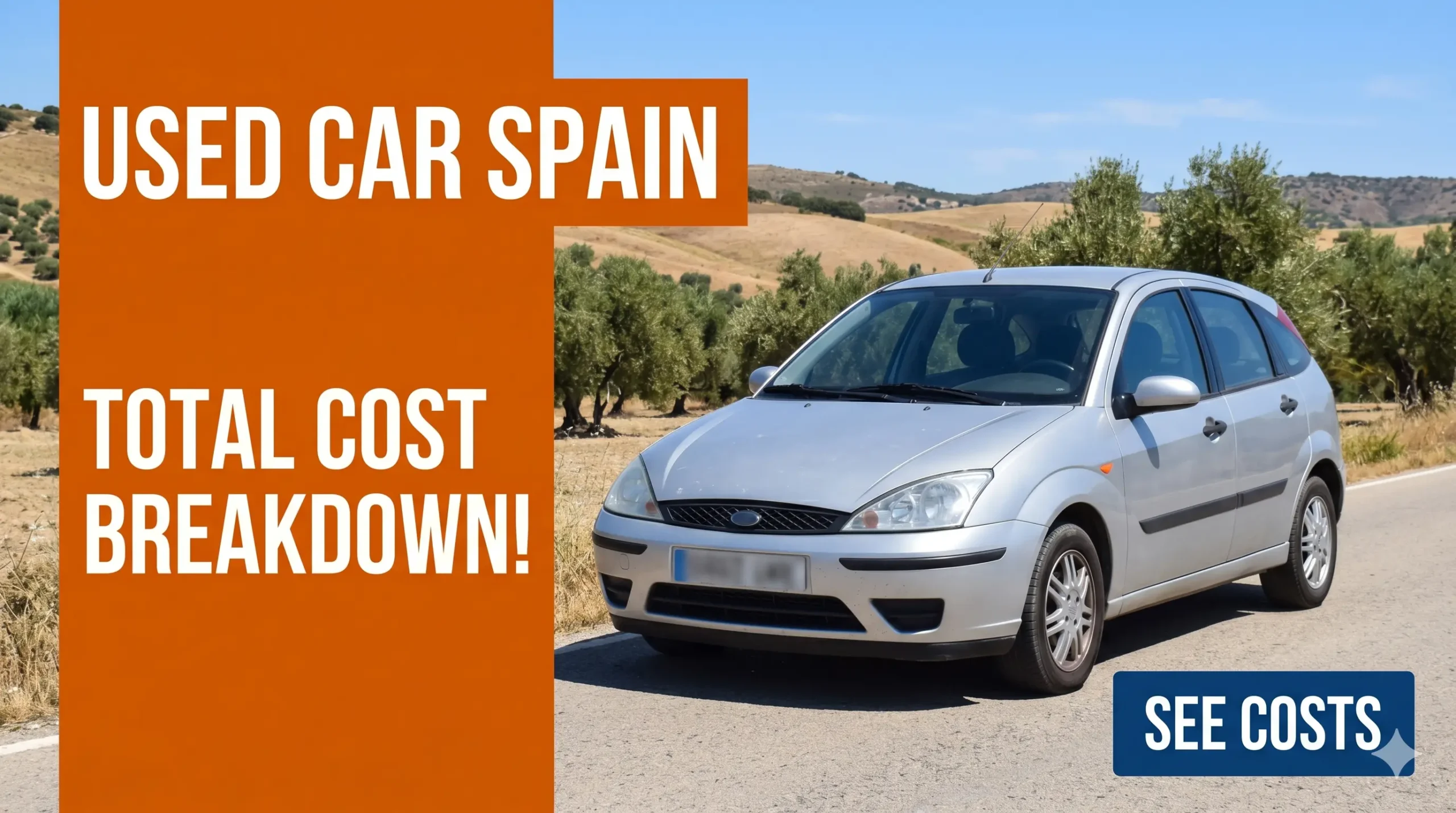
Buying a used car in Spain sounds straightforward until you are hit with hidden transfer taxes and appointment nightmares at the traffic authority. I remember thinking I had negotiated a brilliant deal on a secondhand hatchback, only to get slapped with an unexpected tax bill because of a regional wealth transfer rule. This guide breaks down the true, total costs of buying a used car in Spain so you can budget accurately.
Disclosure: This post may contain affiliate links. We may earn a commission at no extra cost to you if you make a purchase through these links. Read full disclosure.
The Core Purchase Dealership Versus Private Seller
When budgeting for a vehicle, the sticker price is just the baseline. The biggest variable in your total cost depends entirely on who you are buying the car from. Spain treats commercial purchases and private peer-to-peer sales completely differently from a tax perspective.
Buying from a Dealership and IVA
If you decide to buy your vehicle from a professional concesionario (dealership) or a registered secondhand car business, the process is heavily streamlined. The price advertised by the dealer almost always includes the 21 percent Value Added Tax (IVA).
When you buy from a professional, you do not have to worry about calculating regional transfer taxes. The dealership handles the invoice, and they typically bundle the administrative transfer fees directly into the final sale price. While dealership cars usually have higher baseline sticker prices than private sales, they offer the peace of mind of a mandatory one-year legal warranty. If the engine fails a month after driving off the lot, the dealership is legally obligated to repair it.
Buying from a Private Seller and The ITP Tax
The majority of expats hunt for deals on platforms like Wallapop, Milanuncios, or Coches.net, buying directly from private owners. If you buy from an individual, you do not pay IVA. Instead, you are legally required to pay the Impuesto de Transmisiones Patrimoniales (ITP), which is the Property Transfer Tax.
The ITP is a regional tax, meaning the percentage you pay depends entirely on the autonomous community where you officially reside. For example, if you live in Madrid, the ITP is generally 4 percent. If you live in Catalonia, it is 5 percent. In regions like Andalusia, Galicia, or Cantabria, it can reach up to 8 percent for higher-horsepower vehicles.
Here is the massive catch that frustrates foreign buyers: you do not calculate the ITP based on the price you actually paid the seller. You calculate it based on the valor fiscal (fiscal value) assigned to that specific make, model, and year by Hacienda (the Spanish tax authority). If you negotiate a fantastic deal and buy a car for 5,000 euros, but Hacienda’s official tables say the car is worth 8,000 euros, you must pay the 4 to 8 percent tax on the 8,000 euros. Figuring out how to navigate these digital tax portals is a crucial skill, often requiring you to understand How to Pay Taxes in Spain Online: AEAT Payment Options.
Official Administrative Fees and Paperwork
Beyond the taxes, you must pay specific administrative fees to the Spanish government to ensure the vehicle is legally registered in your name. Attempting to bypass these steps will result in severe legal consequences. Before doing anything, you must already be a legal resident, which means understanding the steps in Getting an NIE for Employment or Study: Practical Overview is your absolute first priority.
The DGT Vehicle History Report
Before you hand over a single euro to a private seller, you must purchase an Informe de antecedentes del vehículo (Vehicle History Report) from the Dirección General de Tráfico (DGT). This report costs exactly 8.59 euros.
This is the most important 8 euros you will ever spend in Spain. When you buy a used car in Spain, any unpaid traffic fines, outstanding financing debts, or legal embargoes attached to the vehicle transfer directly to the new owner. If the previous owner stopped paying their car loan and you buy the car without checking, the bank can legally repossess your vehicle. The DGT report tells you definitively if the car is clear of all debts and if the mandatory technical inspection (ITV) is up to date.
The DGT Transfer Fee Tasa de Cambio de Titularidad
To officially change the name on the permiso de circulación (the vehicle’s registration document), the DGT charges a fixed administrative fee of 55.70 euros. You must pay this fee at the time the ownership transfer is processed.
Why You Should Pay a Gestoria
Technically, you and the seller can go to the local DGT office together to submit the paperwork and pay the 55.70 euro fee. In reality, securing a cita previa (prior appointment) at a DGT office can take weeks, completely stalling your car purchase.
To save time and preserve your sanity, you should hire a gestoría (an administrative agency). For a fee ranging between 100 and 150 euros, a gestoría will instantly process the name change electronically, verify that the car has no embargoes, and automatically calculate and pay your ITP tax to Hacienda on your behalf. Splitting the cost of the gestoría with the seller is a common negotiation tactic in Spain.
| Expense Type | Estimated Cost | Who Pays It | When is it Paid |
| DGT History Report | €8.59 | Buyer | Before purchasing |
| ITP Transfer Tax | 4% to 8% of fiscal value | Buyer | Within 30 days of sale |
| DGT Transfer Fee | €55.70 | Buyer | During the ownership transfer |
| Gestoría Agency Fee | €100 to €150 | Negotiable | At the time of signing |
Hidden Costs Insurance Taxes and Upkeep
The moment the gestoría hands you your temporary registration papers, you are legally responsible for the vehicle’s ongoing bureaucratic upkeep.
Spanish Auto Insurance Seguro
It is illegal to drive a car in Spain without active insurance, even if you are just driving it home from the seller’s house. You must have the policy activated on the exact day of the transfer.
Basic third-party liability insurance (seguro a terceros) typically costs between 250 and 350 euros per year. If you want comprehensive coverage (a todo riesgo), expect to pay between 500 and 750 euros annually, depending on your driving history and the vehicle’s age. Spanish insurance companies will require your NIE and a local bank account to set up the policy.
The Annual Road Tax IVTM
Every vehicle owner in Spain must pay the Impuesto sobre Vehículos de Tracción Mecánica (IVTM), commonly known as the sello del coche or road tax.
Unlike the ITP transfer tax, the IVTM is an annual municipal tax paid directly to your local ayuntamiento (town hall). The cost varies wildly depending on your specific city and the horsepower of your vehicle. A standard compact car in a mid-sized town might cost 50 euros a year, while a large SUV in Madrid could cost over 150 euros annually. By law, whoever owns the car on January 1st of the current year is responsible for paying that entire year’s IVTM. It is critical to ensure you are registered in the local tax system, as overlapping municipal taxes can sometimes feel as confusing as the national rules outlined in Spanish Income Tax IRPF 101: Who Pays and When.
How to Manage the Financial Transactions Safely
Moving thousands of euros to buy a car requires a secure, optimized financial setup. Using the wrong bank can result in your payment getting blocked or losing hundreds of euros to hidden fees.
Moving Your Car Budget Across Borders
If you are an expat and your primary savings are still sitting in a bank account in the United States, the United Kingdom, or Australia, you have to bring those funds into Spain to buy the car. If you log into your legacy home bank and initiate a traditional international wire transfer, the bank will crush your budget with hidden SWIFT network fees and terrible exchange rate markups. You could easily lose hundreds of euros just moving your own money.
To protect your purchasing power, you should route your car budget through Wise. By using Wise, you bypass the expensive SWIFT network entirely. Wise converts your home currency to euros using the real, transparent mid-market exchange rate. You pay a tiny upfront fee, ensuring your savings stretch further and giving you more capital to negotiate with the seller. If you are unfamiliar with the mechanics of hidden exchange markups, reading Sending Money to/from Spain: Comparing Banks vs Transfer Services will show you exactly why optimizing your transfers is vital.
Avoiding Legacy Banking Fees for Daily Transactions
Once your euros arrive in Spain, you need a local banking structure to actually execute the purchase and manage the ongoing costs. You will need to pay the private seller via a domestic bank transfer, a process heavily reliant on local systems as explained in Spanish Bank Transfer Terms: Transferencia, Bizum, SEPA Explained. Furthermore, your auto insurance provider and your local town hall will demand a Spanish IBAN to set up automated yearly pulls for your premiums and the IVTM road tax.
Traditional Spanish high-street banks are notorious for demanding endless paperwork and charging expats heavy quarterly maintenance fees. To avoid this legacy friction, opening your daily operational account with N26 is highly strategic. N26 issues a fully recognized local Spanish IBAN directly from your smartphone. You can use your N26 account to seamlessly transfer the purchase funds to the seller, pay the gestoría, and establish the automatic debits required to keep your car legal on the road. Because N26 eliminates the punitive monthly fees common to branch banks, it is consistently the smartest choice for managing local overhead, a strategy explored in Opening a Bank Account in Spain: Step-by-Step for Foreigners. Linking your N26 account ensures you never miss an annual road tax payment, protecting you from the municipal fines detailed in How Direct Debits Domiciliacion Work in Spain: Setup and Cancellations.
Managing Surplus Wealth
Let’s assume you negotiate a fantastic deal on a reliable secondhand car, avoid the expensive dealership markups, and protect your capital by using Wise and N26 for the logistics. You will likely find yourself with surplus savings left over from your original car budget.
Leaving those extra euros sitting idle in a local checking account is a massive financial mistake, as inflation will slowly erode your purchasing power. Furthermore, locking your expat savings into restrictive Spanish mutual funds limits your geographical flexibility. To build robust, long-term wealth, many veteran expats sweep their surplus capital into a global brokerage account like Interactive Brokers. Utilizing Interactive Brokers allows you to build a multi-currency portfolio and access international stock markets with incredibly low commissions. It elegantly separates your long-term wealth building from your daily Spanish living expenses. Keeping your financial footprint agile through platforms like Interactive Brokers ensures your money is always working for you, regardless of where your expat journey takes you next.
References
Primary sources (official)
- Dirección General de Tráfico (DGT) – Cambio de titularidad de vehículos: https://sede.dgt.gob.es/es/vehiculos/transferencias-de-vehiculos/cambio-titularidad/
- Agencia Tributaria (AEAT) – Impuesto sobre Transmisiones Patrimoniales y Actos Jurídicos Documentados: https://sede.agenciatributaria.gob.es/Sede/impuestos-tasas/impuesto-transmisiones-patrimoniales-actos-juridicos-documentados.html
Other helpful sources
- Portal de la Administración General del Estado – Trámites de Vehículos: https://administracion.gob.es/
Disclaimer
The information provided in this guide is exclusively for educational and informational purposes and does not constitute official legal, financial, or tax advice. Spanish regional tax brackets (ITP), DGT administrative fees, and municipal road tax regulations (IVTM) are highly complex and subject to frequent updates by national, regional, and local governments. While we strive to ensure absolute accuracy, you should always verify the latest transfer requirements, tax rates, and vehicle history status directly with the Dirección General de Tráfico and the relevant regional tax authority before executing a vehicle purchase.