Prescription Costs in Spain Without Public Cover: Reimbursement Walkthrough
Disclosure: This article contains affiliate links. If you buy through them, we may earn a commission at no extra cost to you. Read our full disclosure.
Ah, the Spanish healthcare system. It's a fantastic system once you're in it, but for new arrivals or those relying on private health insurance, navigating prescription costs can feel like an unexpected financial hurdle. You've just seen a doctor, gotten a prescription, and then, bam, the pharmacy asks for the full amount, leaving you wondering how on earth you're going to get that money back. This guide is here to walk you through exactly how prescription costs work in Spain when you don't have public cover, and crucially, how to get reimbursed by your private health insurance, with a special focus on how a flexible option like SafetyWing can help bridge the gap.
Understanding Prescription Costs in Spain for Non-Public Users
When you first arrive in Spain, or if your specific visa requires private health insurance, you're operating outside the public system (known as the Sistema Nacional de Salud). This means the standard rules for prescription co-payments that apply to long-term residents with a Tarjeta Sanitaria (health card) won't apply to you. Instead, you'll likely face a "pay first, claim later" scenario for your medications.
Let's unpack what that actually means when you're standing at the farmacia (pharmacy).
The "Public vs. Private" Price Difference at the Pharmacy Counter
In Spain's public healthcare system, prescription costs are subsidized. Patients pay a copago, a small co-payment, typically a percentage of the medication's cost, which varies based on income, age, and chronic conditions. For some groups, like pensioners with very low incomes, prescriptions can even be free. It’s a brilliant system that ensures affordability for everyone.
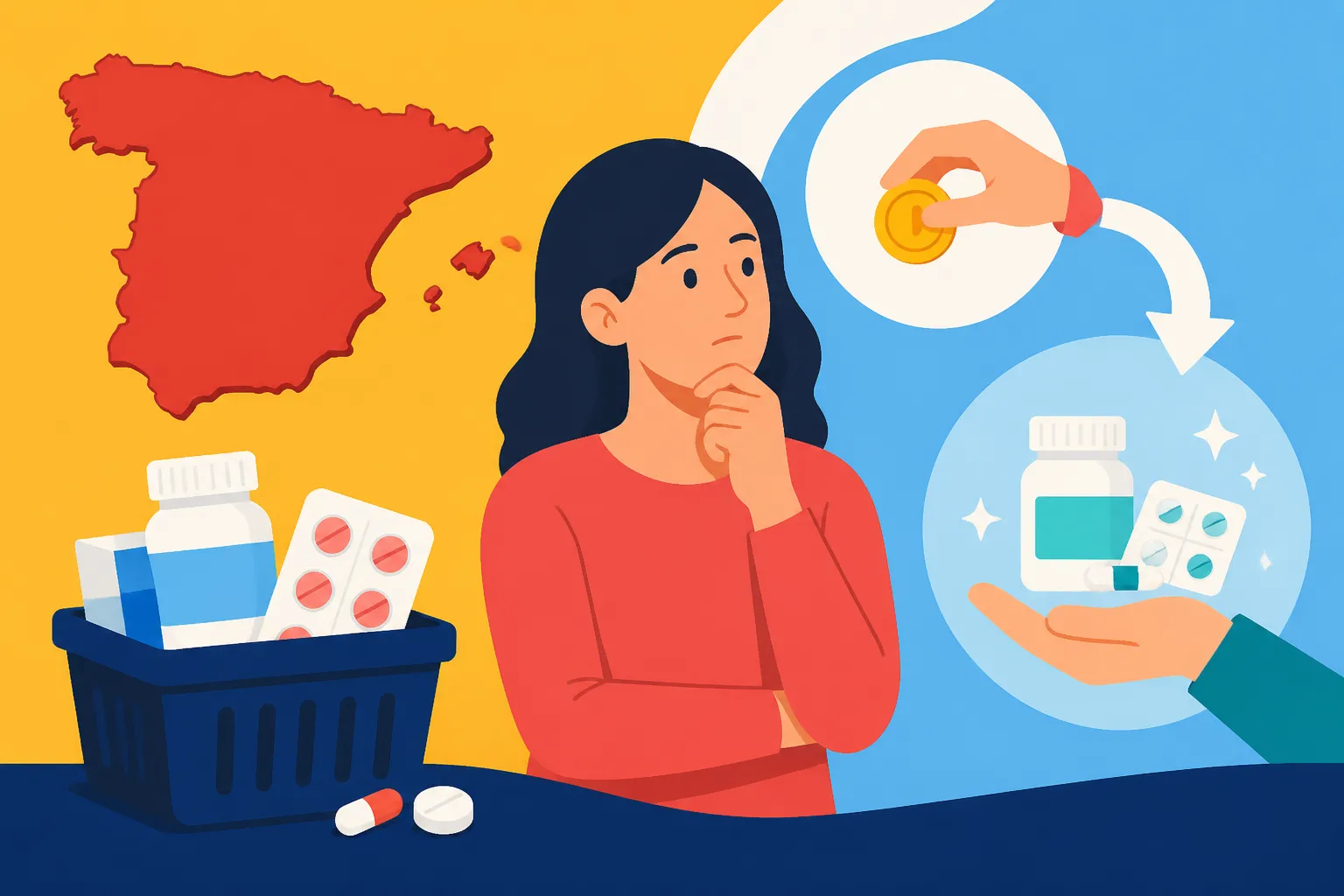
However, if you're on private insurance, the pharmacy will almost always charge you the full, unsubsidized price for your prescription medications. This can be quite a shock, especially if you're used to very low co-pays or direct billing in your home country. Imagine needing a common antibiotic that costs €20, but a specialist medication for a chronic condition could easily run into hundreds of euros. This is why understanding your reimbursement process is absolutely critical.
You might be thinking, "But my insurance policy says it covers prescriptions!" And yes, it probably does, but the mechanism for coverage in Spain, especially for private plans used by expats, usually involves you paying upfront and then seeking reimbursement from your insurer. It's not like in some countries where your insurance card is swiped, and you just pay a co-pay. That direct billing at a pharmacy is quite rare with typical expat private insurance plans in Spain.
What to Expect When You Get a Prescription
The journey to getting your medication usually starts with a doctor's visit. Whether you've managed to find an English-speaking doctor in Spain or are using a translation app to communicate, the doctor will provide you with a prescription. In Spain, this might be a physical paper prescription or an electronic one. Even if it's an electronic prescription, the farmacia will still require a paper printout or a special code (CIP) from your doctor to dispense the medication. It's not like the public system's e-prescription where your tarjeta sanitaria holds all the info.
When you present your prescription at the pharmacy, here's what typically happens:
- Presentation: Hand over your paper prescription to the pharmacist. They will verify it.
- Payment: They will calculate the full price of the medication. This is where you pull out your wallet and pay the entire amount.
- Receipts are Gold: This is perhaps the MOST important step. Do NOT just walk away with the medication and a small till receipt. You need a proper factura (invoice). Explain clearly, "Necesito una factura para el seguro" (I need an invoice for the insurance). A factura should include:
- The pharmacy's details (name, address, NIF/CIF).
- Your full name and your NIE/Passport number (if they ask for it).
- The date of purchase.
- The name of the medication(s) purchased.
- The total cost paid.
- The prescription number or reference.
Without a detailed factura, your insurance company, like SafetyWing, won't be able to process your reimbursement claim. A simple ticket (receipt) is often not enough. Be firm and polite about needing the full invoice!
Remember, managing chronic conditions in Spain means you'll be doing this regularly. Each trip to the pharmacy for a refill will require this same diligent approach to obtaining a proper invoice. It can be a hassle, but it's essential for getting your money back.
Navigating Reimbursement with Private Health Insurance
So, you've got your medication, paid the full price, and, crucially, you have that all-important factura. Now comes the next step: getting your money back from your private health insurer. This process can sometimes feel like another layer of bureaucracy, but with the right approach and knowing what to expect, it's manageable.
The Standard Reimbursement Process
Most private health insurance policies, including flexible travel medical insurance options like SafetyWing, operate on a reimbursement basis for prescription medications when direct billing isn't available. Here's a general walkthrough:
-
Gather Your Documents: Before you even think about submitting a claim, make sure you have everything in order. You'll need:
- The original prescription: This proves the medication was medically necessary and prescribed by a licensed doctor.
- The original detailed factura from the pharmacy: As discussed, this is your proof of purchase and payment. Ensure it has all the necessary details.
- Proof of the doctor's visit: This could be a separate invoice for the consultation, or sometimes the prescription itself is sufficient if it clearly states the doctor's details and date.
- Your insurance policy number and personal details.
- Any specific claim forms required by your insurer.
-
Understand Your Policy's Terms: This is crucial. Every insurance policy is different. Before you rush to submit, read the fine print or contact your insurer directly. Pay close attention to:
- Deductibles (Franquicia): This is the amount you have to pay out-of-pocket before your insurance starts covering costs. If your deductible is, say, €100, and your prescription is €50, you won't get reimbursed until your accumulated medical expenses exceed €100.
- Co-payments (Co-pago): Separate from the copago at a public pharmacy, some private insurances might have a co-payment for certain services or medications even after the deductible is met.
- Exclusions: Are there any specific medications or types of prescriptions that are not covered? This is particularly important for pre-existing conditions if they aren't fully covered by your plan.
- Claim Submission Window: How long do you have to submit a claim after purchasing the medication? Don't miss these deadlines!
- Required Format: Does your insurer need physical documents mailed, or can you submit everything digitally? Many modern insurers, like SafetyWing, offer straightforward online claim portals.
-
Submit Your Claim: Follow your insurer's specific instructions. For most, this will involve:
- Logging into an online portal or filling out a physical form.
- Uploading or attaching scanned copies of your prescription and factura.
- Providing your bank details for direct deposit of the reimbursement.
- Clearly explaining the reason for the medication and attaching any supporting medical notes if required.
-
Wait for Processing: This is often the hardest part – the waiting game. Processing times can vary, but generally, expect a few weeks. Keep copies of everything you submit, and note down submission dates and any reference numbers. If you haven't heard anything after a reasonable period, don't hesitate to follow up. Persistence sometimes pays off in the world of insurance.
SafetyWing and Prescription Reimbursement
For many expats, especially those on a Digital Nomad Visa or who need flexible coverage, SafetyWing offers a practical solution. It's often chosen for its global coverage and ease of use. When it comes to prescriptions, SafetyWing, being a travel medical insurance, typically covers eligible prescription medications that are part of a covered illness or injury treatment.
Here's how SafetyWing usually handles prescription costs:
- Pay Upfront: Just like with other private insurers in Spain, you will pay for your prescriptions at the pharmacy initially.
- Keep Everything: Crucially, you need to keep your doctor's prescription and the detailed factura from the pharmacy. SafetyWing's claims process relies heavily on clear documentation.
- Online Claims: SafetyWing has an online claims portal, making the submission process relatively straightforward. You'll upload your documents directly.
- Deductible: Be mindful of your deductible. SafetyWing plans typically come with a deductible, and you'll need to meet this amount before reimbursement kicks in.
- Benefit Limits: Also, be aware of any sub-limits for prescriptions within your policy. Review your specific SafetyWing policy documents carefully to understand the exact coverage for prescribed drugs.
While SafetyWing is an excellent choice for its flexibility and global coverage, it's essential to remember it's primarily designed as a travel medical insurance. This means it covers acute illnesses and injuries and their related prescription needs. If you have pre-existing conditions requiring ongoing, expensive medication, it's vital to check if and how these are covered under your specific SafetyWing policy. Always confirm specific details with SafetyWing directly if you have particular concerns about a medication.
Making the Most of Your Private Insurance for Prescriptions
Navigating prescription costs without public cover requires a proactive and informed approach. It's not just about getting reimbursed, but also about managing your health and finances effectively in Spain.
Essential Documentation Practices
I cannot stress this enough: documentation is your best friend.
- Originals are Key: Always try to get original documents (prescription, factura). While scans are usually accepted for online submissions, sometimes insurers request originals, especially for larger claims. Keep a physical folder for all your medical paperwork.
- Detailed Invoices: Ensure every factura from the pharmacy explicitly lists the medication name, quantity, unit price, total price, and the pharmacy's details. If you're paying with a card, ask for the factura at the same time; don't assume they'll automatically print it with all the necessary details. Sometimes they give you a simple ticket first, and you have to specifically request the factura.
- Doctor's Notes: If possible, ask your doctor for a brief note (in English or Spanish) explaining the diagnosis and why the medication was prescribed. This can expedite claims processing.
- Personal Information: Ensure your name and NIE/passport number (if asked for by the pharmacy) are correctly stated on the factura. Any mismatch can cause delays.
Here's a handy table to keep track of what you need:
| Document Type | Purpose | Key Details to Check |
|---|---|---|
| Doctor's Prescription | Proof of medical necessity | Doctor's name, license number, date, patient's name, medication name. |
| Pharmacy Factura | Proof of purchase and payment | Pharmacy details, date, your name/ID, medication name, total cost, VAT breakdown. |
| Claim Form | Formal request for reimbursement | Policy number, patient details, bank account for payout, signature. |
| Medical Reports/Notes | Supporting evidence for complex cases (optional) | Diagnosis, treatment plan, doctor's recommendations. |
Communicating with Your Insurer
Don't be afraid to reach out to your insurance provider if you have questions. Before you move, or shortly after arriving, clarify their exact process for prescription reimbursement. Ask them:
- What specific forms do I need?
- What is the typical processing time for prescription claims?
- Is there a direct contact person or department for claims?
- What happens if a medication isn't available and an alternative (or compound) is needed?
Companies like SafetyWing pride themselves on good customer support, so leverage that. Clear communication upfront can save you a lot of headache down the line.
Planning for Ongoing Medications
If you have a chronic condition, managing medication refills in Spain can become a regular administrative task.
- Batch Claims: Check if your insurer allows you to batch claims for multiple prescriptions over a period (e.g., monthly or quarterly) to reduce administrative effort.
- Budgeting: Factor in the upfront cost of your regular medications into your monthly budget. Even if you're reimbursed, you'll need the cash available to pay at the pharmacy first.
- Local Alternatives: Sometimes, the exact brand of medication you're used to might not be available in Spain. Spanish pharmacies often stock generic equivalents, which are just as effective and sometimes cheaper. Your doctor can help you identify these.
For those on a private plan like SafetyWing, which offers flexibility for nomads and travellers, it's particularly important to stay organized with your records. Whether you're moving between regions in Spain or even between countries, having a clear, digital record of your prescriptions and their corresponding facturas is invaluable. This is especially true if you're ever questioned about bringing prescription medication through Spanish airports when traveling.
Practical Tips and What to Expect at the Pharmacy
The Spanish farmacia is more than just a place to pick up pills; pharmacists are highly knowledgeable professionals who can offer advice on minor ailments and clarify medication instructions. However, when you're without public cover, your interaction changes slightly.
Getting a Proper Factura Every Time
This point is so critical it bears repeating. When you're at the pharmacy and have paid for your prescription, before you leave, look the pharmacist in the eye and say: "Por favor, ¿me puede dar una factura completa para el seguro? Necesito mi nombre y número de NIE/pasaporte." (Please, can you give me a complete invoice for the insurance? I need my name and NIE/passport number.)
Sometimes, they might give you a factura simplificada or a basic till receipt first. This often lacks the detailed breakdown, your personal ID, or even the specific medication name required for insurance claims. Insist on a factura completa (full invoice). It might take them an extra minute or two to print, but it will save you weeks of hassle with your insurance claims. Some pharmacies might even ask for your NIE to put on the invoice, which is completely normal.
Understanding Medication Instructions
Spanish medication instructions can sometimes be a bit of a mystery, especially if your Spanish isn't fluent. Don't be shy about asking the pharmacist to clarify:
- "¿Cuántas veces al día?" (How many times a day?)
- "¿Con comida o sin comida?" (With food or without food?)
- "¿Por cuántos días?" (For how many days?)
Most pharmacists will be incredibly helpful, and many in larger cities will speak some English. It's always a good idea to know some basic Spanish medical terminology to help you understand your prescription and ask questions.
Over-the-Counter Medications and Your Insurance
Generally, private health insurance policies, including SafetyWing, do not cover over-the-counter (OTC) medications. These are items you can buy without a prescription, like basic painkillers, cough syrup, or certain stomach remedies. While they're often inexpensive, it's a good distinction to remember so you don't mistakenly try to claim them.
However, if an OTC medication is specifically prescribed by a doctor as part of a treatment plan for a covered illness, there might be a rare exception. Always check your individual policy and, if in doubt, ask your insurer directly before making assumptions.
The Cost Factor: Budgeting for Prescriptions
Even with reimbursement, the need to pay upfront for prescriptions can impact your immediate cash flow, especially for expensive or chronic medications.
- Emergency Fund: It's wise to have an emergency fund that can cover a few months' worth of medication costs, just in case there are delays in reimbursement or unexpected medical needs.
- Compare Prices (if possible): For non-prescription items, or if your doctor offers a choice of equivalent medications, you might be able to compare prices between different pharmacies, though for prescription items, the price is generally standardized.
- Routine Checkups: Make sure you schedule routine health checkups with your doctor. Regular consultations can help manage chronic conditions and ensure you have continuous prescriptions, avoiding last-minute urgent care visits that can be more costly.
Navigating prescription costs in Spain without public cover requires diligence, patience, and good record-keeping. But with a clear understanding of the process, particularly how to work with your private insurer like SafetyWing, you can ensure you get the medical care you need without undue financial stress. Keep those facturas safe, and don't be afraid to ask questions!
Disclaimer
The information provided in this guide is for general informational purposes only and does not constitute medical, financial, or legal advice. While we strive to provide accurate and up-to-date information, healthcare systems and insurance policies are subject to change. Always consult with a qualified healthcare professional, your insurance provider, or a legal expert for advice tailored to your specific situation. Ensure you thoroughly read and understand your individual insurance policy documents, including terms, conditions, deductibles, co-payments, and exclusions, particularly when using a service like SafetyWing, to confirm coverage for prescription medications.