Full Load vs Groupage to Spain: Cost Break-Even by Cubic Metre
Oh, the joys of moving your entire life across continents, or even just countries, to Spain! One of the biggest headaches, and often the most underestimated costs, is figuring out what to do with all your belongings. You’re standing there, looking at your sofa, your books, your grandmother’s lamp, wondering: is it worth shipping, and if so, how? This guide is here to untangle the confusion between full load and groupage shipping, helping you discover your cost break-even point by cubic metre, and simplify the entire process with the help of platforms like Sirelo.
Disclosure: This post may contain affiliate links. We may earn a commission at no extra cost to you if you make a purchase through these links. Read full disclosure.
Understanding Full Load FCL vs. Groupage LCL Shipping to Spain
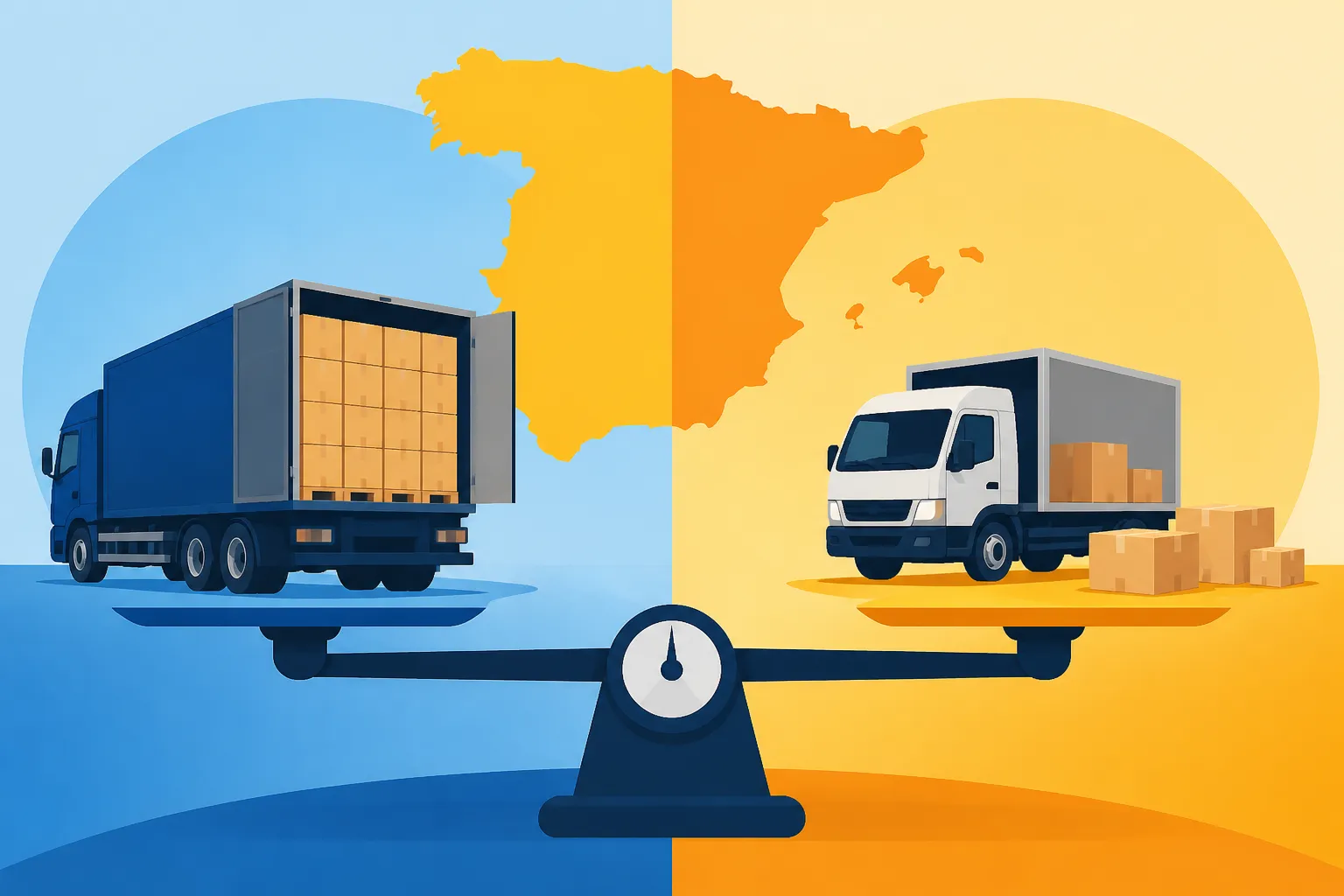
When you're planning your big move to Spain, the first major decision you'll face regarding your household goods isn't what to bring, but how to bring it. This boils down to two primary methods: Full Container Load (FCL), often called 'full load', and Less than Container Load (LCL), more commonly known as 'groupage'. Each has its own set of advantages and disadvantages, particularly when it comes to cost and timeline, and understanding them is crucial to making the right choice for your particular situation.
What is Full Load Shipping FCL?
Imagine packing up your entire life, not just for a holiday, but to restart in a beautiful new country like Spain. If you're bringing a substantial amount of stuff—think a three or four-bedroom house, significant furniture, maybe even a car—then Full Container Load (FCL) shipping is likely what you'll be looking at. This means you get an entire shipping container dedicated solely to your belongings. No sharing, no waiting for other people's stuff.
Typically, these containers come in two standard sizes: 20-foot (around 33 cubic metres, or CBM) and 40-foot (around 67 CBM). When you opt for FCL, that container is sealed at your home, travels directly to the port, makes its journey across the sea, and is unsealed only at your new doorstep in Spain (or a nearby depot, depending on your final delivery arrangements). The biggest perks? Speed and security. Because it's just your items, there's less handling involved, which generally means a faster transit time. You're also paying for the exclusivity, which often translates to a lower risk of damage or loss since your goods aren't being continually loaded and unloaded with other people's items. It also means you have more control over the shipping schedule. However, the downside is clear: if you don't fill the container, you're still paying for the entire thing. It can feel like an extravagance if you're only half-filling a 20-foot container, for instance.
Let's consider a scenario: a family of four moving from, say, London to a sprawling villa in Andalusia. They have a full household of furniture, heirlooms, a significant library of books, and all the accumulated items from years of family life. For them, the sheer volume of their possessions makes a 20-foot or even a 40-foot container a logical, cost-effective, and efficient choice. They want their things to arrive together, relatively quickly, and with minimal fuss, making FCL their best bet for a smooth transition to their new Spanish home.
What is Groupage Shipping LCL?
Now, let's pivot to groupage shipping, or Less than Container Load (LCL). This method is a game-changer for those of us who aren't moving an entire mansion's worth of goods but still need to transport more than just a couple of suitcases. Think of it like a carpool for your cargo. Your belongings, along with items from other movers, are consolidated into a single shipping container. This container is then dispatched to Spain.
The biggest advantage here is the cost-effectiveness. Instead of shouldering the expense of a whole container yourself, you only pay for the space your items occupy. This makes groupage an incredibly attractive option for individuals, couples, or those downsizing their lives for a move to a Spanish apartment. It’s also often considered a more environmentally friendly option, as it maximizes the use of shipping container space. However, these benefits come with trade-offs. Because your goods are sharing space, the logistics are more complex. There's usually a collection window, then a period where your items wait at a depot to be consolidated with other shipments heading to the same region of Spain. This inevitably means a longer transit time compared to FCL. Your items will also be handled more frequently—loaded into the container, potentially transferred between depots, and then unloaded at the destination. While reputable moving companies take great care, increased handling always carries a slightly elevated risk.
Imagine a single expat moving from Berlin to a charming flat in Barcelona. They have a few pieces of cherished furniture, a dozen boxes of personal items, and their bike. Their total volume might be around 5-7 CBM. For them, renting an entire 20-foot container (33 CBM) would be financially absurd. Groupage shipping allows them to send their beloved possessions without breaking the bank, sharing the cost of the container with others. They understand it might take a few extra weeks for their items to arrive, but the significant savings make it a worthwhile compromise for their new life in Spain.
The Core Challenge: Finding Your Cost Break-Even Point in Cubic Metres
One of the most perplexing aspects of international relocation to a new country like Spain is deciphering the opaque world of shipping costs. It’s not like buying a plane ticket where the price is fixed per person. When you're shipping household goods, the numbers can feel like they're pulled out of thin air, and the difference between a good deal and a colossal overspend often hinges on understanding one critical metric: cubic metres (CBM). This is where the concept of a "break-even point" between full load and groupage truly comes into play, and it’s a hurdle many expats stumble over.
Why Cubic Metres CBM Matter for Your Move
Forget about weight for a moment, as counter-intuitive as that might seem. When it comes to sea freight, space is king. Shipping companies primarily calculate their costs based on the volume your goods occupy, measured in cubic metres. Think of it like this: a container has a fixed volume. Whether it's filled with feathers or lead, as long as it takes up the same amount of space, the shipping company's primary cost (the space on the ship, the fuel, the handling of the physical container) remains largely similar.
For groupage shipping, your cost is directly proportional to the CBM your items take up within the shared container. Every extra cubic metre adds to your bill. For full load, you're paying for the entire container, regardless of whether you fill it to the brim or only use half the space. This fundamental difference is why identifying your total volume is the absolute first step in figuring out your best shipping option. Without a solid grasp of your CBM, you're essentially walking into a car dealership without knowing if you need a compact car or a heavy-duty truck. It also dictates how much effort you should put into decluttering, which, let's be honest, is a monumental task when moving to a new country and facing a Spain Relocation Checklist: First 30 Days for New Residents that's already miles long.
Estimating Your Volume: Practical Tips for Expats
Estimating your shipment’s cubic metres might sound like a job for a mathematician, but it's more straightforward than you think. Accuracy here can save you hundreds, if not thousands, of euros. Moving companies will eventually conduct a professional survey, but getting a rough estimate beforehand empowers you with knowledge to compare quotes effectively.
Start by going room by room. For large items like furniture, measure their length, width, and height in metres, then multiply these three figures together to get the CBM for that item (e.g., 2m x 1m x 0.5m = 1 CBM). Don’t forget about irregular shapes; try to visualize them within a rectangular box. For boxes, if you know the dimensions of a standard moving box (say, 0.5m x 0.5m x 0.5m = 0.125 CBM), you can simply count how many you have and multiply.
Many reputable moving platforms, including Sirelo, offer handy online volume calculators. You input common household items like sofas, beds, refrigerators, and a number of boxes, and it gives you an instant estimated CBM. This is a fantastic starting point. You can even do a video survey with some companies, which allows them to visually assess your belongings and provide a more accurate estimate remotely. Be honest and thorough; don't try to under-estimate just to get a lower quote initially, as this will lead to nasty surprises later on. Remember, every item, from your potted plants to your extensive cookbook collection, takes up space.
Here’s a simplified table to give you a rough idea of common household items and their typical CBM, which can help you with your initial calculations:
| Item | Estimated CBM (m³) | Notes |
|---|---|---|
| Small Box (e.g., books) | 0.05 | Standard moving box for heavy items |
| Medium Box (e.g., clothes) | 0.1 | General purpose box |
| Large Box (e.g., linen) | 0.2 | For lighter, bulkier items |
| Armchair | 0.5 – 1.0 | Depends on style |
| 3-Seater Sofa | 1.5 – 2.5 | Larger sofas can exceed this |
| Double Bed (dismantled) | 0.5 – 1.0 | Frame and mattress |
| Wardrobe (dismantled) | 0.8 – 1.5 | Consider size and whether it fully disassembles |
| Dining Table (dismantled) | 0.5 – 1.0 | Plus chairs (add 0.2-0.3 CBM per chair) |
| Refrigerator (standard) | 1.0 – 1.5 | Taller, wider models will be more |
| Washing Machine | 0.5 – 0.7 | Standard size |
| Bicycle | 0.2 – 0.4 | Can vary if packed in a bike box |
| Bookshelf (dismantled) | 0.3 – 0.8 | Depending on length/height |
| Small Desk | 0.5 | Simple desk, dismantled |
This table provides rough estimates; actual volumes may vary based on specific item dimensions and how they are packed.
The Elusive Break-Even: When Groupage Becomes More Expensive
This is the million-dollar question for many expats: at what point does it become cheaper to spring for a full container rather than keep adding to a groupage shipment? The answer, frustratingly, isn't a single, fixed number you can just pluck from a guide. It's more of a range, influenced by a multitude of factors, but we can give you a very strong indication based on years of expat moving experiences to places like Spain.
Generally speaking, groupage shipping tends to be the more economical choice for shipments up to about 10-15 cubic metres (CBM). For anything below this threshold, the cost savings from sharing container space usually outweigh the potential inconveniences of longer transit times and more handling. You're effectively paying for your slice of the pie, and it’s a reasonable slice.
However, as your volume starts to creep past 10 CBM and certainly towards 15 CBM, the costs of groupage can begin to skyrocket. This is because, while you're technically still "sharing," you're now taking up a significant chunk of the container yourself, and the per-CBM rate for groupage can become quite steep beyond a certain point. Moving companies often have a pricing structure where the economies of scale for groupage diminish once your volume becomes substantial. This is the fuzzy break-even zone where an entire 20-foot container, even if you don't fill it completely, might become financially competitive, or even cheaper.
Think about it: a 20-foot container is roughly 33 CBM. If your goods come in at, say, 18 CBM, paying the elevated groupage rate for 18 CBM might surprisingly come close to, or even exceed, the cost of an entire 20-foot container. Why? Because the base costs for an FCL shipment (booking the container, port fees, transport to your door) are fixed. If you're paying a premium for groupage per cubic metre and your cubic metre count is high, those per-CBM costs can quickly add up to or surpass the fixed cost of the FCL.
Several factors muddy this break-even water further:
- Origin and Destination: Shipping from, say, the US West Coast to an inland town in Spain will have different cost structures than moving from Germany to a Spanish coastal city. The distance, specific port fees, and inland transport costs play a big role.
- Time of Year: Peak moving seasons (summer months, end of academic years) can see prices for both FCL and LCL fluctuate.
- Specific Moving Company: Different companies have different pricing models, overheads, and relationships with shipping lines. This is why comparing quotes is so vital.
- Additional Services: Do you need professional packing? Insurance? Disassembly/re-assembly? These add-ons will impact your total cost and, therefore, your effective break-even.
My advice as an expat who’s been through it: if your estimated volume is hovering anywhere between 12 CBM and 20 CBM, always get quotes for both groupage and a 20-foot full container load. You might be surprised at which option comes out on top. And trust me, the peace of mind of having your own sealed container, even if you have a little empty space, can be priceless when you're already dealing with the complexities of Spain Visas & Residency: Complete Guide for Foreigners or setting up your new life.
Practical Strategies for Cost-Effective Moving with Sirelo
Navigating the complexities and costs of moving your belongings to Spain can feel like a Herculean task. Between the paperwork, the logistics, and the sheer volume of things you own, it's easy to get overwhelmed. This is where strategic planning and utilizing the right resources can make all the difference, not just in saving money but in preserving your sanity.
Getting Accurate Quotes and Comparing Options with Sirelo
The cardinal rule of moving is: get multiple quotes. Never settle for the first one. This is non-negotiable, especially for an international move to Spain. Each moving company will have its own pricing structure, network of partners, and service offerings. The difference between the highest and lowest quote can be substantial, often hundreds or even thousands of euros.
This is precisely where Sirelo shines as a truly invaluable resource for expats. Think of Sirelo as your personal moving assistant, simplifying the entire quote-gathering process. Instead of spending hours scouring the internet, filling out endless forms on different websites, and making dozens of phone calls, you can use Sirelo's platform to provide your moving details just once. You'll specify your origin, destination (Spain, of course!), estimated volume (which you've meticulously calculated, right?), and desired services. Sirelo then connects you with a curated list of reputable, pre-vetted moving companies that specialize in international relocations to Spain. Within a short time, you'll start receiving tailored quotes directly from these movers.
Why is this so effective?
- Time-Saving: No more repetitive form-filling.
- Reputable Movers: Sirelo partners with movers who have a track record of good service, which is crucial when your entire life is in transit.
- Direct Comparison: The platform makes it easy to compare offers side-by-side, ensuring you’re not just looking at the bottom line but also at what's included (insurance, packing, customs assistance, etc.).
- Informed Decision: With several detailed quotes, you can accurately weigh the cost of groupage versus a full container for your specific volume. This empowers you to identify that elusive break-even point for your move, not just a theoretical average.
When you're submitting your details through Sirelo, be as detailed as possible about your inventory. The more information you provide, the more accurate the initial quotes will be, minimizing surprises down the line. A thorough inventory, including estimated CBM for each major item, helps movers give you a firm price.
Beyond Price: What Else to Consider in Your Shipping Choice
While cost is undeniably a huge factor when moving to a new life in Spain, it shouldn't be your only consideration. As someone who has packed and unpacked more times than I care to admit, I can tell you that peace of mind and reliability are worth their weight in gold. Especially when you're already juggling things like Spain Immigration Appointments & Paperwork: How to Avoid Delays.
Here are other critical factors to scrutinize when comparing your options received through Sirelo or elsewhere:
- Insurance: This is non-negotiable. What level of coverage is included? What are the exclusions? Are your high-value items fully covered? Accidents happen, and while you hope they don't, having robust insurance protects you from potential financial heartache. Ensure the policy specifically covers international transit to Spain.
- Packing Services: Is professional packing included or an extra cost? For fragile items, bespoke crating might be essential. While self-packing can save money, professional packers are experts at maximizing space and minimizing damage. Consider which items you're comfortable packing yourself and which require professional care.
- Delivery Timelines: How long will your goods take to arrive? Groupage is almost always slower than full load. If you need your belongings quickly, perhaps because you have an immediate need for your office setup or children’s toys for school, the extra cost of FCL might be justified. Be realistic about what "fast" means in international shipping terms; it's rarely next-day delivery!
- Customs Clearance Support: Spain has specific customs regulations. Does the moving company assist with all the necessary paperwork, tariffs, and procedures for importing your household goods? A good mover will guide you through What You Can Bring to Spain Duty‑Free When Moving (Household Goods)] and ensure a smooth process. This alone can save you immense stress and potential delays.
- Company Reputation and Reviews: Beyond Sirelo’s initial vetting, always do your own deep dive. Check independent reviews, ask for testimonials, and gauge their responsiveness and professionalism during the quoting process. A company that is slow to respond to your questions during the planning stage might be equally slow when you have a problem mid-transit.
- Storage Options: Do you need temporary storage in Spain upon arrival? Some movers offer this as part of their service or as an add-on. This can be particularly useful if your new apartment isn't ready or you need time to get settled before everything arrives.
- Door-to-Door vs. Port-to-Port: Clarify the exact scope of service. Does it include collection from your old home and delivery directly to your new address in Spain, including navigating local streets? Or is it only port-to-port, leaving you responsible for hiring local transport and customs clearance from the port?
Remember, the cheapest quote isn't always the best value. Weigh all these factors carefully. A slightly higher price for comprehensive service and peace of mind can be a very wise investment in your new life in Spain.
Maximizing Savings: Tips for Reducing Your Volume (and Cost)
Once you've wrapped your head around the full load versus groupage dilemma, and you've started gathering quotes through platforms like Sirelo, the next logical step is to look for ways to trim those costs. And by far, the most effective way to save money on shipping your belongings to Spain is to reduce the volume of what you're sending. Every cubic metre you don't ship is money saved, plain and simple. This can be a tough pill to swallow, especially if you're emotionally attached to your possessions, but trust me, it’s liberating.
Here are some tried-and-true expat strategies for shrinking your shipment and saving some precious euros for your new Cost of Living in Spain: Realistic Budgets and Savings Tips:
- Declutter Ruthlessly: This is the most painful but most impactful step. Go through every single item in your home. Ask yourself: "Do I love it? Do I need it? Is it easily replaceable in Spain at a lower cost than shipping it?" If the answer to any of those is "no," then it's time to let it go. Be brutal. Clothes you haven't worn in a year, duplicate kitchen gadgets, old magazines, furniture that doesn't quite fit your new Spanish aesthetic – donate, sell, or discard. Remember, smaller apartments are common in Spain, so oversized furniture might not fit anyway.
- Sell or Donate Items: Instead of just throwing things away, consider selling good-condition furniture, electronics, or clothes. Websites like Wallapop or local expat groups on Facebook are great for finding buyers. Even if you only recoup a fraction of the cost, it’s better than paying to move something you no longer need. Donating to charities also feels good and benefits a cause.
- Buy New in Spain: For certain items, especially bulky ones that are readily available and not sentimentally valuable, it can be cheaper to buy them fresh in Spain. This often applies to white goods (washing machines, fridges), basic IKEA-style furniture, or even certain electronics. Factor in the shipping cost of that item versus its purchase price in Spain. Often, buying new locally is the smarter financial choice. Plus, it's a great excuse to explore your new Spanish town and its shops!
- Disassemble Everything Possible: Beds, dining tables, bookshelves, desks – if it can be taken apart, take it apart. This significantly reduces the overall volume and makes items easier to pack efficiently. Just make sure to keep all the screws and assembly instructions in a clearly labeled bag!
- Self-Pack Non-Fragile Items: While professional packing offers peace of mind for fragile or valuable items, you can save on labor costs by packing your own clothes, books, linens, and other non-breakable goods. Invest in good quality moving boxes and packing tape. Label everything clearly with its contents and the room it belongs to – this will be a godsend when you're unpacking in Spain! Just be mindful of insurance policies; some might have caveats about self-packed items.
- Digitize Documents: Instead of shipping boxes of old bills, manuals, or sentimental papers, scan them and store them digitally. Of course, keep original essential documents (passports, birth certificates, etc.) with you in your carry-on luggage!
- Limit Specialty Items: Moving things like pianos, large art pieces, or expensive gym equipment can incur significant additional costs due to their weight, fragility, or awkward dimensions. Evaluate if these items are truly indispensable or if they could be replaced or even rented in Spain.
By diligently applying these strategies, you’ll not only cut down on your shipping expenses but also simplify your move to Spain, giving you more time and resources to enjoy your exciting new adventure.
Disclaimer
Please remember that while this guide provides comprehensive and realistic advice, moving regulations, customs duties, and shipping costs can change. Always verify the latest information with official sources, your chosen moving company, and relevant Spanish authorities. This content is for informational purposes only and does not constitute professional legal or financial advice.