Do You Need an International Driving Permit to Drive in Spain?
Navigating the maze of driving regulations in a new country can feel like trying to solve a Rubik's Cube blindfolded, and Spain is no exception when it comes to understanding what documents you actually need. Believe me, I've been there, pulling my hair out over what permits were required and dreading an unexpected roadside check. This comprehensive guide will cut through all the confusion and tell you exactly whether you need an International Driving Permit (IDP) to legally hit Spain's beautiful, winding roads and bustling city streets.
Disclosure: This post may contain affiliate links. We may earn a commission at no extra cost to you if you make a purchase through these links. Read full disclosure.
The Official Word: Do You Really Need an IDP in Spain?
This is the burning question that keeps many expats and tourists awake at night, and the answer, like so much of Spanish bureaucracy, isn't a simple yes or no. It largely depends on where your original driving license was issued. Spain, being part of the European Union, adheres to certain international agreements regarding driving permits, but there are nuances that are absolutely crucial to understand. Getting this wrong can lead to fines, insurance complications, or even difficulties renting a car.
Requirements for EU/EEA Citizens
If you hold a valid driving license issued by any country within the European Union (EU) or the European Economic Area (EEA – Iceland, Liechtenstein, and Norway), then you are in luck. Your national driving license is perfectly valid for driving in Spain. There's no need for an International Driving Permit. You can drive freely as long as your license is current and you meet the age requirements for certain vehicle types.
However, even though your license is valid, if you're planning on becoming a resident in Spain, it's highly recommended to exchange your license for a Spanish one, especially if your original license has an indefinite validity period. The Dirección General de Tráfico (DGT) has specific guidelines on this, and while not strictly mandatory for all EU/EEA licenses immediately, it simplifies things like penalty point management and renewals down the line. Plus, carrying an easily recognizable Spanish license can make interactions with local authorities smoother.
Rules for Non-EU/EEA Citizens: The IDP Necessity
Now, for those of us from outside the EU/EEA bubble, the situation changes significantly. Generally, if your driving license was issued by a country outside the EU/EEA, you will need an International Driving Permit (IDP) to legally drive in Spain. This includes visitors and residents from countries like the United States, Canada, Australia, and many others.
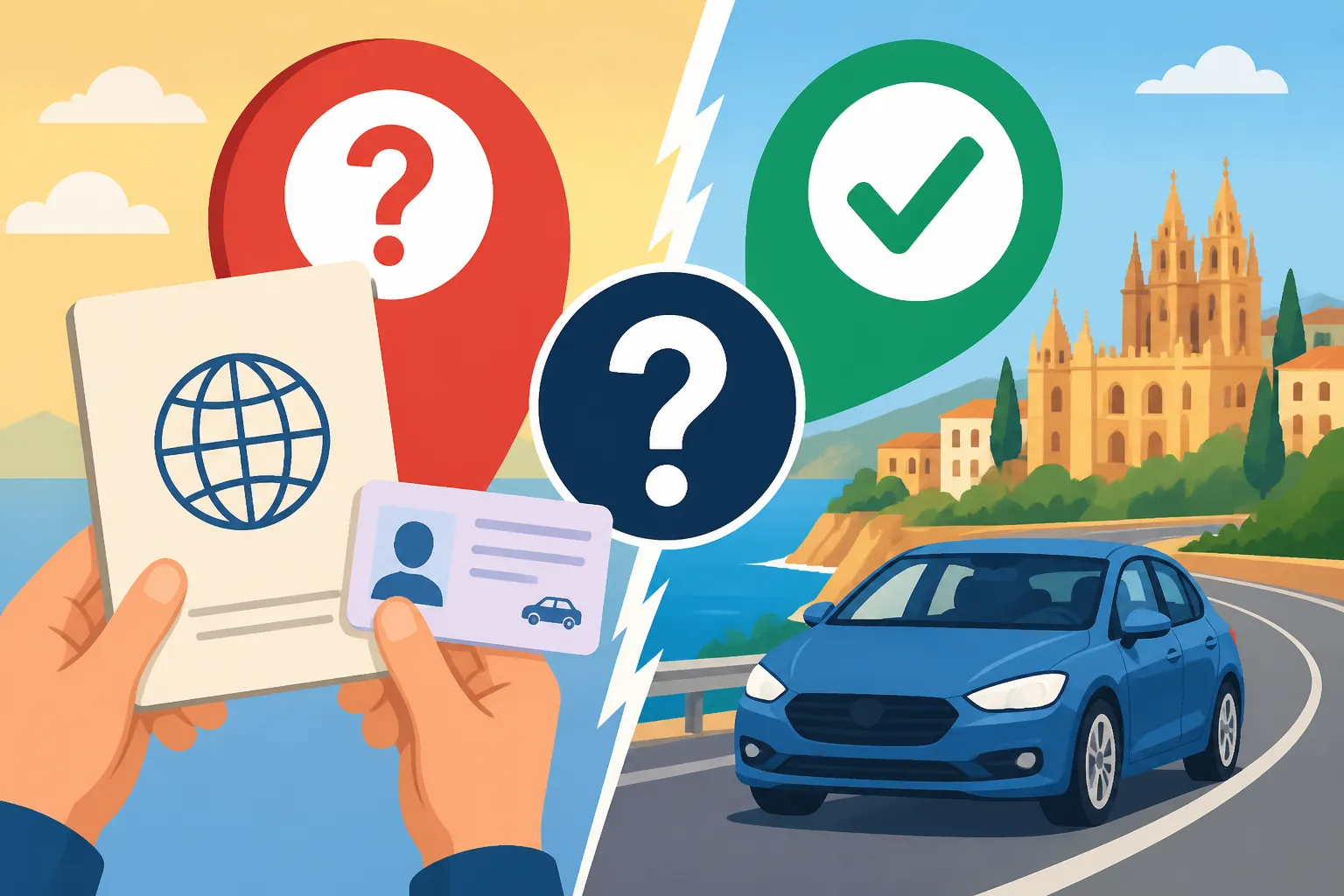
The IDP acts as an official translation of your national driving license into multiple languages, including Spanish, and it certifies that you hold a valid driver's license in your home country. It’s not a standalone document; it must always be carried alongside your original national driving license. Think of it as your driving license’s passport – it validates your credentials in a universally understood format for Spanish authorities. Failure to present both can result in fines and legal headaches. So, if you're from a non-EU/EEA country, consider the IDP an absolute essential, not just a suggestion.
Understanding the IDP: What It Is and How to Get One
So, you've established that you probably need an IDP. But what exactly is it, and how do you go about acquiring one? It's much simpler than it sounds, and thankfully, it's not another piece of Spanish bureaucracy you have to tackle in person here!
What an IDP Entails
An International Driving Permit is a document standardized by the United Nations, designed to overcome the language barriers that can arise when you're driving in a foreign country. It's essentially a multi-language translation of your existing driver's license, complete with a photograph and basic driver information. It confirms that you are authorized to drive various classes of vehicles according to the categories on your national license. It's valid for a specific period, usually one year from the date of issue.
It's absolutely critical to remember that an IDP is never valid on its own. It's merely a supplementary document. You must always carry your valid national driver's license with you when driving in Spain, alongside your IDP. If you only have one, you're considered to be driving without the proper documentation. This often catches out new arrivals or tourists who assume the IDP replaces their home license. Nope! Both are needed.
How to Apply for Your IDP
The good news is you cannot get an IDP in Spain. You must obtain it from your home country before you travel. Each country designates specific authorities or automobile associations to issue IDPs. For example:
- United States: The American Automobile Association (AAA) and the American Automobile Touring Alliance (AATA) are the authorized issuers. You typically need to provide your valid US driver's license, two passport-sized photos, and a completed application form.
- Canada: The Canadian Automobile Association (CAA) is the official issuer. The process is similar, requiring your provincial driver's license, photos, and the application.
- United Kingdom: If you're a UK citizen, after Brexit, you might need an IDP depending on the type of UK driving license you hold and where you're driving. The UK Post Office is usually the place to get these, though specific types are tied to different UN conventions. Always check the latest government guidance before traveling.
- Australia: State and territory motoring clubs (like NRMA, RACV, etc.) issue IDPs.
The process is generally straightforward: fill out a form, provide copies of your driver's license, passport photos, and pay a fee. It's usually a quick turnaround, or you can get it on the spot at some offices. Just make sure you do it well in advance of your trip to avoid any last-minute stress!
When a Foreign License is Enough (and When It's Not)
While the general rule of thumb for non-EU/EEA licenses is "get an IDP," there are specific circumstances and agreements that can make things a little different. It's important to know where you stand, especially if you're planning a longer stay or seeking residency.
Reciprocal Agreements and Exceptions
Spain has bilateral agreements with a few non-EU countries that allow their citizens to drive using just their national license for a limited period, and then exchange it for a Spanish license without needing an IDP or passing a Spanish driving test. These agreements can change, so it's vital to check the latest DGT information. Countries like Switzerland and Andorra, for instance, typically have direct exchange agreements.
For other non-EU countries, even if your license is deemed 'valid' for a short tourist stay (e.g., up to 6 months for some nationalities, though an IDP is still often required by car rental agencies and police), once you establish residency in Spain, the rules shift dramatically. As a legal resident, you generally have a grace period (usually six months) from the date your residency is formalized to either exchange your license (if an agreement exists) or obtain a Spanish one. During this grace period, your national license with an IDP is usually valid. After that, you must have a Spanish license. Don't fall into the trap of thinking your IDP is a permanent solution for residents; it's not.
The Car Rental Conundrum
Even if legally, your country's license might be valid for a short tourist visit without an IDP, many car rental companies, especially larger international ones, will still insist on seeing an IDP if your license isn't from an EU/EEA country. Why? Because they want to avoid any potential hassle with local authorities or insurance claims. They're covering their bases.
There are many reports of people arriving at the rental desk, excited to pick up their car booked via a platform like Booking.com or through a travel package on GetYourGuide, only to be turned away because they didn't have an IDP, even if their national license technically met the legal minimum for a tourist. It's always better to be safe than sorry. If you plan to rent a car, just get the IDP. It will save you a lot of grief and potential scrambling when you're trying to start your Spanish adventure. For those interested in alternatives to car travel, remember that Spain's public transport system, including high-speed trains and buses, is excellent, and you can often find great deals on platforms like Omio.
The table below offers a general overview, but always double-check with the DGT for the most current information, especially if you plan to become a resident.
| Origin of Driving License | Tourist/Short-Term Visitor (< 6 months) | New Resident (> 6 months) | Required Documents While Driving |
|---|---|---|---|
| EU/EEA Country | Valid | Valid (exchange recommended, may become mandatory over time) | Original EU/EEA Driving License |
| UK (Post-Brexit) | Valid (IDP recommended/required by rental companies) | Exchange for Spanish license after 6 months | Original UK Driving License + IDP (highly recommended) |
| USA, Canada, Australia, etc. | Valid, but IDP REQUIRED | Must exchange for Spanish license after 6 months, or pass Spanish test | Original National Driving License + IDP |
| Countries with Exchange Agreements | Valid (check specific agreement terms) | Must exchange for Spanish license after 6 months | Original National Driving License (exchange required for residency) |
Please note: This table provides general guidance. Rules can change, and specific rental company policies may vary.
Practical Advice for Driving in Spain (Beyond the Permit)
Having the correct driving documents is just the first step. Driving in Spain, particularly if you're accustomed to rules and road etiquette from other countries, can present its own set of surprises. Being prepared for these can make your experience much smoother and safer.
Navigating Spanish Roads and Traffic Laws
Spanish roads are generally well-maintained, but city driving can be a tight squeeze, and parking can be a nightmare. Speed limits are strictly enforced, often with cameras, and fines can be hefty. The maximum speed on motorways (autopistas/autovías) is typically 120 km/h, on main roads 90 km/h, and in urban areas 50 km/h, though many smaller streets are 30 km/h or even 20 km/h zones. Always pay attention to signage.
Roundabouts are plentiful and often cause confusion for foreigners. The general rule is that vehicles already in the roundabout have priority, and you should signal before exiting. Using your phone while driving is a big no-no, and hands-free kits are required if you need to use a phone. Drink-driving laws are also very strict, with low blood alcohol limits, so it's best to avoid alcohol entirely if you're driving. Familiarizing yourself with these nuances can prevent an unexpected fine, as detailed in our guide on Driving in Spain: Road Rules, Fines, and What Surprises Expats.
What to Carry in Your Vehicle
Beyond your IDP and national driving license, Spanish law requires you to carry several items in your vehicle at all times. This includes:
- Your car's registration document (Permiso de Circulación).
- Proof of a valid technical inspection (Tarjeta de Inspección Técnica de Vehículos – ITV). This is a separate card from your insurance policy and shows the vehicle has passed its technical inspection. You'll need to understand Car Insurance in Spain: Minimum Coverage and What to Compare.
- Two warning triangles: To be placed behind and in front of your vehicle if you break down (though a new V-16 beacon light is now also permitted).
- A reflective safety vest: You must wear this if you step out of your car on the road or hard shoulder during a breakdown.
- Spare tire or puncture repair kit: And the tools to change it.
These aren't just recommendations; they are legal requirements, and failure to have them can lead to fines during a police stop. It's worth noting that if you're pulled over by the Guardia Civil or Policia Local, clear communication can be a challenge.
When Residency Changes Everything
This cannot be stressed enough: if you plan to live in Spain, the "tourist rules" for driving permits have a very short shelf life. After approximately six months of obtaining your residency, you are generally required to either exchange your foreign license for a Spanish one (if your country has an agreement with Spain) or take a Spanish driving test.
This applies even if you are from a country that generally uses an IDP for short visits. The IDP is a temporary solution for international travel, not a permanent substitute for a Spanish driving license for residents. Many people overlook this, thinking their IDP will endlessly extend their ability to drive here. It won't, and driving without a valid Spanish license as a resident can lead to serious legal consequences, including significant fines and even vehicle impoundment. For more on this, check out Exchanging a Foreign Driver’s License in Spain: Eligibility and Steps.
The entire process of getting set up in a new country involves so many steps, from getting your NIE, TIE, and Empadronamiento to understanding everything about Spain Visas & Residency: Complete Guide for Foreigners. Don't let your driving permit become an oversight.
Planning Your Journey and Staying Safe
Whether you're just visiting or putting down roots, driving in Spain offers incredible freedom to explore its diverse landscapes, from the sun-drenched beaches of Andalusia to the historic towns of Castilla y León. Planning your trips carefully and understanding the local driving culture and laws will enhance your experience immensely.
Beyond the legalities of the IDP, consider other aspects of driving. Are you comfortable driving on the right side of the road? Are you prepared for potentially aggressive drivers in cities or narrow, winding roads in rural areas? Always account for extra time for journeys, especially if you're navigating unfamiliar routes. And if you're not comfortable driving, remember Spain has a fantastic public transportation network. For getting around the bigger cities, buses, metros, and trains are often more efficient and less stressful than navigating by car. Platforms like Omio can help you compare various transport options if driving isn't for you. If you’re renting, don’t forget to review Renting a Car in Spain: Requirements, Insurance, and Driving Tips to ensure a smooth pick-up.
For peace of mind, ensure your car is adequately insured, know the Emergency Numbers in Spain: 112 and When to Use It, and have a basic understanding of road signs, many of which are European standard. Don't let bureaucracy or unfamiliarity deter you from experiencing Spain by car, but do be diligent in your preparation.
Disclaimer
The information provided in this guide is for general informational purposes only and does not constitute legal advice. While we strive to keep the information up-to-date and correct, rules and regulations regarding driving permits and residency in Spain can change frequently. It is always recommended to verify the latest requirements with official Spanish authorities (such as the Dirección General de Tráfico – DGT) or consult with a legal professional specializing in immigration and traffic law for advice tailored to your specific situation.