Home and Contents Insurance in Spain: What to Compare
One of the most jarring realizations for many newcomers in Spain is that your landlord’s insurance likely won’t cover your laptop or jewelry if someone breaks into your apartment. I will never forget the sinking feeling of realizing my Valencia apartment’s leaky pipe wasn't covered by my building's "comunidad" policy. This guide provides a deep dive into home and contents insurance in Spain to protect your sanctuary and your sanity.
Disclosure: This post may contain affiliate links. We may earn a commission at no extra cost to you if you make a purchase through these links. Read full disclosure.
Understanding the Basics of Home Insurance in Spain
Navigating the Spanish insurance market, or seguros de hogar, requires learning a specific vocabulary that dictates exactly what is protected. Most expats arrive assuming a standard policy covers everything under one roof, but in Spain, the distinction between the structure and the items inside is mathematically precise. If you are exploring Renting in Spain: Contracts, Deposits, and Tenant Rights, understanding these terms is the first step toward securing your new home.
Continent vs Contenido Explained
The most critical distinction in a Spanish policy is between continente (the structure) and contenido (the contents). The continente refers to the physical building, including the walls, floors, ceilings, and fixed installations like the plumbing and electrical systems. Interestingly, in Spain, a fitted kitchen or a built-in wardrobe is usually considered part of the continente. I learned this the hard way when a kitchen cabinet fell off the wall; since it was "fixed" to the structure, it fell under a different coverage category than my freestanding microwave.
The contenido, on the other hand, refers to everything else you bring into the property. This includes furniture, electronics, clothing, and personal valuables. When you are filling out an application, the insurer will ask you for a total valuation of these items. Be careful not to under-insure here just to save a few euros on your monthly premium. If you claim that your contents are worth 10,000 EUR but you actually have 30,000 EUR worth of equipment, the "proportional rule" will apply in the event of a claim, and the insurer will only pay a fraction of the loss.
The All-In-One Multirriesgo Hogar
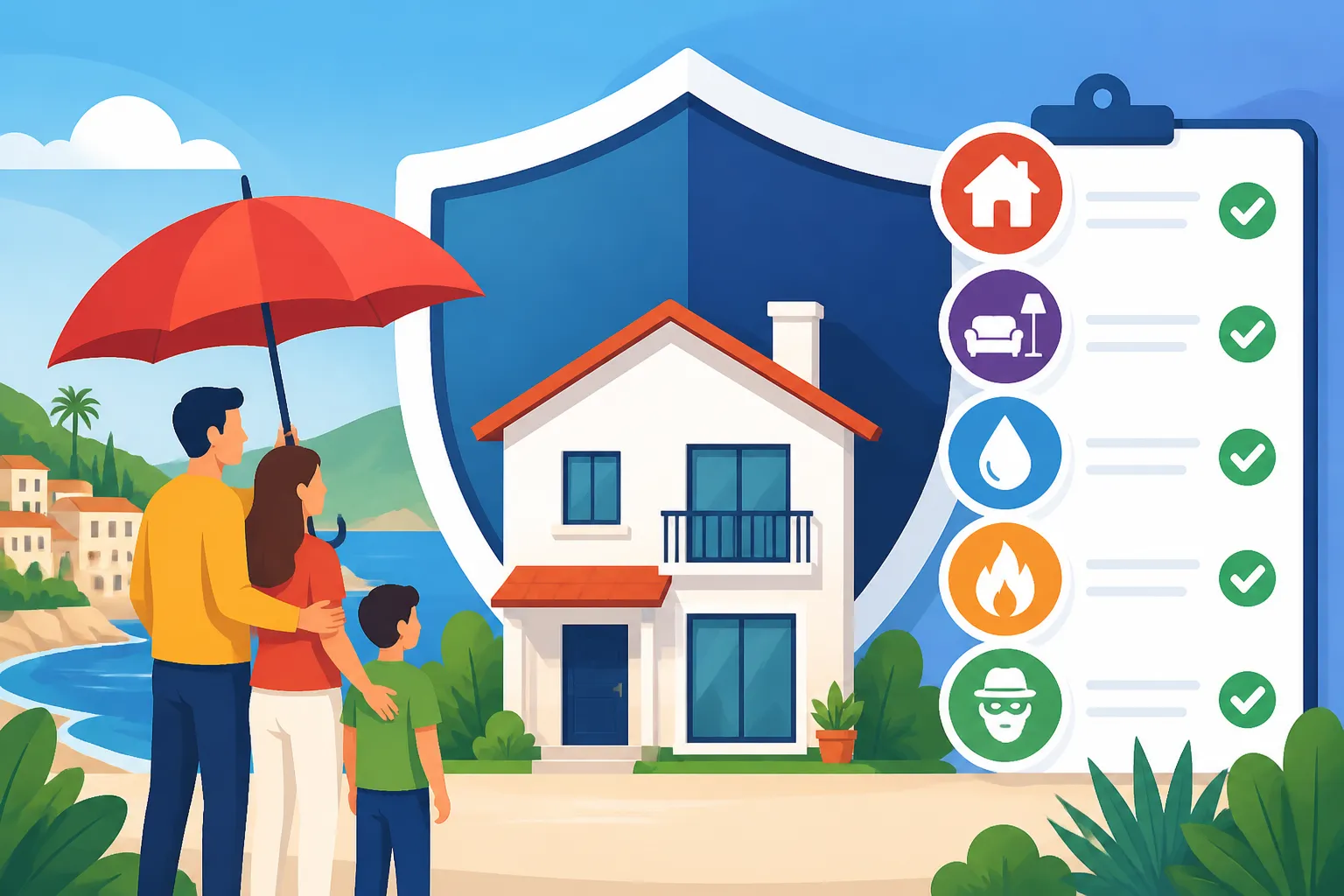
Most policies you encounter will be labeled as Multirriesgo Hogar. These are comprehensive packages designed to cover a wide range of risks, including fire, theft, water damage, and glass breakage. While these policies are convenient, they are not all created equal. Some might include "aesthetic damage," which pays to replace all the tiles in your bathroom if a pipe bursts and the original tiles are no longer available. Others might exclude this entirely, leaving you with a mismatched wall.
When comparing these "multi-risk" options, you should look specifically at the limits for water damage. Water leaks are the most common insurance claim in Spain, often caused by aging pipes in beautiful but older buildings in cities like Madrid or Barcelona. Ensure your policy covers the cost of finding the leak (localización) as well as the repair (reparación), as these are often listed as separate line items with different caps.
Civil Liability The Non Negotiable Coverage
Responsabilidad Civil (Civil Liability) is perhaps the most important part of any Spanish home insurance policy. This covers damages that you, your family, or even your pets might cause to third parties. In a country where vertical living in apartment blocks is the norm, a simple bathtub overflow can easily damage the neighbor's ceiling below. Without liability coverage, you would be personally responsible for those repair costs, which can escalate into the thousands very quickly.
Most experts recommend a minimum liability coverage of 300,000 EUR, though 600,000 EUR is becoming the standard for peace of mind. This coverage often extends beyond the walls of your home as well. For example, if your dog accidentally trips a cyclist in the park, your home insurance's civil liability clause might cover the medical bills. This is a huge relief for families and pet owners.
Key Factors to Compare When Choosing a Provider
Not all insurers offer the same level of service, especially when it comes to English-language support. As an expat, your priority should be clarity. You don't want to be deciphering complex legal Spanish while your living room is underwater. Comparing providers means looking beyond the price and into the actual "meat" of the policy document.
Coverage Limits and Exclusions
Every policy has a "limit" and a list of "exclusions." For example, many basic policies will cover theft but only if there is evidence of "forced entry." If you accidentally leave your balcony door unlocked and someone walks in, the insurer may deny the claim. You should also check the limits for high-value items like jewelry, art, or specialized sports equipment. Most standard policies have a cap (often around 2,000 EUR to 3,000 EUR) for any single item unless it is specifically listed and appraised.
Furthermore, look for exclusions related to the age of the building. In some parts of Spain, buildings over 50 years old require specific certifications or have higher deductibles for pipe-related claims. If you are Buying Property in Spain as a Foreigner: Process and Costs, getting a surveyor to check the plumbing before you buy can save you from being blacklisted by insurers later for having too many "pre-existing" issues.
Claims Process and Customer Support
The ease of filing a claim can vary wildly between a traditional Spanish bank-affiliated insurer and a modern, tech-focused provider. If you use a digital bank like N26, you are likely used to a seamless app-based experience. Some newer insurance companies in Spain have followed suit, allowing you to upload photos of damage directly through an app. Traditional insurers, however, may still require a phone call (often in Spanish) and a visit from a perito (adjuster) who may only speak the local language.
When comparing, ask if they have a dedicated English-speaking claims line. Also, check their "emergency assistance" response times. A good policy will guarantee that a plumber or locksmith will be at your door within three hours for urgent cases. This "manitas" (handyman) service is a common perk in Spain, often including a few hours of free labor every year for minor tasks like hanging shelves or fixing a leaky tap.
Additional Perks and Emergency Services
Spanish insurers love to bundle extra services to stay competitive. Some of the most useful perks for expats include legal defense coverage and IT assistance. Legal defense can be invaluable if you have a dispute with a neighbor or a landlord, helping you navigate your rights without paying for a private lawyer out of pocket. IT assistance might provide remote support if your computer crashes, which is a lifesaver for those working remotely on the Spain Digital Nomad Visa.
Another common addition is "travel assistance." Believe it or not, some home insurance policies in Spain will cover medical emergencies or lost luggage when you are traveling abroad. If you already have Health Insurance in Spain: Options for Residents, Students, and Families, this might seem redundant, but it can provide an extra layer of protection for your belongings while you are away from home.
| Feature | Basic Policy | Premium Policy |
|---|---|---|
| Water Damage | Limited to 1,500 EUR | Unlimited or high cap |
| Theft Outside Home | Not included | Covered up to 1,000 EUR |
| Handyman Service | 1 visit per year | 2-3 visits per year |
| Legal Defense | Basic advice | Full litigation support |
| Aesthetic Damage | Not included | Included (approx. 1,500 EUR) |
| Glass/Mirrors | Only windows | All glass surfaces + hobs |
Mandatory vs Optional Insurance What Does the Law Say
Many expats are confused about whether they are legally required to have home insurance. The answer depends heavily on your housing situation and whether you have a mortgage. Spain has very specific rules that can impact your Cost of Living in Spain: Realistic Budgets and Savings Tips depending on how you choose to protect your property.
Mortgages and Compulsory Fire Insurance
If you have a mortgage with a Spanish bank, the law requires you to have at least basic fire insurance (seguro de incendios). This ensures that the bank's collateral—the building itself—is protected in the event of a total loss. While the bank will almost certainly try to sell you their own in-house insurance policy, you are legally entitled to shop around and choose your own provider, as long as the bank is named as the beneficiary of the policy.
Often, banks will offer a lower interest rate on your mortgage if you take their insurance. You should do the math carefully. Sometimes the "discount" on the mortgage is smaller than the extra cost of the bank's overpriced insurance. Using an app like Wise to manage your international transfers for property deposits is smart, but don't let the convenience of "one-stop-shopping" at a bank blind you to better insurance deals elsewhere.
Why Renters Should Not Skip Contents Insurance
Legally, a tenant is not required to have home insurance in Spain unless the rental contract explicitly demands it. However, skipping it is a massive risk. The landlord’s insurance covers the continente (the building), but it does not protect your contenido (your things). If the apartment upstairs leaks and ruins your bed and your laptop, the landlord’s insurance will pay to fix the ceiling, but it won’t pay you a cent for your ruined belongings.
Furthermore, a renter's policy provides you with your own civil liability coverage. If you accidentally cause a fire in the kitchen, the landlord’s insurer will pay for the repairs but will likely "subrogate" the claim—meaning they will sue you to recover their costs. If you have your own renter's insurance, your policy will handle that legal battle and pay the damages on your behalf. It is a small price to pay (often less than 150 EUR per year) for significant security.
Community Insurance vs Individual Policies
In Spain, most apartments are part of a Comunidad de Propietarios. This community is required by many regional laws to have a building-wide insurance policy. This covers common areas like the roof, stairs, and elevator. It often also covers the "pipes of common use." However, the line between a "common pipe" and a "private pipe" is a frequent source of conflict.
Individual owners still need their own private policy to cover everything from the "stopcock" inward. Neighbors often argue over who is responsible for a leak. Having your own insurance means your company can fight the community's insurance on your behalf. This prevents you from getting caught in the middle of a bureaucratic nightmare.
Managing Your Costs and Payments
Once you have chosen a policy, the next step is ensuring the payments are handled correctly to avoid a lapse in coverage. Spanish insurance companies are very strict about payment deadlines; if your premium isn't paid, your coverage can be suspended almost immediately.
How Premiums are Calculated in Spain
Insurers in Spain use several data points to calculate your premium. The location of the property is a major factor; ground-floor apartments in high-crime areas or villas in remote areas without alarm systems will naturally cost more to insure. The age of the property, the quality of the construction materials, and the presence of security features like reinforced doors (puertas blindadas) or window bars (rejas) also play a role.
Another factor is your claims history. While Spain doesn't have a centralized "no-claims bonus" system as formal as the UK's car insurance, individual insurers will look at your past few years. When you are Buying Property in Spain: Taxes, Notary Fees, and Registry Costs, remember to factor in these recurring insurance costs. A home with an alarm system connected to a central hub can often save you 15-20% on your annual premium.
Using Modern Banking for Easy Payments
Most Spanish insurers require payment via domiciliación bancaria (direct debit). This is where a modern bank account like N26 becomes incredibly useful. Their app allows you to see upcoming direct debits and ensures you have the funds ready in your Euro account. If you are moving money from abroad, using a service like Wise ensures you get the real exchange rate, which is particularly helpful if you choose to pay your insurance premium annually to get a discount.
Annual payments are almost always cheaper than monthly or quarterly installments. Most Spanish insurers add a "fractional surcharge" of 5-10% if you choose to pay monthly. If you can swing the one-time payment at the start of the year, it's an easy way to save money. Just make sure your Spanish IBAN is correctly registered with the insurer to avoid any "returned bill" fees, which can be surprisingly high in the Spanish banking system.
Tax Implications for Homeowners
For some residents, a portion of your home insurance might be tax-deductible. If you work from home as a freelancer (autónomo), you may be able to deduct a percentage of your insurance premium relative to the square footage of your office space. However, this is a complex area of Spanish tax law. Services like Taxes for Expats can be helpful in determining if you qualify for these deductions, especially if you are also managing income from other countries.
If you are renting out a property in Spain, the entire cost of the home insurance is generally a deductible expense against your rental income. Keeping meticulous records and receipts is essential for your annual "Renta" declaration. Consult with a professional at Taxes for Expats to ensure you are maximizing your deductions while remaining fully compliant with the Agencia Tributaria. They can help you understand how your property investments fit into the broader picture of Spanish Taxes for Foreign Residents: Practical Guide to Staying Compliant.
Practical Steps to Filing a Claim in Spain
When disaster strikes, your ability to stay calm and follow the correct steps will determine how quickly your life returns to normal. The Spanish claims process is very structured, and knowing what to expect can save you from a lot of frustration.
Documenting the Damage
The moment you notice damage—whether it's a burglary or a burst pipe—start taking photos and videos. Do not throw anything away! In Spain, the burden of proof is on you. If there was a theft, you must also go to the local police station (Policía Nacional) and file a denuncia (report). The insurance company will not process a theft claim without a stamped copy of this police report.
Keep a "inventory list" updated throughout the year. It’s much easier to prove you owned a high-end camera if you have a photo of the receipt and the serial number saved in the cloud. This proactive approach helps you avoid Common Financial Scams Targeting Expats in Spain (and How to Avoid Them) where scammers might try to inflate claims or where insurers might try to lowball your payout due to lack of evidence.
Working with the Perito
In almost every significant claim, the insurance company will send a perito (loss adjuster) to your home. Their job is to verify the cause of the damage and estimate the cost of repair or replacement. Be polite and helpful, but also be firm. If you feel the perito is overlooking something, point it out. It is also helpful to have your own quotes from independent contractors ready if you think the insurer's "in-house" repair team is providing a sub-par solution.
In Spain, you often have the choice between reparación (the company sends their own repairman) or indemnización (they pay you the cash, and you hire your own). Usually, letting the company handle the repair is faster and less stressful, as they guarantee the work. However, if you have a specific builder you trust, taking the cash might be better, provided the amount covers the real-market costs of labor in your region.
Language Barriers and Professional Help
If your Spanish is not yet at a level where you can discuss the nuances of "capillary moisture" or "electrical surges," consider hiring a public adjuster or using an insurance broker from the start. A broker acts as an intermediary between you and the insurance company; they often don't charge you a fee (as they get a commission from the insurer) and will handle the claim negotiations for you.
Living in Spain is an incredible adventure, but the administrative hurdles like insurance can feel like a full-time job. By comparing policies carefully, using tools like N26 and Wise for your finances, and consulting experts like Taxes for Expats for your filings, you can protect your Spanish home with confidence. Don't wait for a leak to find out what's in your policy—take an hour this weekend to read the fine print and make sure your "sanctuary" is truly secure.
Disclaimer
The information provided in this article is for general informational purposes only and does not constitute legal, financial, or professional insurance advice. While we strive to keep the information up to date and correct, laws and insurance regulations in Spain can change frequently. We recommend consulting with a licensed insurance broker or legal professional before making any decisions regarding home and contents insurance.